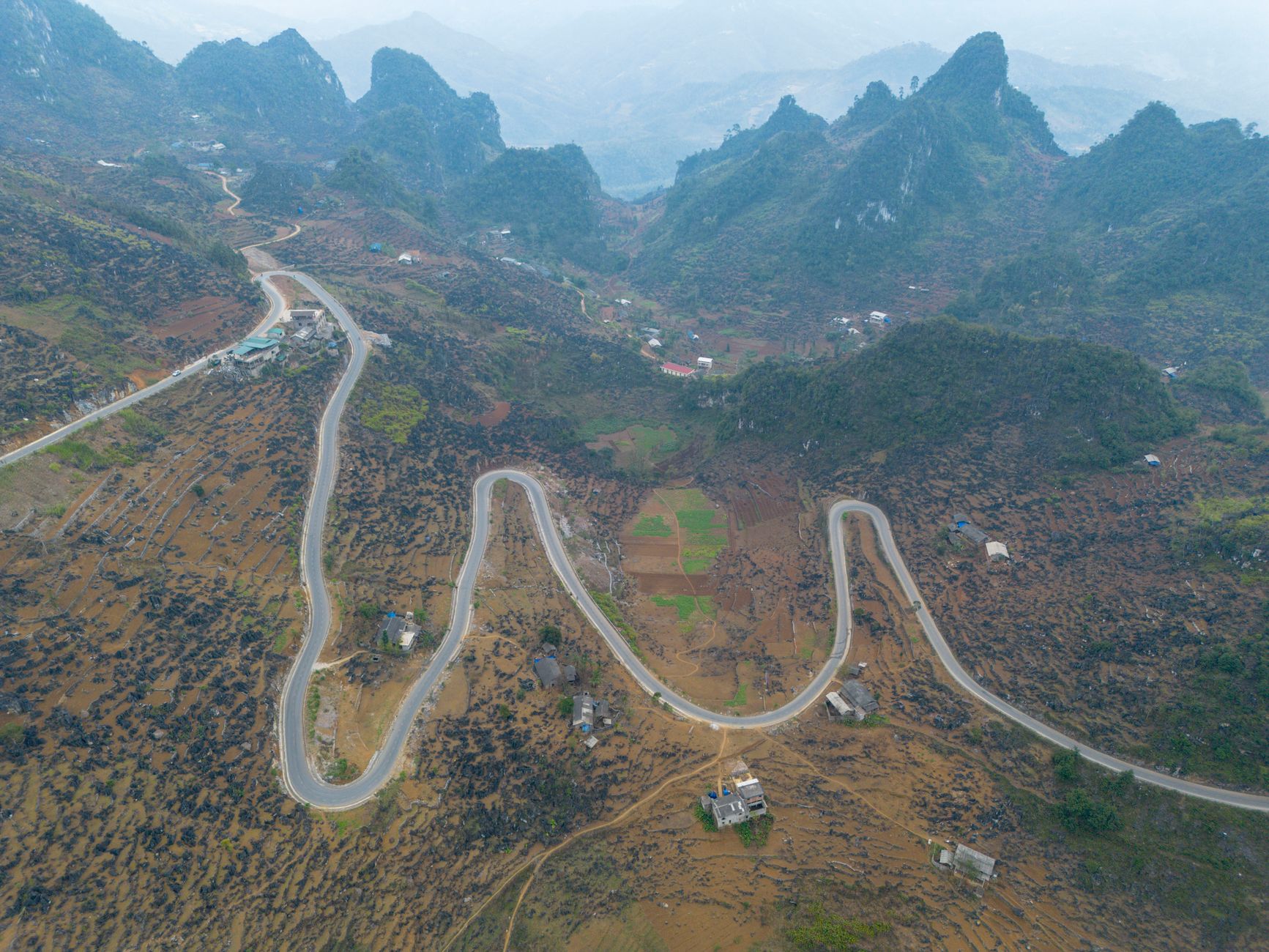
Deo Ma Phuc sits about 30km southwest of Cao Bang city, connecting Dong Khe town to the provincial capital via a series of tight switchbacks cut into limestone mountains. It's one of the most dramatic passes in the Vietnamese northeast — not as long as the Ha Giang loops, but every bit as intense kilometer for kilometer.
What it is and why it matters
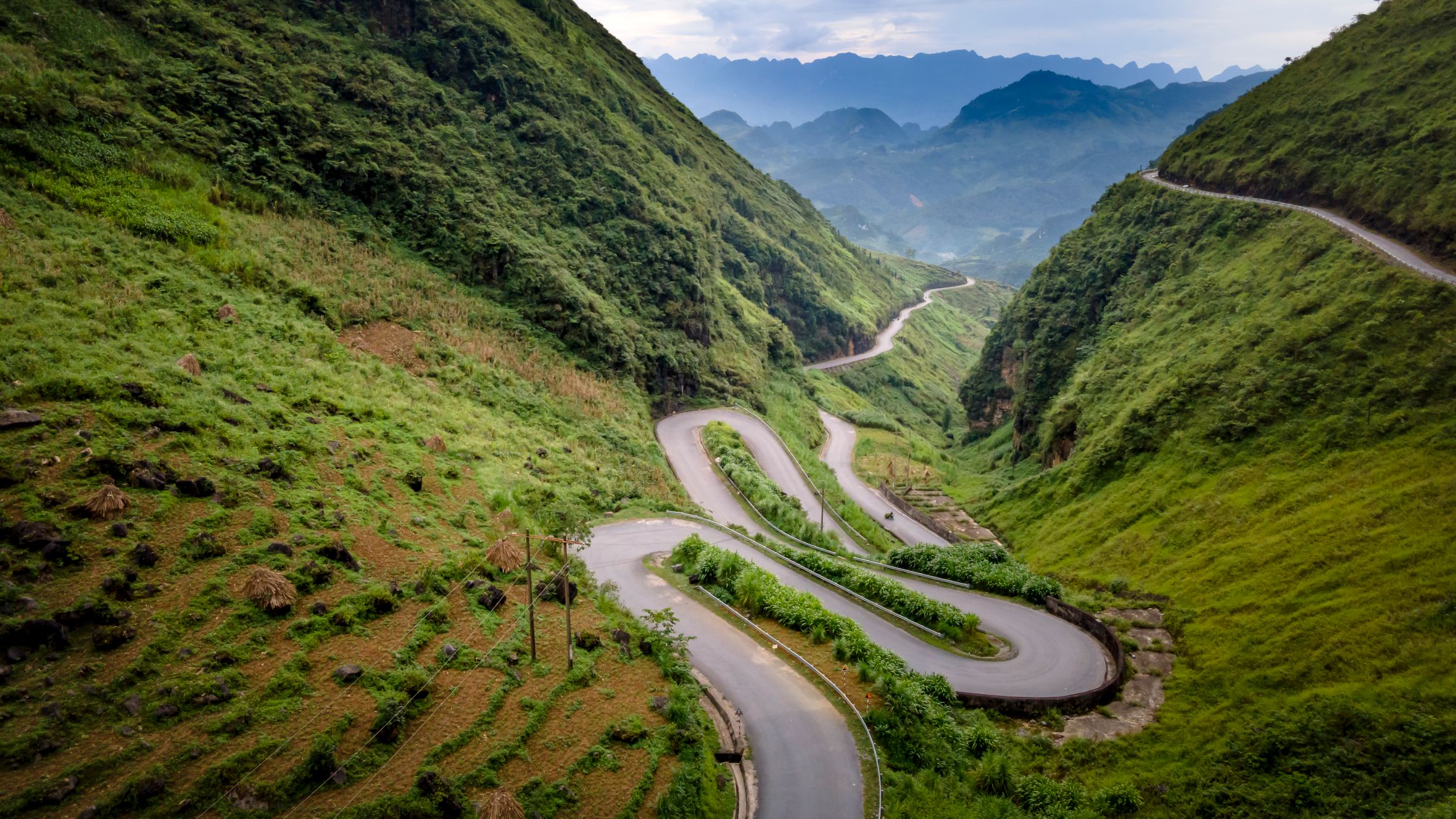
The pass climbs roughly 700 meters over about 15km of road, with somewhere around 14 named switchbacks depending on who's counting. The name translates loosely to "the pass where horses bow down" — a reference to how even horses had to lower their heads to get through the steep terrain. During the colonial period, the French built the original road here to move troops and supplies toward the Chinese border. In 1950, the pass saw heavy fighting during the Border Campaign, which makes it an important historical landmark in Cao Bang province.
Today, it's part of National Road 4A, and the surface is decent two-lane asphalt for most of the route. Trucks use it regularly, which keeps the road maintained but also means you'll share hairpin turns with vehicles that take up more than their lane.
Why travelers go
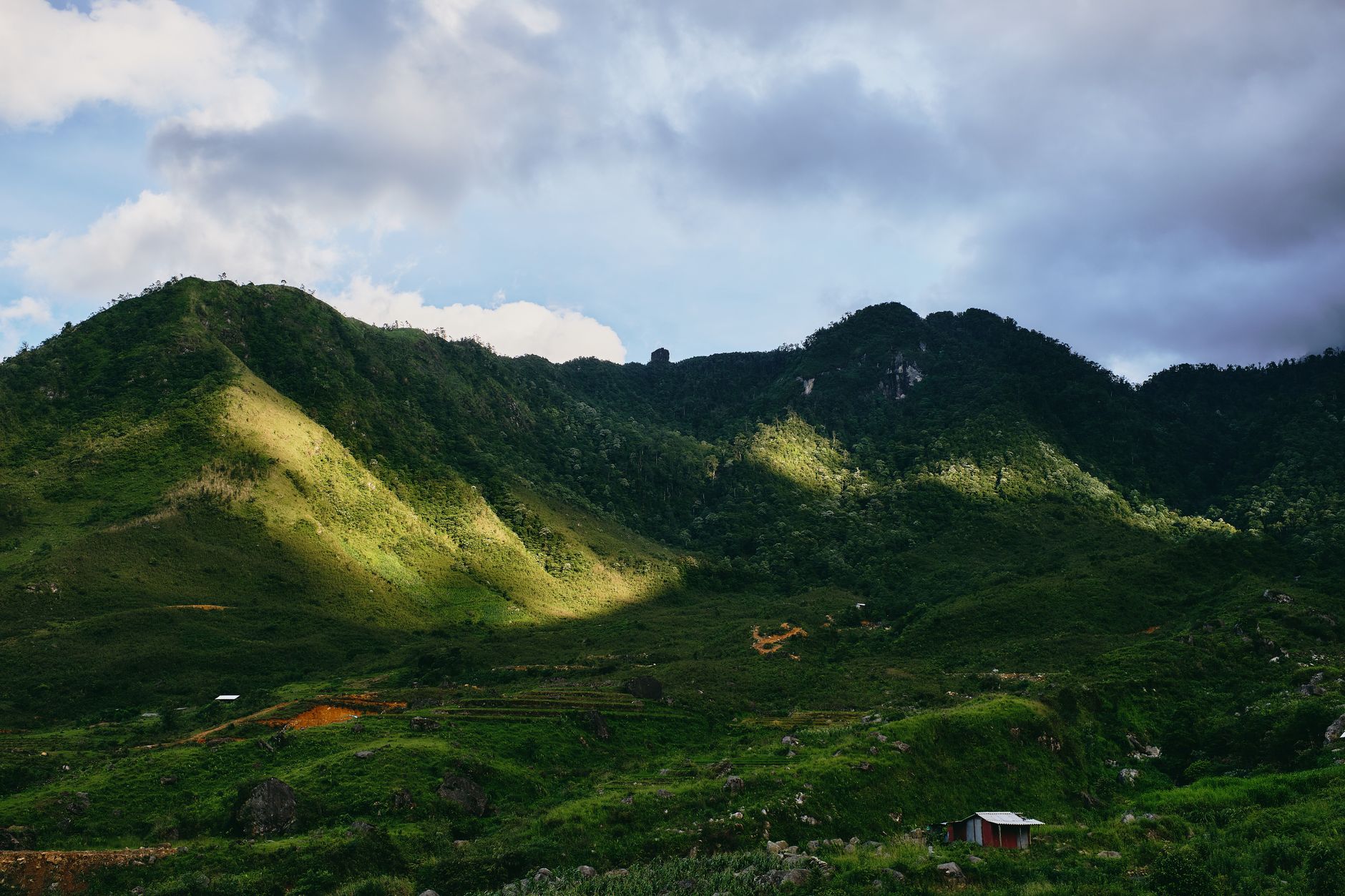
Deo Ma Phuc is one of those places where the drive is the destination. The road cuts through a landscape of sharp karst peaks, terraced rice fields in the valleys below, and patches of forest that still feel properly wild. On clear mornings, you get layered views of mountain ridges fading into haze — the kind of depth that photographs badly but stays in your head.
Most people riding the Ha Giang loop never make it to Cao Bang, which means Deo Ma Phuc sees a fraction of the motorcycle traffic. You'll pass local Tay and Nung villages along the route, and the general pace of life here is noticeably slower than the more popular northern circuits.
Best time to visit
The sweet spot is September through November, when the rice terraces in the valleys turn gold before harvest and the skies are clearest. October is arguably the best single month — warm days, cool nights, low rainfall.
December through February can be bitterly cold up here, with fog thick enough to cut visibility to 20 meters on the pass. Rideable, but miserable and genuinely dangerous on a motorbike. March through May warms up but brings intermittent rain and haze from agricultural burning.
June through August is wet season. The road holds up fine, but rockslides are a real concern on the steeper sections, and afternoon downpours are almost guaranteed.
How to get there
From Hanoi, the most common route is the overnight sleeper bus to Cao Bang city — roughly 7-8 hours, departing from My Dinh bus station, costing around 250,000-300,000 VND. From Cao Bang city, Deo Ma Phuc starts on the road south toward Dong Khe (QL4A). You can rent a motorbike in Cao Bang for about 150,000-200,000 VND per day from guesthouses near the bus station.
If you're riding your own bike from Hanoi (하노이 / 河内 / ハノイ), the route via Thai Nguyen and Bac Kan on QL3 takes about 8-9 hours for the roughly 280km. Don't try to do the Hanoi-to-pass ride in one day unless you left before dawn.
There's no direct public transport that drops you at the pass itself. Local buses run between Cao Bang and Dong Khe, but they won't stop for photos on switchbacks.

Photo by Quang Nguyen Vinh on Pexels
What to do
Ride the pass at dawn
Leave Cao Bang city by 5:30am to hit the pass around sunrise. The light is best before 7am, when the valleys fill with low cloud and the limestone peaks catch the first sun. Traffic is also lightest at this hour.
Stop at the hilltop viewpoint
About two-thirds of the way up from the Dong Khe side, there's a small cleared area on the left where trucks sometimes pull over. This is the most popular photo spot — you can see four or five switchbacks stacking below you. No sign marks it, but you'll recognize it from every photo of the pass you've seen online.
Visit Dong Khe town
At the base of the pass, Dong Khe is a quiet border-area town with a daily market where Tay and Nung people trade. The market is busiest in the morning before 9am. It's not a tourist market — expect dried goods, tobacco, livestock, and local textiles.
Combine with Ban Gioc Waterfall
Deo Ma Phuc sits on the natural route between Cao Bang city and Ban Gioc Waterfall, about 90km further north. Most travelers ride the pass as part of a two or three-day loop: Cao Bang to Dong Khe via the pass, then north to Ban Gioc, returning via Trung Khanh. This is the best way to see northeast Cao Bang without backtracking.
Walk a section on foot
If you want to feel the scale of the pass without a motor, park at the viewpoint and walk one or two switchbacks downhill. The road shoulders are narrow, so stay alert for trucks. Even 20 minutes on foot changes your sense of how steep this terrain actually is.
Where to eat nearby
Cao Bang city has the best food options. Look for "pho chua" (sour pho) — a local specialty where rice noodles are served cold with roasted pork, peanuts, and a tangy broth. It's nothing like Hanoi "pho" and worth trying specifically here. Stalls on Xuan Truong street near the market serve solid versions for about 30,000-40,000 VND.
In Dong Khe, options are limited to a few rice-and-meat shops along the main road. "Com binh dan" (everyday rice plates) run 35,000-50,000 VND. Don't expect menus — point at what looks good in the glass case.
Where to stay
Cao Bang city has a range of guesthouses and mini-hotels. Budget rooms start around 200,000-300,000 VND per night — clean enough, hot water, Wi-Fi. Mid-range hotels with proper beds and breakfast run 400,000-600,000 VND. There's nothing on the pass itself and very little in Dong Khe, so plan to base yourself in Cao Bang city.
If you're heading to Ban Gioc, homestays in Trung Khanh are a better overnight option than trying to find accommodation near the waterfall gate.
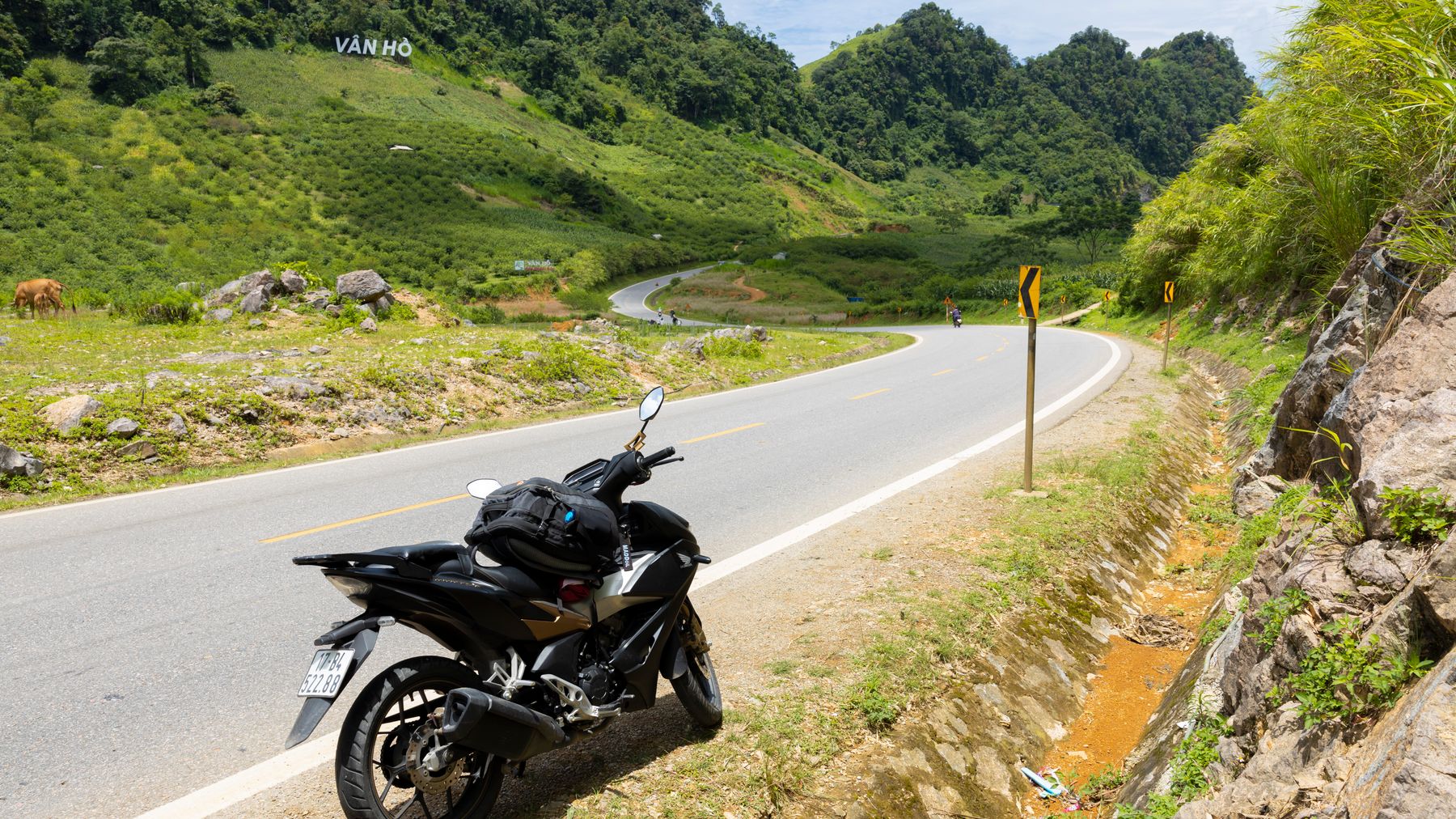
Photo by HONG SON on Pexels
Practical tips locals would tell you
- Honk before every blind switchback. Trucks cut corners constantly and won't hear your engine.
- Fill your fuel tank in Cao Bang city. There are a couple of small fuel stops near Dong Khe, but they occasionally run dry.
- Bring a light jacket even in summer. The top of the pass catches wind, and temperatures drop fast once the sun goes behind the peaks.
- If you're on a semi-automatic (Wave, Future), first gear is your friend on the descent. Riding the brakes for 15km will overheat them.
Common mistakes to avoid
- Rushing it as a day trip from Hanoi. The bus takes 7-8 hours each way. Give yourself at least two nights in Cao Bang to ride the pass and see the area properly.
- Riding in fog. If you wake up to zero visibility, wait. The fog usually lifts by mid-morning. The pass is not worth risking on a blind road with truck traffic.
- Skipping Dong Khe. Most riders summit the pass, take photos, and turn back to Cao Bang. The town at the bottom is part of the experience — and it connects you to the Ban Gioc route.
Practical notes
Deo Ma Phuc doesn't charge an entrance fee — it's a public road. Phone signal (Viettel) is patchy on the pass but works in Cao Bang and Dong Khe. Bring cash; there are no ATMs between Cao Bang city and Dong Khe.
Last updated · May 26, 2026 · independently researched, never sponsored.