Dinh Dinh Bang sits about 20 km northeast of Hanoi in the town of Dinh Bang, Tu Son district, Bac Ninh province. It's one of the largest and most architecturally significant communal houses — called "dinh" — in Vietnam (베트남 / 越南 / ベトナム)'s north, and it rewards the kind of traveler who gets more out of hand-carved dragons than selfie spots.
What it is and why it matters
Built between 1700 and 1736, Dinh Dinh Bang is a communal house dedicated to the worship of local guardian spirits and community ancestors. Think of a "dinh" as a civic-spiritual hybrid: part village hall, part shrine, part gathering place for festivals and dispute resolution. This particular one was constructed during the late Le dynasty and stands out for its scale — the main hall alone stretches roughly 20 meters across with massive ironwood columns — and the density of its woodcarvings.
The carvings are the main draw. Every bracket, beam, and rafter is covered in scenes of dragons, phoenixes, clouds, and figures from daily life. Unlike many communal houses that were rebuilt or heavily restored over the centuries, Dinh Dinh Bang retains most of its original 18th-century woodwork. The government classified it as a Special National Monument in 1952, making it one of the earliest heritage designations in the country.
Why travelers go
Most visitors come for the architecture. If you've already seen the [Temple of Literature](/posts/temple-of-literature-hanoi (하노이 / 河内 / ハノイ)-guide) in Hanoi and want to understand traditional Vietnamese woodworking and communal design beyond the capital, this is the logical next step. Dinh Dinh Bang is less crowded than Hanoi's heritage sites but arguably more impressive in craft detail.
Bac Ninh province is also the heartland of "quan ho" folk singing — a UNESCO-recognized tradition — so a trip here lets you combine architecture with one of Vietnam's most distinctive musical cultures.
Best time to visit
The communal house is open year-round, but two windows stand out:
- January to March ([lunar new year](/posts/tet / 越南春节 / テト)-lunar-new-year-guide) season): The annual Dinh Bang festival falls on the 6th to 8th of the first lunar month, usually in February. During the festival, you'll see "quan ho" performances, processions, and offerings. It's lively and genuine — not staged for tourists.
- October to December: Cool, dry weather. Fewer visitors. Good light for photography inside the main hall.
Avoid midsummer (June–August) if you're sensitive to heat. The courtyards have limited shade, and the interior can feel airless on humid days.
How to get there from Hanoi
Dinh Bang town is in Tu Son district, Bac Ninh — a straightforward trip from Hanoi.
- Motorbike or car: Take National Highway 1A or the Hanoi–Bac Ninh expressway. The ride is about 20 km and takes 30–45 minutes depending on traffic. Expressway toll is around 25,000 VND for a car.
- Bus: Catch bus 54 from Long Bien bus station toward Bac Ninh city. Get off at Dinh Bang junction, then walk about 800 meters to the communal house. Fare is 10,000 VND. Buses run every 15–20 minutes.
- Grab/taxi: A Grab car from central Hanoi runs 150,000–200,000 VND one way. Reasonable if you're splitting with someone.

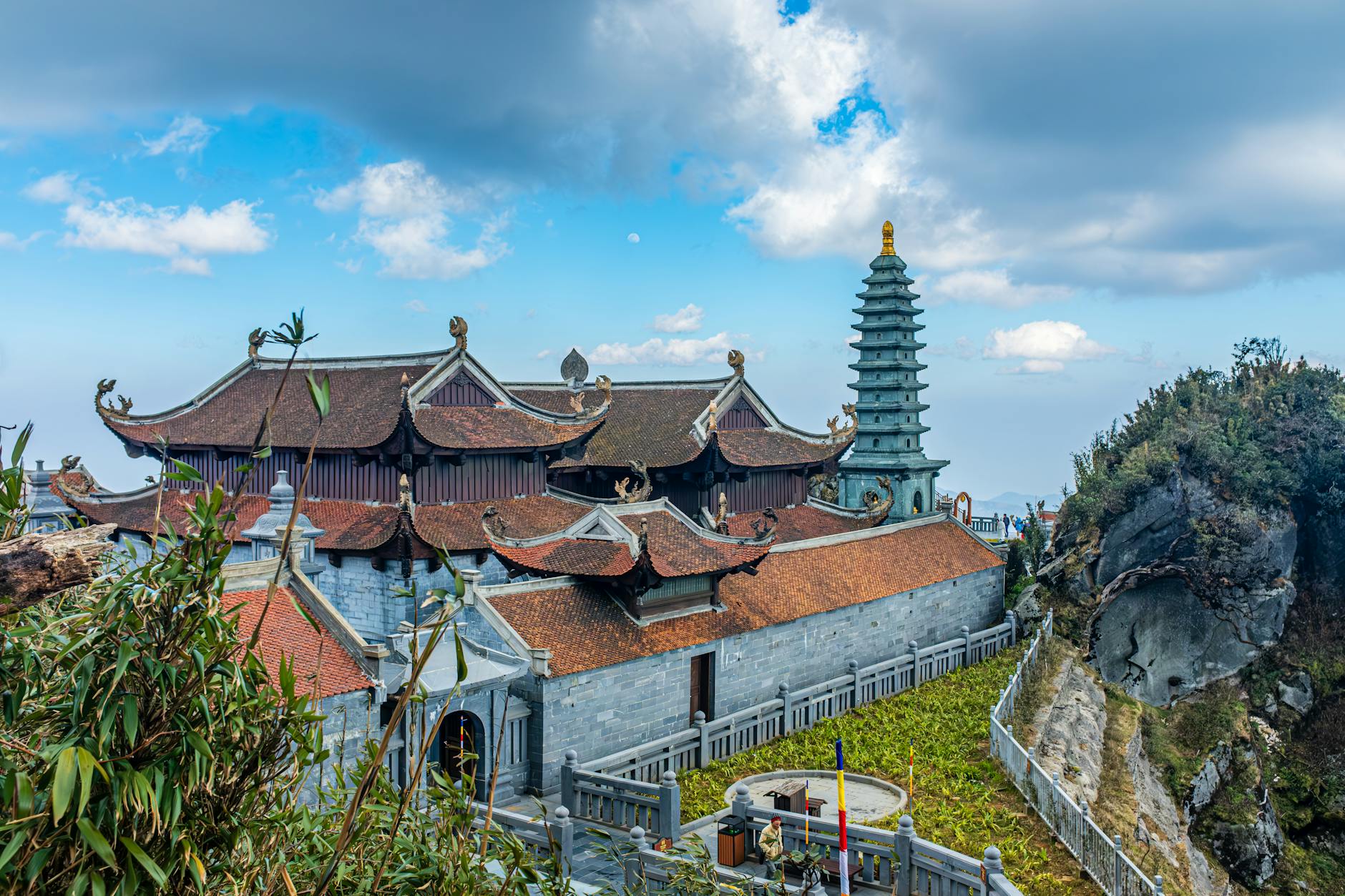
Photo by Haneul Trac on Pexels
What to do — 5 specific things
1. Study the main hall's carvings up close
The interior of the "dinh" has eight rows of ironwood columns supporting a layered roof system. Look up: the bracket sets between columns and roof beams are where the best carvings hide. Dragons chasing pearls, layered cloud motifs, and scenes of musicians and dancers. Bring a small flashlight or use your phone torch — the interior is dim, and details disappear without direct light.
2. Walk the full courtyard layout
Dinh Dinh Bang follows a classic "dinh" plan: a front gate, a ceremonial courtyard, the main hall, and a rear shrine. Take the time to walk the full axis from gate to rear. The proportions are deliberate — the courtyard is sized for processions and communal gatherings, and the scale only makes sense when you walk it.
3. Check the side halls
Two flanking buildings sit on either side of the courtyard. These are often empty or used for storage, but they contain secondary altars and older stone stelae with inscriptions recording village history. Less dramatic than the main hall, but worth five minutes.
4. Visit during a quan ho session
If you time your visit with the lunar new year festival or a local holiday, you may catch "quan ho" singing in or near the communal house grounds. Bac Ninh locals take this seriously — it's participatory, not performative. Two groups of singers face each other and trade improvised verses. Even if you don't understand the lyrics, the call-and-response format is compelling.
5. Combine with nearby Bac Ninh sites
From Dinh Dinh Bang, it's a short ride to But Thap Pagoda (about 8 km), one of the finest Buddhist pagodas in the north with a celebrated thousand-arm Quan Am statue. You can see both in a half-day.
Where to eat nearby
Dinh Bang town itself doesn't have a notable restaurant scene, but Bac Ninh city is only 10 km away.
- "Banh cuon" Bac Ninh style: Bac Ninh's version of steamed rice rolls is slightly thicker than Hanoi's and often served with a pork-based dipping sauce that's more savory than sweet. Look for stalls along Ngo Gia Tu street in Bac Ninh city. A plate runs 25,000–35,000 VND.
- "Nem chua" Bac Ninh: Fermented pork rolls are a regional specialty here. They're sold as street snacks throughout the province — tangy, chewy, and wrapped in banana leaf. Grab a few from any market vendor for 5,000–10,000 VND each.
Where to stay
Most travelers visit Dinh Dinh Bang as a half-day trip from Hanoi and don't stay overnight. But if you want to linger in Bac Ninh:
- Budget: Local guesthouses ("nha nghi") near Bac Ninh city center start at 200,000–350,000 VND/night. Basic but clean.
- Mid-range: Phoenix Hotel or Bac Ninh Hotel offer rooms in the 500,000–800,000 VND range with air conditioning and breakfast.
- Alternative: Head back to Hanoi for more variety.

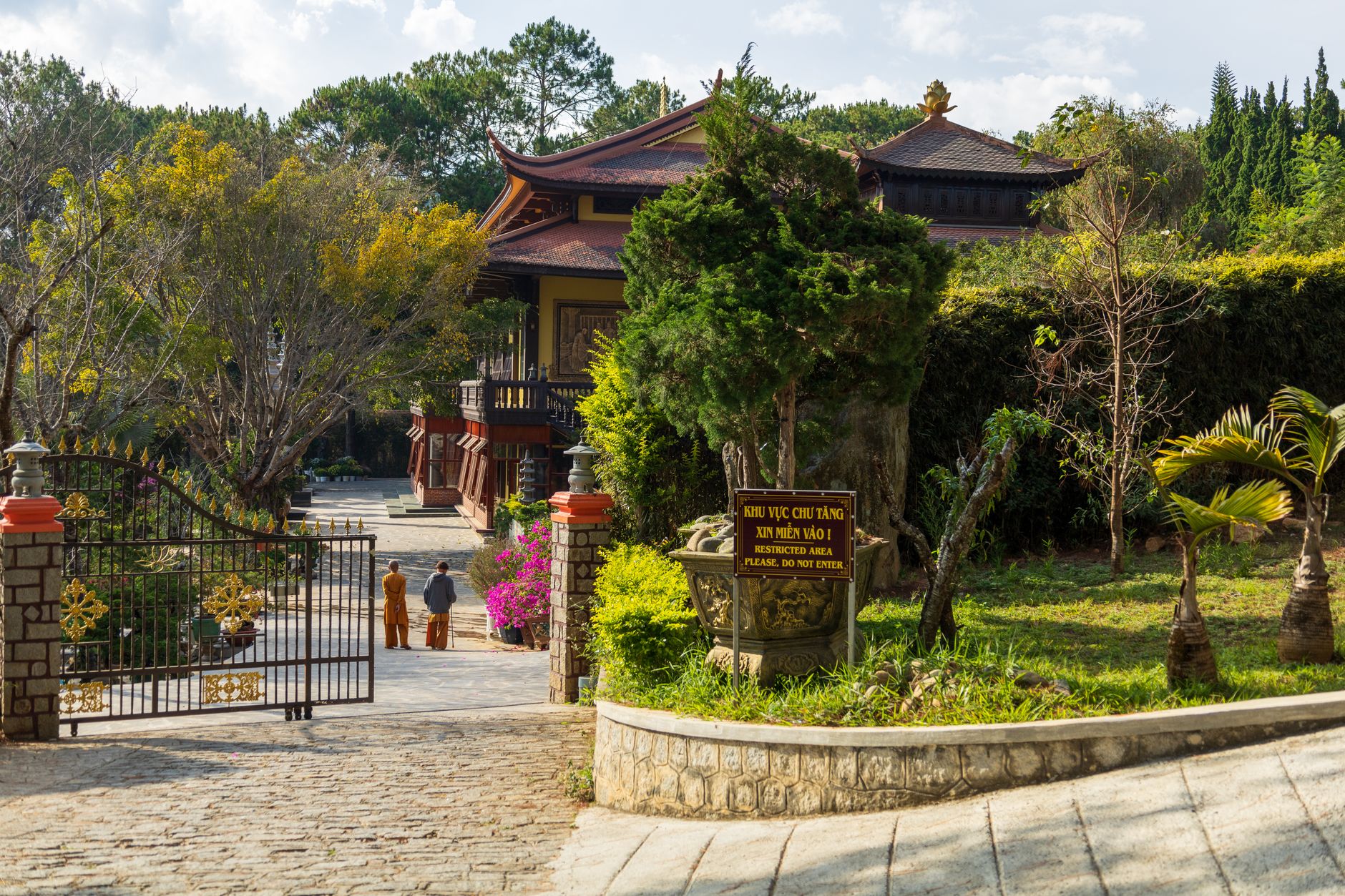
Photo by HONG SON on Pexels
Practical tips locals would tell you
- Dress modestly. The "dinh" is an active place of worship. Cover your shoulders and knees. Shoes off before entering the main hall.
- Photography is generally fine inside the main hall, but avoid using flash near the altars and ask if a ceremony is in progress.
- Bring cash. There's no entrance fee, but a small donation at the altar (20,000–50,000 VND) is customary and appreciated. No card readers here.
- Go early. The site is quietest before 9 AM. By midmorning on weekends, school groups sometimes arrive.
Common mistakes to avoid
- Rushing it. People spend 15 minutes, snap a few photos of the roof, and leave. The carvings need time — at least 45 minutes to appreciate the main hall properly.
- Skipping the rear shrine. Most visitors stop at the main hall. Walk through to the back. The rear altar is smaller but older and has a different atmosphere.
- Confusing Dinh Bang with Bac Ninh city. Dinh Bang is a specific town within Tu Son district, not Bac Ninh city itself. Make sure your Grab driver has the right pin — search "Dinh Dinh Bang" on Google Maps.
Practical notes
Dinh Dinh Bang works best as a morning trip from Hanoi combined with But Thap Pagoda or a wander through Bac Ninh's markets. It's not a full-day destination on its own, but for anyone interested in traditional Vietnamese architecture, it's one of the most rewarding examples in the north — and it's barely a half-hour from the capital.
Last updated · May 29, 2026 · independently researched, never sponsored.