Wet markets are the beating heart of Vietnamese food culture, and most travelers walk straight past them. That's a mistake — the freshest ingredients, the cheapest cooked food, and the most honest local dining happen inside. But there's a reason experienced eaters approach them with a little strategy.
Go Early — Before 9 AM
The cardinal rule. Wet markets run on a morning rhythm. Vendors start setting up around 5–6 AM; by 7 AM the cooked-food stalls are in full swing. This is when the broth is freshest, the ingredients were delivered an hour ago, and the cooking surfaces have just been heated. By 10 AM, what's left on the grill has been sitting, the ice on the seafood display is half-melted, and the flies have found everything.
If you're hitting a market after 10 AM, limit yourself to watching the produce section. Don't eat cooked food that's been sitting under a heat lamp in a tropical kitchen.
What to Order
Cooked-to-order is your safest default. Anything that goes directly from raw ingredients into a hot pot or onto a live flame in front of you is low risk.
- "Pho" and other broth-based noodles — the broth in a proper market pho stall has been simmering since 4 AM. Heat kills pathogens. Order a bowl while the pot is still actively bubbling. Watch the vendor ladle broth straight from the pot.
- "Banh mi" — market banh mi stalls are reliable because the fillings are simple: pate, butter, pickled vegetables. Grab one early before the cold cuts sit too long.
- "Banh cuon" — steamed rice rolls made fresh on a cloth steamer. You can watch them being made. The filling is usually minced pork and wood-ear mushroom, cooked through.
- "Bun bo Hue" — the spiced beef and pork noodle soup from central Vietnam (베트남 / 越南 / ベトナム). Because it's served in scorching broth, it's a sensible choice at market stalls.
- "Bun rieu" — crab and tomato noodle soup, popular in northern markets. Again, heat is your friend. Order only if the pot is actively simmering.
- Grilled items over live coals — corn, sweet potato, skewers cooked in front of you. Fine.
What to Skip
- Pre-cooked meat displayed at room temperature. Piles of roasted pork or duck that have been sitting since 6 AM with no refrigeration are a gamble by 9 AM in 33-degree heat.
- Raw shellfish or oysters. Unless you're at a coastal market with obvious rapid turnover and you watch the vendor open them fresh, skip it.
- Salads or herb garnishes rinsed in tap water. The herbs that come alongside your noodle soup are usually fine if the stall is reputable — vendors don't want to poison their regulars. But pre-made salads dressed and sitting out are higher risk.
- Smoothies or fresh juice blended with ice. The juice itself is fine. The ice may be made from tap water at smaller stalls. Ask for juice without ice ("khong da") or accept the risk.
- Anything that smells off. This sounds obvious but it bears saying: trust your nose. Fermented and pungent foods ("mam", fermented shrimp paste) are supposed to smell strong. Protein that smells sour when it shouldn't — walk away.

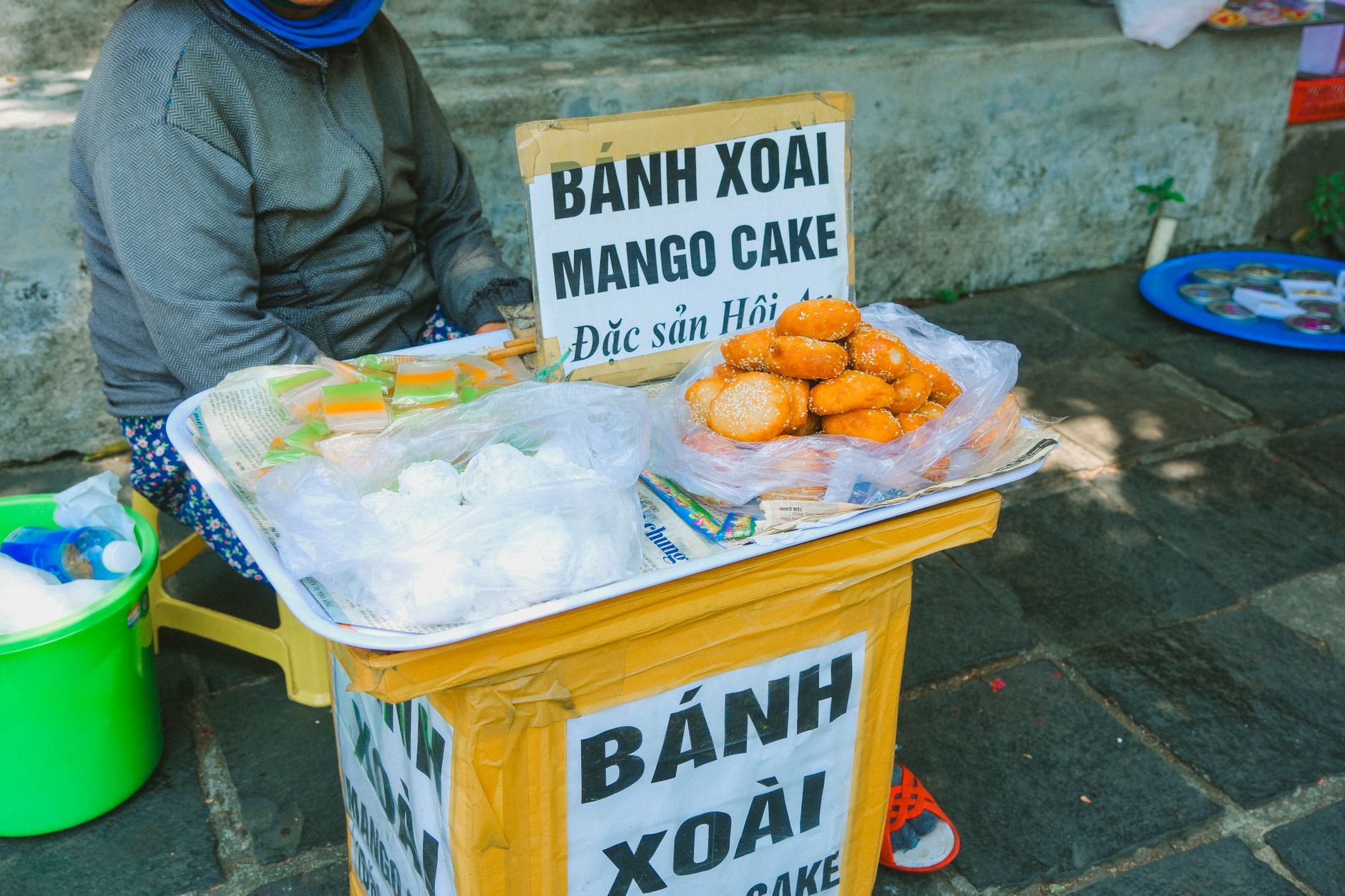
Photo by Trần Phan Phạm Lê on Pexels
Reading Hygiene Cues
You don't need a health inspector — just look for a few things.
Turnover is the most reliable signal. A stall with a line of locals at 7 AM and an empty pot by 8:30 AM is safe. A stall with the same pot of soup still half-full at 9:30 AM with one customer: think twice.
Dedicated serving utensils. The vendor should have separate tools for raw and cooked food. If the same tongs touch raw pork and then reach into the cooked bowl, that's a flag.
Clean bowls, not just wiped ones. Most market stalls rinse bowls in a basin of water. Watch how often the water is changed. A tub that looks like dishwater from six hours ago is a different situation from one that's clearly been refreshed.
The vendor's own cleanliness. Gloves aren't universal — that's fine. But watch whether the vendor handles cash and then immediately handles your food without rinsing. Many experienced market vendors rinse their hands constantly. Others don't. Factor it in.
What Locals Eat vs. What You Should Avoid That They Don't
Locals have gut flora adapted to Vietnamese food environments. If you've been in Vietnam less than two weeks, your digestive system is still adjusting. This means a stall that a Hanoi resident eats at daily without incident might still give a first-week visitor trouble — not because the food is bad, but because your gut hasn't caught up.
For your first market meal, lean toward the hot, broth-based dishes. After a week of eating Vietnamese street food without incident, expand your range.

Photo by Hồng Quang Official on Pexels
Prices and Practicalities
Market breakfasts run 20,000–50,000 VND (roughly 80 cents to $2 USD) for a full bowl of noodles. Bring small bills — 10,000 and 20,000 VND notes. Many stalls don't have change for 200,000 VND. Don't ask for a receipt; there isn't one.
If you're in Hanoi, Ben Thanh Market in Saigon's District 1, or any provincial market in the Mekong Delta (메콩 델타 / 湄公河三角洲 / メコンデルタ) town of Can Tho, the cooked-food sections are well-established and the morning turnover is high enough that early visits are reliably safe.
Practical Notes
Bring hand sanitizer and use it before eating — market seating rarely has a sink nearby. If you do get an upset stomach, oral rehydration salts are sold at every pharmacy for about 5,000 VND a packet. One bad meal doesn't mean markets are off the table; it means you went too late or picked the wrong stall.
Last updated · May 26, 2026 · independently researched, never sponsored.