What it is
The Fansipan cable car connects Sapa town to the summit ridge of Fansipan (3,143m), the highest peak in mainland Southeast Asia. Opened in February 2016 by Sun Group, the system runs 6,292 meters from the lower station in Muong Hoa Valley (altitude ~1,900m) to the upper station at roughly 3,000m. From there, a funicular and about 600 stone steps take you to the summit marker. The whole trip — base to peak — takes around 20 minutes if you don't stop, compared to the traditional two-day trek through the Hoang Lien Son range.
The cable car holds the Guinness record for the world's longest three-rope cable car and the greatest elevation difference in a single span. It's an engineering project dropped into a landscape of granite and cloud forest, and whether you think that's impressive or intrusive depends on your tolerance for infrastructure in mountain settings.
Why travelers go
The obvious draw: standing on the roof of Indochina without needing technical climbing skills or two days of hiking through leeches. On a clear morning, you can see layered mountain ridges fading into Yunnan province to the north and the terraced valleys of Sapa (사파 / 沙坝 / サパ) below.
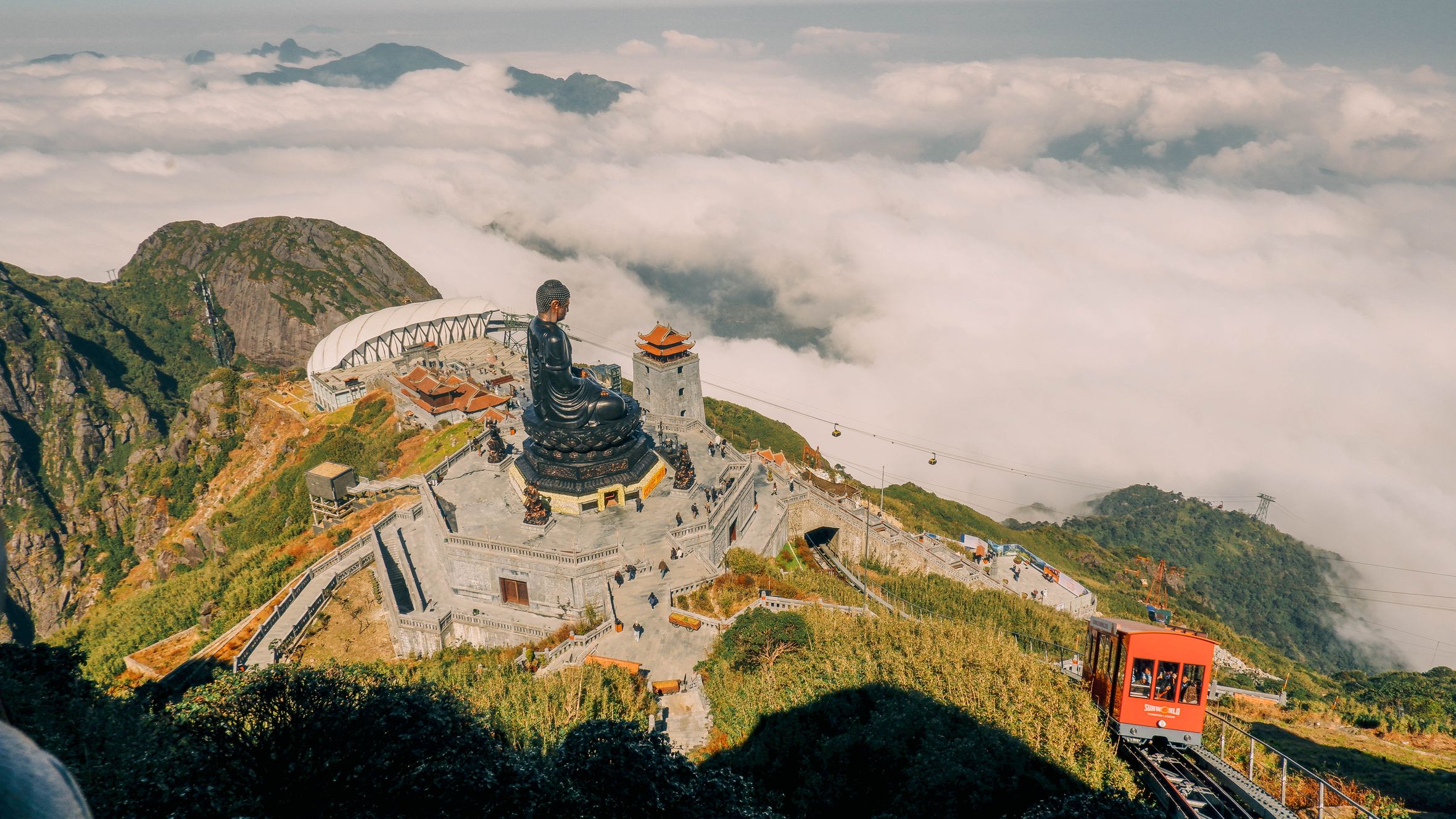
Beyond the summit selfie, the complex at the top includes a Buddhist temple complex (the Bich Van Thien Tu pagoda), a giant bronze Amitabha statue, manicured gardens, and — on the best days — a sea of clouds rolling below you. It's part pilgrimage site, part theme park, part genuine mountain experience.
For travelers short on time in Sapa, the cable car offers a half-day activity that pairs well with rice terrace visits or a market morning.
Best time to visit
The summit is clouded in more often than not. Your best odds for views:
- October to December — driest months, coldest temperatures (bring layers; summit can hit 0°C), clearest skies
- March to April — spring blooms on the mountain slopes, occasional clear mornings before afternoon clouds roll in
- Avoid June to August — heavy rain, near-zero visibility at the top, slippery steps
Time of day matters more than most guides admit. Arrive at the station by 7:00–7:30 AM. The clouds typically build after 10:00 AM, and by noon you're paying full price to stand in fog. Early birds also dodge the tour-group crush that peaks between 9:30 and 11:00.
How to get there
Getting to Sapa
Sapa sits about 380 km northwest of Hanoi. Options:
- Train + bus: Overnight sleeper train from Hanoi (하노이 / 河内 / ハノイ) to Lao Cai station (7–8 hours, from 500,000 VND for a soft berth), then a 45-minute bus or taxi up the mountain road to Sapa town.
- Direct bus: Several operators (Sapa Express, Ha Son Hai Phong) run sleeper buses from Hanoi's My Dinh station direct to Sapa, about 5.5–6 hours.
- Private car: Around 5 hours via the Noi Bai–Lao Cai expressway. Useful if you're combining with Ha Giang or want flexibility.
Getting to the cable car station
The lower station is at Sun Plaza in Sapa town center — walkable from most hotels. You literally step out of the town square and into the ticketing hall.

Photo by Quý Nguyễn on Pexels
What to do
The ride itself takes about 15 minutes. The cabins hold 30–35 people. You'll pass over deep valleys of bamboo and cloud forest, with Muong Hoa Valley opening up behind you.
At the top station, you transfer to the funicular (included in the ticket), which carries you further up the ridge. From the funicular's upper stop, it's roughly 600 steps to the summit. The steps are well-maintained granite — steep in places but manageable for anyone with reasonable fitness.
The summit has the iconic red triangulation marker (3,143m). Expect a queue for photos on busy days.
The temple complex sprawls across several levels below the summit. Bronze bells, incense, the large Amitabha statue — worth 20 minutes of wandering even if temples aren't your main interest.
The gardens between the funicular and summit feature azaleas and alpine plants, best in March–April bloom season.
Budget about 2.5–3 hours for the full round trip including time at the top.
Tickets and costs
As of 2024:
- Cable car + funicular combo: 800,000 VND for adults, 600,000 VND for children (1m–1.3m height)
- Cable car only (no funicular): 700,000 VND adult
- Children under 1m: free
Book online through Sun World's website or app for occasional 10–15% discounts. Buying at the counter is fine but means joining the ticket queue.
These prices don't include the 70,000 VND entrance fee to the Fansipan Legend complex if you want to explore the lower gardens and cultural village area.
Where to eat
The summit complex has a cafeteria-style restaurant (overpriced, underwhelming — 80,000–150,000 VND for basic Vietnamese dishes). Better to eat before or after.
Back in Sapa town:
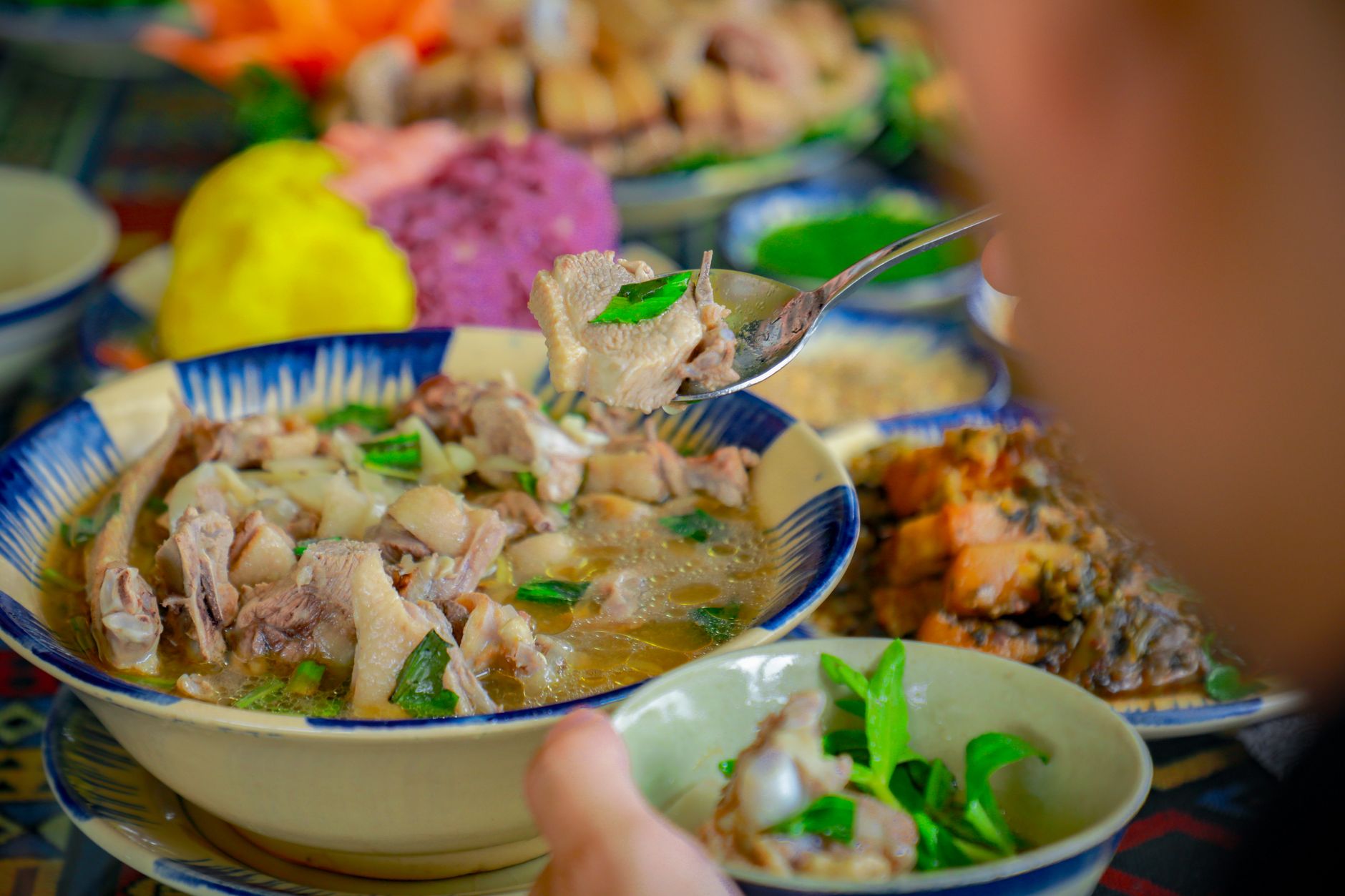
- A Quynh (Cau May street) — solid bowls of "pho" and local "thang co" (horse meat stew, a Hmong specialty)
- Barbecue stalls along Cau May — grilled meats on sticks, 15,000–30,000 VND each
- Good Morning Vietnam — decent pizza if you need a break from rice
- For egg coffee with a mountain view, try the cafes lining the valley-facing side of Sapa Lake

Photo by Kirandeep Singh Walia on Pexels
Where to stay
Sapa has accommodation at every budget level:
- Budget: Sapa Capsule Hotel, hostels around Cau May street — 150,000–300,000 VND/night
- Mid-range: Sapa Charm Hotel, Sapa Highland Resort — 800,000–1,500,000 VND
- Splurge: Hotel de la Coupole (MGallery) — French-colonial fantasy at 3,000,000+ VND, directly connected to the cable car station via an indoor walkway
Staying near Sun Plaza means you can walk to the cable car in two minutes — useful for that early-morning start.
Practical tips
- Dress in layers. Sapa town might be 18°C while the summit is 5°C with wind chill. Bring a proper jacket, not just a hoodie.
- Wear shoes with grip. The summit steps get slippery in mist. Sandals are a bad idea.
- Bring cash. Card payment exists at the ticket office but not at food stalls or smaller vendors.
- The cable car closes in high winds. This happens occasionally in storm season (July–September). No refunds if weather shuts it mid-day, so go early.
- Weekend vs. weekday: Vietnamese domestic tourists flood the cable car on weekends and public holidays (especially around Tet). Weekday mornings are noticeably calmer.
Common mistakes
- Going at midday — you'll see nothing but cloud and wait 30+ minutes in the queue
- Skipping the funicular to save 100,000 VND — the walk up from the cable car station without it is an extra 2,000+ steps and adds an hour
- Not checking weather — a 30-second look at the Sapa webcam or Windy.com saves you a wasted morning
- Treating it as the only Sapa activity — the cable car is a half-day; pair it with a trek to Cat Cat village or a motorbike ride toward Muong Hoa Valley for rice terrace views
Final note
The Fansipan cable car isn't wilderness — it's a commercial attraction on a sacred mountain. If you want the raw trekking experience, the two-day guided hike still exists and is worth doing separately. But for a clear-morning ride above the clouds to a 3,143-meter summit before breakfast, nothing else in Vietnam competes.
Last updated · May 26, 2026 · independently researched, never sponsored.