Hai Phong does not shut down at dinner. Once the sun drops and the humidity loosens its grip slightly, a parallel food city opens up — grill smoke rising off sidewalks, carts of "che" rolling out, and snail restaurants filling every plastic stool within three blocks of the waterfront. This is where to eat if you want the city on its own terms.
The Grilling Streets After 9 PM
The stretch of Tran Phu running toward the Tam Bac lake area is ground zero for late-night grilling. From around 9 PM onward, vendors set up charcoal braziers directly on the pavement and start pushing "banh mi nuong" — thick bread slabs pressed flat and grilled with pate, scallion oil, and dried shrimp. You will pay 15,000–20,000 VND per piece. It is not the same animal as a standard banh mi and it is better at this hour.
Nearby on Dinh Tien Hoang, a cluster of "nem nuong" stalls operates until well past midnight. Nem nuong here means grilled pork sausage rolled in rice paper with fresh herbs and a thick dipping sauce — 35,000–50,000 VND for a generous plate. The stalls are not marked in English. Look for the smoke and follow the locals carrying trays.
For full grilled-meat spreads — the kind where you order ribs, chicken wings, and corn all at once and they bring it in waves — Lach Tray street has a row of open-front restaurants that run on an informal bring-your-own-beer system. Bring Larue or Hanoi beer from the convenience store two doors down. No one will mind.
Snail Joints: The Real Hai Phong Institution
"Oc" culture in Hai Phong runs serious. The city has access to coastal shellfish that Hanoi (하노이 / 河内 / ハノイ) cannot easily match, and the late-night snail joints reflect that. Around the Ngo Quyen district, specifically along Phan Boi Chau and the side streets feeding off it, you will find restaurants where the entire menu is shellfish cooked eight different ways.
Ordering works like this: choose your shellfish (blood cockles, razor clams, periwinkles, or mantis shrimp if they have it), then choose your preparation — steamed with lemongrass, stir-fried with chili and salt, or cooked with tamarind and butter. A full spread for two people with drinks will run 150,000–250,000 VND. "Oc huong" (tiger snails) are the premium option and worth the extra cost — around 80,000–100,000 VND per portion depending on the night's supply.
These joints get genuinely packed after 9:30 PM on weekends. Arrive before 9 or be prepared to wait on the sidewalk.

Photo by Quang Nguyen Vinh on Pexels
Dessert Carts and "Che" Stops
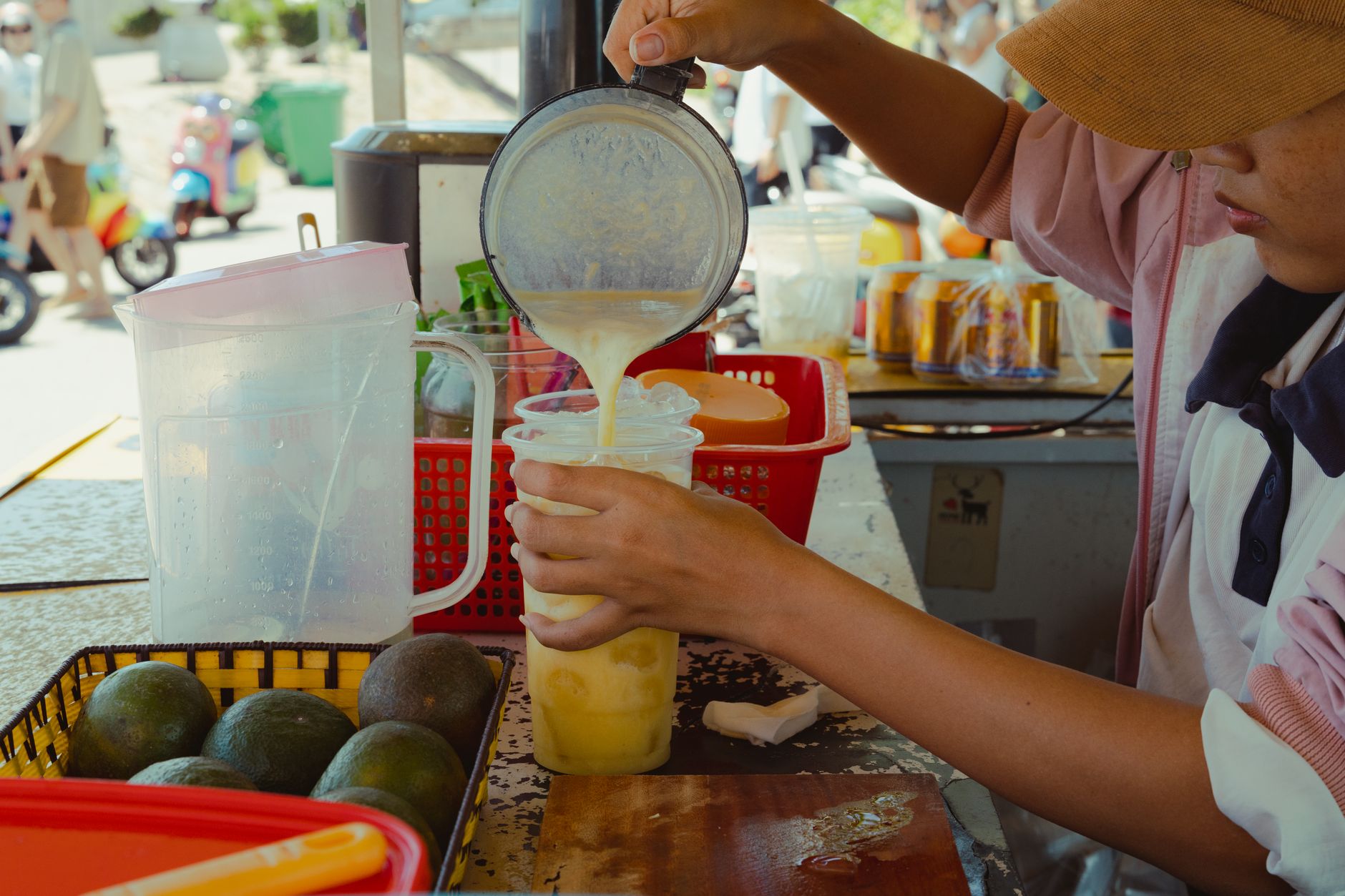
Hai Phong's "che" scene is underrated even by northern Vietnamese standards. The most consistent dessert cart clusters appear around Ben Bach Dang — the riverside promenade — after 8 PM. Cart vendors here sell "che ba mau" (three-color dessert with mung bean, jelly, and coconut milk over shaved ice) and "che hat sen" (lotus seed sweet soup), both priced at 15,000–25,000 VND.
For something more substantial, the "banh duc" stalls near Cho Sat market operate into the late evening. "Banh duc" is a savory rice cake served cold with a topping of fried shallots, pork floss, and nuoc cham. It reads like a late-night snack that someone invented specifically to be eaten at 11 PM, which is essentially the context.
If you want hot dessert, look for "tao pho" — silken tofu in ginger syrup — sold from buckets by walking vendors around the Tam Bac area. They ring small bells. You will hear them before you see them.
Where Locals Go vs. the Tourist Circuit
The honest answer is that Hai Phong does not have much of a tourist food circuit yet, which is mostly a good thing. The night market stalls near the old French Quarter on Hoang Van Thu are the most visible to visitors staying in that area, but they skew toward grilled corn and packaged snacks. Functional, not particularly interesting.
The snail joints on Phan Boi Chau, the nem nuong stalls on Dinh Tien Hoang, and the che carts along Ben Bach Dang are what locals actually eat. None of them require a guide or a booking. You walk up, you point, you sit down.
One practical note: Google Maps coverage of street food in Hai Phong is patchy. The stalls that matter most do not have listings. Navigate by neighborhood rather than by pin.

Photo by Nguyễn Thị Thảo Hà (Ha Nguyen) on Pexels
Safety and Prices at Night
Hai Phong's nighttime street food areas are calm by Vietnamese city standards. The main thing to watch is motorbike traffic — some of the narrower grilling streets double as through-routes, and bikes move fast through the smoke. Eat on the sidewalk side of whatever table you sit at.
Prices are honest. This is not Hanoi's Old Quarter. There is no foreigner markup operating here in any systematic way. If you are charged 30,000 VND for a bowl of oc luoc (boiled snails) that a local paid 25,000 for, that is the full extent of any differential you will encounter. Prices across snail joints and street stalls run low enough that negotiating is unnecessary and slightly awkward.
Cash only at virtually every street stall. ATMs are easy to find near Cho Sat and along Tran Phu. Carry small bills — 10,000 and 20,000 VND notes — because carts rarely have change for 200,000 VND.
Practical Notes
Most of the late-night action in Hai Phong runs from 8 PM to midnight on weekdays and until 1 AM on weekends. The Ben Bach Dang riverside area is safe and pleasant for a post-dinner walk between dessert stops. Hai Phong is a straightforward day trip or overnight from Hanoi — about 100 km and two hours by road — but the night food scene makes the case for staying over rather than rushing back.
Last updated · May 26, 2026 · independently researched, never sponsored.