What is Hon Da Bac?
Hon Da Bac is a cluster of large granite boulders sitting just offshore in Tran Van Thoi district, Ca Mau province — about 50 km southwest of Ca Mau city. In a region defined by flat mangrove swamps and muddy rivers, a pile of rock sticking out of the sea is genuinely unusual. The name translates roughly to "Silver Rock Island," though calling it an island is generous. It's more of a rocky outcrop with a small surrounding platform that's been built up for visitors.
During wartime, Hon Da Bac served as a secret communication station for revolutionary forces operating in the Mekong Delta (메콩 델타 / 湄公河三角洲 / メコンデルタ). A radio post was hidden among the rocks, relaying messages between the southern resistance and command further north. Today there's a small monument and exhibition space marking that history. Whether or not wartime sites interest you, the location itself — where the mangrove coast meets open water at the bottom tip of Vietnam — gives it a geographic weight that's hard to replicate elsewhere.
Why travelers go
Most people visiting Hon Da Bac are already in Ca Mau, usually on a trip to Dat Mui (Cape Ca Mau), the southernmost point of mainland Vietnam (베트남 / 越南 / ベトナム). Hon Da Bac works as a half-day addition to that itinerary rather than a standalone destination. The draw is threefold: the novelty of rock formations in an otherwise pancake-flat delta, the wartime history, and the boat ride through mangrove channels to reach it. If you've spent days in the Mekong Delta surrounded by rice paddies and river towns like Can Tho, the coastal mangrove landscape here feels like a different country.
Best time to visit
The dry season from December through April is the most comfortable window. Ca Mau gets serious rain from May to November — not light showers, but sustained downpours that turn dirt roads to mud and make boat trips less pleasant. January to March tends to be the driest stretch, with lower humidity and calmer seas. That said, Ca Mau is not a major tourist draw, so even during peak dry season you won't find crowds. If you visit in the shoulder months (November or May), you'll likely have the place nearly to yourself, but pack rain gear and confirm boat schedules — operators sometimes cancel during heavy weather.
How to get there
From Saigon, the most practical route is a bus to Ca Mau city (around 350 km, 7-8 hours, 180,000-250,000 VND depending on the operator). Phuong Trang (Futa) runs frequent sleeper buses from the Western Bus Station (Ben Xe Mien Tay). From Ca Mau city, you'll need to get to Tran Van Thoi district, specifically the Khanh Binh Tay commune area. Local buses run from Ca Mau's bus station to Tran Van Thoi town (about 40 km, roughly 30,000 VND), but the final stretch to the boat launch requires a motorbike taxi or private car — around 15 km more.
From the boat launch, it's a 15-20 minute ride through mangrove-lined waterways to reach Hon Da Bac. Boat hire typically costs 200,000-400,000 VND for a small group, though prices fluctuate. If you're coming from Can Tho, add another 3-4 hours of travel time. Renting a motorbike in Ca Mau city and riding out yourself is the most flexible option — the road is flat and straightforward.

Photo by Flint Huynh on Pexels
What to do
Walk the rock formation and monument area
The main site is compact — you can see the rocks, the monument, and the small exhibition about the wartime radio station in under an hour. The granite boulders are genuinely impressive in scale, especially given that everything else around you is mud and mangrove. There's a viewing platform built onto the rocks where you can look out over the coast.
Take the mangrove boat ride seriously
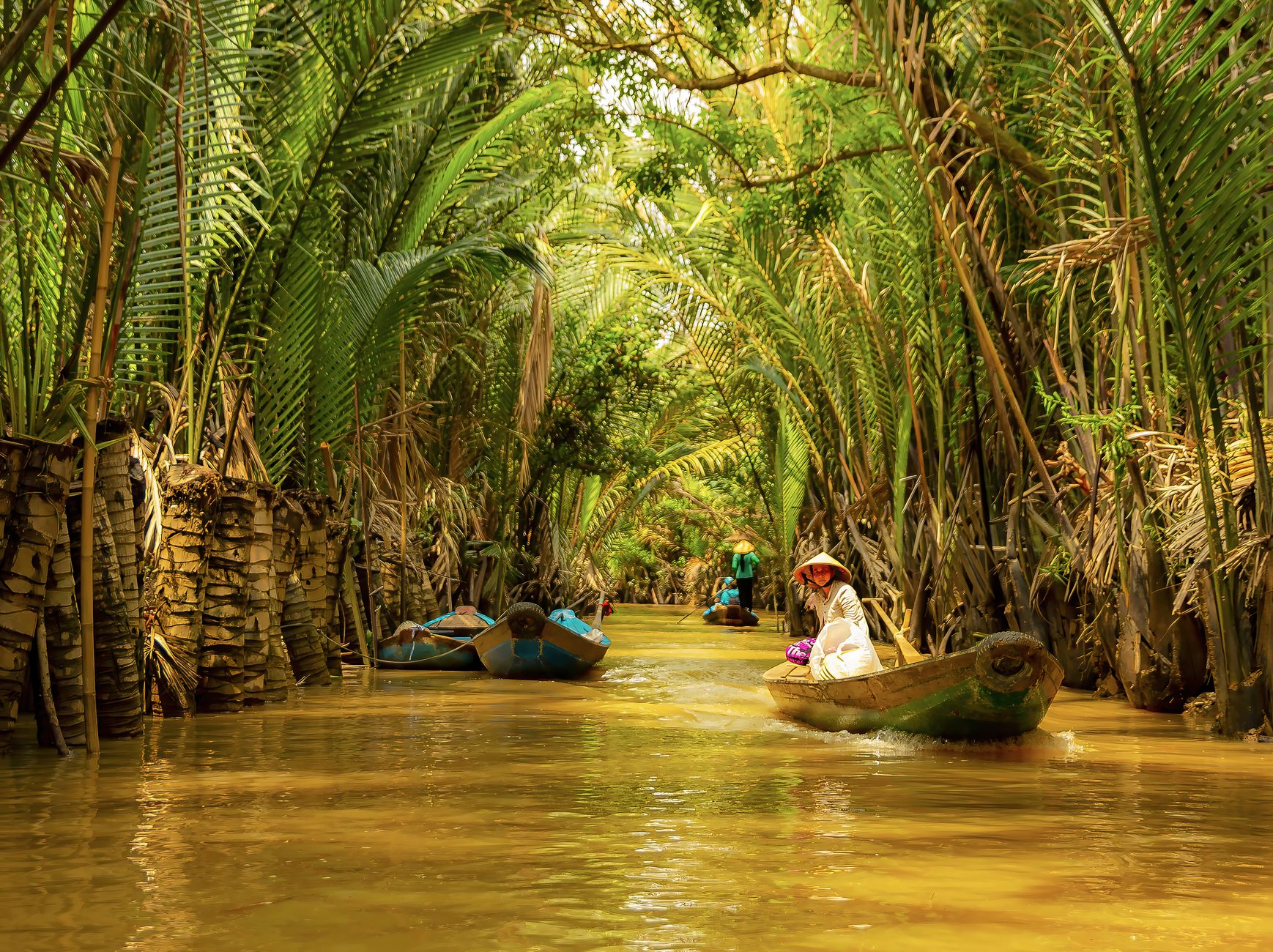
Don't treat the boat as just transport. The mangrove channels between the mainland and Hon Da Bac are dense "rung ngap man" (mangrove forest) ecosystems. Ask your boat driver to go slow through the narrower channels. You'll see mudskippers, fiddler crabs, and if you're lucky, the occasional monkey. This is part of the Ca Mau Biosphere Reserve, and the biodiversity is real.
Visit Dat Mui (Cape Ca Mau)
If you've come this far south, combine Hon Da Bac with a trip to Dat Mui, roughly 30 km further along the coast. The GPS marker at Vietnam's southernmost point is the main photo op, but the surrounding mangrove national park has elevated walkways through the forest canopy that are worth an hour or two. Most travelers do both in a single long day from Ca Mau city.
Watch the sunset from the coast
Ca Mau's western coast faces the Gulf of Thailand, which means proper ocean sunsets — rare in Vietnam, where most of the coastline faces east. The flat horizon and wide sky make for good light in the late afternoon, especially in dry season.
Where to eat nearby
Ca Mau province is known for mud crabs — "cua Ca Mau" has a reputation across the Mekong Delta. Look for "lau cua" (crab hotpot) or "cua rang me" (tamarind crab) at local restaurants in Tran Van Thoi or back in Ca Mau city. Expect to pay 150,000-300,000 VND per person for a solid crab meal depending on the season and crab size. The other local specialty worth trying is "bun nuoc leo," a shrimp-paste-based noodle soup that's a Mekong Delta staple — richer and funkier than "pho," and something you won't easily find up north. A bowl runs about 25,000-35,000 VND at market stalls.
Where to stay
There's no accommodation at Hon Da Bac itself. Base yourself in Ca Mau city, where budget hotels and guesthouses line the streets around the central market area. Simple but clean rooms with air conditioning go for 200,000-350,000 VND per night. Mid-range options like Muong Thanh or Anh Nguyet hotel run 500,000-800,000 VND. Don't expect international-standard hotels — Ca Mau is a provincial capital, not a tourist hub.

Photo by Cầu Đường Việt Nam on Pexels
Practical tips locals would tell you
- Bring cash. Card payment barely exists outside Ca Mau city. ATMs are available in town but not in Tran Van Thoi or at the boat launch.
- Sunscreen and a hat are non-negotiable. There's zero shade on the boat and minimal shade at Hon Da Bac. The southern sun at this latitude is aggressive even on overcast days.
- Negotiate boat prices before departure. Agree on a round-trip fare, waiting time, and whether the mangrove detour is included. Get the number written down if your Vietnamese is limited.
- Mosquito repellent. The mangroves are beautiful but the insects are persistent, especially in the late afternoon.
Common mistakes to avoid
Don't come expecting a beach island — Hon Da Bac is rocks and mangroves, not sand and swimming. Travelers who arrive thinking "island" in the tropical sense leave disappointed. Also, don't try to do Hon Da Bac as a day trip from Saigon — it's technically possible but miserable. Budget at least two nights in Ca Mau to see both Hon Da Bac and Dat Mui without rushing. Finally, don't skip the boat ride's mangrove section to save time. The rocks themselves take 30 minutes; the journey through the waterways is where the real experience sits.
Practical notes
Hon Da Bac works best as part of a broader Ca Mau or Mekong Delta itinerary, not as a standalone destination. Pair it with a couple of days exploring Can Tho's floating markets and the slower pace of the deep south. If you're doing a full north-to-south trip, Ca Mau province is the satisfying geographic full stop at the bottom of the map.
Last updated · May 29, 2026 · independently researched, never sponsored.