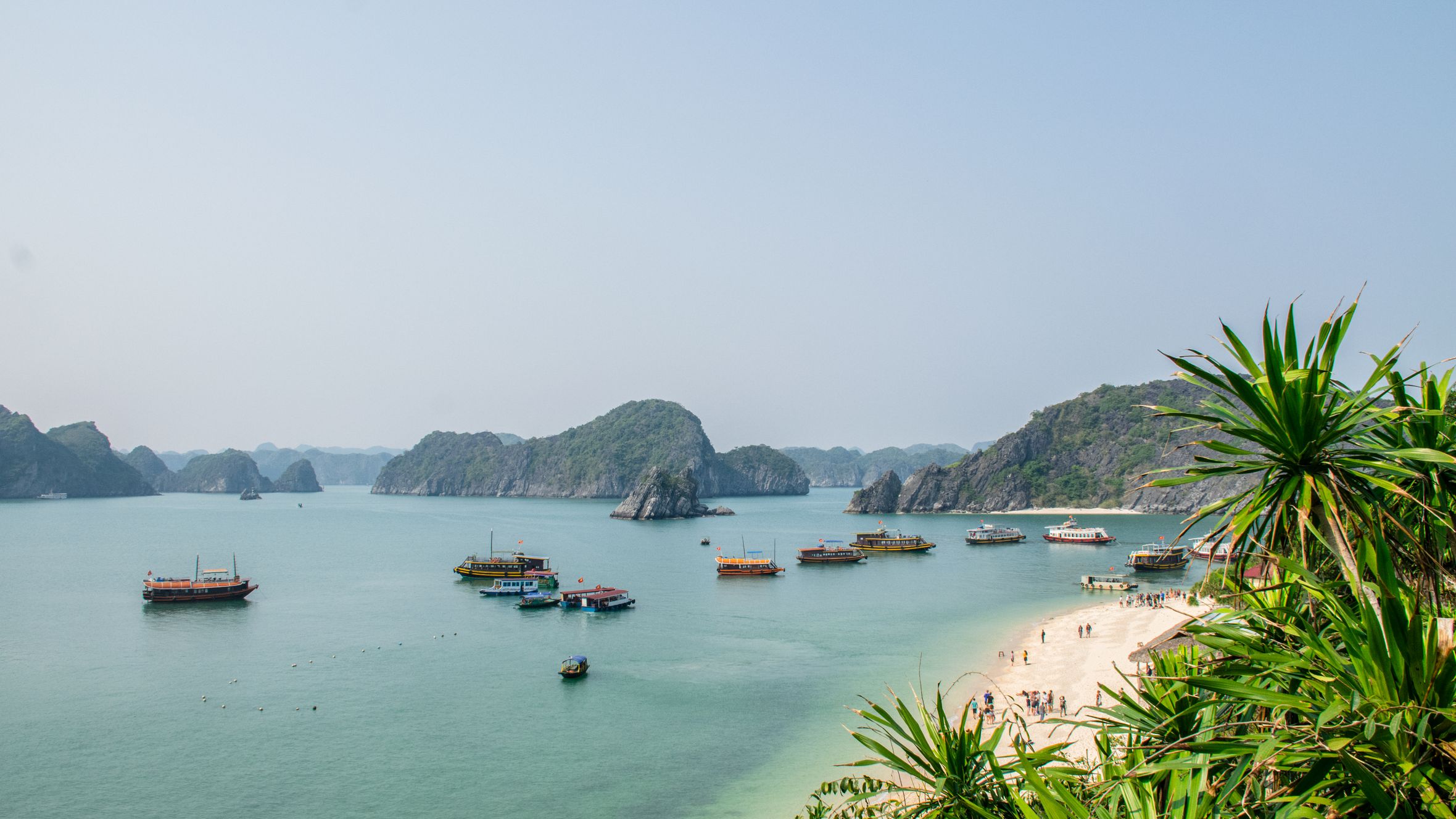
Hon Khoai sits about 15 km off the coast of Ngoc Hien district, Ca Mau province — roughly as far south as you can go in Vietnam (베트남 / 越南 / ベトナム) before you're in open sea. It's not a beach-holiday island. There are no resorts, no cocktail bars, no banana boats. What it offers is a granite island covered in primary forest, a 19th-century lighthouse with wide views, and the particular satisfaction of reaching a place most travelers never bother with.
What Hon Khoai actually is
Hon Khoai is the largest island in a small archipelago of five islands (Hon Khoai, Hon Sao, Hon Da Le, Hon Doi Moi, Hon Tuong) clustered off Ca Mau's southern coast. The main island covers roughly 4 square kilometers and peaks at about 318 meters — modest, but steep enough to make you sweat on the trail up.
The French built a lighthouse on the summit in 1904, and it still operates. The forest is dense tropical cover with old-growth trees, and the coastline alternates between rocky outcrops and small sandy coves. The surrounding waters are part of a marine area with reasonable coral coverage and visibility, though don't expect Phu Quoc-level diving infrastructure.
Few domestic tourists make it here, and foreign visitors are genuinely rare. That isolation is the whole point.
Why travelers go
Honesty first: Hon Khoai is not for everyone. There's limited infrastructure, no nightlife, and getting there takes effort. People come here for three reasons:
- The lighthouse hike — a proper jungle trek up to 318 meters with the reward of a French-colonial lighthouse and panoramic views of the archipelago and open sea.
- The isolation — if you've been grinding through Saigon traffic or the tourist circuit of Hoi An and Phu Quoc (푸꾸옥 / 富国岛 / フーコック), this is the antidote.
- Completing the map — Hon Khoai sits near Mui Ca Mau, the southernmost tip of the Vietnamese mainland. Some travelers pair the two as a geographic pilgrimage.
Best time to visit
The dry season runs from November through April, and that's when you want to go. Seas are calmer, rain is infrequent, and the trail to the lighthouse is less of a mud bath.
Avoid June through September entirely. The southwest monsoon makes the sea crossing genuinely rough — boats may not run at all, and even if they do, you'll regret it. October is transitional; check conditions locally before booking.
January to March is the sweet spot: low humidity by southern Vietnam standards, minimal rain, manageable seas.
How to get there
Hon Khoai is accessed from Rach Goc town in Ngoc Hien district, Ca Mau province.
Getting to Ca Mau city
From Saigon, you have two options:
- Bus: Multiple operators run daily from Mien Tay Bus Station to Ca Mau city. The ride takes about 8-9 hours and costs 200,000-280,000 VND depending on the bus company. Night buses are available.
- Flight: There's a small airport in Ca Mau (Ca Mau Airport) with limited domestic connections, mostly from Saigon. Flights take under an hour but schedules are thin — check availability well ahead.
Ca Mau city to Rach Goc
From Ca Mau, take a local bus or hire a car south to Rach Goc. It's about 90 km and takes roughly 2.5 hours on provincial roads. Expect to pay around 150,000-200,000 VND for a bus, or negotiate a private car for 500,000-700,000 VND.
Rach Goc to Hon Khoai
The boat crossing from Rach Goc takes approximately 1.5-2 hours depending on sea conditions. There is no regular public ferry — you'll need to arrange a boat through a local tour operator or the border guard station (Hon Khoai is a border island, so you may need a permit; more on that below). Boat charter costs vary, but expect 2,000,000-4,000,000 VND for a round trip for a small group.
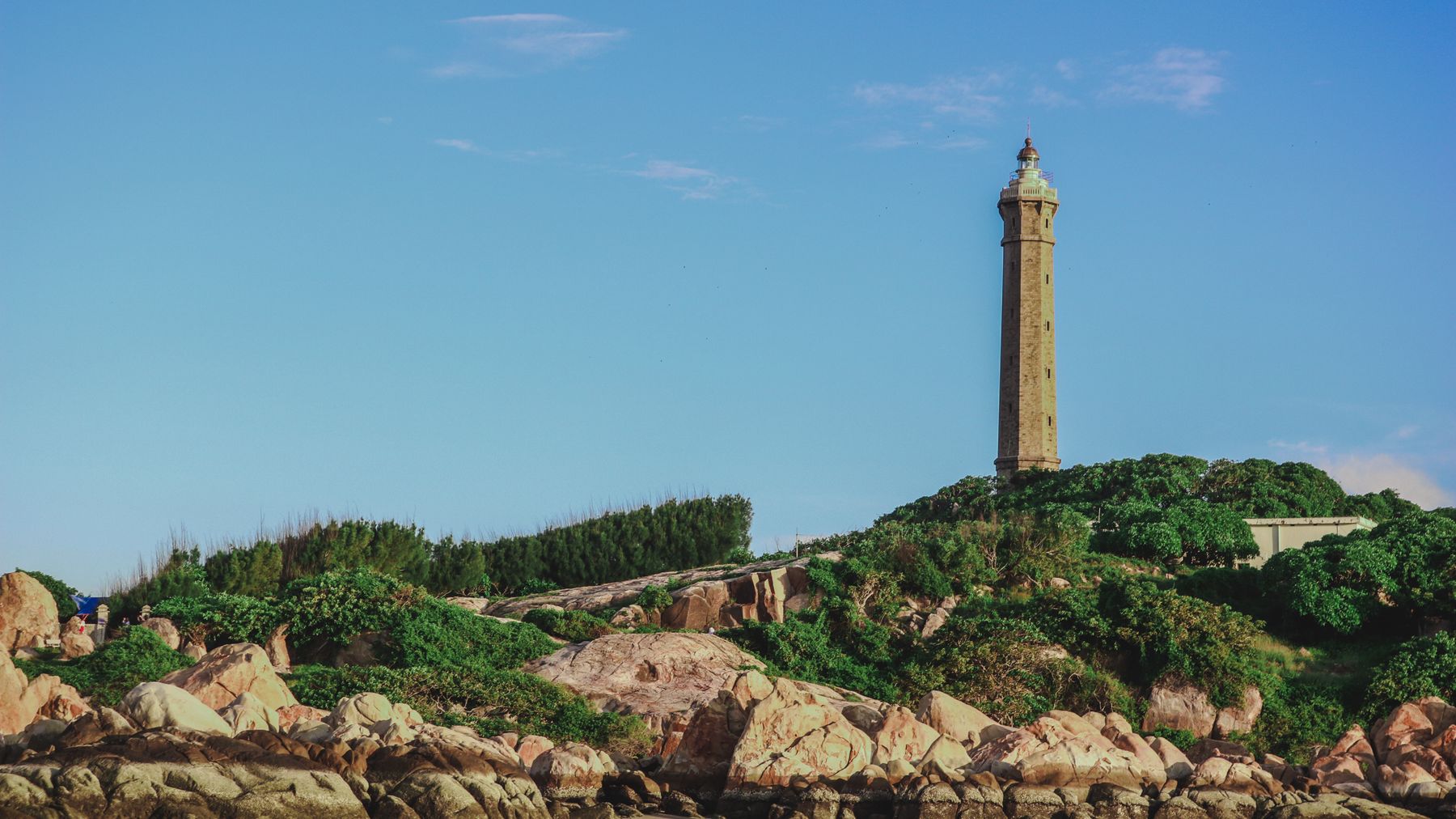
Photo by Loifotos on Pexels
What to do on Hon Khoai
Hike to the lighthouse
The main event. The trail from the coast up to the French-built lighthouse at the island's peak takes about 1.5-2 hours through thick jungle. It's not technically difficult but it's steep in sections and can be slippery. Wear proper shoes — not sandals. The lighthouse itself is a solid stone structure, and on a clear day you can see across to the mainland and out to the smaller islands in the archipelago.
Swim at the coves
Several small beaches ring the island, reachable on foot or by boat. The water is clearer than anything you'll find on the Ca Mau mainland coast. Don't expect white sand — this is rocky, wild coastline with pockets of sand between granite.
Snorkel the reef edges
Bring your own gear. There's modest coral around the island's southern and eastern edges. Visibility varies with season and weather, but during dry-season calm spells you can get 5-8 meters.
Watch the forest wildlife
The island's forest is home to long-tailed macaques, monitor lizards, and a decent variety of birds. Early mornings on the trail are the best time.
Visit Mui Ca Mau on the way
If you're already in Ngoc Hien district, pair Hon Khoai with a trip to Mui Ca Mau — the actual southernmost point of mainland Vietnam, marked by a GPS coordinate monument in Ca Mau Cape National Park. It's a mangrove landscape, very different from the island.
Where to eat nearby
Hon Khoai itself has no restaurants. Bring food and water for the island visit.
Back in Rach Goc or Ca Mau city, eat what the Mekong Delta does best. Look for "hu tieu" — the southern-style rice noodle soup that's lighter and sweeter than its northern cousins. Ca Mau is also known for crab — mud crabs from the mangrove forests are served grilled, steamed, or in a tamarind sauce at local seafood restaurants. A solid crab meal in Ca Mau city runs 150,000-300,000 VND per person. "Banh canh" with crab is another local favorite worth tracking down.
Where to stay
You won't be sleeping on Hon Khoai unless you arrange a camping setup (which some tour operators can do). Plan to stay in:
- Ca Mau city: Budget guesthouses from 200,000-350,000 VND/night. Mid-range hotels around 500,000-800,000 VND. Nothing fancy, but functional.
- Rach Goc: Very limited accommodation — basic guesthouses only, around 150,000-250,000 VND. Book ahead or confirm availability before showing up.

Photo by Alberto Capparelli on Pexels
Practical tips locals would tell you
- You need a permit. Hon Khoai is classified as a border island. Contact the Ngoc Hien district border guard station in advance to arrange permission. A local tour operator in Ca Mau can handle this for you — it's significantly easier than doing it yourself.
- Bring everything you need to the island. Water, food, sunscreen, insect repellent, rain cover. There are no shops.
- Start the hike early. Afternoon heat and humidity in the jungle are brutal. Aim to be on the trail by 7 AM.
- Cash only. There are no ATMs on the island and limited options even in Rach Goc. Withdraw what you need in Ca Mau city.
Common mistakes to avoid
- Going in monsoon season. The crossing gets cancelled, and even if you make it, the island experience is significantly worse in heavy rain.
- Underestimating the logistics. This isn't a show-up-and-hop-on-a-ferry situation. Plan the boat and permit at least a few days ahead.
- Wearing sandals on the hike. The trail to the lighthouse is jungle terrain with exposed roots and loose rock. Closed-toe shoes with grip are non-negotiable.
- Expecting a beach resort vibe. Hon Khoai is raw and undeveloped. That's the draw, but come prepared for it rather than disappointed by it.
Practical notes
Hon Khoai rewards the effort it takes to reach. Budget two full days minimum — one for the journey from Ca Mau city to Rach Goc and the crossing, one for the island itself. Combine it with Mui Ca Mau and the mangrove forests of Ca Mau Cape National Park for a proper deep-south Vietnam trip that almost no one else is doing.
Last updated · May 29, 2026 · independently researched, never sponsored.