The Name That Appears Everywhere
If you're planning a trip to Vietnam (베트남 / 越南 / ベトナム) and see "Hoi An" mentioned multiple times in different contexts, you're not imagining it. The name refers to at least four distinct places across the country, which can trip up travelers and researchers alike. Most people mean the famous Old Town, but the others exist too—and they're nothing like what tourists expect.
This confusion gets worse when you're searching for accommodation or reading Vietnamese news articles that reference administrative changes. A hotel listing in "Hoi An (호이안 / 会安 / ホイアン)" could technically sit in Da Nang's jurisdiction. A government document about "Hoi An" might refer to an agricultural commune 800 km south. Knowing which is which saves you from booking errors and general bewilderment.
Hoi An Old Town — The UNESCO World Heritage Site
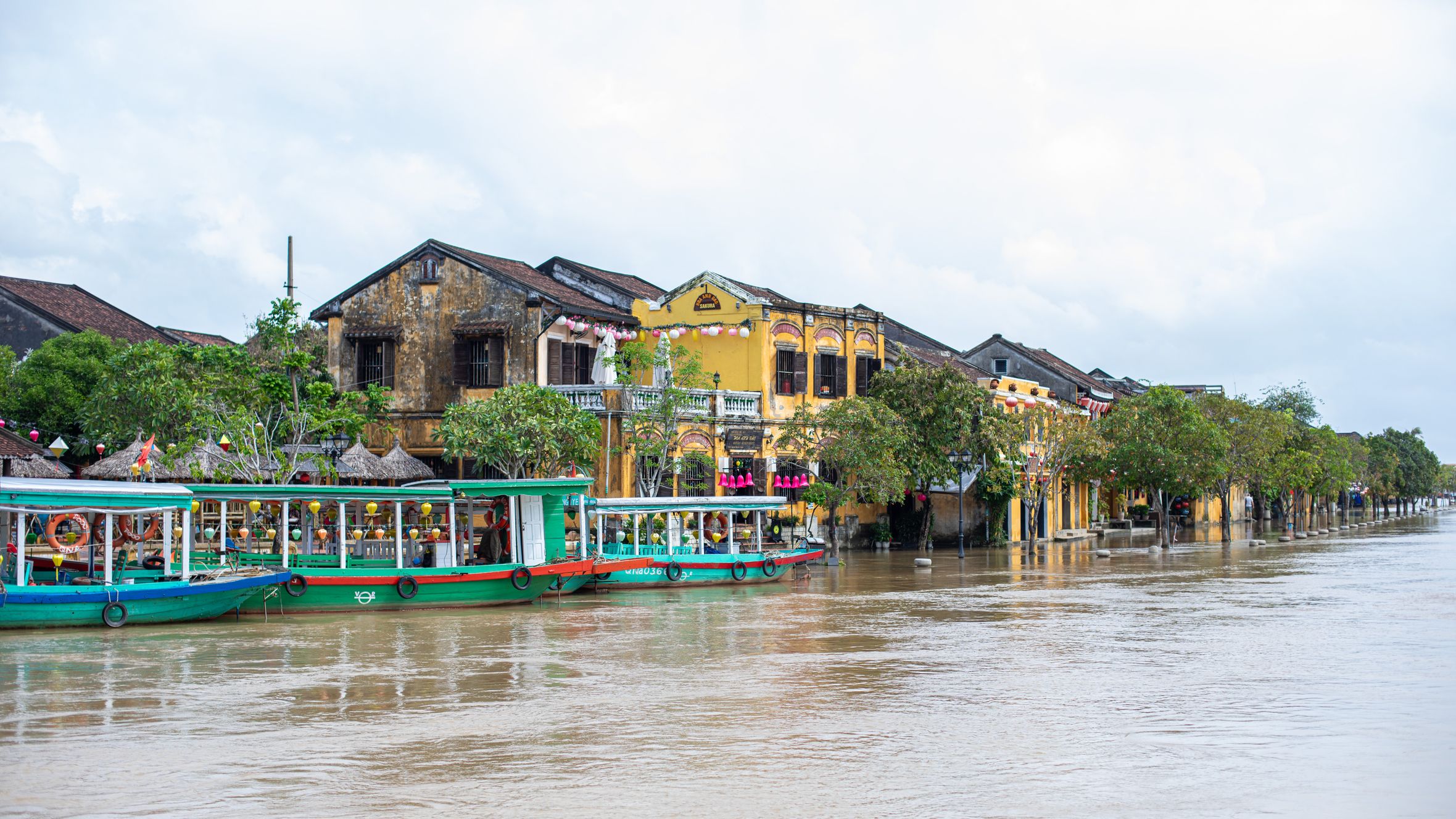
This is the Hoi An you've heard about. The Old Town is a preserved port city that flourished from the 15th to 19th centuries, when it was a major Southeast Asian trading hub. Its architecture blends Vietnamese, Chinese, and Japanese influences in a way that feels authentic rather than reconstructed.
Walk the narrow streets in the evening (motorbikes are restricted then) and you'll see why UNESCO granted it World Heritage status in 1999. Lanterns hang above shopfronts. Wooden shutters frame doorways. The Japanese Covered Bridge, built in the 1590s, stands as the most recognizable symbol. The Thu Bon River runs alongside, and the town sits a short distance inland from the coast.
This is the Hoi An that matters for tourism. It's in Quang Nam province, though it sits between Da Nang and the coast.
The Old Town entry ticket costs 120,000 VND (about $5 USD) and grants access to five heritage sites of your choice from a list of around twenty. These include assembly halls built by Chinese merchant communities (Fujian, Cantonese, Hainan), the Museum of Trade Ceramics, and several ancestral houses. The ticket is valid for 24 hours. You buy it at booths on Tran Phu or Nguyen Hue streets, or at the main checkpoint near the Japanese Covered Bridge.
The Old Town core is roughly 1 km long and 500 m deep—small enough to walk end to end in fifteen minutes, though you'll want hours to actually absorb it. Most heritage buildings line Tran Phu, Nguyen Thai Hoc, and Bach Dang streets. An Hoi Island, across the bridge on the south side, has a quieter feel with fewer tour groups and slightly cheaper food.

Image by Christopher Crouzet via Wikimedia Commons (CC BY-SA)
Hoi An Ward, Inside Da Nang City
Da Nang absorbed the Old Town's former administrative territory and created a modern ward called Hoi An. It's an urban administrative division—not a travel destination on its own. The historic Old Town area is technically within this ward's boundaries now, but when locals or officials say "Hoi An ward," they usually mean the broader Da Nang district, not the heritage site specifically.
For travelers, the practical implication is this: if you see a hotel advertised as being in "Hoi An" but its map pin lands squarely in Da Nang's urban sprawl, you might be 25-30 km from the Old Town. Always check the actual address and distance to Tran Phu Street before booking.
Hoi An Commune, An Giang Province
Deep in the Mekong Delta, in the southern province of An Giang, there's a rural commune also named Hoi An. It's in what used to be Cho Moi district. There's no connection to the famous Old Town—same name, completely different place, entirely different scale and character. It's agricultural land, not a tourist draw.
An Giang province itself is interesting for travelers headed to Sam Mountain or the Khmer communities near the Cambodian border, but Hoi An commune specifically offers nothing for visitors. If your GPS or booking app ever routes you here, something has gone very wrong.

Image by Steffen Schmitz (more photos) via Wikimedia Commons (CC BY-SA)
Hoi An City (Dissolving in 2025)
Historically, there was a provincial municipality called Hoi An City within Quang Nam. It was bigger than the Old Town alone and served as the administrative hub for the region. Vietnam has been reorganizing its administrative divisions in recent years, and Hoi An City is scheduled to be dissolved in 2025. This doesn't affect the Old Town itself—the heritage site will remain—but it signals a shift in how the region is governed.
What this means practically: future maps, postal codes, and official addresses may change. Hotels might update their listed city from "Hoi An City" to whatever new district or merged entity replaces it. The UNESCO site stays put regardless.
How to Know Which Hoi An You're Looking At
Context is everything. If someone is talking about tourism, temples, lanterns, or history, they mean the Old Town. If an article mentions Da Nang, look for "ward" or "district." If it says An Giang or Cho Moi, you're in the Delta. And any reference to administrative changes typically refers to the former provincial municipality.
When booking hotels, researching restaurants, or reading travel guides, you'll almost always be reading about the Old Town. That's the Hoi An that deserves your time.
The other three are real places, but they exist for bureaucratic or geographical reasons, not because they have anything tourists want to see. The name is shared; the experiences are worlds apart.
What to Eat in Hoi An Old Town
Hoi An has its own regional dishes that you won't find done properly elsewhere in Vietnam. Three are essential.
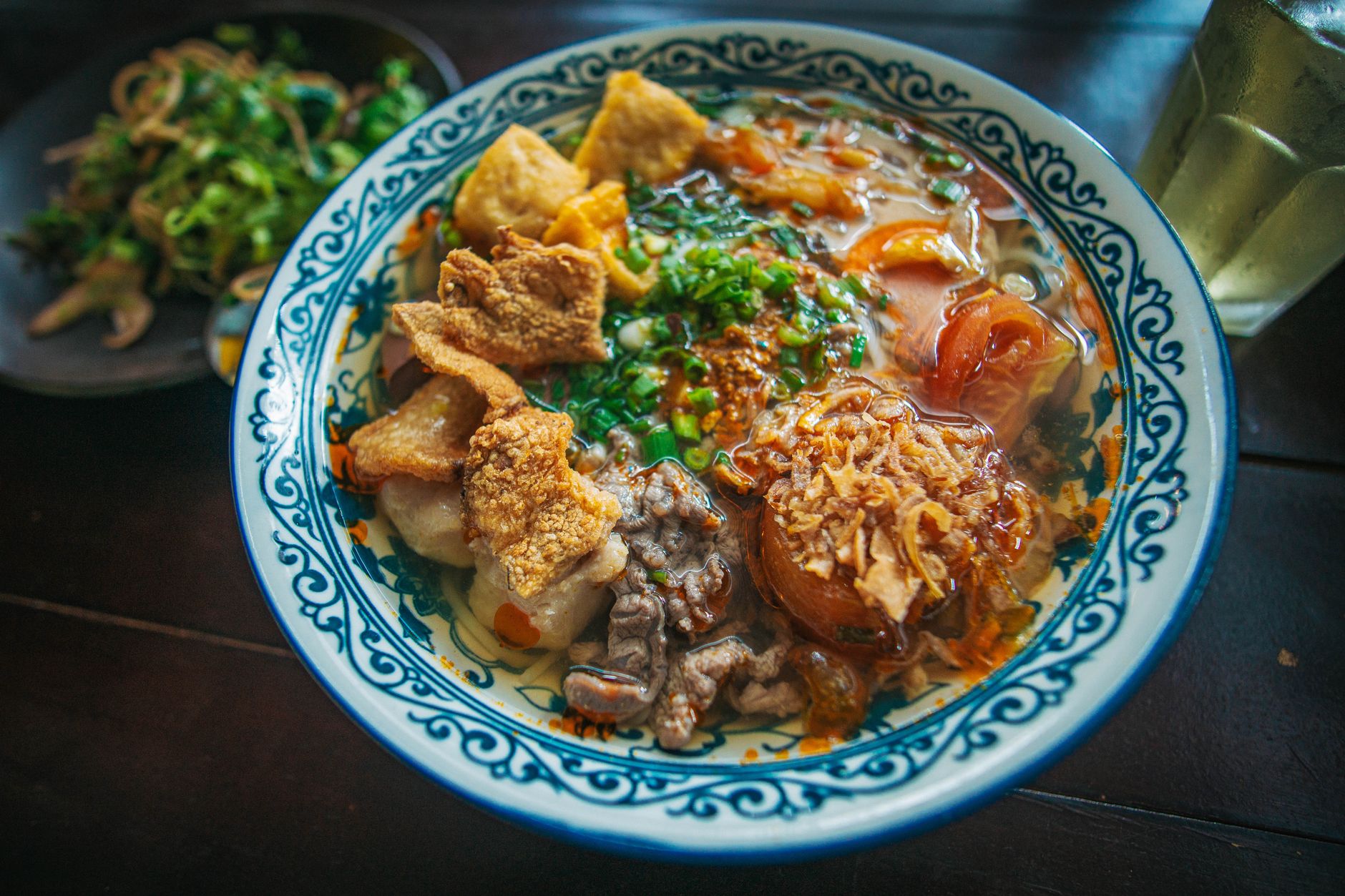
"Cao lau" is thick rice noodles in a small amount of broth, topped with pork, croutons, and fresh herbs. The noodles have a particular chewiness—locals claim the water from Ba Le Well is what makes them right. A bowl costs 30,000-50,000 VND at market stalls. Try it at the Central Market (Cho Hoi An) on Tran Phu, where several vendors on the upper floor serve it from early morning until around 2 PM.
"Mi quang" is a turmeric-tinted noodle dish served with very little broth, shrimp, pork, peanuts, rice crackers, and a pile of greens. It's from Quang Nam province broadly, but Hoi An does it well. Portions run 35,000-55,000 VND.
White rose dumplings ("banh bao banh vac") are translucent shrimp dumplings shaped like roses, steamed and topped with crispy shallots. Only a few families in town make the wrappers. You'll see them on most restaurant menus for 40,000-60,000 VND per plate.
Beyond the local specialties, Hoi An has solid versions of national staples. Banh mi here tends toward the Hue-influenced style with more pate and chili. Madam Khanh (115 Tran Cao Van) charges around 30,000 VND and has been doing it for decades. Com tam is harder to find good versions of this far north—it's really a Saigon dish—but pho stalls open early on Le Loi street if you want a familiar breakfast.
For drinks, egg coffee has migrated south from Hanoi and several cafes on Nguyen Hue street now serve it (35,000-50,000 VND). The local Vietnamese coffee scene leans toward "ca phe sua da"—iced coffee with condensed milk—served at plastic-chair spots along Bach Dang riverside for 20,000-30,000 VND.
Getting There and Getting Around
Hoi An has no airport or train station. The nearest airport is Da Nang International (DAD), about 30 km north. A taxi from the airport costs 350,000-450,000 VND; Grab rides are usually cheaper at 250,000-350,000 VND depending on demand. The ride takes 35-50 minutes depending on traffic.
Da Nang's train station connects to the Reunification Express running between Hanoi and Ho Chi Minh City. From there, you still need a taxi or bus to Hoi An.
Within the Old Town, you walk. Bicycles are the next best option—most hotels and guesthouses lend or rent them for 30,000-50,000 VND per day. For reaching An Bang Beach (4 km east) or the vegetable villages to the north, cycling works well on flat roads. Motorbike rental runs 100,000-150,000 VND per day if you want to explore further—say, the Marble Mountains (about 20 km toward Da Nang) or Hue as a day trip (130 km, roughly 2.5 hours by coastal road).
Boats along the Thu Bon River offer trips to Cam Thanh coconut village and beyond. Expect to pay 150,000-200,000 VND per person for a short basket-boat experience; longer river tours run higher.
Common Mistakes Foreigners Make
Skipping the ticket. Some travelers walk into the Old Town without buying the 120,000 VND heritage pass. Checkpoints aren't always strict, but individual sites will turn you away without it. Buy one—the money funds preservation.
Visiting only at night. The lantern-lit evening is famous, but mornings (before 9 AM) reveal a quieter town: residents sweeping storefronts, banh cuon vendors steaming rolls at market stalls, fishermen sorting catches on Bach Dang. Come twice.
Confusing tailors with fast fashion. Hoi An is known for custom tailoring. Good suits take 3-5 days with multiple fittings. Shops promising same-day delivery typically produce lower-quality work. Budget 2-4 million VND for a decent custom shirt; 5-10 million VND for a suit. If you only have one night, skip tailoring—you won't get a proper fitting.
Expecting the Old Town to represent all of Hoi An. The heritage core is roughly 30 hectares. The surrounding area includes rice paddies, the beach strip at An Bang and Cua Dai, fishing communities, and the Tra Que herb village. Spending three days lets you actually see the area rather than just the postcard streets.
Booking "Hoi An" accommodation that's actually in Da Nang. As noted above, check the map pin. Anything north of the Marble Mountains is functionally in Da Nang.
Quick Reference — Hoi An Old Town
- Province: Quang Nam
- Nearest airport: Da Nang (DAD), 30 km north
- Old Town ticket: 120,000 VND (valid 24 hours, covers 5 heritage sites)
- Motorbike restriction in Old Town: roughly 8 AM - 11 AM and 3 PM - 9 PM (varies seasonally)
- Best months to visit: February through April (dry, mild, 25-30°C)
- Rainy season: October through December (flooding possible in November)
- Distance to Hue: 130 km north (2.5 hours by car)
- Distance to Da Nang center: 30 km north (45 minutes)
- Distance to An Bang Beach: 4 km east (10 minutes cycling)
- ATMs: Available on Tran Hung Dao and Hai Ba Trung streets; most accept international cards
- Key streets: Tran Phu (main heritage axis), Nguyen Thai Hoc (parallel), Bach Dang (riverfront), Le Loi (market area)
Bottom Line
The name "Hoi An" is shared across four places in Vietnam, but only one earns the trip. The Old Town is compact, walkable, and rewards repeat visits across different times of day. If your search results or booking platform ever sends you somewhere confusing, check the province name: Quang Nam means you're in the right place. Anything else, and you've wandered into Vietnamese bureaucracy—not a UNESCO site.
Last updated · May 29, 2026 · independently researched, never sponsored.