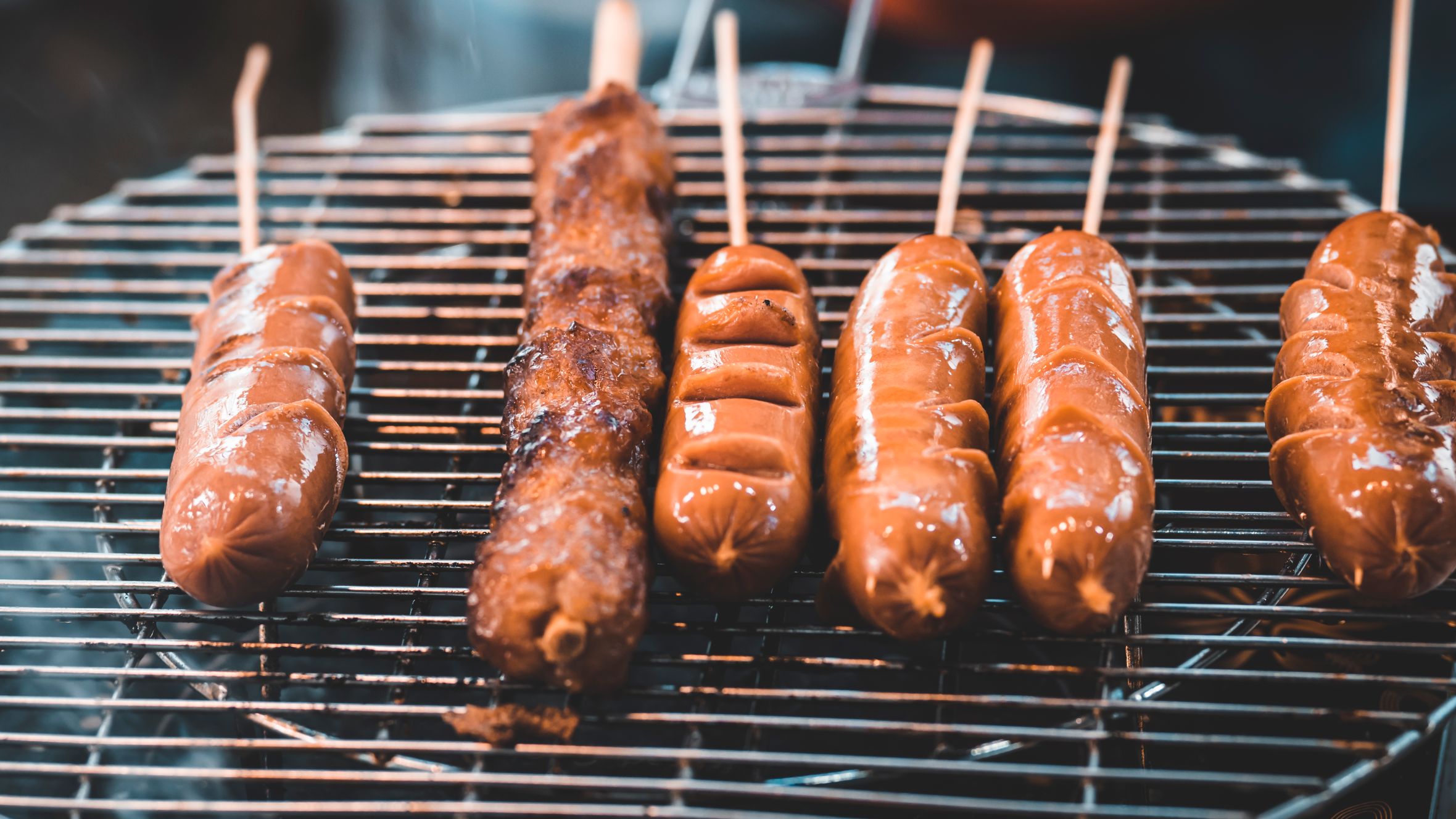
Khanh Hoa is easy to flatten into a beach holiday with fresh prawns on the side. But the province's culinary identity is older and stranger than that — shaped in part by the Cham people who built temples here before Viet settlement pushed south. That influence is quiet now, woven into fermented pastes, fish preparations, and a charcoal-grilling culture that peaks about 30 km north of Nha Trang (냐짱 / 芽庄 / ニャチャン) in the market town of Ninh Hoa.
Ninh Hoa and the Art of "Nem Nuong"
"Nem nuong" is fermented pork sausage grilled over charcoal — and Ninh Hoa's version is considered the regional benchmark. The pork is coarsely ground, seasoned with fish sauce and a little sugar, packed onto short skewers, and cooked slow enough that the outside chars without the inside drying out. You eat them wrapped in rice paper with fresh herbs, thin-sliced green banana, starfruit, and a sauce that is thicker and darker than the Hanoi style — closer to a peanut-forward dipping paste cut with fermented peanut and pork liver.
Ninh Hoa's nem nuong stalls are concentrated around the central market on Tran Phu street in the town center. Lunch hours (10:30–13:00) are when the charcoal is hottest. Expect to pay around 50,000–70,000 VND per person for a full set with wrapping vegetables and dipping sauce. The town is a straightforward 30-minute bus or motorbike ride north from Nha Trang on Highway 1.
The Cham connection here isn't obvious from the menu — but fermented meat preparations and grilled skewer culture appear consistently in Cham culinary records across the south-central coast, from Binh Dinh down through Khanh Hoa and into Ninh Thuan. Ninh Hoa sits at the geographic heart of this corridor.
Fish Paste and the Fermentation Tradition
Around Nha Trang's fishing communities and the estuary settlements south of the city, the Cham legacy shows up most clearly in fermented fish products. "Mam ca" (fermented fish paste) is the foundational condiment — brined, packed, and left for weeks or months depending on the type. The varieties around Khanh Hoa tend toward a lighter, less aggressively salty profile than the Mekong Delta (메콩 델타 / 湄公河三角洲 / メコンデルタ) versions, partly because the fish stock here — small anchovies, mackerel, and estuarine species — differs from river fish.
The paste feeds into several local preparations. "Ca dam" is a Cham-origin dish found in villages north of Nha Trang — chunks of mackerel or tuna rubbed with turmeric, fermented fish sauce, and lemongrass, then grilled wrapped in banana leaf. It's not something you'll find on a tourist-facing menu. Ask at wet markets in Dam Market (Cho Dam) in central Nha Trang — the vendors who sell the spice packets for home cooking will point you toward which families or small stalls still make it.

Photo by Nguyên Đoàn on Pexels
Nha Trang Street Food That Carries This Thread
Nha Trang's street food scene is broader than most visitors realize, and some of it connects directly back to Cham coastal cooking.
"Banh canh cha ca" is the local noodle dish worth knowing — thick udon-like rice noodles in a clear-ish fish broth, with rounds of grilled fish cake on top. The fish cake is seasoned with dill and turmeric, which is more central-Vietnamese Cham in influence than anything from Hanoi or Saigon. A bowl runs 35,000–50,000 VND at street stalls; the cluster around Biet Thu street near the beach serves it from about 06:00 until sold out, usually by 10:00.
Further inland at the markets, "bun cha ca" appears as a brothier, looser cousin — the same fish cake in a thinner, slightly tart soup base made from tomatoes and pineapple. It overlaps with what you find in Da Nang but has a firmer, more aggressively spiced fish cake.
Po Nagar and the Context
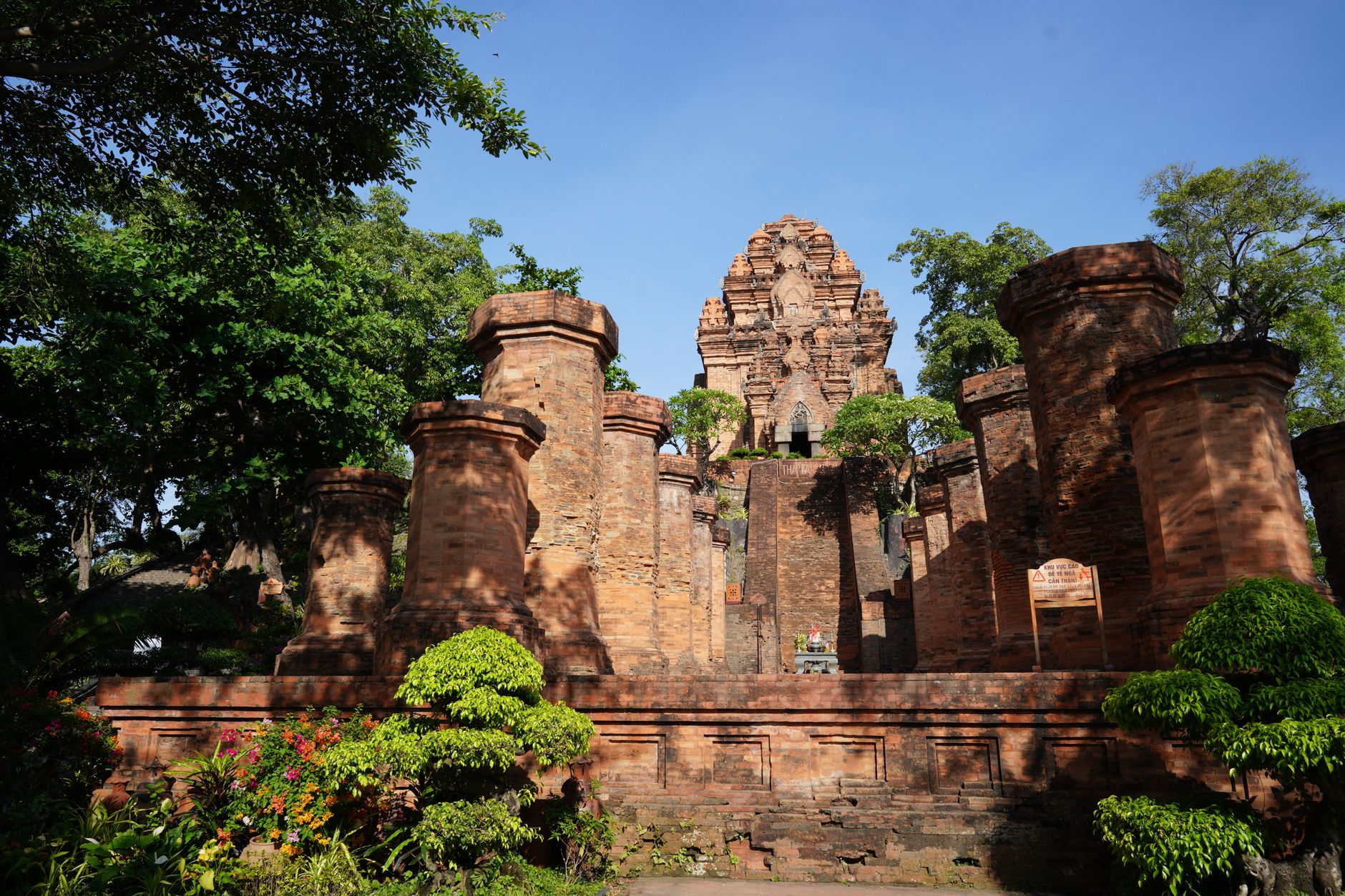
If you want a physical anchor for the Cham food history, the Po Nagar Cham towers on the north bank of the Cai River in Nha Trang give you that. The towers date to the 7th–12th centuries and were built by Cham kings as a religious complex. The surrounding neighborhood — Vinh Phuoc — still has a small Cham community presence, and some older residents maintain food traditions linked to ceremonial offerings: sticky rice preparations, sesame and coconut sweets, and specific fish dishes tied to festivals at the tower. The towers themselves are about 2 km from central Nha Trang, accessible by a 15,000 VND xe om ride or a pleasant walk across the Xom Bong Bridge.

Photo by NGUYỄN THÀNH NHƠN on Pexels
How to Eat It All Without a Car
You don't need a vehicle for the Nha Trang end — Cho Dam, Biet Thu, and Po Nagar are all within 3 km of each other. For Ninh Hoa, the easiest option is a Grab motorbike from Nha Trang (around 150,000–180,000 VND one-way) or the local bus from the intercity bus station near Vo Van Ky street (about 20,000 VND, 45 minutes). Don't bother with a tour — the nem nuong stalls in Ninh Hoa are not on any tourist circuit and are better for it.
The best single morning itinerary: banh canh cha ca at Biet Thu by 07:30, a walk through Cho Dam market to look at the spice and mam vendors, then a motorbike north to Ninh Hoa for a nem nuong lunch before heading back.
Practical Notes
Ninh Hoa market stalls typically close by 14:00, so don't plan a late lunch. Most of the fermented fish product vendors at Cho Dam speak limited English — bring a translation app or a written note in Vietnamese asking for "mam ca dia phuong" (local fish paste). Khanh Hoa's food is at its most interesting outside the tourist-facing beachfront strip, and finding it just takes a willingness to get off that strip.
Last updated · May 29, 2026 · independently researched, never sponsored.