Ca Mau is usually the place travelers pass through on their way to the southernmost tip of Vietnam (베트남 / 越南 / ベトナム). But just off the coastal road outside the city, Khu Quan Am Phat Dai is one of those sites that rewards a deliberate stop — a massive open-air Buddhist complex facing the sea, less polished than the big-name pagodas up north, and all the more interesting for it.
What it is
Khu Quan Am Phat Dai is a Buddhist monument complex centered on a 21-meter statue of Quan Am (the Bodhisattva of Compassion) standing on a lotus pedestal. The full structure, including the base, rises to roughly 43 meters. It sits on the coast about 5 km southeast of Ca Mau city center, looking out over the mangrove-fringed shoreline toward the East Sea.
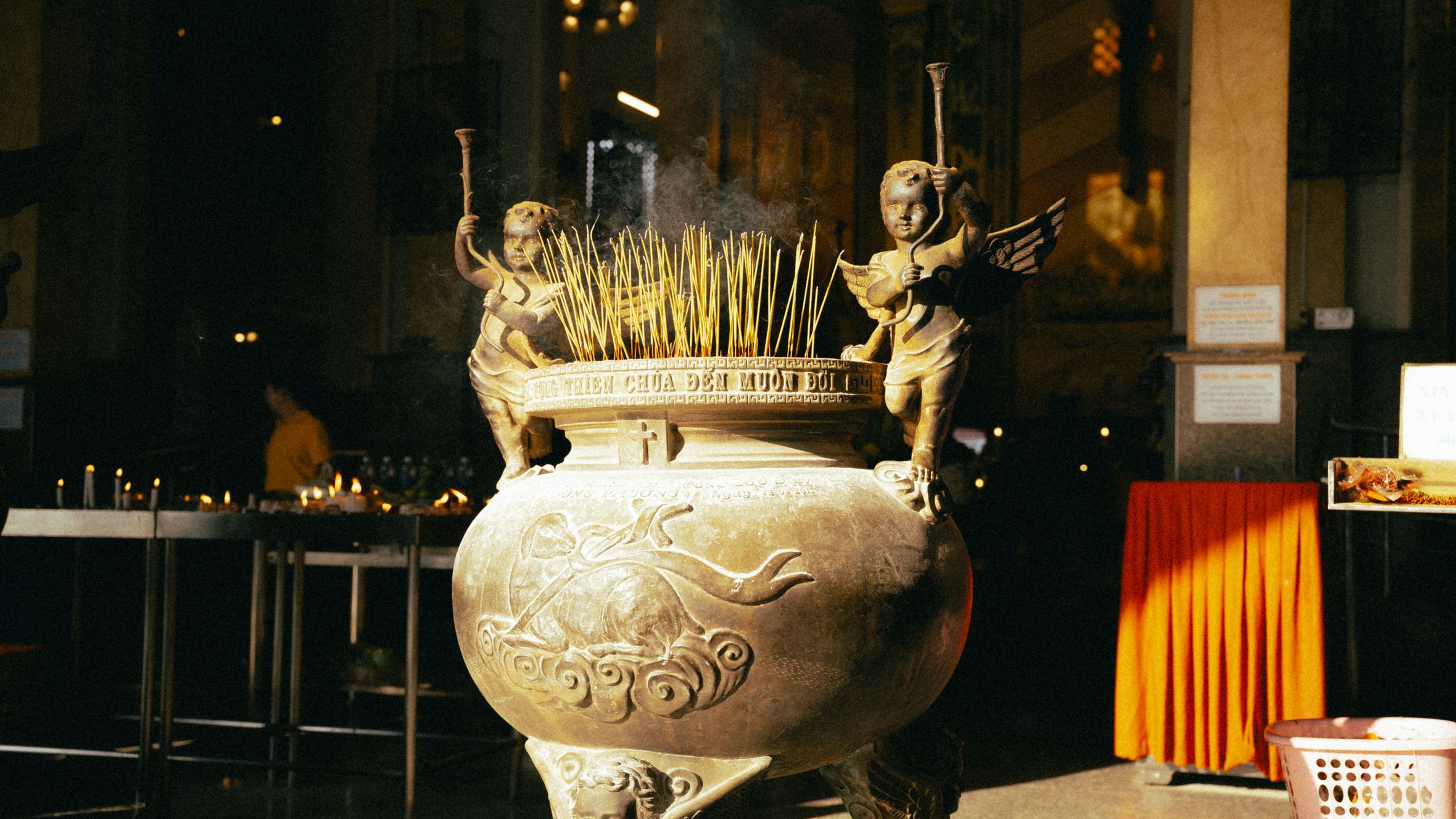
The complex was originally located in Bac Lieu province before administrative boundary changes placed it within Ca Mau's jurisdiction. Construction started in 2003 and the main statue was completed around 2010. The site includes a main prayer hall, a series of smaller shrines, ornamental gardens, and a long walkway lined with smaller Bodhisattva statues. It's an active place of worship, not a museum — expect incense smoke, chanting, and local families visiting on weekends.
Why travelers go
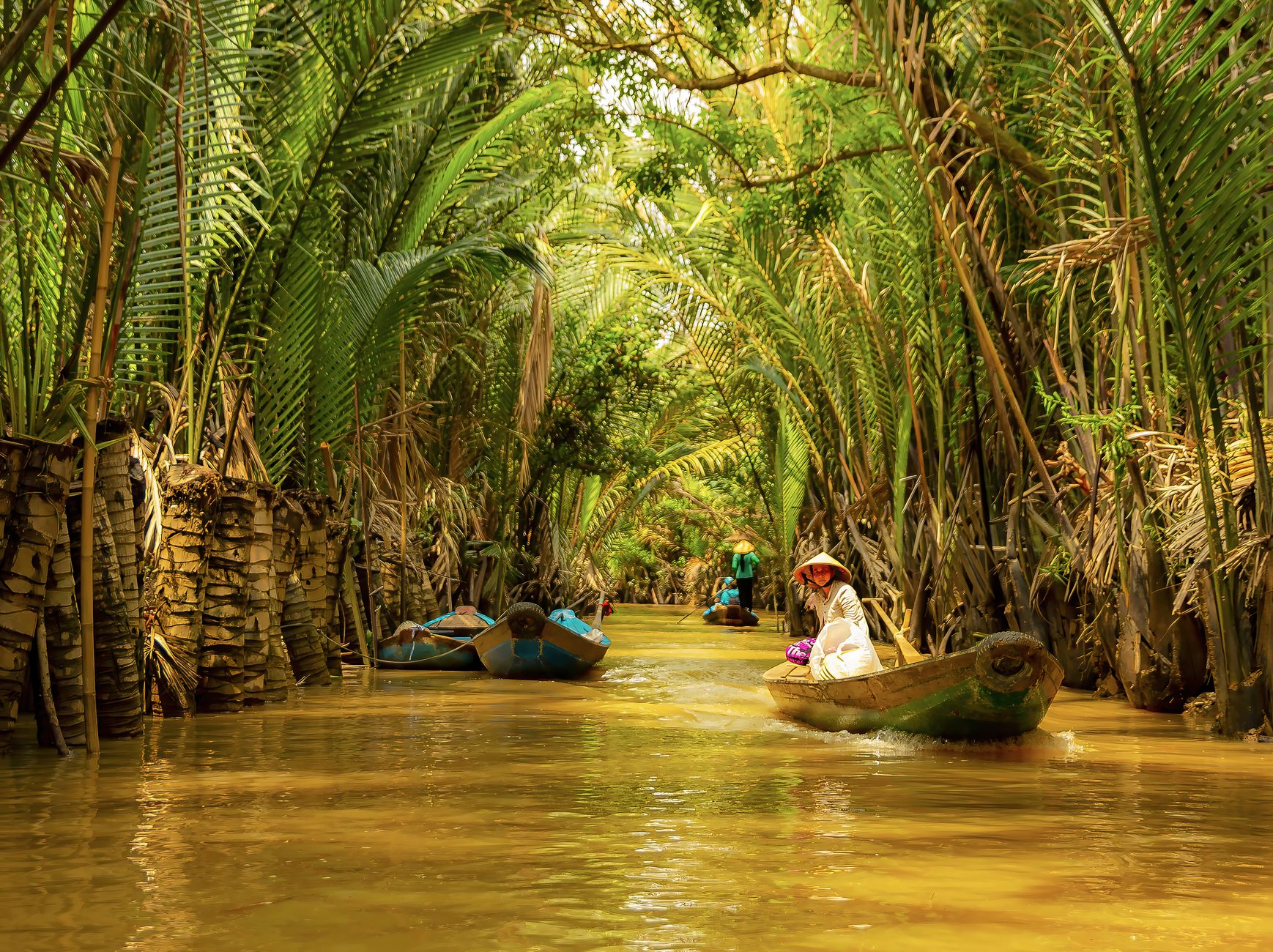
Most visitors to Ca Mau are ticking off the "southernmost point" box at Dat Mui. Khu Quan Am Phat Dai offers something different: a chance to see how Buddhism is practiced in the deep Mekong Delta (메콩 델타 / 湄公河三角洲 / メコンデルタ), far from the tourist circuits of Saigon or Hoi An. The statue is genuinely imposing, especially when you see it rising above the flat delta landscape from kilometers away. The coastal setting, with shrimp ponds and mangroves stretching in every direction, gives the place an atmosphere that's hard to replicate at more manicured religious sites.
It's also just quiet. You won't find tour buses here. On a weekday morning, you might share the grounds with a handful of monks and a few elderly locals lighting incense.
Best time to visit
The dry season — roughly November through April — is the most comfortable window. Ca Mau gets hit hard during the wet season (May to October), with heavy afternoon downpours that turn unpaved paths muddy and make the coastal wind unpleasant. January through March is ideal: lower humidity, cooler mornings, and the grounds are well-maintained ahead of Tet celebrations.
If you time it around Tet / 越南春节 / テト) or major Buddhist holidays (the 15th day of the lunar month draws larger crowds), you'll see the complex at its most vibrant — decorated altars, fruit offerings stacked high, and families in their best clothes.
How to get there
From Ca Mau city center, the complex is about 5 km southeast along the coastal road. A xe om (motorbike taxi) costs around 30,000–50,000 VND one way and takes 10–15 minutes. Grab is available in Ca Mau, though drivers are fewer than in bigger cities — book a few minutes ahead.
If you're coming from Can Tho, the nearest major hub, it's roughly 180 km by road. Buses from Can Tho to Ca Mau run frequently from the Can Tho bus station (Bến xe Khách Cần Thơ), cost around 120,000–150,000 VND, and take 3.5–4 hours depending on traffic and ferry crossings. From Saigon, direct sleeper buses to Ca Mau depart nightly from Mien Tay bus station; expect 8–9 hours and fares around 200,000–280,000 VND.
There's also Ca Mau Airport with limited domestic flights from Saigon, though schedules are inconsistent. Most travelers arrive by road.

Photo by maxed. RAW on Pexels
What to do
Walk the statue grounds
The main draw. Start at the entrance gate and follow the central walkway — it's flanked by 24 smaller statues, each representing a different manifestation of Quan Am. Take the stairs up to the base of the main statue for a wide view over the shrimp ponds and coastline. The wind up top can be strong, especially in the afternoon.
Visit the main prayer hall
Behind the statue, the prayer hall is open to visitors. Remove your shoes, keep your voice low, and you're welcome to sit and observe. The interior has carved wooden panels depicting Buddhist sutras and a large altar with multiple Buddha figures. Early morning visits (before 8 AM) sometimes coincide with monks chanting.
Explore the gardens and fish ponds
The ornamental gardens surrounding the complex include bonsai trees, small ponds with koi and turtles, and shaded benches. It's a calm place to sit after walking the grounds. Not spectacular — just pleasant, and a contrast to the concrete and dust of Ca Mau city.
Watch the sunset from the seawall
The complex faces east, but the coastline nearby offers open views in every direction. Walking 10 minutes south along the seawall path, you can watch the sun drop behind the mangrove canopy. Bring mosquito repellent — the coast at dusk is their territory.
Where to eat nearby
Ca Mau's signature dish is "banh canh" — thick tapioca noodles in a crab-based broth, served with chunks of blue crab and fresh herbs. Several local shops along the road back into town serve solid bowls for 35,000–50,000 VND. Look for the places with the most motorbikes parked outside.
Also worth trying: "hu tieu" in the Ca Mau style, which leans heavier on pork bone broth and dried shrimp than versions you'll find in Saigon. The morning market near the Ca Mau river has a few stalls that have been doing it the same way for decades.
Where to stay
Ca Mau city has a decent range of accommodation. Budget guesthouses (nha nghi) near the central market run 150,000–250,000 VND per night — basic but clean enough for a night or two. Mid-range hotels with air conditioning, hot water, and breakfast go for 400,000–700,000 VND. The nicest option in town is Muong Thanh Luxury Ca Mau Hotel, which typically runs 800,000–1,200,000 VND per night and has a pool — unusual for this part of the delta.
There's no accommodation at the complex itself, so you'll be staying in town regardless.

Photo by HONG SON on Pexels
Practical tips locals would tell you
- Dress modestly. This is an active religious site. Cover your shoulders and knees. Shorts and tank tops will get you sideways looks.
- Bring water. There's one small drinks vendor near the entrance, but no proper cafe or shop on the grounds.
- Go early. By midday the concrete radiates heat and there's limited shade on the main walkway. Arriving by 7–8 AM is far more comfortable.
- Combine it with Dat Mui. The southernmost point of Vietnam is about 110 km further south. Most travelers do both in the same Ca Mau trip — Khu Quan Am Phat Dai on the way in or out.
Mistakes to avoid
- Skipping it because it's not famous. Ca Mau doesn't have many dedicated sights. This is genuinely one of the most interesting things in the province, and it costs nothing to visit.
- Showing up during midday rain in wet season. The grounds are exposed. A sudden downpour with nowhere to shelter is miserable.
- Expecting English signage. There's almost none. Download Vietnamese phrases or bring a translation app. The monks are friendly but communication will be mostly gestures and smiles.
Practical notes
Entrance is free. The complex is open daily from roughly 6 AM to 6 PM, though there's no formal gate — you can walk in earlier if the caretakers are around. Budget 1–2 hours for a thorough visit, more if you're a photographer. Ca Mau itself is worth at least one overnight to experience the deep delta atmosphere that most Mekong tours skip entirely.
Last updated · May 29, 2026 · independently researched, never sponsored.