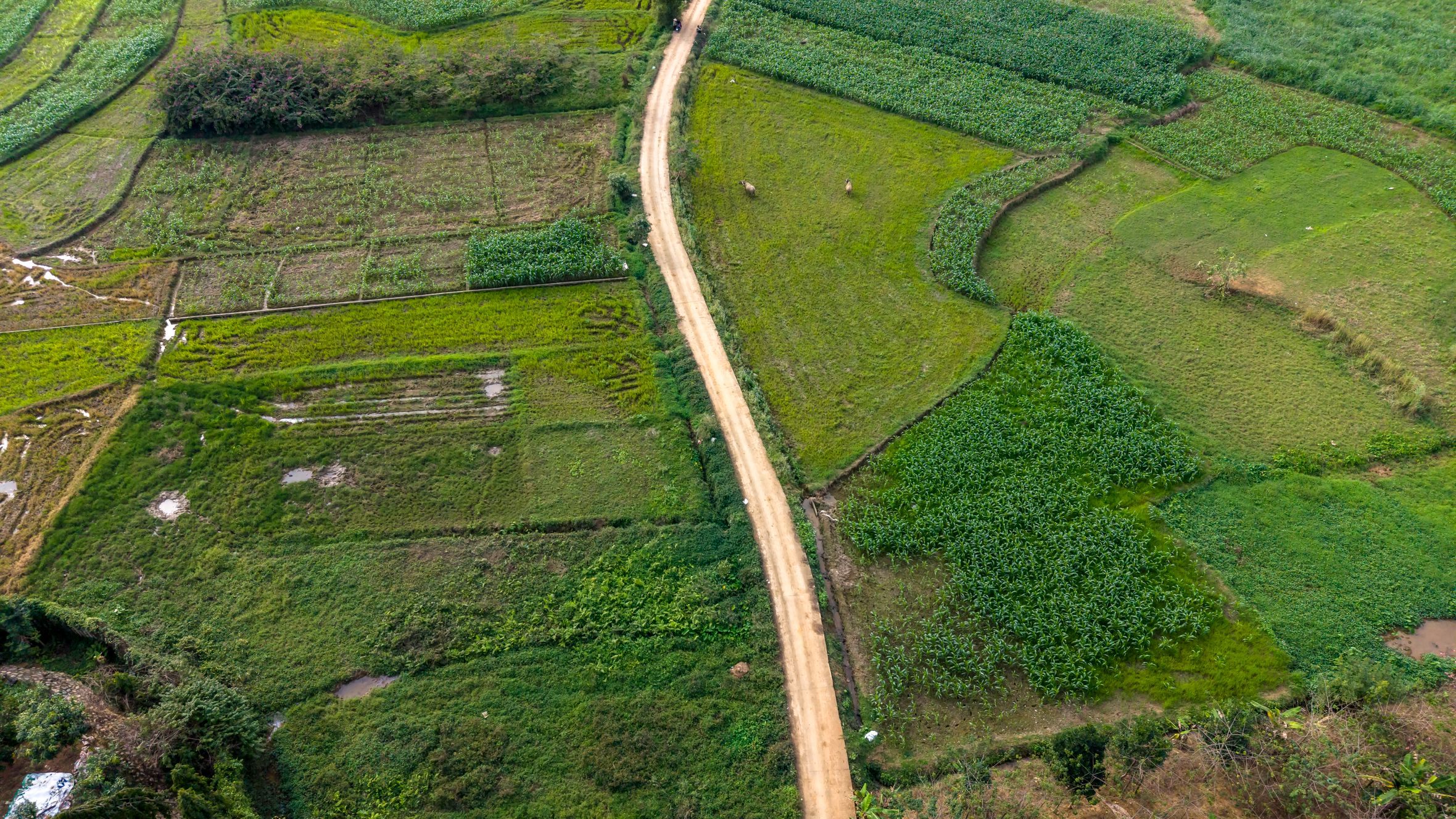
Lang Biang sits about 12 km north of Da Lat's center, a broad-shouldered mountain that tops out at 2,167 meters. It's the most prominent peak in the area and the reason half the postcards from Lam Dong province look the way they do — green ridgelines fading into cloud.
What it is and why it matters
Lang Biang is actually two peaks: Ong (Mr.) at 2,167 m and Ba (Mrs.) at 2,120 m, named after a K'Ho legend about two lovers from rival clans. The story is a local Romeo-and-Juliet parallel, and you'll hear versions of it from every guide and jeep driver on the mountain. The lower peak (Ba) is the one most visitors reach. The higher peak (Ong) requires a longer trek and a guide.
The mountain sits inside the Lang Biang Biosphere Reserve, recognized by UNESCO in 2015. The reserve covers a patchwork of montane forest, pine stands, and grassland that supports a handful of endemic bird species. It's not a national park in the strict sense — there's no gate fee for the reserve itself — but the tourist area at the base charges admission.
Lam Dong province recently expanded through an administrative merger with Dak Nong and Binh Thuan, but for travelers, nothing has changed on the ground. Da Lat (달랏 / 大叻 / ダラット) is still your base, and Lang Biang is still Da Lat's backyard mountain.
Why travelers go
Three reasons, mostly. First, the view from the radar station at the top of the jeep road is genuinely wide — on a clear morning you can trace the valley all the way south toward the reservoirs. Second, the trekking to the higher Ong peak is one of the few real hikes near Da Lat that feels like actual wilderness, not a manicured garden. Third, the cool air up top (often 5-8°C cooler than Da Lat town) makes it a relief even from Da Lat's already mild climate.
It's also one of the few places near Da Lat where you can interact with K'Ho communities in a way that isn't entirely staged. Some local families sell woven goods and roasted corn at the base area, and a few homestay options have popped up in Lac Duong town nearby.
Best time to visit
November through March is the dry season, and mornings are your best window — clouds typically roll in by noon. December and January bring the coldest temperatures, sometimes dipping to 8-10°C at the summit, so bring a proper jacket, not just a hoodie.
Avoid June through September if you want views. The mountain disappears into fog for days at a stretch during the wet season, and the trail to the upper peak gets slippery enough to be genuinely unpleasant.
Weekday mornings beat weekends by a wide margin. The jeep road gets clogged with tour groups on Saturdays and Sundays, especially around Vietnamese holidays and Tet.
How to get there from Da Lat
From Da Lat's central market area, Lang Biang is about 12 km north along the road to Lac Duong (Provincial Road 723). You have three options:
- Motorbike: 25-30 minutes. Rental bikes in Da Lat run 120,000-150,000 VND/day for a semi-auto. The road is paved and straightforward — no mountain passes, just a gentle climb through pine forest.
- Grab/taxi: Around 150,000-200,000 VND one way. Ask the driver to wait or arrange a return time; Grab availability at the mountain base is unreliable.
- Tour: Most Da Lat day tours bundle Lang Biang with other stops (flower gardens, strawberry farms). These run 300,000-500,000 VND per person and typically give you 60-90 minutes at the site, which isn't enough if you want to hike.
Entrance fee to the tourist zone at the base is 50,000 VND per person.

Photo by Dongdilac on Pexels
What to do
Take the jeep to the radar station
This is what most visitors do. Open-top military-style jeeps run from the base to a viewpoint near the old radar station on the lower peak. The ride is about 5 km up a steep dirt road and takes 15 minutes. Jeep tickets cost 150,000 VND per person round trip. The viewpoint at the top has a few photo spots, a small coffee stall, and genuinely good panoramic views on clear days.
Trek to the Ong peak (2,167 m)
The trail from the radar station to the true summit is roughly 3-4 km through dense montane forest. It takes 2-3 hours each way depending on pace and conditions. You need a guide — both for navigation (the trail forks and isn't well-marked) and because the reserve technically requires one. Guides can be arranged at the base for around 500,000-700,000 VND for a group of up to 4. The trail is steep in sections and involves some scrambling over roots and rocks. Bring water, snacks, and shoes with grip.
Walk the pine forest trails at the base
If a full trek isn't your thing, the area around the base has several flat-to-gentle walking paths through pine forest and grassland. These are pleasant in the early morning, uncrowded on weekdays, and completely free once you've paid the entrance fee.
Visit Lac Duong town
The small town of Lac Duong, about 3 km before the Lang Biang entrance, has a weekly market and a few K'Ho cultural spots. It's low-key and not set up for mass tourism, which is part of the appeal. The church in town is worth a quick look — it's one of the few highland churches with K'Ho architectural elements.
Catch sunrise from the jeep viewpoint
The jeeps start running at 7:00 AM, which is early enough in the dry season to catch good light. If you're on a motorbike, you can ride up earlier — the road is open — but you won't reach the radar station without the jeep unless you hike.
Where to eat nearby
Da Lat is where you eat properly, but near Lang Biang you can find two things worth trying:
- "Com lam" (bamboo-tube rice): K'Ho families at the base sell this — sticky rice cooked inside a bamboo section over charcoal. It's smoky, slightly sweet, and costs about 20,000-30,000 VND per tube.
- Grilled chicken and rice at Lac Duong market: Simple, cheap (60,000-80,000 VND for a plate), and flavored with local herbs. Not fancy, but honest.
Back in Da Lat, don't skip "banh mi" from the stalls near the central market, or a bowl of "bun bo Hue" at one of the spots along Phan Dinh Phung street — Da Lat's version is adapted to highland tastes, slightly less spicy than the Hue original.
Where to stay
Most people stay in Da Lat and visit Lang Biang as a day trip. Da Lat accommodation ranges from 200,000 VND/night hostels to 3,000,000+ VND boutique hotels.
If you want to stay closer, Lac Duong has a handful of guesthouses and homestays in the 300,000-600,000 VND range. They're basic — hot water, clean beds, maybe breakfast — but they put you at the mountain's doorstep for an early start.
Photo by HONG SON on Pexels
Practical tips locals would tell you
- Bring layers. Even in the dry season, the summit is cold in the morning and can shift fast.
- Carry cash. The jeep ticket booth and vendors at Lang Biang don't take cards.
- If you're hiring a guide for the Ong peak trek, confirm the price and duration before you start. Some guides rush the hike to fit more groups in a day.
- Leeches are real on the upper trail during and just after the wet season. Tuck your pants into your socks — it looks ridiculous and works.
Common mistakes to avoid
- Going at midday: Clouds move in fast. Morning is the only reliable window for views.
- Wearing sandals on the upper trail: The path is muddy, rooty, and steep. Proper shoes aren't optional.
- Budgeting only an hour: If you're just doing the jeep ride, 60-90 minutes is fine. If you want to hike the upper peak, plan a full half-day.
- Skipping Lac Duong entirely: Most tours drive right past it. Stop. It's more interesting than the souvenir stalls at the mountain base.
Practical notes
Lang Biang works as a half-day trip from Da Lat if you're doing the jeep ride, or a full day if you're trekking. Pair it with an afternoon exploring Da Lat's food scene — the city is one of the best eating towns in southern Vietnam, and you'll have earned a proper meal after the mountain.
Last updated · May 26, 2026 · independently researched, never sponsored.








