Ca Mau is where Vietnam runs out of land. The province tapers into a muddy point where the East Sea meets the Gulf of Thailand, and most of that final stretch is mangrove forest — dense, tidal, and surprisingly alive. "Lang rung" literally means forest village, and Lang Rung Ca Mau refers to the sprawling mangrove ecosystems that define this corner of the Mekong Delta (메콩 델타 / 湄公河三角洲 / メコンデルタ). If you've done the usual southern loop — Saigon, Can Tho, maybe Phu Quoc — Ca Mau is the logical next step for anyone who wants to see the delta at its rawest.
What it is and why it matters
Lang Rung Ca Mau covers a massive area of mangrove and melaleuca forest, most of it concentrated in two protected zones: Mui Ca Mau National Park (at the southernmost tip) and U Minh Ha National Park (inland, to the northwest). The mangroves here are among the largest remaining in Southeast Asia.
During the war, these forests served as cover for resistance fighters — the dense canopy made aerial surveillance nearly impossible. That history is part of the local identity, though today the forests are more about conservation and eco-tourism than anything else. The region was historically part of a larger Ca Mau province that once included Bac Lieu; the two split into separate provinces in 1997, but culturally they still share a lot of DNA.
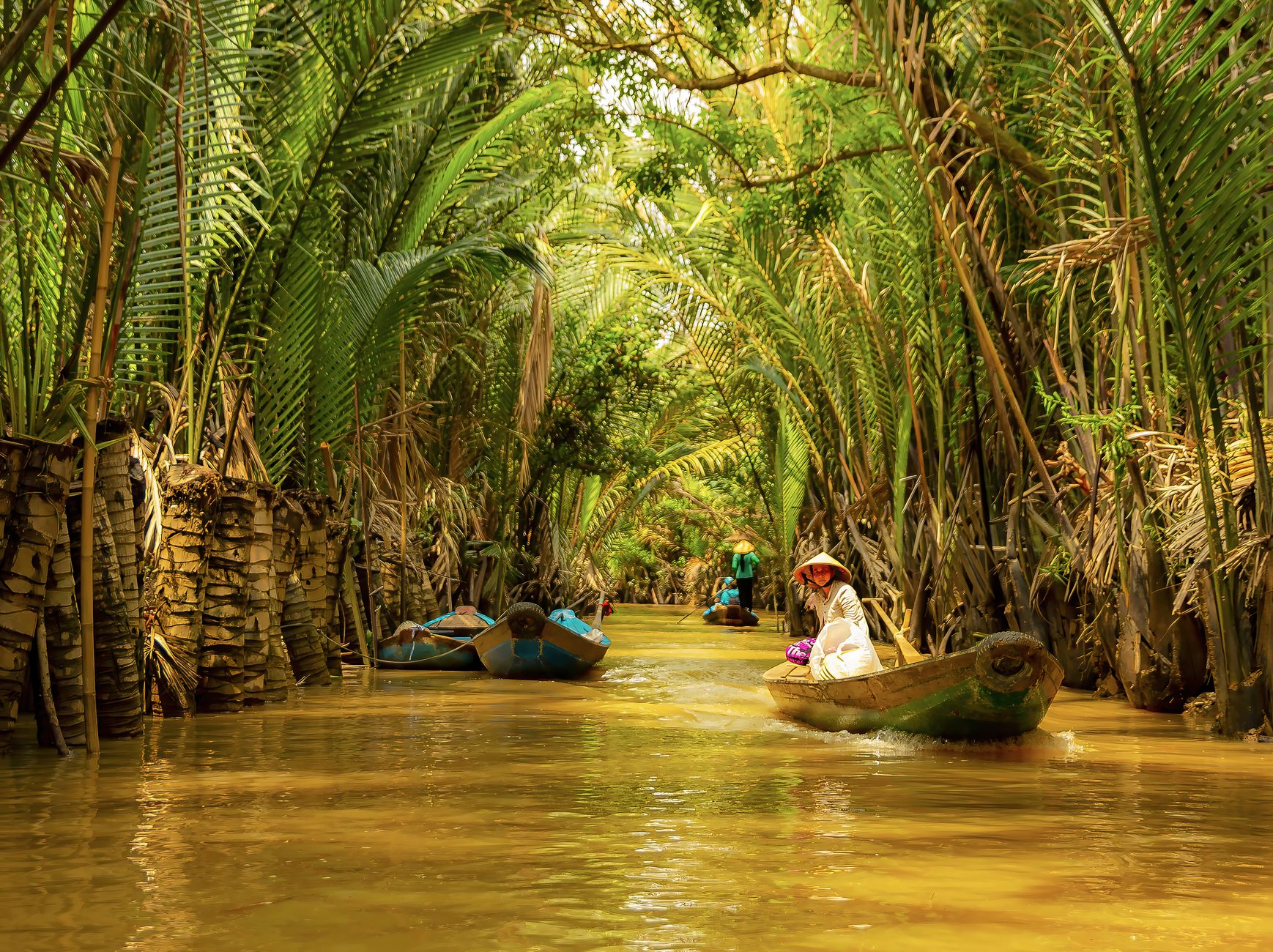
Travelers come here for the landscape. The mangrove root systems rise out of black water in tangled walls. Monkeys swing through the canopy. Birds — herons, storks, cormorants — nest in enormous colonies. It's not polished or Instagram-ready, but it's real in a way that more developed destinations aren't.
Best time to visit
The dry season from December to April is the most comfortable window. Water levels are lower, making boat travel easier and wildlife more concentrated around remaining pools. January through March is ideal — less rain, cooler mornings, and migratory birds are still around.
Avoid September and October if you can. Flooding peaks, some trails close, and mosquitoes are relentless. That said, the wet season has its own drama — the forest feels almost submarine, and you'll have the place largely to yourself.
How to get there
From Saigon (사이공 / 西贡 / サイゴン), you have a few options:
- Bus: Direct sleeper buses run from Saigon's Mien Tay station to Ca Mau city. The ride takes about 8-9 hours and costs 200,000-280,000 VND depending on the operator. Phuong Trang (Futa) runs multiple daily departures.
- Fly + transfer: Vietnam Airlines and Bamboo Airways fly to Ca Mau airport (CAH) from Saigon. Flight time is about 1 hour, tickets run 800,000-1,500,000 VND if booked early. From the airport, it's a 15-minute taxi to Ca Mau city center.
- From Can Tho: Buses from Can Tho to Ca Mau take about 3.5-4 hours and cost around 120,000-150,000 VND.
Once in Ca Mau city, getting to the forests requires local transport. Mui Ca Mau National Park is roughly 100 km south — you'll need to arrange a car or motorbike to Dat Mui commune, then take a boat. Most guesthouses can help set this up. U Minh Ha is closer, about 30 km west of the city.

Photo by maxed. RAW on Pexels
What to do
Boat through the mangrove canals
This is the main event. Narrow wooden boats ("xuong") weave through canals barely wider than the hull. The boatman cuts the engine in quiet stretches and you drift under a green tunnel of roots and branches. Boat trips through Mui Ca Mau typically run 2-3 hours and cost 300,000-500,000 VND per boat (fits 2-4 people). Negotiate before you board.
Walk the boardwalk at Dat Mui
A raised wooden boardwalk extends through the mangroves near the Mui Ca Mau landmark — the literal southernmost point of Vietnam. It's about 1.5 km long and ends at a viewing platform where sediment meets open water. The walk takes 30-40 minutes. Entry is 20,000 VND.
Visit U Minh Ha melaleuca forest
U Minh Ha is a different ecosystem — freshwater melaleuca ("tram") forest rather than saltwater mangrove. The trees grow tall and straight, and the water underneath is stained tea-brown by tannins. Kayaking or small-boat tours run about 200,000-350,000 VND. Bird-watching is best at dawn.
Watch the sedimentation line
Ca Mau's coastline is one of the few places in Vietnam where you can literally watch land being created. Sediment deposits from the Mekong push the shoreline outward by 50-80 meters per year in some spots. Stand at the tip and you're on ground that didn't exist a decade ago.
Hon Khoai Island (if time allows)
About 15 km offshore from Mui Ca Mau, Hon Khoai is a small forested island with a French-era lighthouse. Speedboat access takes about 40 minutes from Dat Mui. It's not always easy to arrange — ask locally about conditions and availability. Budget 800,000-1,200,000 VND for a return boat charter.
Where to eat nearby
Ca Mau's signature dish is "lau mam" — a fermented fish hotpot with a funky, deeply savory broth loaded with shrimp, squid, eggplant, and water spinach. It's intense. Find it at local restaurants along Ly Bon or Tran Hung Dao streets in Ca Mau city. A pot for two costs 150,000-250,000 VND.
Also worth seeking out: "ba khia" — a small, fiercely salted marsh crab pickled in brine. It's an acquired taste — salty, briny, eaten with rice — and it's specific to this region. Street vendors sell portions for 30,000-50,000 VND. Pair it with a bowl of "hu tieu" from any morning noodle stall for a proper delta breakfast.
Where to stay
Ca Mau city has a handful of decent hotels along the main roads. Budget guesthouses run 200,000-400,000 VND per night. Mid-range hotels (Muong Thanh, Anh Nguyet) go for 500,000-900,000 VND with air-con, hot water, and breakfast.
Near Mui Ca Mau, accommodation is basic — community homestays in Dat Mui offer beds for 150,000-250,000 VND per night with meals available. Don't expect luxury. Do expect mosquito nets and cold-water showers.

Photo by Quang Nguyen Vinh on Pexels
Practical tips locals would tell you
- Bring insect repellent. Not a suggestion — a requirement. The mangroves breed mosquitoes on an industrial scale, especially at dawn and dusk.
- Wear long sleeves and long pants, even in heat. Sun, bugs, and branches all conspire against exposed skin.
- Carry cash. ATMs exist in Ca Mau city, but once you're heading toward Dat Mui or U Minh Ha, card payments vanish.
- Hire a local guide for forest trips. The canals look identical after 20 minutes. Getting disoriented is easy. Guides cost 200,000-400,000 VND per half-day.
- Start early. Wildlife is most active before 8 AM. By 10, the heat is punishing and the birds retreat.
Common mistakes to avoid
- Treating it as a day trip from Can Tho. The distance is too far for a comfortable day return. Plan at least one overnight in Ca Mau city or Dat Mui.
- Skipping U Minh Ha. Most travelers fixate on the southernmost-point photo op and miss the melaleuca forest, which is arguably the better nature experience.
- Not confirming boat schedules. Boats to Dat Mui and Hon Khoai don't run on fixed timetables. Weather and tides dictate schedules. Always confirm the day before.
- Expecting the Mekong Delta's usual tourist polish. Ca Mau is not Can Tho. English signage is rare, tourist infrastructure is thin, and that's part of the appeal.
Practical notes
Ca Mau rewards patience. It's not a place you breeze through — the distances are long, the logistics are looser, and the payoff is quieter than a floating market or a cooking class. But if you want to see the Mekong Delta before it meets the sea, this is where you go.
Last updated · May 29, 2026 · independently researched, never sponsored.