What Thung Nai actually is
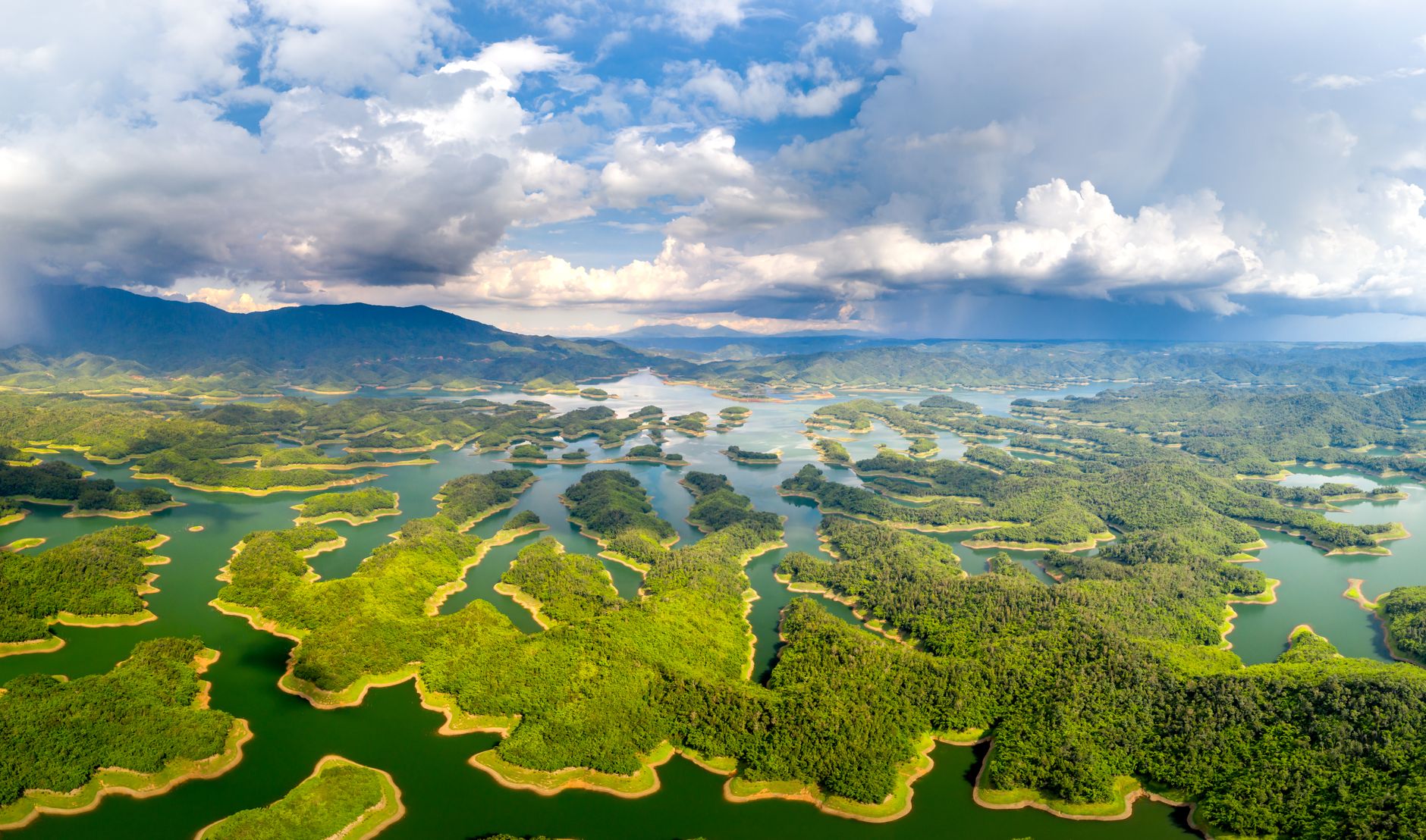
Thung Nai is a valley turned waterscape. When the Da River was dammed decades ago, the reservoir swallowed lowland farms and left behind a maze of limestone karsts, submerged hills, and narrow channels that now function as a kind of inland Ha Long Bay — minus the cruise ships and the crowds. The area sits in the mountainous northwest of northern Vietnam (베트남 / 越南 / ベトナム), surrounded by land traditionally home to Muong ethnic communities who've fished these waters for generations.
The name roughly translates to "deer valley," though you won't find any deer. What you will find is a quiet, slightly rough-edged destination that runs on boat engines and home-cooked meals rather than resort infrastructure. That's the appeal — and also the limitation.
Why travelers go
Thung Nai draws people who want a nature-focused weekend without the tourist machinery of Ha Long Bay (하롱베이 / 下龙湾 / ハロン湾) or the trekking commitment of Sapa. The reservoir is genuinely peaceful on weekdays. You motor between karst islands, stop at a cave or two, eat lunch on a floating house, and by late afternoon you're back on the dock sunburned and satisfied.
It's also a window into Muong culture. The stilt houses in surrounding villages aren't staged for tourists — people live in them. If you're coming from Hanoi and want something beyond the usual Ninh Binh or Mai Chau circuit, Thung Nai fills that gap without requiring more than two days.
Best time to visit
The sweet spot is October through March. The reservoir is full from summer rains, the air is cooler (15-22°C most days), and the dry weather means better visibility across the water. December and January can get properly cold on the boat — bring a windbreaker, not just a hoodie.
Avoid July and August if you can. Heavy rain makes boat trips unpredictable, and the roads in can get muddy. April through June works fine but it's hot, and the water level starts dropping, which makes some channels impassable.
If you happen to visit around the Hung Kings Festival period (usually mid-April by the solar calendar), the broader Phu Tho region comes alive with processions and local events worth catching on the way in or out.
How to get there from Hanoi
Thung Nai is roughly 100 km from Hanoi, but the road quality means it takes about 2.5 to 3 hours by motorbike or car.
By motorbike: The most common option for independent travelers. Head west on the Ho Chi Minh Highway (AH13) toward Hoa Binh city, then follow signs northwest toward Thung Nai. The last 15 km is a narrower mountain road — not dangerous, but winding enough that you should arrive before dark. Fuel up in Hoa Binh city. Total cost: around 80,000-100,000 VND in petrol each way on a 125cc bike.
By car/private driver: Book a car from Hanoi for roughly 1,500,000-2,000,000 VND round trip including waiting time. This is the easier option if you're a group of three or four splitting the cost.
By bus: There's no direct bus to Thung Nai. You can take a bus from My Dinh station in Hanoi to Hoa Binh city (about 60,000-80,000 VND, 2 hours), then hire a local xe om (motorbike taxi) for the remaining 25 km. Expect to pay 150,000-200,000 VND for that last leg.

Photo by Quang Nguyen Vinh on Pexels
What to do
Take a boat through the reservoir
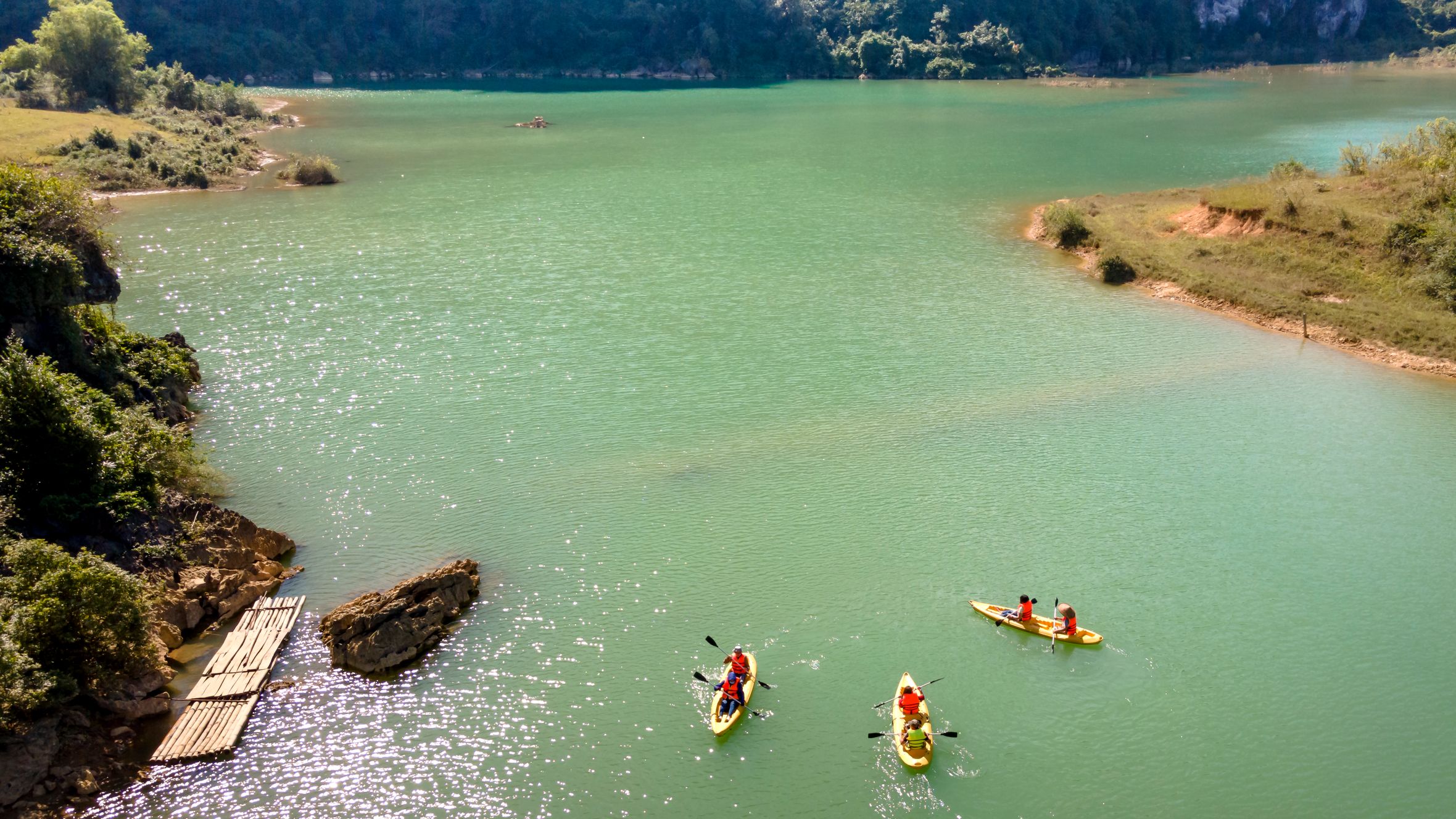
This is the main event. At the Thung Nai boat dock, you hire a metal longboat with a driver. A standard loop of 3-4 hours covers the main karst formations and a couple of island stops. Boat hire runs 400,000-600,000 VND for the whole vessel (fits 8-10 people), so it's cheaper in a group. Don't skip the negotiation — agree on the route and price before boarding.
Visit the caves
Two caves are commonly included in the boat route. They're small — no Phong Nha-level drama — but the stalactite formations are worth the 20-minute walk inside. Bring a headlamp or phone flashlight; lighting inside is minimal.
Eat lunch on a floating house
Several families operate floating fish-farm restaurants on the reservoir. You point at the fish in the net pen, they cook it. Grilled reservoir fish with rice, greens, and dipping sauce runs about 150,000-250,000 VND per person depending on the catch. The fish is fresh — that's not marketing, it was literally swimming five minutes ago.
Walk through a Muong village
Ask your boat driver to drop you at one of the lakeside Muong hamlets. The stilt houses here are traditional, not reconstructed. People are generally welcoming but this isn't a tourist show — be respectful, ask before photographing, and don't wander into homes uninvited. If someone offers you "ruou can" (rice wine drunk through bamboo straws from a communal jar), it's rude to refuse entirely. One sip is enough.
Cycle the reservoir road
If you have your own bicycle or can borrow one from a homestay, the road that traces the reservoir's eastern edge is a good 15 km ride through rice paddies and jackfruit groves. Flat-ish. Best in the early morning before it heats up.
Where to eat nearby
Beyond the floating restaurants, look for local com binh dan (everyday rice shops) in Thung Nai village and along the road back toward Hoa Binh city. Two things to seek out:
- Muong-style "com lam" — sticky rice cooked inside bamboo tubes over charcoal. It has a faint smoky sweetness you won't get from regular steamed rice. Often served alongside grilled pork or chicken.
- Freshwater fish hotpot — reservoir fish simmered with tomato, dill, and rice noodles. Simple, warming, and cheap (around 120,000-180,000 VND for a pot that feeds two).
If you're heading back through Hoa Binh city, there are a few decent "pho" and "bun cha" spots along the main road near the market — nothing extraordinary, but solid and filling after a day on the water.
Where to stay
Budget (200,000-400,000 VND/night): A handful of family-run homestays in Thung Nai village offer basic rooms with mosquito nets and shared bathrooms. Don't expect hot water in all of them. What you get instead is proximity to the dock and dinner cooked by the family.
Mid-range (500,000-900,000 VND/night): A couple of guesthouse-style places along the reservoir road have private rooms with en-suite bathrooms and balconies overlooking the water. These book up on weekends from October to December — reserve ahead.
There are no resorts here. If you need air conditioning and a pool, Thung Nai isn't the trip for you.

Photo by Quý Nguyễn on Pexels
Practical tips locals would tell you
- Bring cash. There are no ATMs in Thung Nai village. The nearest reliable ones are in Hoa Binh city.
- Sunscreen and a hat matter more than you think. The reservoir reflects light from every direction.
- Phone signal is spotty on the water. Download offline maps before you leave Hanoi.
- If you're riding a motorbike, check your brakes before the descent into the valley. It's steep in places.
Common mistakes to avoid
- Coming on a Saturday with no boat reservation. Weekend demand from Hanoi day-trippers spikes, and you can wait an hour or more at the dock. Arrive before 9 AM or go on a weekday.
- Expecting Ha Long Bay. The scale is smaller, the infrastructure is rougher, and that's the point. If you arrive wanting a polished experience, you'll be disappointed.
- Skipping the villages for more cave time. The caves are fine, but the Muong villages are what make Thung Nai different from a dozen other reservoir destinations. Budget time for both.
- Not bringing layers in winter. It's open water at elevation. Wind chill on the boat in January can drop the perceived temperature well below 10°C.
Practical notes
Thung Nai works best as an overnight trip from Hanoi — one afternoon arriving, one full day on the water, drive back the next morning. It pairs naturally with a stop in Mai Chau if you want to extend to three days. Come with low expectations for comfort and high expectations for quiet, and the place delivers.
Last updated · May 29, 2026 · independently researched, never sponsored.