Spend enough time eating in Saigon and you'll hit a meal that splits a table clean in half. "Lau mam" is usually that meal — a hotpot built on a base of fermented fish paste so assertive it clears sinuses before the pot even reaches the burner.
What Lau Mam Actually Is
At its core, lau mam is a simmering broth fortified with "mam ca loc" (fermented snakehead fish paste) or "mam ca sat" (a finer, saltier variety), thinned with coconut water or plain stock, and scented with lemongrass, galangal, and dried chilies. The paste itself smells like a fishing village left in the sun — which is precisely the point. Once the broth cooks down, that raw aggression softens into something layered: salty, funky, lightly sweet from the coconut, with a low heat that builds rather than spikes.
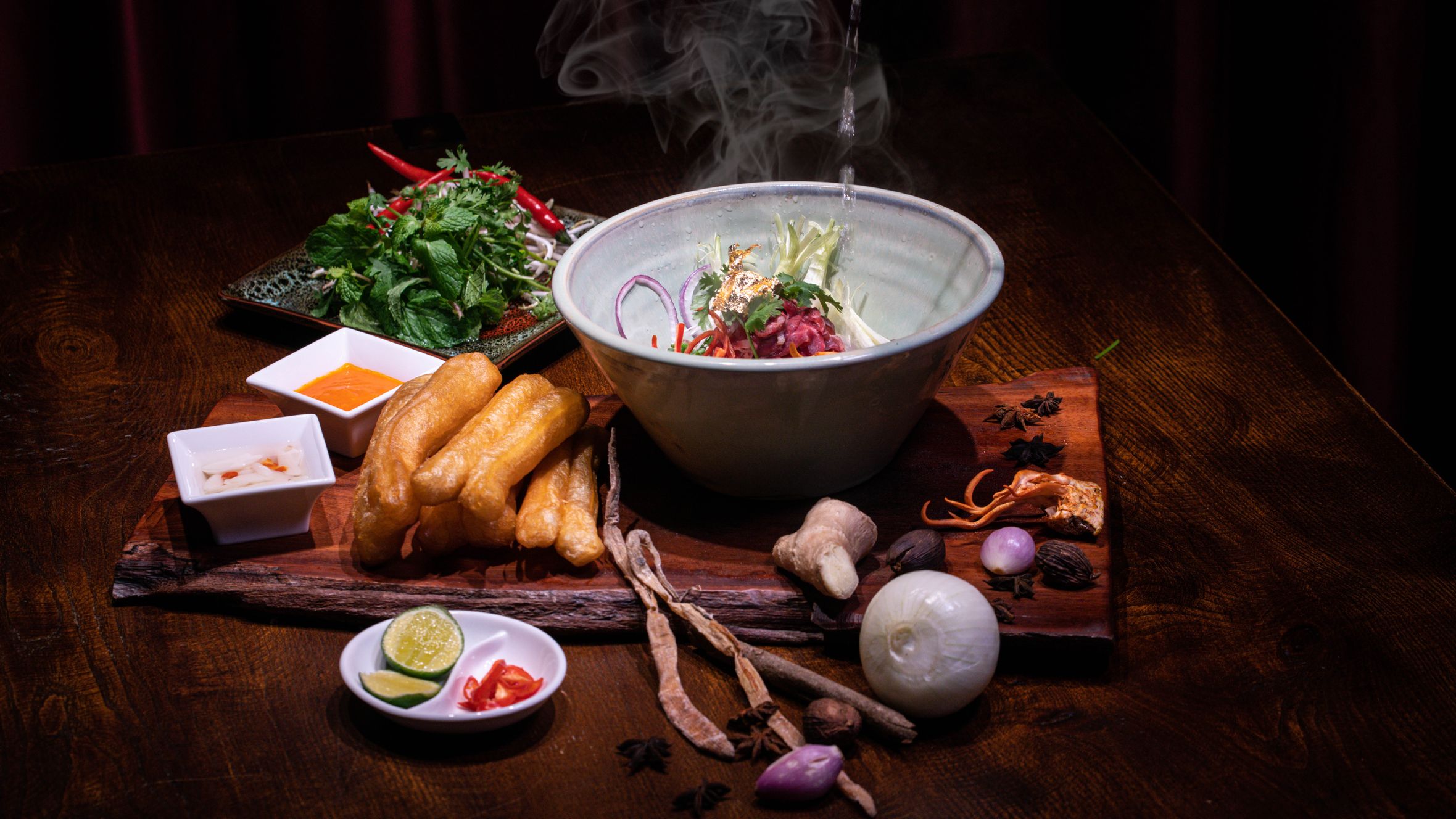
The table spread is where lau mam earns its reputation for excess. A properly served pot comes with a vegetable platter that barely fits — morning glory, water spinach, banana blossom, sliced eggplant, okra, bean sprouts, and whatever water hyacinth the kitchen sourced that morning. Then comes the protein: raw fish fillets (usually "ca bong lau," striped catfish, or snakehead), shrimp, squid, and pork slices. You cook everything in the pot, wrap it in rice paper or eat it over rice vermicelli, and spend the next hour reconsidering your life choices — in the best way.
The Mekong Original vs. What Saigon Does
Lau mam is not from Saigon. It comes from the Mekong Delta (메콩 델타 / 湄公河三角洲 / メコンデルタ) — specifically the provinces of An Giang, Dong Thap, and Can Tho, where fermenting fish in salt and rice bran has been a preservation method for centuries. In those provinces, the dish is blunter. The mam concentration is higher, the vegetable selection leans heavier on foraged riverbank greens, and the broth is often murkier, less finessed. There's no apology in it.
Saigon (사이공 / 西贡 / サイゴン)'s version is the migrant edit. Decades of Mekong families arriving in the city brought the dish with them, and somewhere along the way, it softened slightly for a broader palate. The coconut water got more generous. Shrimp and squid appeared alongside the freshwater fish. The vegetable platter grew theatrical. This is not dilution — it's adaptation, and the best Saigon spots still hit the fermented-fish note hard enough to be divisive.
For comparison, "bun bo Hue" has its own deeply fermented shrimp paste component ("mam ruoc"), but it's used as a background seasoning, not a structural base. Lau mam has nowhere to hide.

Photo by Sophie Roome on Pexels
Where to Eat It in Saigon
Lau Mam Bong Sung — Binh Thanh District
This is the place most Saigonese will point you to if they actually eat lau mam at home, not just for tourists. Located on Nguyen Xien Street in Binh Thanh, it's a no-frills shophouse operation that has been running the same stripped-down menu for years. The broth here is on the stronger end — mam ca loc from An Giang province, they'll tell you, if you ask. A pot for two with standard protein runs around 280,000–320,000 VND. Open from roughly 11 a.m. to 9 p.m., though the vegetable platter gets thin by early evening.
Quan Lau Mam Co Suong — District 4
District 4 has long been Saigon's working-class food neighborhood, and Co Suong fits the template: plastic stools, fluorescent lighting, and a pot that arrives within minutes. The house specialty is the "mam nhieu ca" option — a pot that cycles through three or four fish types rather than a single protein. Around 350,000 VND for two people eating properly. Open evenings only, from about 4 p.m. to 10 p.m., closed Mondays.
The Vegetable Situation
This is where Saigon lau mam genuinely outpaces its Delta origin. The sheer volume and variety of the vegetable platter — sometimes 12 to 15 types — is a Saigon elaboration. Morning glory and bean sprouts are universal, but good spots add keo neo (a sour riverine leaf), bap chuoi (shaved banana blossom), and cu hu dua (young coconut shoot), each of which takes the broth differently. The greens aren't garnish. They're half the meal.

Photo by Đậu Photograph on Pexels
Who It's Not For
Honestly? Anyone who finds fish sauce too intense will struggle here. The fermented paste is an order of magnitude more pungent. First-timers sometimes order it expecting something like a standard hotpot and spend the first ten minutes adjusting. That adjustment is worth making — but go in knowing what you're sitting down to.
Practical Notes
Most lau mam spots in Saigon don't take card payments, so bring cash. A full meal for two — pot, full vegetable platter, protein, rice paper, and vermicelli — lands between 280,000 and 400,000 VND depending on the district. Weeknight evenings are the sweet spot; weekends get crowded fast and pots sometimes run short on mam paste by 8 p.m.
Last updated · May 26, 2026 · independently researched, never sponsored.






