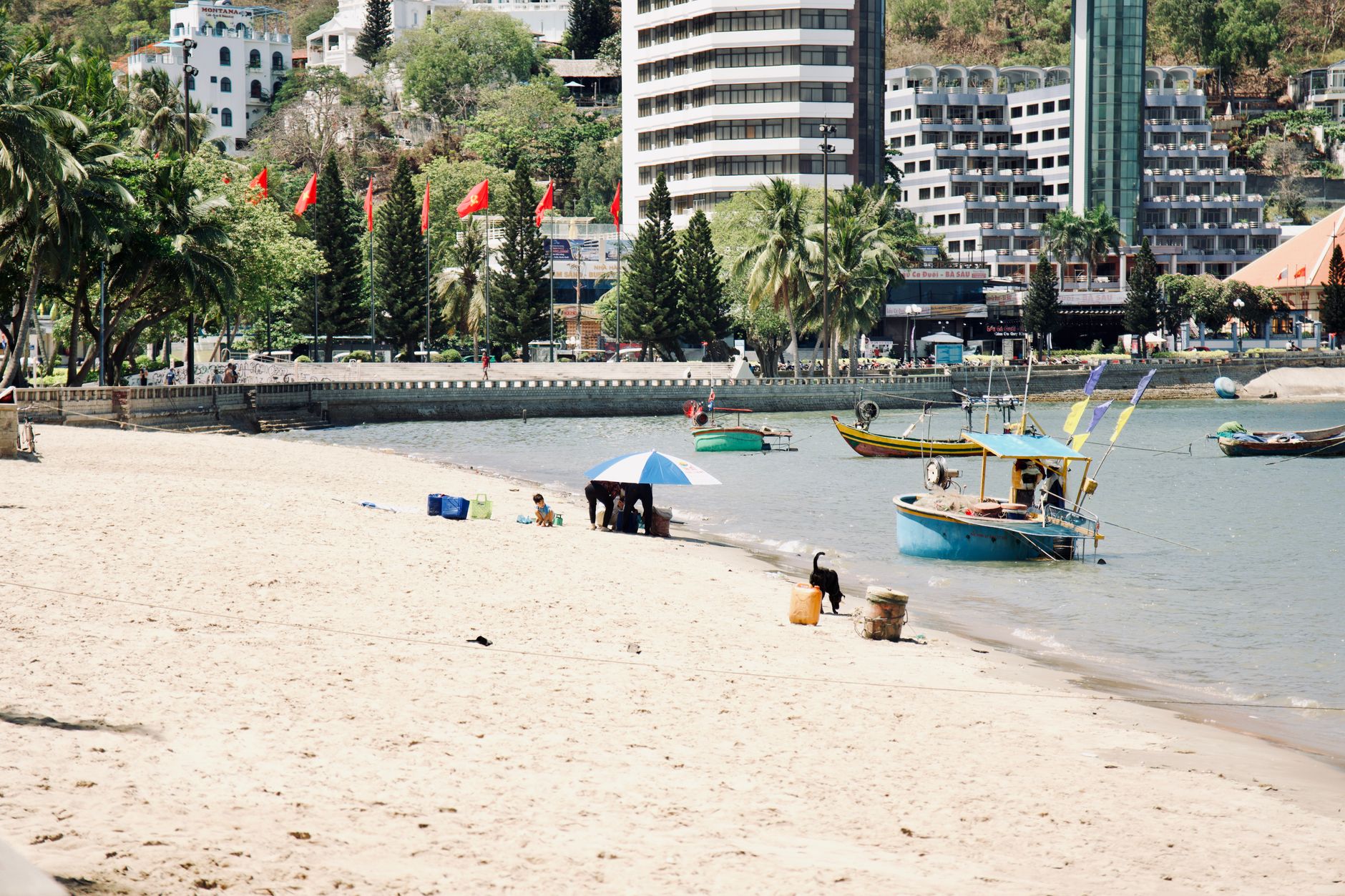
Vung Tau gets the crowds and the reputation. Long Hai and Ho Coc get the actual quiet. Both sit within Ba Ria–Vung Tau province, less than 30 km past the main Vung Tau strip, and on a good Saturday morning you can still find stretches of sand with more fishing boats than sunbeds.
Why Drivers Skip Vung Tau on a Weekend
Vung Tau (붕따우 / 头顿 / ブンタウ) is fine — there is seafood, there is surf, and the Back Beach promenade is genuinely lively. But anyone who has tried to find parking on Front Beach at 10am on a Sunday in July knows the problem. The town absorbs roughly 400,000 visitors on a peak holiday weekend, and the roads from Ho Chi Minh City (particularly the Vung Tau Expressway from District 9) back that up comprehensively.
The detour calculus is simple: from Saigon (사이공 / 西贡 / サイゴン)'s eastern edge, Long Hai adds maybe 35–40 minutes. Ho Coc adds another 20 minutes beyond that. Neither has the infrastructure for mass tourism yet, which is precisely the point. Local families from Ba Ria town, cyclists doing the coastal loop, and a low-key resort crowd make up most of the weekend traffic.
Long Hai — Fishing Town with a Beach Attached
Long Hai is the more developed of the two, though that's relative. The town has a working fishing harbour where boats leave before 4am and return mid-morning, and the beach itself runs about 3 km along the eastern shore. The water is calmer than Vung Tau's Back Beach and the sand is darker — not the white-powder variety, but clean and functional.
The seafood here is priced for the local market. A meal of grilled squid, steamed clams, and rice at one of the open-front restaurants lining Nguyen Tat Thanh street runs 150,000–250,000 VND per person. Morning "banh mi" from carts near the harbour costs 15,000 VND. Nobody is charging tourist premiums yet.
Accommodation is mostly guesthouses and small resorts in the 500,000–900,000 VND per night range for a fan or basic air-con room. A handful of mid-range resorts sit back from the beach road with pools — Lan Rung Resort is the longest-established and caters mostly to HCMC families. Book directly; their walk-in rate is often lower than the OTA price.
Ho Coc — The Harder-to-Reach Payoff
Ho Coc requires commitment. The beach is inside a protected forest zone — Ho Coc–Ho Tram Beach — and the access road runs through thick casuarina pine. The beach itself is long, backed by dunes in places, and genuinely underpopulated outside of major holidays like Tet or the April 30 break.
The tradeoff is infrastructure. Facilities are thin: a few resort clusters, some basic food stalls, and intermittent mobile signal. Ho Tram Strip, a casino resort complex a few kilometres north, sits in odd contrast to the quiet pine-backed stretches to the south. Ignore it; the southern end near the Ho Coc access point is where you want to be.
For the full experience, stay overnight at one of the forest-edge bungalow operations — prices range from 800,000 to 1,500,000 VND for a basic bungalow. Early morning at Ho Coc, before day-trippers arrive from Long Hai or Ba Ria, is genuinely good. The only sound is wind through the casuarinas and whatever the birds are doing.

Photo by Quang Vuong on Pexels
Binh Chau Hot Springs — The Detour Worth Taking
About 8 km inland from Ho Coc, Binh Chau Hot Springs is the kind of place that sounds more dramatic than it is, which is not a criticism. The springs reach 82°C at the source — hot enough to boil an egg in 15 minutes, which vendors will demonstrate for 30,000 VND — and the surrounding wetland area is pleasant to walk through. The resort development around it is dated but functional, with outdoor soaking pools at more manageable temperatures. Entry is 50,000 VND. It pairs well with a Ho Coc beach day: springs in the morning, sea in the afternoon.
The Coastal Road Drive
If you have a motorbike or car, the coastal road linking Long Hai, Ho Tram, and Ho Coc (loosely following Phuoc Thuan, Co Chien, and the D994 inland leg) is one of the better drives within range of Saigon. It is not spectacular mountain scenery — it is flat coast and fishing villages — but the scale is human, the road is mostly empty, and you can stop whenever something looks interesting without holding anyone up. Total driving distance from Long Hai to Binh Chau via the coast is around 40 km.

Photo by ㅤ quang vinh ㅤ on Pexels
Weekend Itinerary from Saigon
Saturday
Leave HCMC by 6:30am via the Vung Tau Expressway to avoid traffic. Drive through Vung Tau without stopping — or grab a coffee and "ca phe sua da" on Le Loi street if you need a break — then continue on DT44 toward Long Hai. Arrive by 9am. Walk the harbour, buy whatever the boats brought in, and arrange a beachside lunch at one of the Nguyen Tat Thanh restaurants. Afternoon at Long Hai beach. Check into your resort before sundown.
Sunday
Early start. Drive the coastal road to Ho Coc by 7:30am before day-trippers. Two hours at the beach, then cut inland to Binh Chau for the hot springs and a late breakfast. Back to HCMC via Ba Ria and the expressway — you should be home before the Sunday afternoon traffic builds, which means leaving Binh Chau by noon.
Total driving distance for the loop from HCMC: roughly 260–280 km depending on your route home.
Frequently Asked Questions
How far are Long Hai and Ho Coc from Saigon compared to Vung Tau?
Long Hai sits less than 30 km past the main Vung Tau strip, adding roughly 35-40 minutes to the drive from Saigon's eastern edge. Ho Coc is another 20 minutes beyond Long Hai. Neither destination has the infrastructure that draws mass tourism, so the extra drive time effectively trades Vung Tau's 400,000-visitor peak weekends for stretches of sand with more fishing boats than sunbeds.
What does food cost at Long Hai compared to a tourist beach town?
Long Hai seafood is priced for the local market. A meal of grilled squid, steamed clams, and rice at open-front restaurants on Nguyen Tat Thanh street runs 150,000-250,000 VND per person. Banh mi from harbour carts costs 15,000 VND. Guesthouse and basic resort accommodation runs 500,000-900,000 VND per night. Nobody is charging tourist premiums yet, and Lan Rung Resort's walk-in rate is often lower than online booking platforms.
When is the best time to visit Ho Coc to avoid crowds?
Ho Coc is genuinely underpopulated outside major holidays like Tet and the April 30 break. The best window is early morning on a non-holiday weekend, before day-trippers arrive from Long Hai or Ba Ria. Staying overnight in a forest-edge bungalow, priced at 800,000-1,500,000 VND, puts you there at first light when the beach is quiet and the only sounds are wind through the casuarina pines.
Practical Notes
Both Long Hai and Ho Coc are cash-dominant — bring VND, as ATMs thin out past Ba Ria town. The sea here can have strong lateral currents from October through January; check conditions before swimming and note the flag system at any staffed beach section. Weekday visits, if your schedule allows, are a different proposition entirely: Long Hai fishing town on a Tuesday morning is as close to an unmediated coastal Vietnam experience as you will find within three hours of Saigon.
Last updated · May 26, 2026 · independently researched, never sponsored.