What it is
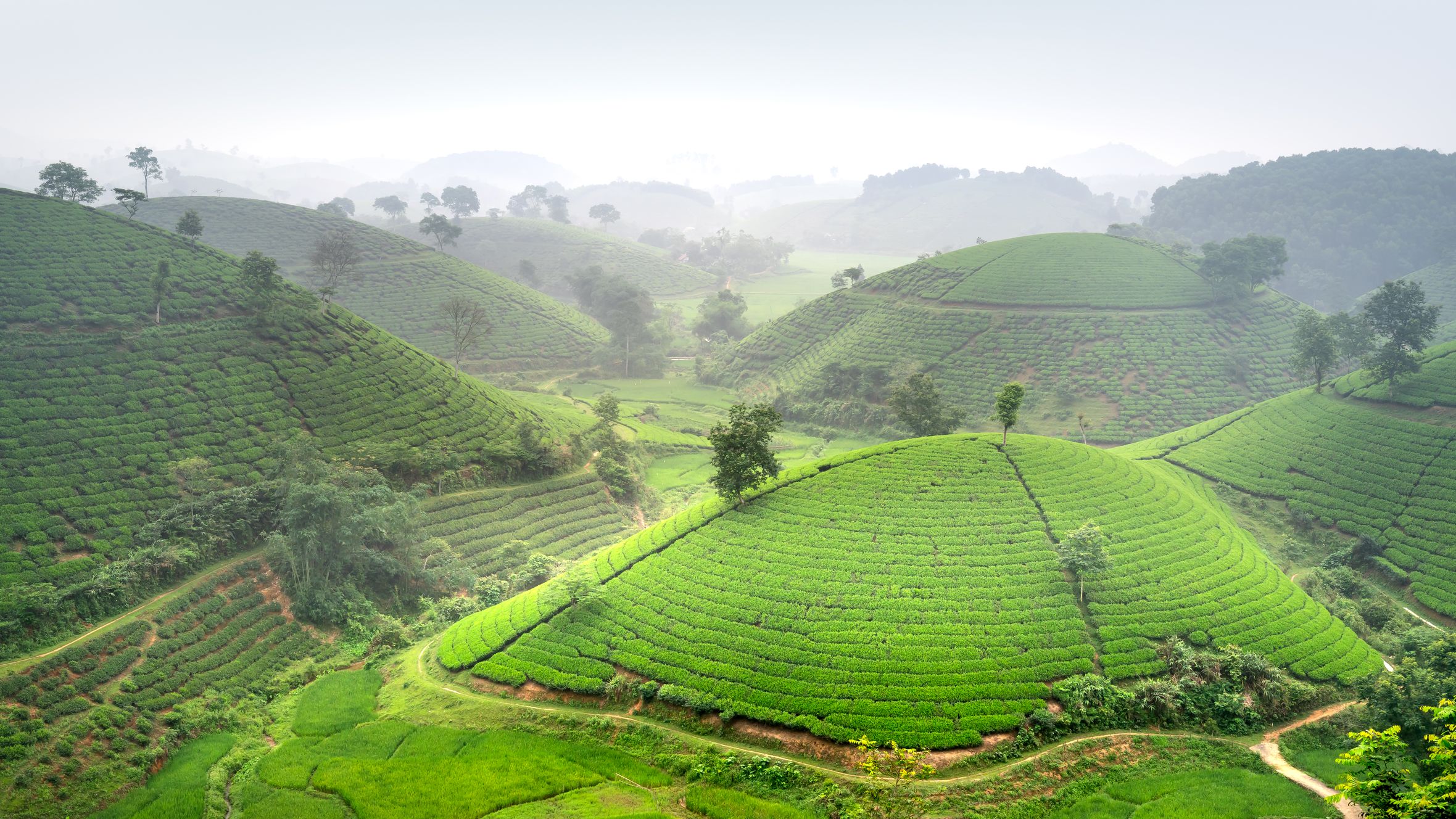
Mam Xoi — literally "sticky rice mound" — is the name locals gave to a hill in La Pan Tan commune whose terraced rice paddies spiral downward in concentric circles, looking exactly like a mound of "xoi" served on a plate. It sits at roughly 1,000m elevation in Mu Cang Chai district, now part of the expanded Lao Cai province (following the 2025 merger of Yen Bai into Lao Cai). The terraces here are part of a broader network carved by Hmong farmers over generations — recognized as a national heritage landscape since 2007.
This isn't some newly manufactured viewpoint. The Hmong have been shaping these hills for over 300 years. What changed is accessibility: a paved road now runs from the district town to within a short walk of the main overlook.
Why travelers go
Mam Xoi is one of the few places in northern Vietnam (베트남 / 越南 / ベトナム) where the scale of terraced agriculture hits you all at once. Unlike Sapa, where terraces are spread across a wide valley and often shrouded in cloud, Mam Xoi concentrates the effect into a single amphitheater of curving lines. You stand above it and see the entire formation — no hiking required to get the payoff.
Photographers come for the geometry. The concentric rings catch light differently throughout the day, and during flooding season (May–June) the water-filled paddies turn into mirrors. In September–October, the ripening rice turns the whole hill gold. It's a landscape that rewards patience more than expensive gear.
Best time to visit
Two windows stand out:
- Late May to mid-June — Water season. Terraces are flooded and reflective. Fewer tourists than autumn. Mornings tend to be clearer.
- Mid-September to early October — Harvest season. Golden rice, photogenic farmers at work, festival atmosphere in the villages. This is peak season; expect more visitors and higher homestay prices.
Avoid November through March — terraces are bare brown earth, and fog can close in for days. July–August is green but the rice isn't yet dramatic, and afternoon rain is near-guaranteed.
How to get there
From Hanoi
The most common route is Hanoi → Mu Cang Chai via National Road 32, passing through Nghia Lo. Total distance: about 280 km. By motorbike, budget 7–8 hours with stops. By car or private driver, 6–7 hours.
There's no direct bus to Mam Xoi itself. Overnight buses run from Hanoi (하노이 / 河内 / ハノイ)'s My Dinh station to Mu Cang Chai town (around 200,000–250,000 VND), departing in the evening and arriving early morning. From the town center, Mam Xoi viewpoint is 15 km south — you'll need a motorbike (rent locally for 150,000–200,000 VND/day) or arrange a "xe om" (motorbike taxi).
From Sapa or Lao Cai city
Since the provincial merger, Mu Cang Chai and Sapa are now in the same province, but the road between them is still long — roughly 180 km through mountain passes via Thanh Kim or the route through Than Uyen. Allow 5–6 hours by motorbike. This stretch is beautiful but demanding; don't attempt it in rain or after dark.
The final stretch
From Mu Cang Chai town, head south on Road 32 toward La Pan Tan. The Mam Xoi viewpoint is signposted. A short concrete staircase (about 200 steps) leads up to the main observation platform. Entry fee: 20,000 VND.

Photo by Quang Nguyen Vinh on Pexels
What to do
- Sunrise at the viewpoint — Arrive before 6:00 AM in season. You'll share it with a handful of photographers, not busloads.
- Walk into the terraces — A dirt path descends from the platform into the paddies themselves. Stick to the raised borders between fields. Don't trample crops.
- Visit La Pan Tan village — Hmong households here still weave traditional textiles. You can watch indigo dyeing if you ask politely (and don't shove a camera in anyone's face uninvited).
- Ride the Khau Pha Pass — One of Vietnam's most rewarding mountain roads, connecting Mu Cang Chai to Tu Le. About 30 km of switchbacks with panoramic views. Often compared to Ha Giang's passes but with less traffic.
- Soak in Tu Le hot springs — After a day on a motorbike, the natural hot springs in Tu Le (20 km north) are worth the detour. Basic facilities, 30,000 VND entry.
Where to eat
Mu Cang Chai town has a handful of "com pho" shops along the main road — rice plates, pho, and "bun" for 30,000–50,000 VND. Nothing fancy, but filling.
For something more memorable:
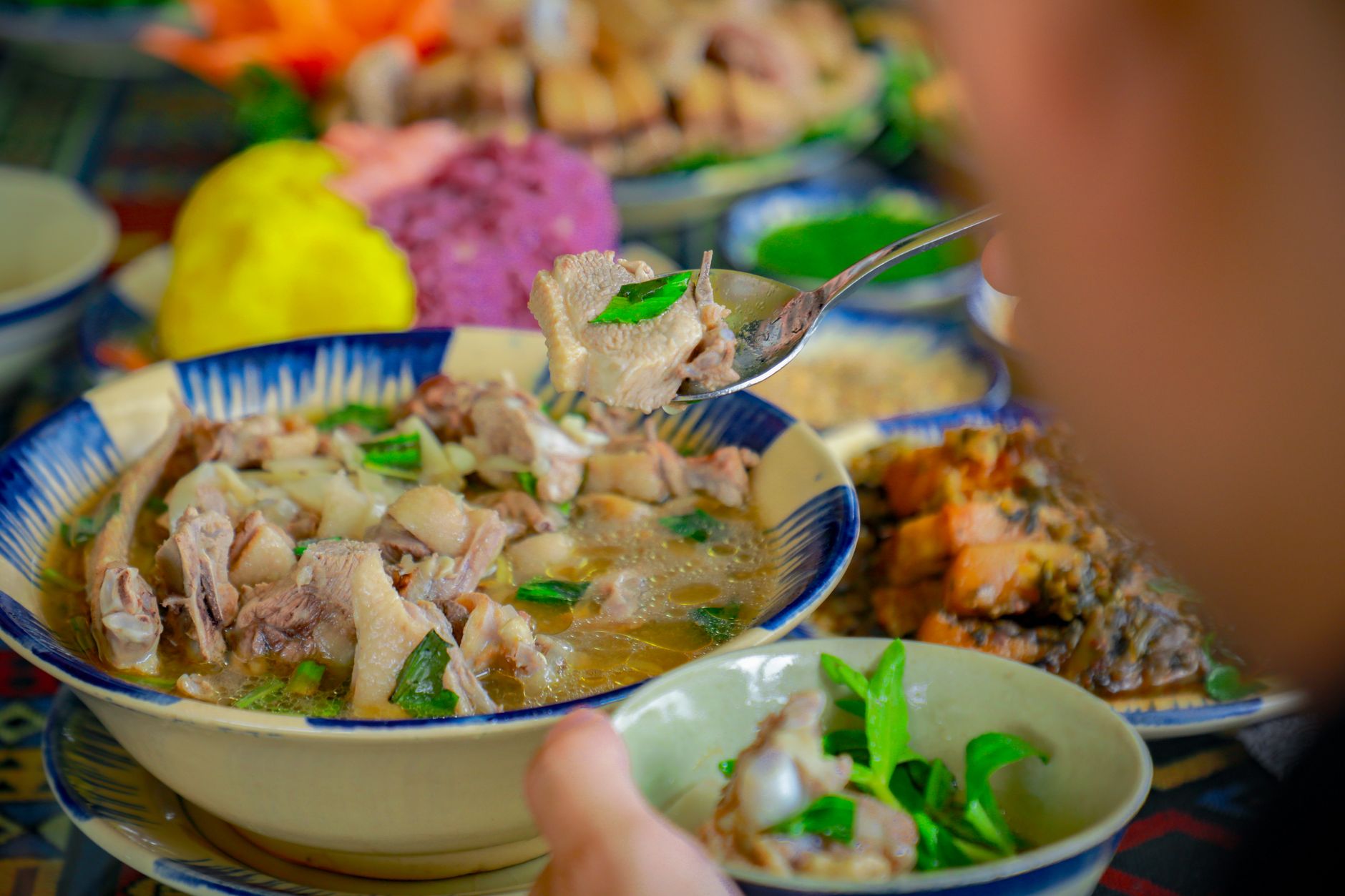
- Homestay dinners — Most homestays in La Pan Tan cook family-style meals using local ingredients: "xoi" (sticky rice steamed in banana leaf), grilled stream fish, stir-fried pumpkin shoots, and "thit trau gac bep" (buffalo meat smoked over the kitchen hearth). Expect 100,000–150,000 VND per person for a full spread.
- "Com lam" — Bamboo-tube rice, sold at roadside stalls near the pass. 15,000–20,000 VND per tube. Best eaten with sesame salt.
Don't expect craft coffee or brunch spots here. This is rural mountain Vietnam. Bring snacks if you're picky.
Where to stay
- Homestays in La Pan Tan — The closest accommodation to Mam Xoi. Basic wooden houses, shared bathrooms, mattresses on the floor. 150,000–300,000 VND/night. Book ahead during September–October or you'll be sleeping in someone's living room (which, honestly, might happen anyway).
- Mu Cang Chai town guesthouses — More comfort: private rooms, hot water, Wi-Fi that mostly works. 300,000–500,000 VND/night. Try the cluster near the market.
- Tu Le — A few mid-range options if you want a proper bed and the hot springs nearby. 400,000–700,000 VND.

Photo by Quang Nguyen Vinh on Pexels
Practical tips
- Cash only — No ATMs in La Pan Tan, and the single ATM in Mu Cang Chai town runs empty during peak season. Withdraw in Nghia Lo or Hanoi.
- Fuel up — Fill your tank in town. There's no petrol station between Mu Cang Chai and Tu Le.
- Layer up — Mornings at 1,000m elevation are cool even in summer (15–18°C at dawn in September). Bring a light jacket.
- Respect the fields — These are working farms, not a theme park. Stay on paths. Ask before photographing people. If someone waves you off, move on.
Common mistakes
- Day-tripping from Sapa — The distance makes this exhausting and rushed. Stay at least one night near Mam Xoi.
- Coming only for the viewpoint — The platform shot is iconic, but walking down into the terraces and through La Pan Tan village is where the real texture lives.
- Visiting midday — Flat overhead light kills the depth of the terraces. Early morning or late afternoon only.
- Skipping Khau Pha Pass — Some travelers drive straight in and out via Road 32. The pass is half the reason to come this far north.
Final note
Mam Xoi isn't hard to reach anymore, but it still feels earned — far enough from Hanoi to filter out the casual crowd, remote enough that you're eating dinner with a Hmong family instead of scrolling restaurant reviews. Go in season, stay the night, and give it more than a quick photo stop.
Last updated · May 29, 2026 · independently researched, never sponsored.