The Sunday market at Meo Vac runs on its own logic. Farmers walk down from the karst ridges before dawn, lead their buffalo to the trading pen, haggle in Hmong and Tay, and are half done by the time most visitors arrive. The food stalls exist because people need to eat after a long walk in — not because anyone planned a culinary experience for you. That's what makes it worth the trip.
Getting There
Meo Vac sits about 23 km east of Dong Van along the Ma Pi Leng pass road — one of the more demanding stretches of the Ha Giang Loop. If you're riding a motorbike from Ha Giang town, budget around three to four hours including stops. Most riders overnight in Dong Van and arrive at Meo Vac by 8 a.m., which is exactly when you want to be there. The livestock section winds down fast; by 10 a.m. the cattle pens are half empty.
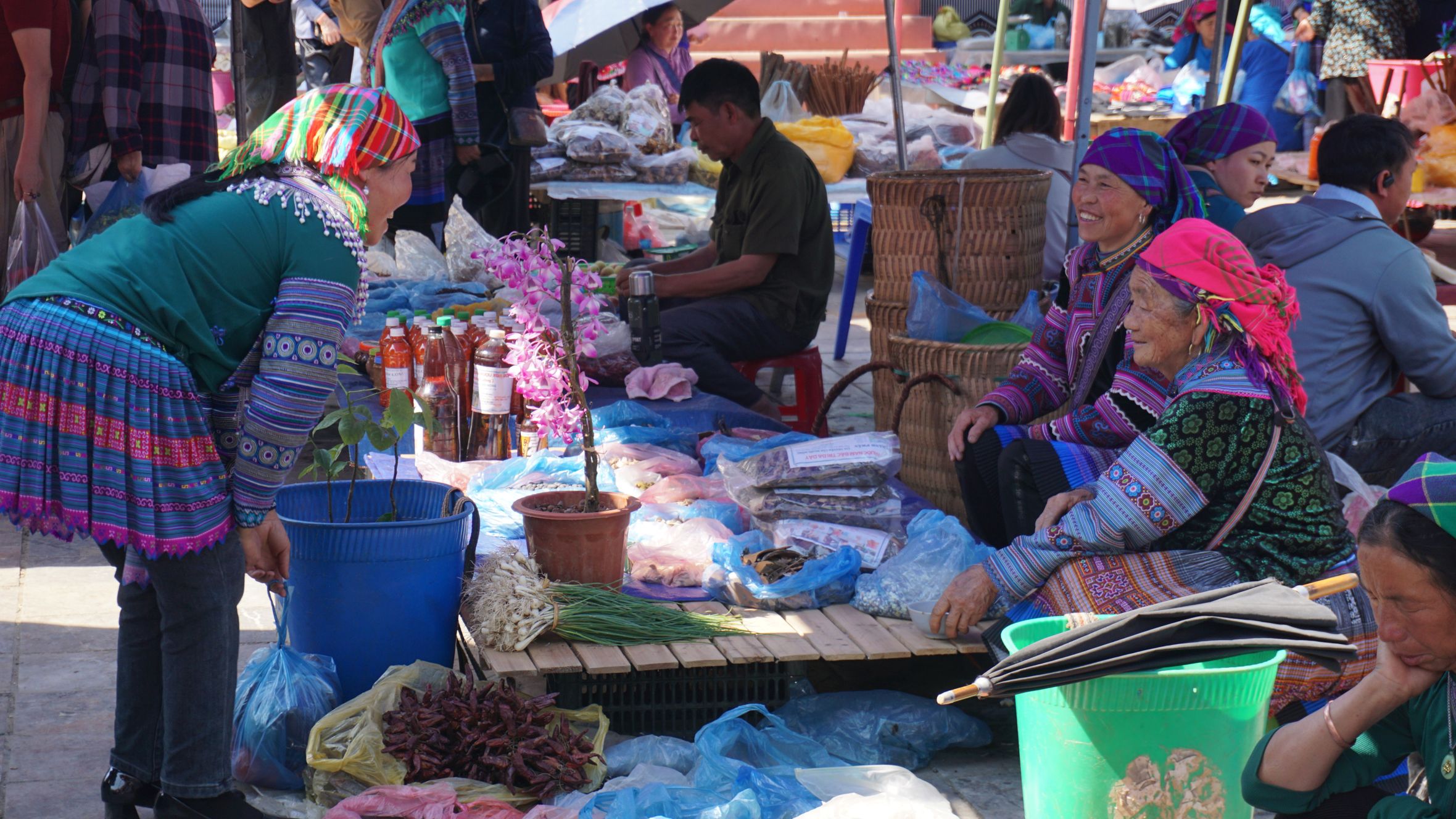
Sunday is the main market day, but a smaller version runs on Thursday. The Sunday crowd is larger and draws more ethnic minority vendors from surrounding villages — H'mong, Lo Lo, Giay, and Phu La communities often come down in traditional dress, not for tourists but because this is genuinely where they trade.
The Livestock Pen — Worth Seeing Before You Eat
Before you find food, walk to the cattle area below the main market terrace. Buffalo, pigs, and the occasional horse change hands here in transactions that involve a lot of touching the animal, muttered consultation, and handshakes that finalize deals worth several million dong. There's no showmanship in it. Vendors from the highlands bring animals they've raised; buyers assess them like mechanics assess a used engine. Spend twenty minutes here and the rest of the market makes more sense.

Photo by Suki Lee on Pexels
What to Eat
Thit Nuong — The Main Event
"Thit nuong" at Meo Vac means pork and occasionally beef skewered on bamboo and grilled over charcoal on low metal grates. The meat is marinated in a mix that typically includes lemongrass, chili, and what locals call "mac khen" — a Sichuan pepper-adjacent spice from the northern highlands that has a citrusy, slightly numbing edge. You'll smell the smoke from 50 meters away.
A standard serving runs 15,000–25,000 VND per skewer depending on meat type and size. Buy four or five, find a low plastic stool, and eat with your hands. Some stalls add a dipping sauce of fermented soybean paste thinned with chili — ask for it if it's not already on the table.
Com Lam — Rice Cooked in Bamboo
"Com lam" is glutinous rice packed into green bamboo tubes and roasted over open fire until the outside chars and the inside steams into something dense and faintly smoky. It's a staple across the northern highlands and Meo Vac's vendors do a clean version of it. One tube costs around 10,000–15,000 VND. Split it open at the table and eat it alongside thit nuong — the combination works the way rice and grilled meat tends to work, which is to say well.
Ruou Ngo — Corn Wine
This is the drink of the market. "Ruou ngo" is corn-based rice wine, distilled locally and poured from repurposed plastic water bottles. It's dry, strong (usually 35–45% ABV, sometimes higher from home stills), and tastes like the corn it came from. A small cup will cost you almost nothing — sometimes vendors pour the first one free for anyone sitting down to eat. Drink slowly; the altitude and the morning sun do their own work.
If you want something milder, a few stalls sell hot tea, and one or two permanent vendors near the main steps sell instant coffee in styrofoam cups. It is what it is.
Other Stalls Worth Noting
Look for vendors selling "thang co", a horse-meat stew that is traditional to H'mong markets across the northern highlands. The smell is assertive and the broth is dark — it polarizes people, but it's the most culturally specific thing you can eat here. Not every week has a thang co vendor; ask around when you arrive.
There are also dried chili vendors, stalls selling hand-embroidered cloth, and a row of women selling fresh vegetables that traveled down from steep garden plots most visitors will never see. Buy something even if you don't need it.

Photo by Nguyen Truong Khang on Pexels
Practical Notes
Arrive by 8 a.m. if you want to see the livestock trade at full activity; arrive by 9 a.m. if you're primarily there for food. The market is mostly done by noon. Bring cash in small denominations — 10,000 and 20,000 VND notes — since no one runs card readers here. The road from Dong Van is paved but narrow; if you're renting a motorbike in Ha Giang, make sure the brakes are solid before you attempt Ma Pi Leng.
Last updated · May 26, 2026 · independently researched, never sponsored.