Sapa's morning market wraps up by 9 a.m. If you sleep in, you miss the whole point.
Where the Market Actually Is
The main market building sits just off Ham Rong Street, a short walk downhill from the central square. But the better eating happens around the edges and along the lane behind it, where H'mong and Dao vendors set up folding tables and low plastic stools before dawn. Come between 6 and 8 a.m. The stalls selling to tourists get busier after 8; the ones selling to locals start packing up.
Thang Co — the One Dish You Should Know
"Thang co" is the market dish most people photograph and few actually order. That's a mistake. It's a horse-meat stew — sometimes mixed with other offal, simmered for hours in a large pot with spices including star anise, lemongrass, and dried chili. The smell hits you before you see the pot. It's funky and rich, not delicate. Vendors ladle it into enamel bowls and serve it with a wedge of steamed "com lam" or plain rice. A bowl runs about 30,000–40,000 VND.
If the idea of horse meat is a hard stop for you, most thang co stalls also have a milder beef version. Ask by pointing at the cow — vendors are used to the confusion.
Com Lam — Sticky Rice in Bamboo
"Com lam" is glutinous rice packed into green bamboo tubes and roasted over charcoal. You peel back the charred outer layer and eat the rice directly from the tube, or pry it out in one piece. The bamboo gives the rice a faint grassy, smoky flavor that plain sticky rice doesn't have. At altitude, in cold air, it's one of the better things you can put in your hands.
Stalls selling com lam usually have them stacked in a bundle near the fire. Price is typically 10,000–15,000 VND per tube. Order two.
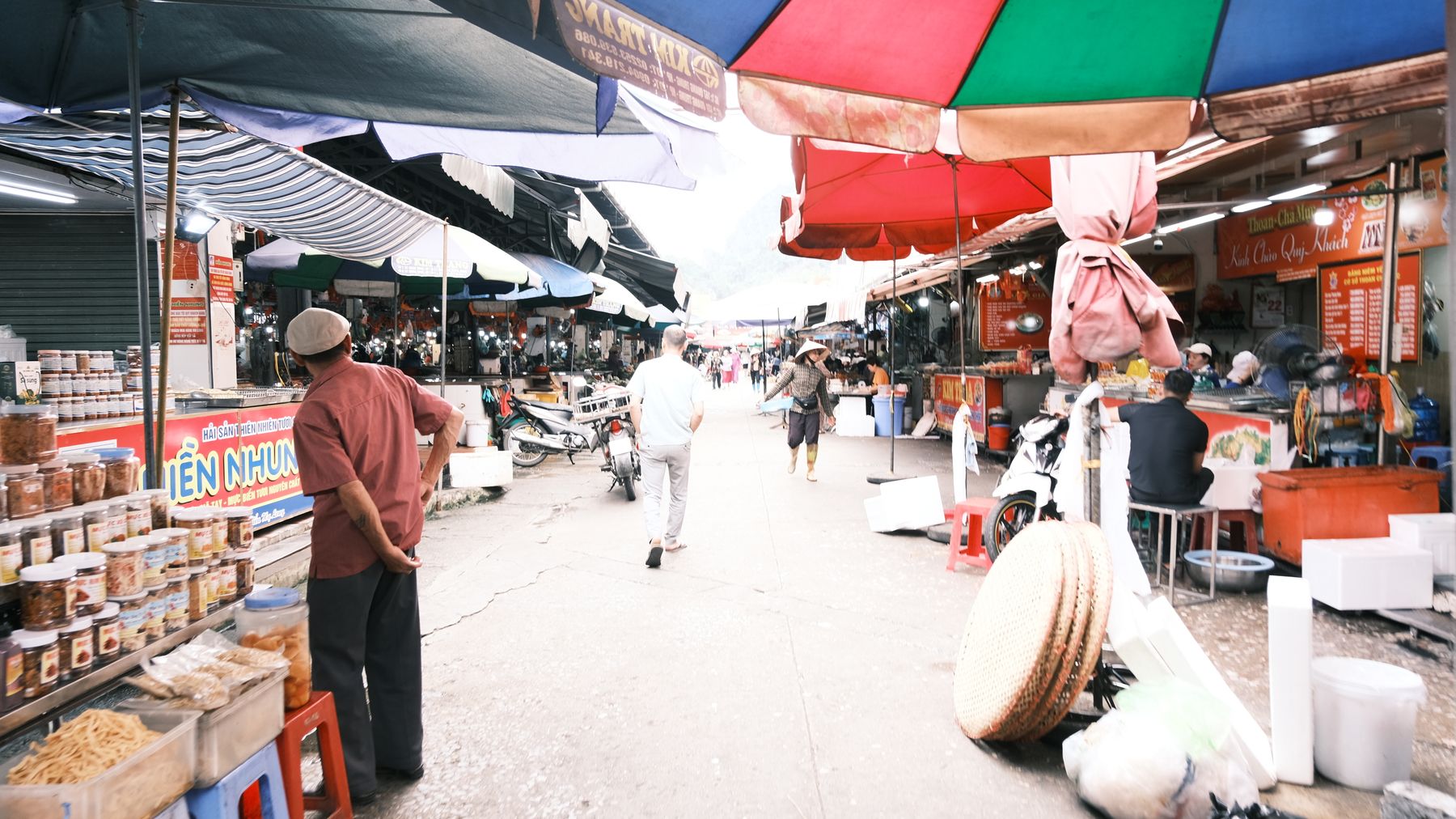
Photo by Đạt Nguyễn on Pexels
Grilled Corn and Pork Skewers
Along the outer edge of the market, you'll find small grills going from first light. Corn ("ngo nuong") — the local highland variety, smaller and tougher than the lowland kind — gets grilled slow over charcoal and brushed with a bit of salt or chili oil. It's not sweet like the corn you get elsewhere in Vietnam (베트남 / 越南 / ベトナム). It's starchy and savory and takes some chewing.
Pork skewers ("thit nuong") are the other constant. Pork fat chars better at altitude, don't ask me why. Skewers go for about 10,000–15,000 VND each. You'll smell them before you see them.
Banh Day — the Sticky Cake
"Banh day" is a small round cake made from pounded glutinous rice, white and slightly chewy, sometimes wrapped in banana leaf. It's a staple of H'mong food culture and shows up at most markets in the northern highlands. On its own it's plain; vendors often pair it with a salty sesame or peanut dip. If you're coming from Hanoi, where "banh chung" is the sticky-rice touchstone, banh day is its mountain cousin — simpler, denser, no filling.
A small stack costs 5,000–10,000 VND. Some vendors sell them in sets of four with the dipping sauce included.

Photo by Vietnam Tri Duong Photographer on Pexels
Drinks at the Market
Corn wine — "ruou ngo" — is the local spirit, distilled from fermented highland corn. Vendors sell it in recycled plastic bottles. The quality varies considerably; the stuff sold to tourists near the market entrance is often watered down. If you want to try it properly, look for the older women selling in the back rows who have a small cup out as a tasting sample.
For something non-alcoholic, look for fresh ginger tea served from a thermos. At 1,500 meters, the morning air in Sapa (사파 / 沙坝 / サパ) is cold enough that a paper cup of hot tea earns its price.
How to Navigate the Market Without Being Steered
Sapa's market gets a lot of foot traffic from tour groups, and some vendors near the entrance know how to price accordingly. The fix is simple: walk past the first two rows and find where people are eating, not browsing. If the only customers at a stall are other tourists, keep walking. If there's a Dao woman eating a bowl of thang co and ignoring you entirely, sit down next to her.
Prices are generally fixed at this kind of market — haggling over a 30,000 VND bowl of stew isn't worth the awkwardness. For handicrafts and textiles you'll find in the main building, negotiating is expected, but that's a different transaction.
Practical Notes
Bring small bills: 500,000 VND notes cause problems at food stalls. The market is busiest and most alive between 6:30 and 8 a.m.; by 9 it's thinning out. Dress for cold — even in April, mornings in Sapa sit around 12–15°C, and you'll be standing around outside.
Last updated · May 26, 2026 · independently researched, never sponsored.