
What Nha Tram Cot actually is
Nha Tram Cot — literally "Hundred-Column House" — is a wooden residential house built between 1901 and 1903 in Long An province, about 45 km southwest of Saigon. The name is not an exaggeration: the structure stands on exactly 100 hardwood columns, each carved with motifs drawn from both Vietnamese and French decorative traditions.
The house was commissioned by Tran Van Hoa, a wealthy landowner during the French colonial period, and took local craftsmen roughly two years to complete. What makes it unusual is the collision of styles. The floor plan follows southern Vietnamese "nha ruong" (traditional timber-frame) architecture, but the carvings borrow freely from Chinese, Khmer, and French art nouveau patterns. It was recognized as a national architectural monument in 1997 and remains one of the best-preserved examples of turn-of-the-century Mekong Delta (메콩 델타 / 湄公河三角洲 / メコンデルタ) residential design.
The house sits in the hamlet of Long Huu Tay, Can Duoc district, surrounded by rice paddies and fruit orchards. It is not a museum with ticket counters and audio guides — it is a family home that happens to be historically significant, and visiting feels more like being invited into someone's ancestral property than touring an attraction.
Why travelers go
Most visitors come for the woodwork. The 100 columns feature carvings of dragons, phoenixes, bats, deer, and grape vines — a strange mix that reflects the cultural cross-pollination happening in the Mekong Delta at the turn of the 20th century. Some columns took individual craftsmen months to complete. The level of detail is genuinely impressive, not because someone tells you it is, but because you can stand in front of a single column for five minutes and keep finding new figures hidden in the grain.
Beyond architecture nerds, the house appeals to anyone interested in how wealthy southern Vietnamese families lived during the colonial era. The interior still contains original furniture, altar pieces, and household items. Photographers also make the trip — the interplay of light through the wooden lattice screens produces the kind of shots you don't get at more polished heritage sites.
It's also blissfully uncrowded. On most days, you might share the space with a handful of Vietnamese university students on a field trip and no one else.
Best time to visit
The dry season — December through April — is the most comfortable window. Long An's climate is standard Mekong Delta: hot, humid, and split between a wet season (May to November) and a dry season. Visiting in July or August means navigating flooded rural roads and sitting through afternoon downpours that can turn a 30-minute motorbike ride into an hour of mud.
Weekday mornings are ideal. The house faces east, so morning light fills the interior and makes the carvings easier to photograph. By early afternoon, it gets hot enough inside that you won't want to linger.

Photo by VINVIVU ® on Pexels
How to get there from Saigon
From central Saigon (사이공 / 西贡 / サイゴン), you have three realistic options:
Motorbike or car
The most common route is Highway 1A south toward Can Duoc, then follow signs to Long Huu Tay hamlet. Total distance is roughly 45 km, which takes about 1.5 hours on a motorbike depending on traffic getting out of the city. If you rent a motorbike in Saigon (150,000–200,000 VND/day for a semi-auto), this is the cheapest and most flexible option.
Grab car
A Grab car from District 1 runs approximately 350,000–450,000 VND one way. Arrange a round trip with waiting time if you don't want to gamble on finding a return ride from rural Long An.
Bus + xe om
Catch a bus from Ben Thanh Market area or Cho Lon bus station heading toward Can Duoc (around 30,000–40,000 VND). From Can Duoc town center, hire a "xe om" (motorbike taxi) for the remaining 5 km to the house — expect to pay 30,000–50,000 VND. This option is slower but works fine if you're not in a rush.
What to do at Nha Tram Cot
Study the columns up close. Each of the 100 columns has distinct carvings. The front columns feature the most elaborate work — look for the French grape-vine motifs mixed with Chinese dragons. Ask the caretaker (usually a family descendant) to point out the columns that took the longest to carve.
Walk through the three main sections. The house follows a traditional three-part layout: a front reception hall, a central ancestral worship area, and rear living quarters. The ancestral altar in the center section is original, with inlaid mother-of-pearl panels that still catch light.
Check the roof structure. The timber-frame joinery uses no nails — a hallmark of traditional Vietnamese "nha ruong" construction. The roof beams lock together through mortise-and-tenon joints, and the whole structure has survived over a century of delta humidity and seasonal flooding.
Photograph the lattice screens. The carved wooden screens separating rooms filter light into geometric patterns on the floor. Late morning (around 9–10 AM) produces the best effect.
Talk to the caretaker. If you speak some Vietnamese — or bring a friend who does — the family members who maintain the house can share stories about the original owner and the craftsmen who built it. This isn't a scripted tour; it's a conversation.
Where to eat nearby
Can Duoc district is not a food destination, but you won't go hungry. The town market has standard southern Vietnamese fare: "hu tieu" (Mekong-style pork noodle soup) is the local go-to breakfast, served at stalls for 30,000–40,000 VND. For something more specific to Long An, look for "banh canh" with crab — the thick tapioca noodles in a peppery broth are a regional staple. There are a few "com binh dan" (rice-and-dish) shops along the main road near Can Duoc center where lunch runs 35,000–50,000 VND.
If you're heading back toward Saigon afterward, the stretch of Highway 1A through Binh Chanh has clusters of roadside restaurants serving grilled snakehead fish and sour soup — decent and cheap.
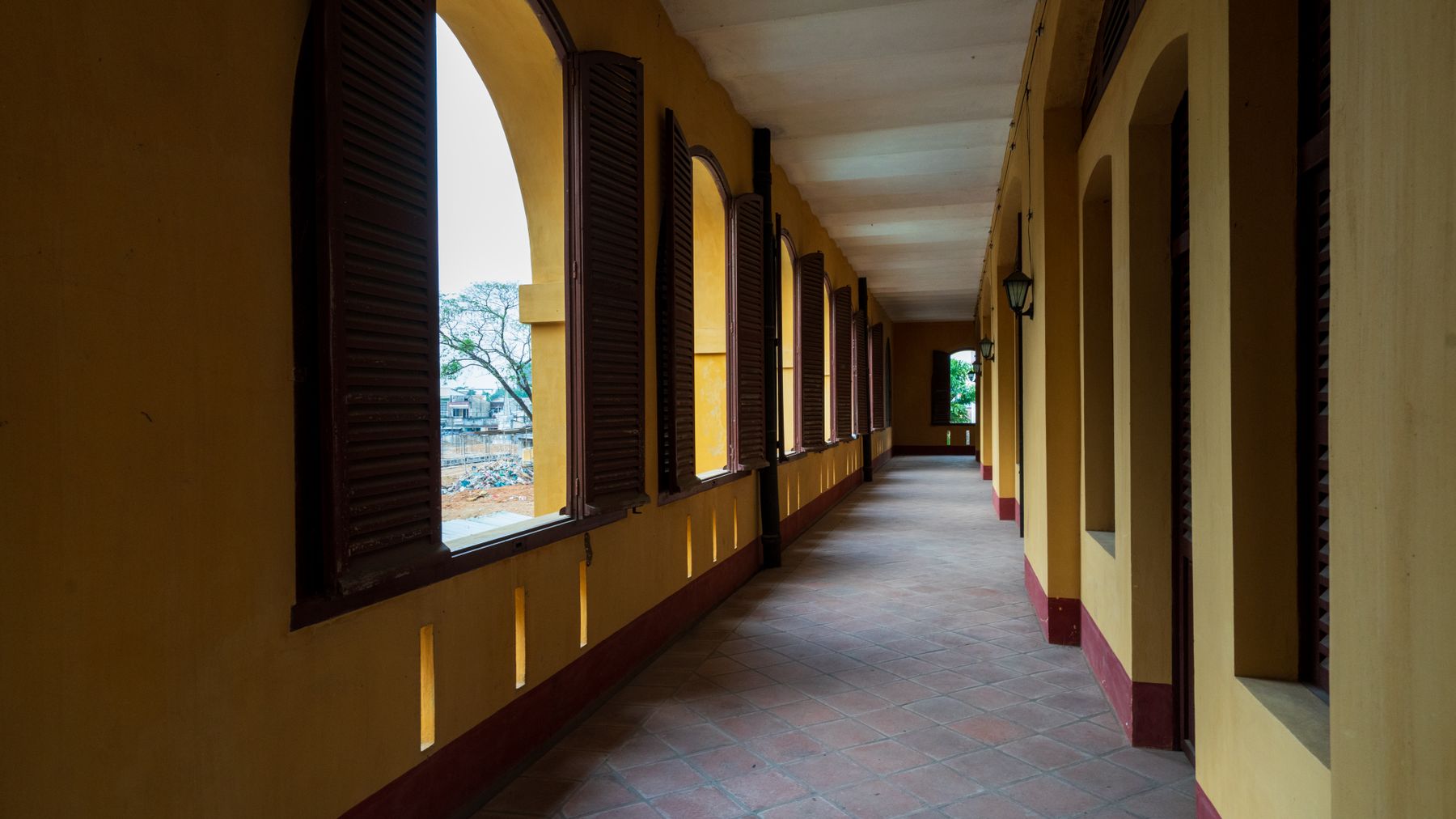
Photo by Đan Thy Nguyễn Mai on Pexels
Where to stay
Most travelers visit Nha Tram Cot as a half-day trip from Saigon and don't stay overnight in Long An. If you do want to stay, Can Duoc town has a handful of basic guesthouses ("nha nghi") in the 200,000–350,000 VND range — clean enough, air-conditioned, but no frills. For anything more comfortable, head back to Saigon or continue southwest to Can Tho, which has proper hotels and hostels across all budgets.
Practical tips locals would tell you
- Bring cash. There's no ticket booth or entrance fee, but a small donation (50,000–100,000 VND) to the family maintaining the house is appropriate and appreciated.
- Wear shoes you can slip off easily. You'll remove footwear before entering.
- Dress modestly. The house contains an active ancestral altar. Cover your shoulders and knees as a basic courtesy.
- Charge your phone. There are no charging stations nearby, and if you're navigating by Google Maps on a motorbike, battery drain is real.
- Combine with other stops. On the way back to Saigon, you can detour to the Cu Chi Tunnels (about 60 km north) to make a full day of it.
Common mistakes to avoid
Don't show up after 4 PM. The house is not formally "open" — it's a private residence that welcomes visitors during daylight hours, typically before 5 PM. Arriving late means the caretaker may have left.
Don't rely solely on GPS. Some map apps route you through narrow hamlet paths that are impassable after rain. Stick to paved roads and ask locals for the final kilometer if your map looks uncertain.
Don't rush. Nha Tram Cot rewards slow looking. People who spend 20 minutes and leave tend to miss the best details — the carved bats under the eaves, the mother-of-pearl inlays on the altar, the joinery in the roof beams. Give it at least an hour.
Last updated · May 29, 2026 · independently researched, never sponsored.