"Bun sua" — literally jellyfish noodle soup — is one of those dishes that barely registers on the tourist radar, which is exactly why it's worth tracking down. The Khanh Hoa coast has been processing jellyfish for centuries, and locals treat this bowl with the same quiet pride that Hue reserves for "bun bo hue". The jellyfish are salted, pressed, sliced into translucent ribbons, then served cold or at room temperature in a clean broth with thin rice vermicelli, fresh herbs, and a drizzle of chili fish sauce. It's subtle, a little briny, faintly springy. Not dramatic — just precise.
The tourist version, sold in air-conditioned restaurants along Tran Phu and around the night market, tends to oversell it: thick broth, too much garnish, jellyfish that's been sitting too long and gone rubbery. The local version is lighter, served faster, and costs a third of the price.
What Makes the Local Version Different
Authentic bun sua uses "sua dong" — moon jellyfish processed fresh in Khanh Hoa — not the imported dried-and-reconstituted product that some restaurants substitute. The texture should be slightly firm but yielding, never chewy. The broth is thin and savory, built from pork bone with a small amount of shrimp paste for depth, not the thick sweetened stuff served to tourists. Fresh herbs — perilla, mint, bean sprouts — come on the side, not buried under the noodles. A squeeze of calamansi lime at the end is non-negotiable.
Price range for the real thing: 25,000–40,000 VND per bowl. If you're paying over 60,000 VND, you're in tourist territory.
Where to Eat It
Quan Bun Sua Ba Giang
Address: 16 Hoang Hoa Tham, Phuoc Tan Ward Hours: 6:00–11:00 (sells out fast) Price: 30,000 VND
This is the benchmark. Ba Giang has been running this stall for over 20 years and still shows up before dawn to prep. The jellyfish here is sliced thin and served cold alongside warm broth poured separately — you combine at the table. Ask for "them ot" if you want extra chili. It's a residential street with minimal signage; look for the blue plastic stools around 7am and the crowd of xe om drivers.
Co Ut — Bun Sua Cho Dam
Address: Cho Dam Market, stall near the north entrance (Nguyen Hong Son side) Hours: 5:30–10:30 Price: 25,000–30,000 VND
Dam Market is the best place to eat in Nha Trang (냐짱 / 芽庄 / ニャチャン) full stop, and Co Ut's bun sua stall is why you show up before 8am. The jellyfish ribbons are noticeably wider here — more chew, slightly different cure — and the broth has a cleaner shrimp note. She also does a version with added pork skin ("da heo") for 35,000 VND that's worth the upgrade. Crowded, fast, cash only, no English menu — point at what the person next to you ordered.
Quan 79 — Bun Sua Lan Ong
Address: 79 Lan Ong, Van Thanh Ward Hours: 6:30–12:00 Price: 30,000–35,000 VND
A slightly later start than the others, which makes it useful if you're not a dawn eater. The owner sources jellyfish directly from a cousin who processes them in Cam Ranh, so supply is consistent year-round — some stalls quietly swap to inferior product in the off-season. The herb plate here is generous, and they keep a small jar of fermented shrimp paste ("mam ruoc") on each table if you want to push the flavor harder.
Bun Sua Thi — Nguyen Thi Minh Khai
Address: 112 Nguyen Thi Minh Khai, Phuoc Tien Ward Hours: 6:00–10:30 Price: 25,000 VND
The cheapest bowl on this list and probably the most spartan — a fold-up table, two gas burners, and a woman who has been making the same bowl for 15 years. The jellyfish-to-noodle ratio skews higher toward jellyfish, which is either a plus or minus depending on how much you like it. Neighborhood crowd only. No frills, no concessions. Worth the trip to this quiet residential block if you want to eat completely off the tourist track.
Skip This: Bun Sua at the Nha Trang Night Market
The stalls clustered around the night market on Tran Phu and the surrounding tourist-facing area use jellyfish that's been sitting in cooling units too long. The texture goes gummy after a few hours, and these stalls often serve it warm rather than cold-rinsed, which changes the whole character of the dish. Prices run 60,000–80,000 VND for an inferior product. Skip it.
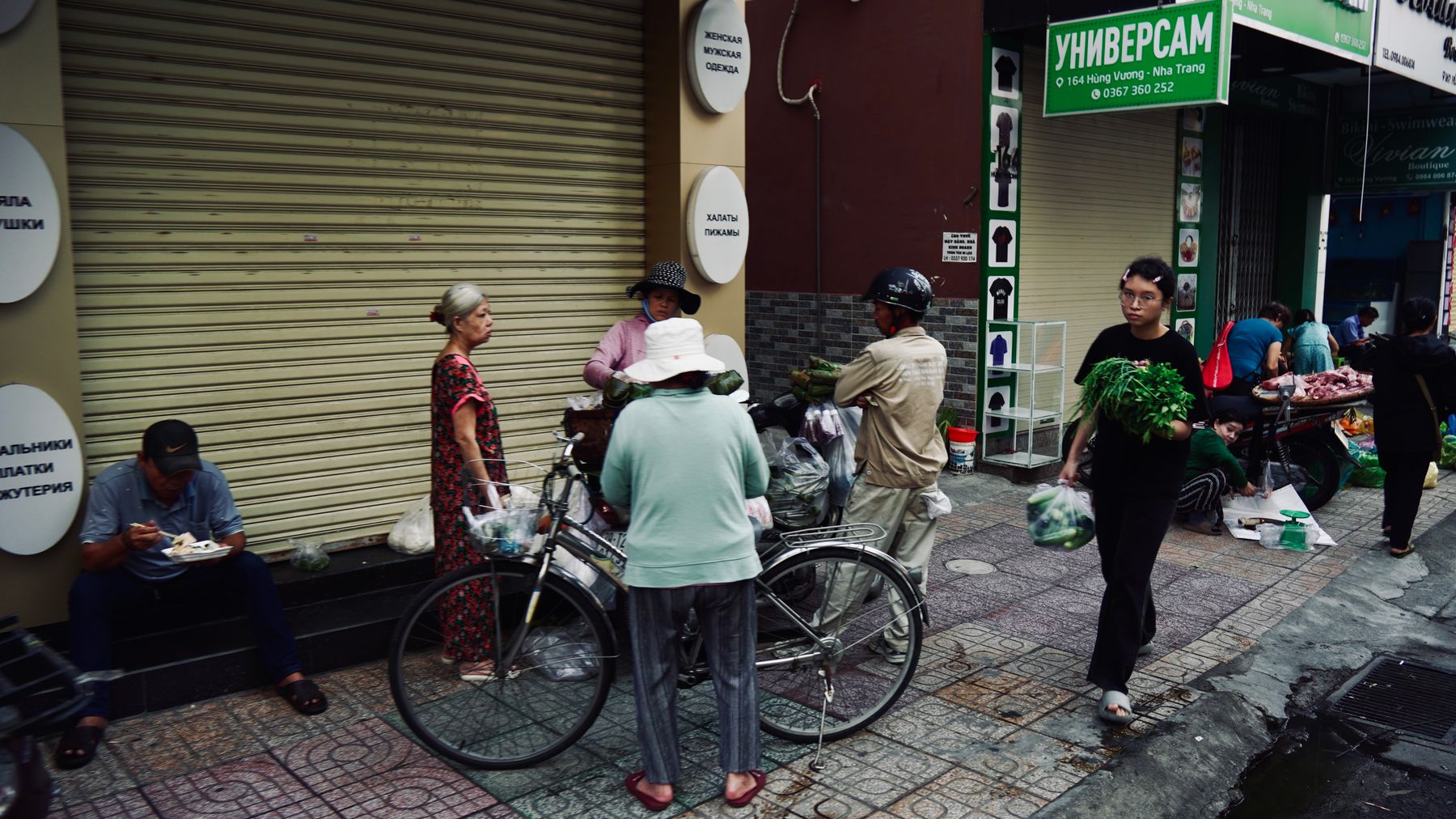
Photo by Tuan Vy on Pexels
Seasonal Note
Jellyfish season peaks from roughly April through August along the Khanh Hoa coast, which is when you'll find the freshest product. Outside of season, good stalls still operate using properly salted preserved sua — but be more selective. If the jellyfish in your bowl looks greyish or smells strongly of ammonia, that's a bad batch. The legitimate stalls will often tell you upfront if supply is limited that day.

Photo by RDNE Stock project on Pexels
Ordering It
Point and say "mot bowl bun sua" — that's enough. At market stalls, hold up one finger. If you want extra jellyfish: "them sua". Spicy: "co ot". No fish sauce: "khong nuoc mam" (rarely necessary — the broth is already seasoned lightly). Add the calamansi yourself at the table.
Practical Notes
All of the stalls above are morning-only and sell out by late morning — plan breakfast or a 7am detour, not lunch. None of them take cards. Bring small bills (20,000–50,000 VND notes). A motorbike taxi from the beach strip to any of these spots runs under 30,000 VND each way.
Last updated · May 26, 2026 · independently researched, never sponsored.