The bottles lined up outside every guesthouse and market stall in Sapa look almost decorative — dark glass, crude labels, whole dried fruits floating inside. But "ruou tao meo", the highland apple wine of the northwest, is worth paying attention to beyond its aesthetic. Made from the small, wild tao meo fruit (a relative of the rose hip, sometimes called the Chinese hawthorn or Malus doumeri depending on who you ask), this is a genuinely regional drink tied to the H'Mong and Dao communities of the Hoang Lien Son range.
What Tao Meo Actually Is
The tao meo fruit grows at elevations above 1,000 metres across Ha Giang, Lao Cai, and Yen Bai provinces. It's small — roughly the size of a crabapple — with a deep red skin and a flavour that sits somewhere between a sour plum and a rosehip: tannic, slightly astringent, with a floral back note. The fruit is harvested in autumn, between September and November, which is also when you'll find the freshest batches of ruou tao meo hitting the market.
The wine itself is made by steeping the dried or fresh fruit in rice spirit — usually "ruou gao", a clear, high-proof distillate common across northern Vietnam (베트남 / 越南 / ベトナム). Some producers add honey or medicinal herbs. The infusion period runs from a few weeks to several months. The result is a wine that ranges from pale gold to deep amber, with an alcohol content typically between 20 and 35 percent depending on the base spirit used. It doesn't taste like a French fruit wine. It's closer to a sharp, fruit-forward digestif.
Why People Drink It
In Sapa (사파 / 沙坝 / サパ), ruou tao meo is consumed the way most Vietnamese highland spirits are — slowly, in small glasses, often alongside food. It's considered good for digestion and circulation, and you'll hear locals claim it helps with altitude-related fatigue. Whether or not you buy the medicinal pitch, the flavour profile actually does pair well with grilled meats and the smoky dishes common at H'Mong household tables.
For visitors, it's also one of the more honest souvenirs Sapa offers. Unlike mass-produced lacquerware or synthetic indigo scarves, a bottle of decent ruou tao meo is something people genuinely make and drink here. The fruit grows on the hillsides. The distillation happens in villages. The commercial versions in town are a step removed from that, but the better ones still carry that authenticity.
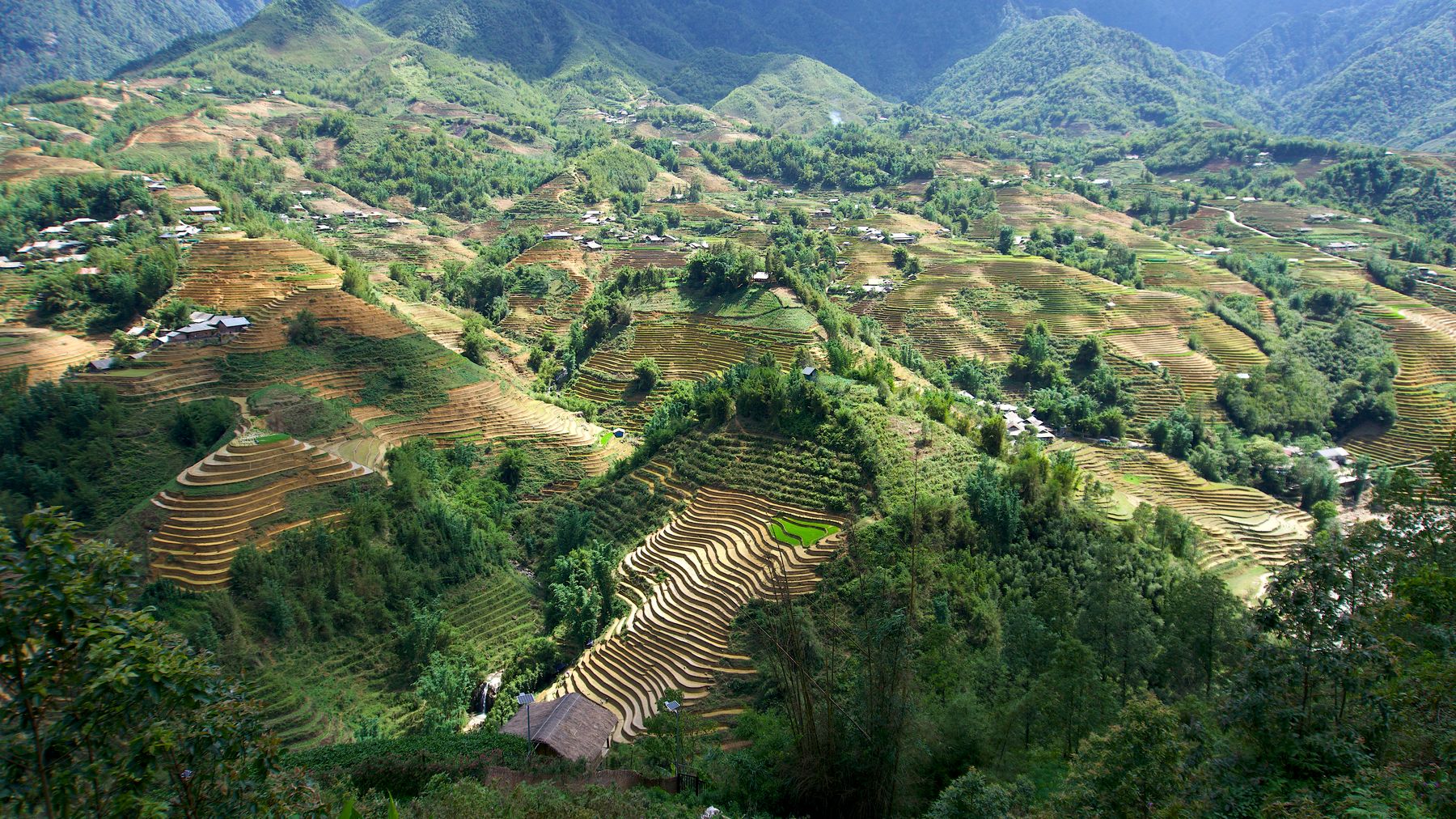
Photo by Duong Nguyen on Pexels
Where to Buy It in Sapa
The Sapa market area along Cau May Street and the central market building off Ngu Chi Son is where most visitors first encounter ruou tao meo. Prices range from around 80,000 to 250,000 VND per bottle depending on size and quality. The cheapest bottles (under 60,000 VND) are generally bulk-produced rice spirit with minimal fruit content — the liquid is too clear and the fruit inside looks decorative rather than steeped. Skip those.
Better options:
H'Mong village producers near Ta Phin and Ban Ho
If you're doing a day walk out to Ta Phin village, about 12 km northeast of Sapa town, several Red Dao households sell home-produced ruou tao meo directly. The bottles aren't labeled and the pricing is negotiable — usually 100,000 to 150,000 VND for 500ml. The fruit content is higher and the colour is noticeably darker. This is as close to source as most visitors get.
Sapa market vendors you can actually trust
Look for stalls where the seller opens a bottle for you to smell before buying. The aroma should be fruity and slightly fermented, not harsh or nail-polish sharp. A good ruou tao meo has a round, slightly sweet nose before the alcohol hits. If it smells purely of grain spirit, the fruit ratio is too low.
Specialty shops on Muong Hoa Street
A few shops closer to the cable car terminus have moved toward slightly more curated highland products — sealed bottles with consistent labels, sometimes from cooperatives working with H'Mong growers directly. Prices here run 180,000 to 250,000 VND per 500ml bottle but the quality is more reliable if you're buying to take home.
How to Drink It
Serve it at room temperature or very slightly chilled — not cold. Cold kills the fruit aromatics. Pour small measures, around 30ml, in a short glass. It's sipping wine, not a mixer. If you're drinking it with food in Sapa, pair it with "thang co" (the H'Mong horse-meat stew you'll find at weekend markets) or grilled pork skewers from the street stalls along Cau May after dark.
If you're flying home from Hanoi, ruou tao meo travels fine in checked luggage wrapped in clothing. A 500ml bottle typically clears customs without issue as a personal amount. Buy two.

Photo by Koen Swiers on Pexels
What to Watch For
The main thing to avoid is adulterated base spirit. There have been periodic reports across northern Vietnam of low-quality industrial alcohol being used in homemade spirits — not specific to tao meo, but relevant to any unlabeled highland wine. The practical test: smell before you buy, buy from someone who drinks it themselves, and avoid anything priced suspiciously low. Stick to bottles where the fruit is visible inside and the liquid has genuine colour depth.
Practical Notes
Ruou tao meo is best bought in Sapa itself rather than Hanoi souvenir shops, where it's often repackaged and marked up. September through December is the best window for fresh-batch wine made from the current year's harvest. A 500ml bottle at a fair price in Sapa market is around 120,000 to 150,000 VND — that's a reasonable benchmark for quality without paying the tourist premium.
Last updated · May 29, 2026 · independently researched, never sponsored.