
Sticky-rice wine — "ruou nep" — doesn't get the attention that Vietnamese coffee or bia hoi gets from foreign visitors, but it's been on Vietnamese tables for centuries. It's fermented at home, sold in repurposed plastic bottles at rural markets, and consumed in a single gulp on the fifth day of the fifth lunar month. Understanding it tells you a lot about how Vietnamese people relate to food, ritual, and the agricultural calendar.
What Ruou Nep Actually Is
Ruou nep is made from glutinous rice — "gao nep" — inoculated with a dried yeast-mold cake called "banh men" and left to ferment for several days to a few weeks. The result is a mildly alcoholic liquid (typically 8–15% ABV depending on fermentation time and rice variety) with a naturally sweet, slightly sour taste and a faint floral note from the mold cultures.
It's not the same as rice wine in the Japanese or Korean sense. Ruou nep is cloudier, less refined, and tastes more like something made in a kitchen than a factory — because it usually is.
The two most common forms are:
- Ruou nep trang — made with white glutinous rice. The wine is pale and relatively light, with a clean sweetness.
- Ruou nep than (or ruou nep cam) — made with purple or black glutinous rice. This version has a deep burgundy color, a more complex flavor with earthy, almost tannic notes, and tends to be slightly higher in natural sugars.
A third form worth knowing is "ruou nep cam" from the Can Tho and Mekong Delta (메콩 델타 / 湄公河三角洲 / メコンデルタ) region, where black glutinous rice from the Cam variety produces a wine with a dense, almost jammy character. You'll see it bottled and sold as a regional specialty alongside dried goods at delta markets.
The Doan Ngo Connection
The fifth day of the fifth lunar month is "Tet Doan Ngo" — sometimes called the mid-year festival or, colloquially, "giet sau bo" day (the day of killing parasites). It falls somewhere between late May and late June on the solar calendar.
The tradition holds that eating and drinking certain fermented foods at midday will purge intestinal worms and bad spirits from the body. Ruou nep is central to this: a small cup, taken on an empty stomach, first thing in the morning. Children and adults alike do it. The logic is folk-medical — fermentation equals beneficial acidity, acidity kills parasites — but the practice is taken seriously across generations and regions.
Alongside the wine, households prepare "com ruou" — fermented sticky rice that hasn't fully liquified, eaten as small balls with a slightly boozy, sweet tang — and "banh u" or "banh nep" (steamed glutinous rice parcels wrapped in banana or dong leaves). In central Vietnam (베트남 / 越南 / ベトナム), particularly around Hue, the pairing with "che" (sweet soup) is also common.
In Hanoi, you'll find markets selling pre-made com ruou and ruou nep by the cup in the days before Doan Ngo. In Saigon, the southern version leans slightly sweeter. In villages, families ferment their own.
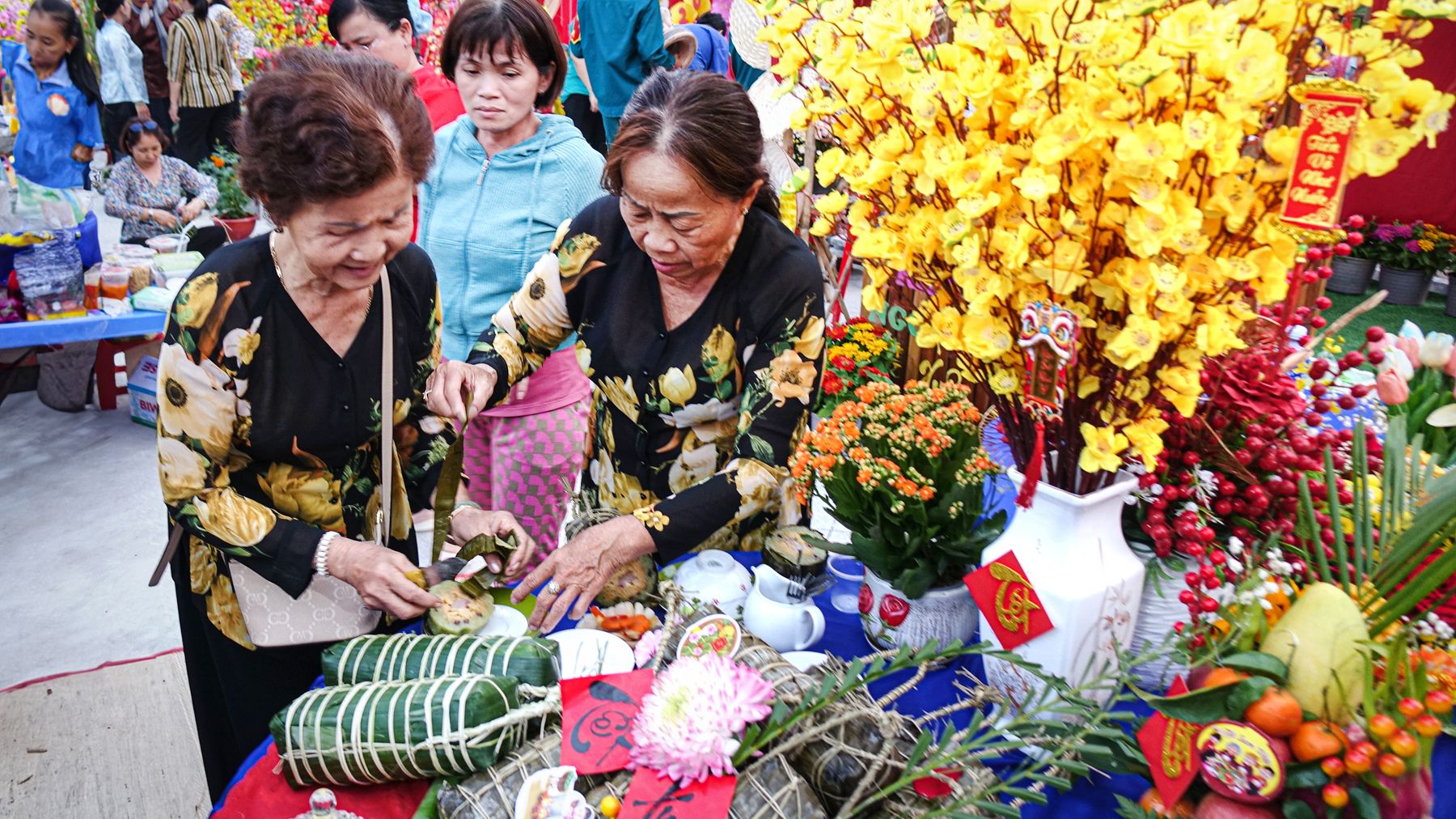
Photo by Vyvan BÙI VY VÂN on Pexels
How It's Made at Home
The process is straightforward but unforgiving if you rush it. Glutinous rice is soaked overnight, steamed until just cooked (not mushy), then spread on a tray to cool to roughly body temperature. Crushed banh men is dusted over the rice and mixed through. The rice is packed into a clay pot or glass jar, covered with cloth, and left somewhere warm — 28–32°C is ideal.
After two to three days, liquid begins pooling at the bottom. By day four or five, you have com ruou. Leave it another week and the solids break down further into full ruou nep liquid. Some makers add a small amount of boiled, cooled water at this stage to thin it; others press the mash through cloth to get a cleaner wine.
Banh men quality matters enormously. Good cakes — dried discs made from a proprietary blend of mold spores, herbs, and rice flour — produce a balanced fermentation. Bad or old cakes produce sour, vinegary wine. Brands from Binh Tay Market in Saigon or Dong Xuan Market in Hanoi are reliable starting points if you want to try making it.
Beyond Doan Ngo
Ruou nep isn't only a festival drink. It appears year-round:
- At Tet, families in the north ferment nep cam as part of the holiday spread alongside banh chung.
- At weddings and death anniversaries across the Mekong Delta, it's the house wine — poured from large ceramic urns.
- In the highlands, ethnic minority communities and Mai Chau) ferment communal jars of ruou nep drunk through bamboo straws, sometimes called "ruou can."
- Small roadside shops in Da Lat sell purple-rice wine by the 500ml bottle — 25,000–40,000 VND — as a take-home souvenir that actually tastes like something.
If you're in Hoi An, look for small ceramic bottles of locally produced ruou nep at the covered market on Tran Phu — vendors usually let you taste before you buy.

Photo by 🇻🇳🇻🇳 Việt Anh Nguyễn 🇻🇳🇻🇳 on Pexels
What to Look For (and Avoid)
Good ruou nep should smell sweet and slightly yeasty, not sharp or acetone-like. A mild sourness is normal; strong vinegar smell means the fermentation went wrong or the wine is old. Color should be consistent — pale gold for white rice, deep violet for black rice — without sediment that looks curdled.
In tourist areas, some vendors sell artificially colored versions passed off as nep cam. The giveaway is an unnaturally vivid purple and a thin, watery body with no real flavor depth. Real nep cam has a slightly viscous texture and a color closer to dark grape juice than neon ink.
Practical Notes
Ruou nep is easy to find before and during Tet Doan Ngo at any wet market in Vietnam; outside that window, look for it at specialty dry-goods shops or village markets rather than supermarkets. It doesn't travel well once open — drink within a week or refrigerate and use within two. If you're visiting a home during a festival period and offered a cup, drink it — refusing is considered mildly bad form.
Last updated · May 29, 2026 · independently researched, never sponsored.




