Four hours is enough time to eat your way through the core of what Saigon does better than almost anywhere: fast, cheap, intensely flavored food served on plastic stools at the edge of a busy street. This route stays inside District 1 and moves roughly south to north, so you can walk or grab a Grab bike between stops without backtracking.
7:00 AM — Start with Pho
Saigon (사이공 / 西贡 / サイゴン) wakes up early and so should you. The city's version of "pho" runs sweeter and cleaner than Hanoi's — a lighter broth, a wider bowl, and a plate of fresh herbs and bean sprouts on the side that you tear up and drop in yourself. Pho Hoa Pasteur on Pasteur Street in District 1 has been open since 1960 and the formula hasn't changed much. A bowl runs 60,000–80,000 VND. Arrive before 8:00 AM if you want a seat without a wait.
If you prefer something smaller and less touristy, the cluster of carts along Nguyen Trai near Pham Ngu Lao does solid bowls for 40,000–50,000 VND, though the English menu is nonexistent — just point at what the person next to you ordered.
8:00 AM — Coffee Before You Continue
Don't skip this step. "Ca phe sua da" — iced coffee with sweetened condensed milk — is as much a part of Saigon mornings as the food. The coffee here is robusta-heavy, meaning it hits harder than what you're probably used to. It's strong enough to feel it behind your eyes.
Cong Ca Phe on Pham Ngu Lao has reliable ca phe sua da (연유커피 / 越南冰咖啡 / ベトナムアイスコーヒー) and air conditioning if you need to sit down properly. For a more local vibe, find a sidewalk plastic-stool spot on Bui Vien or along De Tham — they all do essentially the same coffee for 20,000–30,000 VND a glass. Sit for 20 minutes. Watch the motorbikes. You'll understand Saigon better after one glass than after an hour at a rooftop bar.
9:00 AM — Banh Mi
By mid-morning you want something handheld. "Banh mi" in Saigon means a light, crackery French-influenced baguette split open and packed with a combination of pate, cold cuts, pickled daikon and carrot, cucumber, coriander, and chili. The bread-to-filling ratio matters — a good banh mi has a thin, airy crust that shatters when you bite it, not a dense chewy loaf.
Banh Mi Huynh Hoa on Le Thi Rieng Street is the most famous in District 1. It's not the cheapest (around 45,000–55,000 VND) but the fillings are stacked absurdly high and the bread is good. There's usually a short queue in the morning. Alternatively, any banh mi cart with a charcoal-heated tray of meats out front is worth stopping at — look for the ones with a crowd of locals, not tourists, waiting.

Photo by Tuan Vy on Pexels
10:00 AM — Com Tam
"Com tam" — broken rice — is the lunch dish Saigon is most attached to. The name refers to the fragmented rice grains left over from milling, which were historically cheaper and ended up becoming the base of one of the city's defining meals. A full plate comes with grilled pork ribs (suon), a steamed egg and pork cake (cha trung hap), a thin slice of pork skin (bi), and fish sauce with sliced chili and garlic poured over everything.
Com Tam Ba Ghien on Dang Van Ngu (about a 10-minute Grab ride from District 1 into District 3) is considered one of the benchmarks. A full plate is around 60,000–75,000 VND. If you'd rather stay in District 1, look along the side streets off Nguyen Thi Minh Khai — com tam shops are everywhere and most open from 7:00 AM through early afternoon.
This is a heavy plate. You'll want to slow down here.
11:00 AM — Walk It Off Around Ben Thanh
Ben Thanh Market sits about 1 km from the Nguyen Thi Minh Khai corridor and makes a useful anchor for the end of the route. The market itself is worth a 20-minute walk-through — it's loud, dense, and the vendors around the perimeter sell fresh produce, dried goods, and spices that give you a better sense of what's actually cooking in Saigon kitchens than any restaurant menu will.
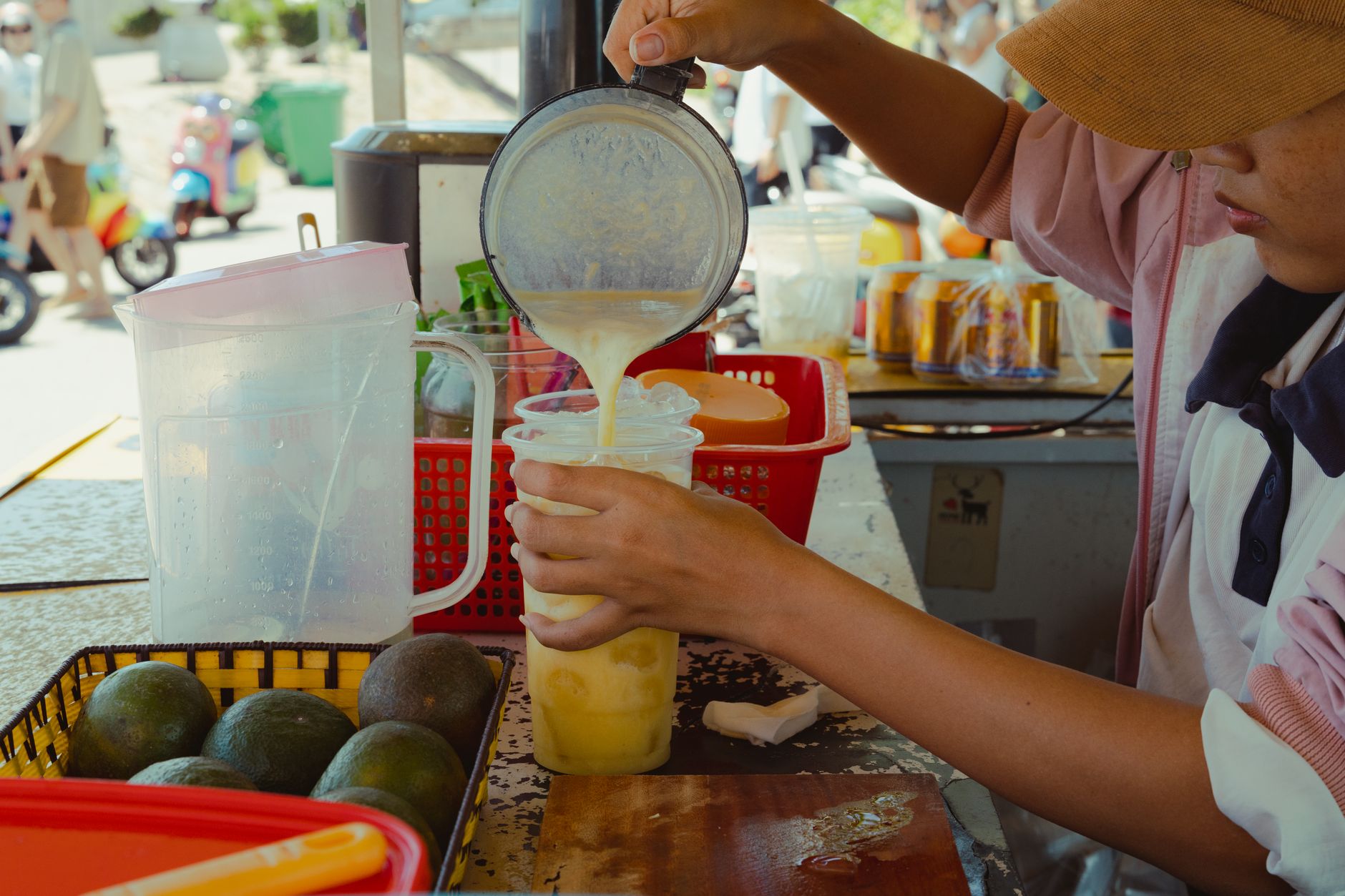
Don't feel obligated to buy anything. The surrounding streets — particularly Le Loi and Nam Ky Khoi Nghia — have good coffee shops and juice stalls if you need a sit-down break before finishing.

Photo by Pragyan Bezbaruah on Pexels
What This Route Costs
Budget roughly 200,000–250,000 VND (around USD 8–10) for all four food stops if you're eating solo. Add 50,000–80,000 VND for Grab rides if you don't want to walk the full route. Everything here is cash — have small bills on hand.
Practical Notes
Start no later than 7:30 AM; most of these spots are at their best in the morning and some com tam shops sell out by noon. Wear something you can move in — Saigon in the morning is already hot, and you'll be sitting on low stools and stepping around motorbikes. A tote bag beats a backpack for navigating tight market corridors.
Last updated · May 29, 2026 · independently researched, never sponsored.