
The restaurants with TripAdvisor stickers in their windows are fine. But the real eating in Sapa costs 20,000 VND, happens on a plastic stool, and involves a cook who has never once thought about her online presence. These places are not hidden in any dramatic sense — they are just invisible to the algorithm.
Why the Best Stalls Have Zero Reviews
Sapa (사파 / 沙坝 / サパ)'s tourist corridor runs predictably: Cau May Street, the area around Ham Rong Mountain, the blocks circling the old church. Most visitors eat within a 500-meter radius of their hotel and never stray. The no-name stalls that locals actually use are a five-minute walk in any direction from that corridor — sometimes less. They do not have Facebook pages. The owners do not speak English and are not trying to attract foreign customers. That is precisely why the food is good: it is calibrated for the H'mong, Dao, and Kinh locals who eat there every single day, not for tourist palates.
Sapa Market: Go Before 8 a.m.
Sapa Market (Cho Sapa, on Ngu Chi Son Street) gets written about constantly, but almost every guide describes the upper floors where textiles and souvenirs are sold. The ground level and the back alley that runs along the eastern side of the building are different. Arrive before 8 a.m. and you will find a row of women cooking over portable gas burners. Look for the woman with the wide aluminum pot — she is almost certainly making "bun bo Hue", the spice-forward beef noodle soup from central Vietnam (베트남 / 越南 / ベトナム) that has found an unlikely following in northern mountain towns. A bowl is 25,000–30,000 VND. No menu, no sign. Point at the pot and hold up one finger.
Further along the same alley, there is usually at least one stall doing "banh cuon" — steamed rice rolls filled with minced pork and wood-ear mushroom, served with a light fish sauce broth. The rolls are made to order, pulled off a cloth stretched over a steaming pot. Watch the technique for a minute before you sit down. It is worth it.

Photo by quang vinh on Pexels
The Alley Behind the Bus Station
The inter-province bus station on Ngu Chi Son Street is unglamorous and most tourists pass through it as fast as possible. The alley directly behind it — running roughly parallel to the main road — has four or five food operations that run from around 6 a.m. to noon, then again from 5 p.m. until the pots run out. Lunch tends to be "com tam", broken rice served with a piece of grilled pork and a fried egg, for 30,000–40,000 VND. In the evening the same spots pivot to grilled skewers: pork intestine, corn, sweet potato, and occasionally wild boar if a local hunter has come through the market.
Order by pointing. Prices are not negotiable but they are also completely fair — you are not being charged a tourist premium here because tourists do not come here.
How to Find Stalls That Do Not Want to Be Found
The practical method is simple: follow people who are eating something while they walk. In Sapa's market district, this happens constantly in the morning. If three or four local women are standing around a cart holding bowls, that cart is worth investigating. If you see a plastic tub of broth, a stack of noodle portions in a colander, and a jar of chili — that is enough information. Sit down.
A few useful phrases help enormously. "Cho toi mot to" (one bowl for me) works at almost any noodle stall. "Cai nay la gi" (what is this?) is genuinely useful and usually produces a one-word answer — enough to go on. Even attempting the pronunciation tends to generate goodwill and occasionally a larger portion.
Bring small bills: 10,000 and 20,000 VND notes. Many of these stalls do not carry change for 200,000 VND and it creates an awkward situation. QR pay (MoMo, ZaloPay) is increasingly accepted even at informal stalls — look for a printed QR code propped against the pot.
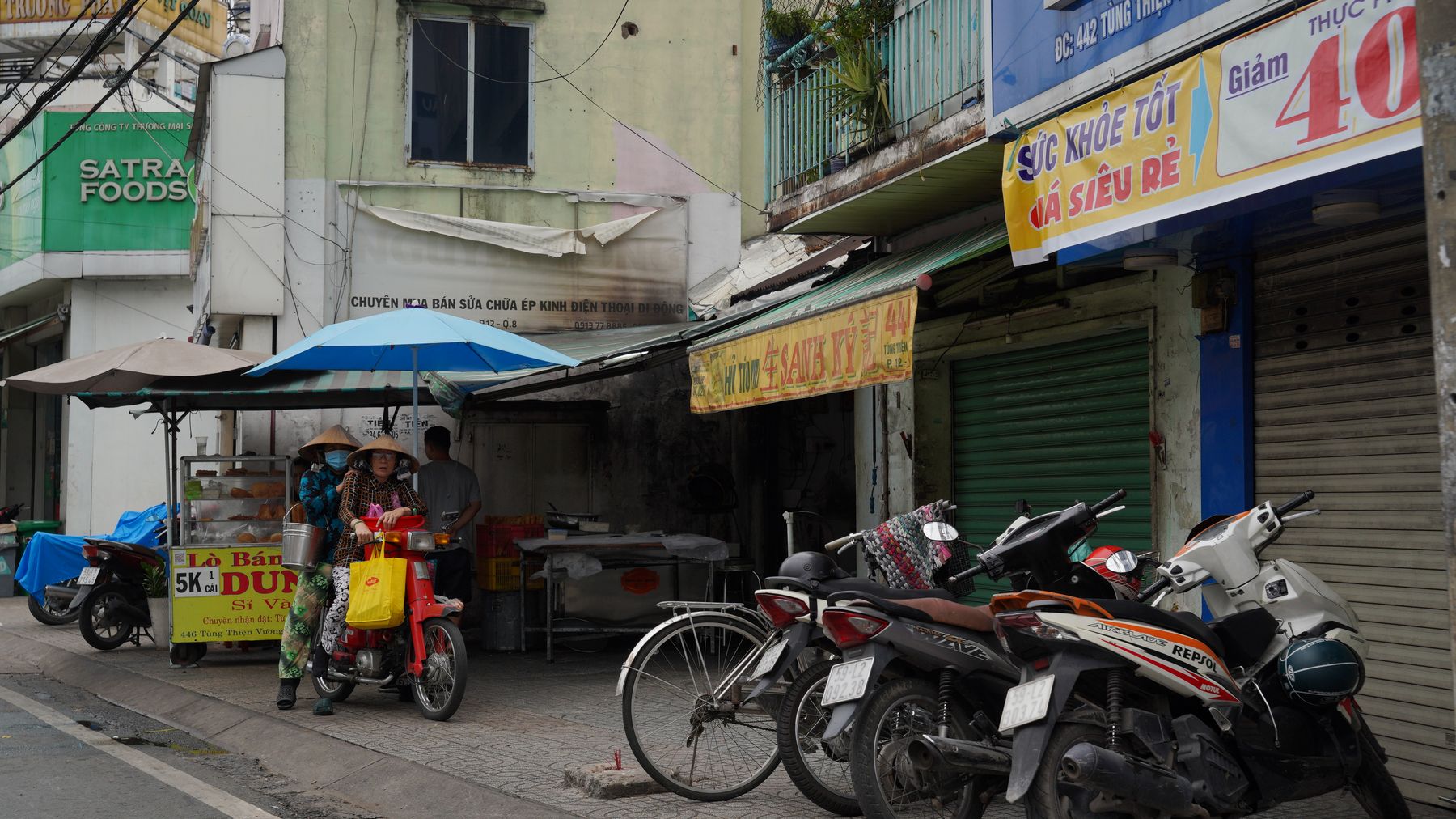
Photo by NGUYỄN THÀNH NHƠN on Pexels
What to Ask For at the Weekend Market Stalls
On Saturday and Sunday mornings, the broader market area swells with vendors coming in from surrounding villages. This is when you are most likely to find things that do not have easy names in any guide: fermented pork wrapped in banana leaf (a rough equivalent of "nem chua", though the mountain version is less sweet and considerably more funky), grilled sticky rice in bamboo tubes, and small parcels of "banh chung" made with black glutinous rice rather than the standard white variety. The black rice version has an earthier, nuttier flavor and is much harder to find outside the highlands.
Do not overthink it. Buy one of everything that looks interesting and costs under 20,000 VND. Worst case you lose 100,000 VND on things you do not enjoy. Best case — which is more likely — you eat better than you have all trip.
Practical Notes
Most of these stalls operate on tight hours: dawn to mid-morning, then a gap, then a shorter evening run. Come hungry and early. If you are staying near the center of Sapa, none of these spots is more than a 10-minute walk. Do not bring the expectation of a restaurant experience — bring the expectation of standing in an alley holding a warm bowl, which is considerably better.
Last updated · May 26, 2026 · independently researched, never sponsored.



