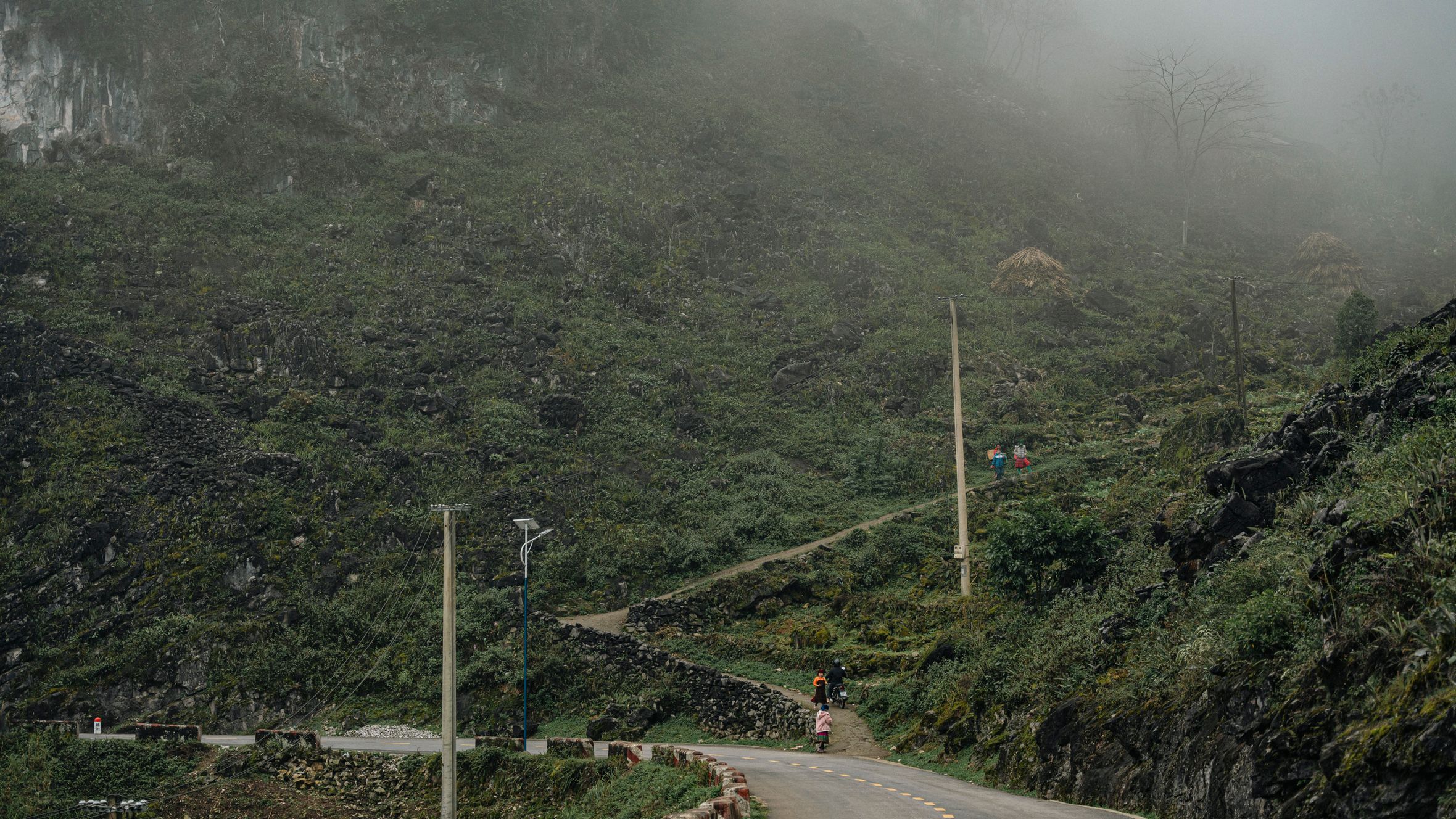
Sapa sits at around 1,500 metres above sea level, and that altitude shapes everything on the plate — from the fish pulled out of cold mountain streams to the pigs raised free-range in the forest understory. If you spend your whole trip eating fried rice and spring rolls at tourist-facing restaurants on Cau May Street, you'll miss what this town actually tastes like.
Cold-Stream Salmon and Trout
The Muong Hoa Valley and the streams feeding into it are cold enough year-round to support salmon and trout farming, and both fish have become genuinely local staples. You'll find them grilled over charcoal, steamed with ginger and dill, or served in a light hotpot with lemongrass and fresh herbs. The trout, in particular, has a cleaner flavour here than anything you'd eat at a lowland restaurant — less muddy, firmer flesh.
Look for restaurants along Hoang Lien Street or out near the Saturday market in Bac Ha (about 60 km from Sapa (사파 / 沙坝 / サパ) town) that advertise ca hoi nuong (grilled salmon) or ca hoi lau (salmon hotpot). Budget around 150,000–200,000 VND per portion of grilled fish; hotpot sets for two run 300,000–450,000 VND depending on the place.
"Lon Cap Nach" — The Black-Bellied Pig
This is arguably the one dish most worth seeking out in Sapa. "Lon cap nach" refers to a small indigenous pig breed raised by H'Mong and Dao communities — the name roughly translates to "armpit pig", a nod to the old practice of carrying piglets under the arm to market. They're free-range, slow-growing, and lean in a way that factory-farmed pork simply isn't.
The pig is typically split-roasted over an open fire or slow-grilled in sections and served with a dipping sauce of salt, wild pepper, and lime. The skin crisps without being fatty, and the meat has real depth. You'll find it at the weekly markets in Sapa town and Bac Ha, or at a handful of restaurants that source it from nearby villages. Expect to pay 120,000–180,000 VND per portion. If someone is charging you 60,000 VND for "lon cap nach", question what you're actually eating.
"Thang Co" — Not for Everyone, Essential to Understand
"Thang co" is a H'Mong stew made from horse meat — and sometimes horse organs — slow-cooked in a large communal pot with spices including star anise, cardamom, and local herbs. It's a fixture at highland markets and has been eaten at festivals and gatherings for generations.
The flavour is strong and gamey, the broth rich and murky. It's not a dish to approach casually, and plenty of travellers try one spoonful and walk away. But if you're at the Bac Ha market on a Sunday and you see the big iron pots bubbling near the entrance, ordering a small bowl (around 40,000–60,000 VND) is worth the experience even if it's not something you'd go back for. It's a genuine window into highland food culture that no amount of restaurant-hopping in Sapa town will give you.

Photo by Vietnam Tri Duong Photographer on Pexels
"Ga Den" — Black-Bone Chicken
"Ga den" (black-bone chicken, sometimes called black silkie chicken) shows up on menus across Vietnam (베트남 / 越南 / ベトナム), but in Sapa the birds are typically free-range and fed on mountain grains, which gives the meat a stronger, more mineral flavour than their lowland counterparts. The most common preparations are ga den stewed with medicinal herbs — particularly popular in cooler months — or grilled simply with salt and local spices.
For the stewed version, small family-run places on the outskirts of Sapa town tend to do it better than the main tourist strip. A whole stewed chicken for two costs roughly 250,000–350,000 VND. The broth alone is worth ordering if you've been hiking and need something warming.
"Com Lam" — Bamboo Tube Rice
"Com lam" is glutinous rice packed into a section of fresh bamboo with a little water, then slow-roasted directly over fire until the bamboo chars and the rice inside steams into a slightly smoky, faintly sweet cylinder. It's the highland equivalent of fast food — portable, filling, and cheap at around 15,000–25,000 VND per tube.
You'll see it sold at roadsides, at markets, and at trailheads. Eat it with grilled meat, or just on its own as a snack after a morning walk. The bamboo imparts a subtle flavour that's hard to describe but immediately makes plain rice feel like a lesser option. It pairs particularly well with lon cap nach.

Photo by Quang Nguyen Vinh on Pexels
Where to Eat: A Note on Choosing
Sapa town has filled up with restaurants in recent years, and a lot of them serve the same pan-regional Vietnamese menu aimed at tour groups. For the dishes above, your best bets are:
- Highland markets — Bac Ha on Sundays, Coc Ly on Tuesdays, Can Cau on Saturdays. These are where the food is most authentic and least marked up for tourists.
- Family guesthouses in villages like Ta Van and Lao Chai — many offer home-cooked meals if you arrange in advance with your homestay host.
- The lane behind Ham Rong Street in Sapa town has a cluster of smaller local restaurants that don't appear on Google Maps and turn over regularly — walk it in the early evening and look for where the tables are full of non-tourists.
Practical Notes
Sapa's markets run on a lunar calendar, so confirm dates before building your itinerary around them. Prices at market stalls are generally non-negotiable for food — don't haggle over a bowl of thang co. If you're visiting in the colder months (November through February), the highland chill makes the hot dishes — ga den broth, salmon hotpot, thang co — considerably more appealing than they might sound on a warm day.
Last updated · May 26, 2026 · independently researched, never sponsored.



