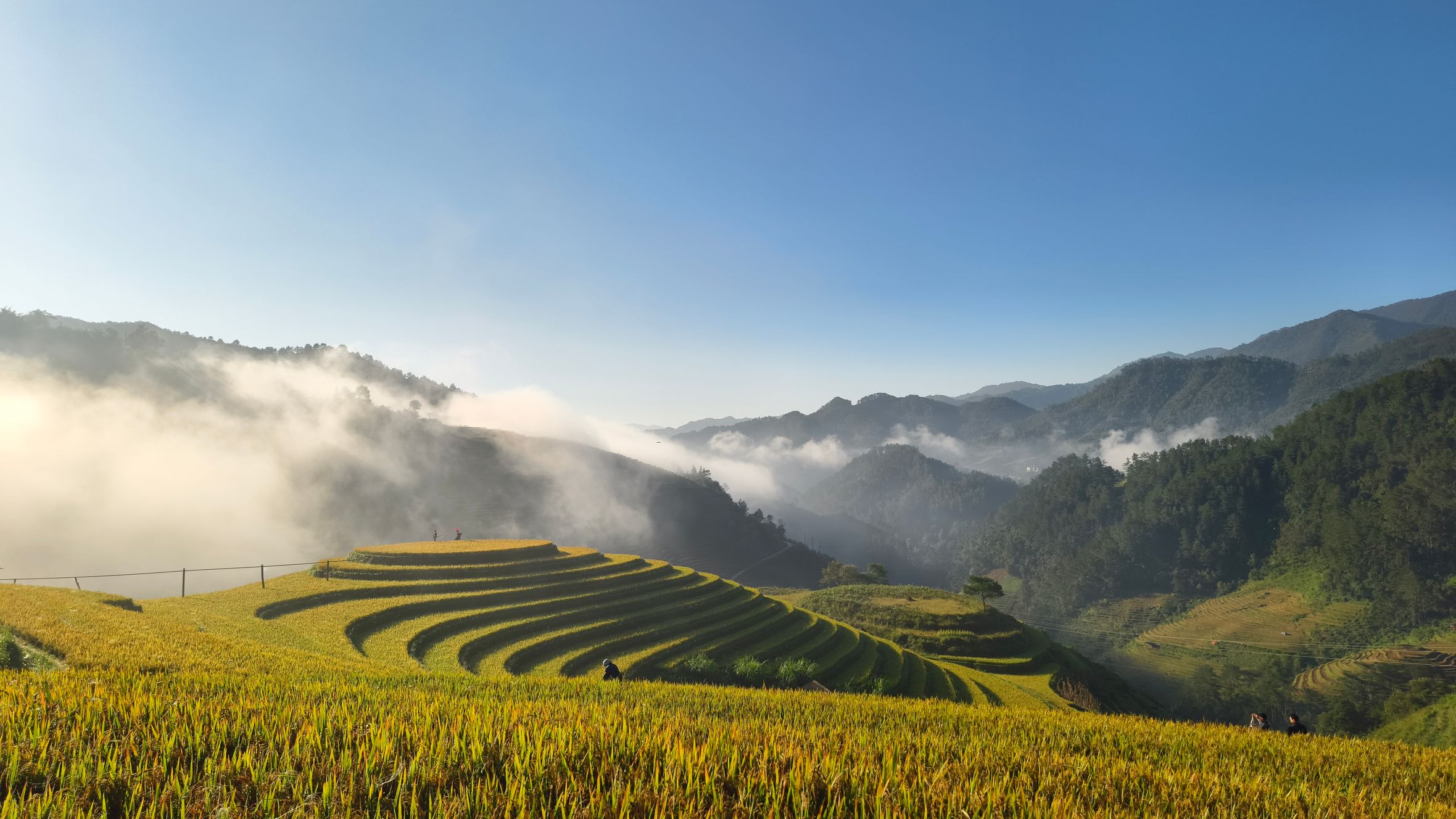
"Xoi ngu sac" — five-color sticky rice — looks like something designed for Instagram, but it predates the phone camera by generations. The H'mong and Tay communities in Sapa have made it for festivals and family gatherings using plants gathered from the hills: turmeric root for yellow, gac fruit for red, pandan leaf for green, purple cabbage or magenta plant for indigo, and plain glutinous rice for white. Each color carries its own faint flavor. The turmeric portion tastes earthy and slightly medicinal. The gac rice is subtly sweet and fatty. The pandan has that grassy vanilla note. The purple is almost neutral. Together on one plate they make something that is filling, naturally colored, and genuinely good — if you know what to eat it with.
The problem is most visitors in Sapa (사파 / 沙坝 / サパ) buy a small bag of it at the market, eat it plain while walking, and move on. That is not the intended format. Xoi ngu sac is a meal component, not a snack. Here is how to build a full plate around it.
Start With the Rice Itself
The best place to find xoi ngu sac made fresh is the Sapa Market on Cau May Street, particularly on weekend mornings when hill community vendors come down from the surrounding villages. Look for vendors near the covered wet market section rather than the tourist stalls on the outer ring. A full portion — enough for one person as part of a meal — costs around 20,000–30,000 VND. The market is busy from about 6:30 AM and most of the fresh xoi is gone by 9:00 AM. Weekday mornings are quieter but the selection thins out faster.
If you miss the market window, Baguette & Chocolat on Thach Son Street sometimes has xoi ngu sac in the early morning alongside their breakfast spread, though their version is softer and less textured than the market version.
Pair It With Steamed or Braised Pork
The traditional pairing across northern Vietnam (베트남 / 越南 / ベトナム) is fatty pork — specifically "thit lon kho" (braised pork belly) or plain steamed pork sliced thin. The fat coats the rice in a way that makes each mouthful richer and less sticky on the palate. In Sapa, a few of the com binh dan (everyday rice) restaurants on Muong Hoa Road serve braised pork by the portion in the morning and at lunch. Ask for a half-portion of thit kho alongside your xoi. Budget 35,000–50,000 VND for the pork.
If you want something lighter, "cha" — grilled pork sausage from the northwest highlands, different from the Hanoi-style version — works well with the pandan and turmeric sections of the rice. The smokiness plays against the earthy colors cleanly.
Add a Soft-Boiled Egg or Scrambled Egg
This is the simplest, cheapest addition and it works. A soft-boiled egg broken over warm sticky rice is a standard northern Vietnamese breakfast move for a reason. The yolk loosens the rice and adds protein without competing with the subtle plant flavors. Most com binh dan spots will cook you one for 5,000–8,000 VND. Scrambled eggs cooked with spring onion are also common and slightly more satisfying as a full meal anchor.

Photo by Quang Nguyen Vinh on Pexels
Don't Skip the Sesame Salt
"Muoi vung" — toasted sesame salt — is the traditional condiment for xoi in northern Vietnam, and it matters more with xoi ngu sac than with plain sticky rice because the colors have distinct flavors that sesame salt pulls together. Good vendors at the Sapa Market sell small paper twists of it alongside the rice. If yours doesn't come with it, ask. It should cost nothing extra or 2,000 VND at most. The ratio you want is roughly one pinch of sesame salt per three or four bites of rice.
Round It Out With Pickled Vegetables
The colors and the starch make this a heavy plate without some acid to cut through. "Dua cai" (pickled mustard greens) or simple pickled daikon appear on most com binh dan tables in Sapa as a condiment. They are not always listed on any menu — they just appear in a bowl at the table. If they don't, ask. The sourness resets your palate between the different rice colors and makes the whole plate feel less leaden by the end.
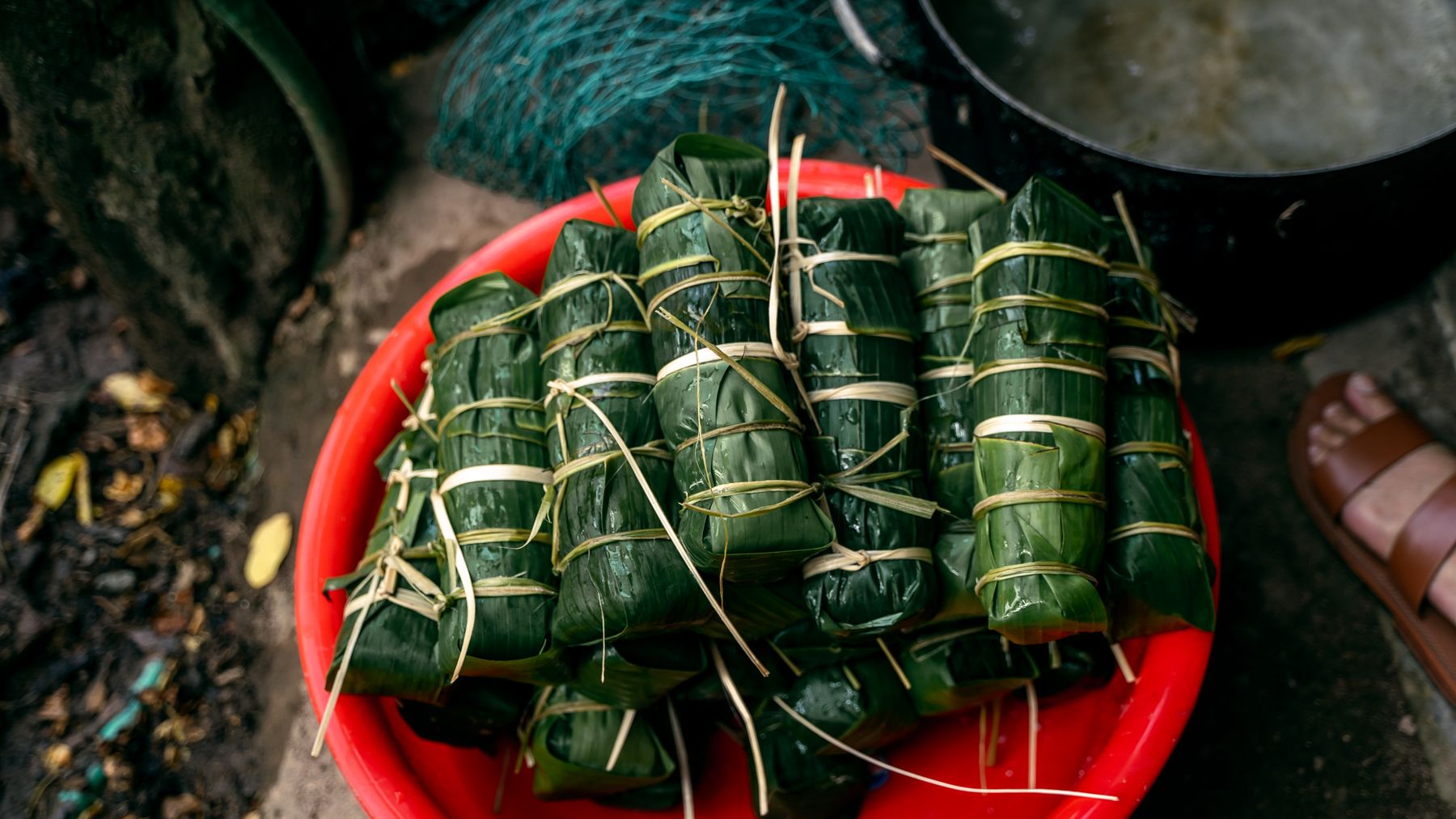
Photo by Vietnam Tri Duong Photographer on Pexels
Where to Sit and Eat Properly
For a full assembled meal, the com binh dan spots clustered on Muong Hoa Road between the Sapa town center and the edge of the valley are the most practical. They open around 6:30 AM and serve until mid-afternoon. None of them have English menus. Point at what you want or bring up a photo. A full meal — xoi ngu sac, braised pork, one egg, pickled vegetables, and tea — will run you 60,000–80,000 VND total.
Avoid ordering xoi ngu sac at tourist restaurants on Cau May Street. It tends to be pre-made, refrigerated, and resteamed, which kills the texture. The colors also fade. Fresh xoi ngu sac has a slightly chewy, springy bite. Resteamed rice goes gummy and flat.
Practical Notes
Xoi ngu sac is most available on weekends in Sapa, when the market is at full capacity and village vendors make the trip down. If you are visiting midweek, call ahead or ask your guesthouse the evening before — some family-run places will prepare it on request for a morning meal. The rice travels reasonably well for a few hours if you are heading out to the rice terraces, making it a practical field lunch if you pack the condiments separately.
Last updated · May 26, 2026 · independently researched, never sponsored.



