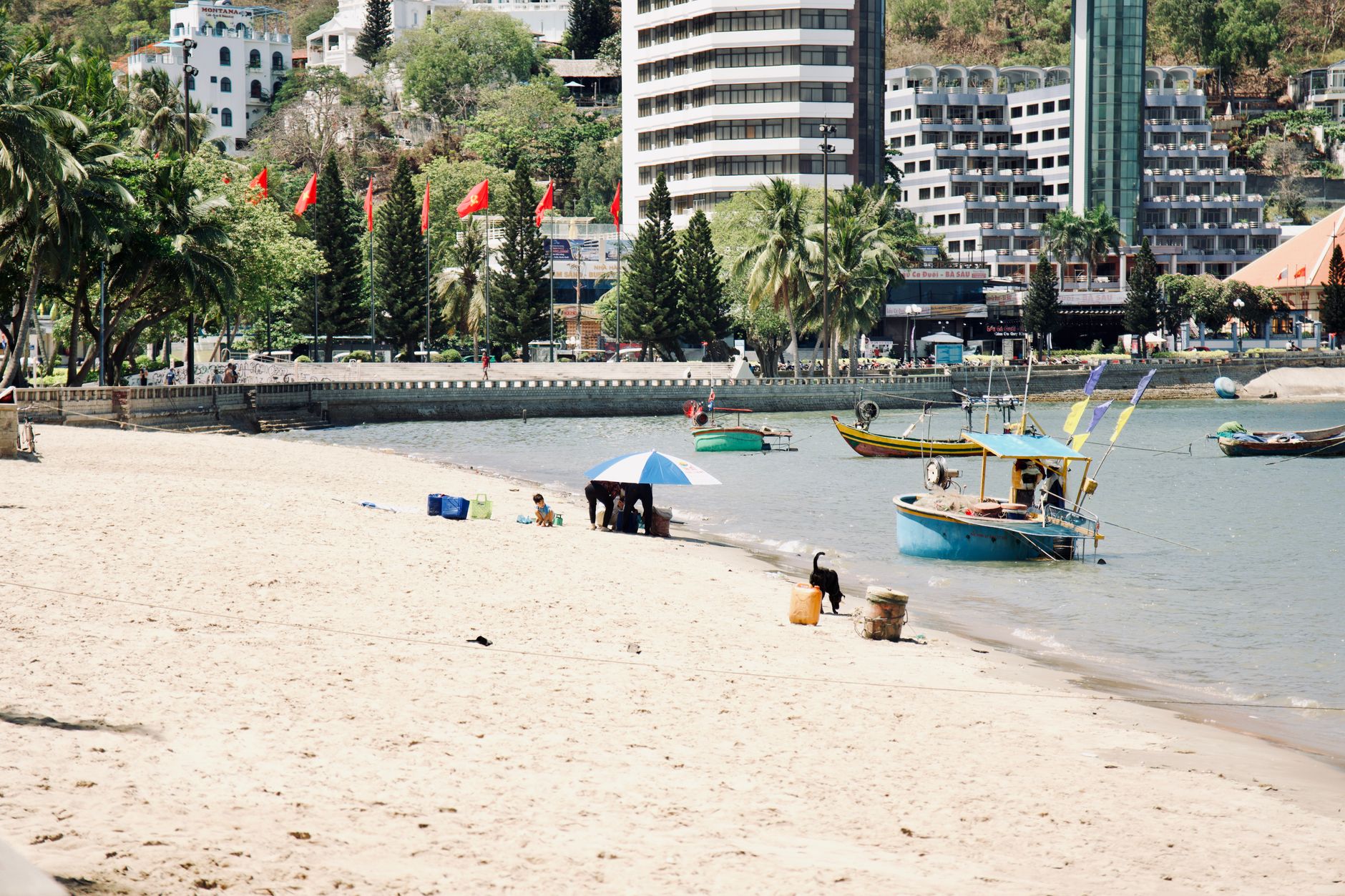
Vung Tau is a beach town, yes — but after the sunburned day-trippers from Saigon head back on the ferry, the city exhales and the food gets interesting. The stretch from around 9pm onward is when locals pull plastic stools onto the pavement and the charcoal smoke really gets going.
The Grilling Streets: Where to Follow the Smoke
The highest concentration of after-dark grilling happens along Tran Phu and the side streets feeding off Hoang Hoa Tham, roughly between the Bai Truoc roundabout and the fish market end. This isn't a formal night market with overhead lights and vendor stalls — it's more organic than that. Proprietors wheel out their grills, stack crates of fresh shellfish, and the whole block fills with smoke by 8:30pm.
Look for places doing oc (snails) in volume. Vung Tau (붕따우 / 头顿 / ブンタウ) has a serious snail culture — "oc" joints here serve a rotating cast of mollusks depending on the day's catch: "oc huong" (babylon snails) grilled with lemongrass and chili, "oc len" (mud creeper snails) stir-fried in coconut milk, and "oc mo" (ark clams) steamed with ginger. A shared plate of two or three varieties with a round of cold "bia hoi" runs around 150,000–250,000 VND per person depending on what you order and how many rounds you manage.
For grilled seafood in the more sit-down sense, the cluster of restaurants near Bach Dinh (the old French villa on the hill) has options, but the prices skew tourist. Better to walk five minutes down to the side lanes off Le Loi where the same quality fish costs 30–40% less and the clientele is almost entirely local.
Dessert Carts: The Late-Night Sweet Circuit
Vung Tau has a specific dessert culture that runs late. The "che" vendors — pushcarts and small shop fronts selling layered sweet soups — stay open until midnight or later around the Nguyen Thai Hoc area and near the base of Small Mountain (Nui Nho). A cup of "che thai" (the coconut-cream fruit mix with palm jelly) or "che bap" (sweet corn pudding) goes for 15,000–25,000 VND. It's not the most photogenic food you'll eat in Vietnam (베트남 / 越南 / ベトナム), but at 11pm with the sea breeze coming through, it does the job.
Also worth knowing: Vung Tau is famous for its "banh khot", small savory rice-flour cups crispy on the bottom and topped with shrimp and a soft egg center, finished with "nuoc cham" and fresh herbs. These aren't exclusively a night food, but the best spots — particularly a few low-key places on Nguyen Truong To — run into the late evening and are easy to miss if you're scanning the main tourist drag. A plate of ten pieces sits around 35,000–50,000 VND.

Photo by VANNGO Ng on Pexels
Where Locals Go vs. Where Tourists End Up
The tourist circuit in Vung Tau hugs Bai Truoc (Front Beach) — the restaurants facing the water, the seafood places with English menus and photographs of every dish. The food isn't bad, but you're paying a markup for the view and the ease. Expect to spend 300,000–500,000 VND per person at those spots for a full seafood meal.
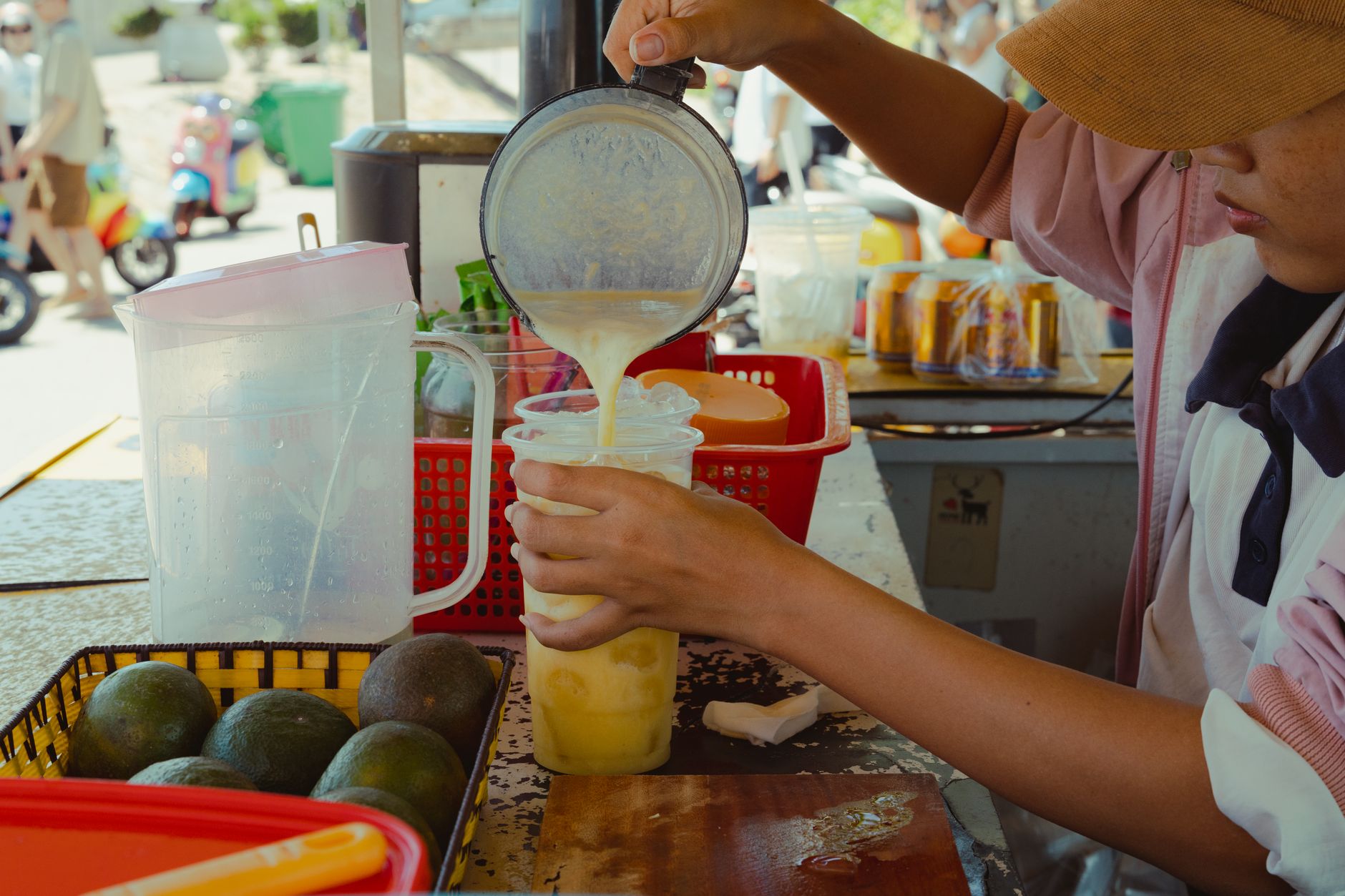
Locals eat further inland or along Bai Sau (Back Beach) on the northern end, where the road is less polished and the signage is all Vietnamese. The Bai Sau market area has a loose night-food cluster that kicks up around 7pm with grilled corn, "bo bia" rolls (a Teochew-influenced crepe with dried shrimp and jicama), and fresh-squeezed sugarcane juice from ancient-looking machines that somehow still work. This is where you'll spend 50,000–80,000 VND for a full snack circuit and feel genuinely like you found something.
If you want one sit-down recommendation that splits the difference — local prices, some English spoken — the snail restaurants on Vo Thi Sau around the 300-meter mark from the intersection with Tran Phu are reliable. Busy on weekends, which is always a decent sign.

Photo by FOX ^.ᆽ.^= ∫ on Pexels
Safety and Practical Notes for Eating After Dark
Vung Tau is a relaxed city by Vietnamese standards and eating late doesn't carry particular risks. The usual common sense applies: watch your phone on the table at open-air spots near the main beach road, don't leave bags unattended, and be aware that motorbike taxis ("xe om") quoting prices in English near tourist restaurants will charge 3–4x what a Grab ride costs for the same distance.
On pricing: if a street snail joint doesn't have a menu visible, ask "bao nhieu" (how much) before ordering. Most vendors will either write it down or show you on a phone calculator — this is standard practice, not an insult to either party. Overcharging tourists for "oc" is less common here than in bigger cities, but it happens at spots facing the main beach.
Allergies and dietary needs are harder to navigate in this context than in a proper restaurant. The grilling streets use shared charcoal and shared prep surfaces — if cross-contamination is a concern, stick to the sit-down spots that can actually hear and understand a specific request.
Practical Notes
Most of Vung Tau's street food action runs from around 6pm to midnight, with the grilling streets peaking between 8pm and 10:30pm. If you're coming from Saigon for a day trip, the last ferry back leaves before the night food scene properly starts — factor that in, or stay overnight. A basic guesthouse near Bai Sau runs 250,000–400,000 VND and puts you walking distance from everything worth eating.
Last updated · May 29, 2026 · independently researched, never sponsored.