What it is
Suoi Nuoc Nong Tram Tau is a natural hot spring complex tucked into a narrow valley in Tram Tau district, now part of the expanded Lao Cai province (formerly Yen Bai). The springs sit at roughly 800m elevation, fed by geothermal activity along a fault line that runs beneath the Hoang Lien Son range's eastern foothills. Water temperatures hover between 40–60°C depending on the pool and season.
Locals — mostly Hmong and Thai ethnic communities — have bathed here for generations, using the mineral-rich water for everything from sore muscles after rice harvests to skin ailments. The site saw modest infrastructure development in the early 2020s: concrete soaking pools, a changing area, and a gravel access road. It remains low-key compared to the polished hot spring resorts near Sapa or the commercial operations in Thanh Hoa.
Why travelers go
Three reasons, mostly:
- It's quiet. Tram Tau district gets a fraction of the visitors that Sapa (사파 / 沙坝 / サパ) pulls. On weekdays you might share the pools with a handful of locals and zero other tourists.
- The landscape. The drive in passes terraced rice fields, bamboo forest, and small Thai stilt-house villages that haven't been styled for Instagram yet.
- Post-trek recovery. If you've been hiking around Sapa, Mu Cang Chai, or the Ta Xua area, a soak in 45°C mineral water is genuinely therapeutic — not just a nice idea.
It's not a destination you'd fly to Vietnam (베트남 / 越南 / ベトナム) specifically for. But if you're already exploring the northwest highlands, it slots in well as a half-day detour.
Best time to visit
October through March. The contrast between cool mountain air (sometimes dropping to 8–12°C at night in December–January) and hot spring water is what makes the experience. April through September is warmer, wetter, and the road can get muddy after heavy rain — passable on a motorbike but less enjoyable.
Rice terrace season (September–October) overlaps nicely: golden fields on the approach roads, then a hot soak at the end of the day.
How to get there
From Sapa: Head southeast toward Mu Cang Chai on the QL32, then cut south on provincial road 174 into Tram Tau town. Total distance: approximately 130 km, roughly 4–4.5 hours by motorbike due to winding mountain roads. Not a casual afternoon ride.
From Yen Bai city (the old provincial capital): Take QL32 west, then turn onto the 174 at Nghia Lo. About 100 km, 3 hours by motorbike or private car.
From Hanoi: The most direct route is Hanoi → Yen Bai (Noi Bai expressway + QL32, ~180 km) → Nghia Lo → Tram Tau. Budget 6–7 hours total with stops. No direct bus runs to the hot springs; you'd bus to Nghia Lo or Tram Tau town and then hire a local "xe om" (motorbike taxi) for the final 10–12 km.
The last stretch from Tram Tau town center to the springs is a narrow concrete-and-dirt road. Signage is minimal — ask for "suoi nuoc nong" and locals will point you right.

Photo by Sk4ter bol on Pexels
What to do
Soak
The main activity. There are 3–4 pools at different temperatures. The hottest one (55–60°C) is too hot for prolonged sitting — people dip feet or use it for washing. The mid-range pools (40–48°C) are where you'll spend most of your time. Bring your own towel. Entry fee: 30,000–50,000 VND per person (as of early 2025).
Walk the valley
A dirt path follows the stream upstream for about 2 km, passing smaller natural seeps and thick vegetation. Nothing technical — sandals are fine in dry season.
Visit a Thai village
Several small Thai communities sit within 5 km of the springs. If you're respectful and ideally have a local contact or guide, you can see traditional stilt houses, rice wine production, and textile weaving. Don't just walk into someone's home uninvited — common sense applies.
Where to eat
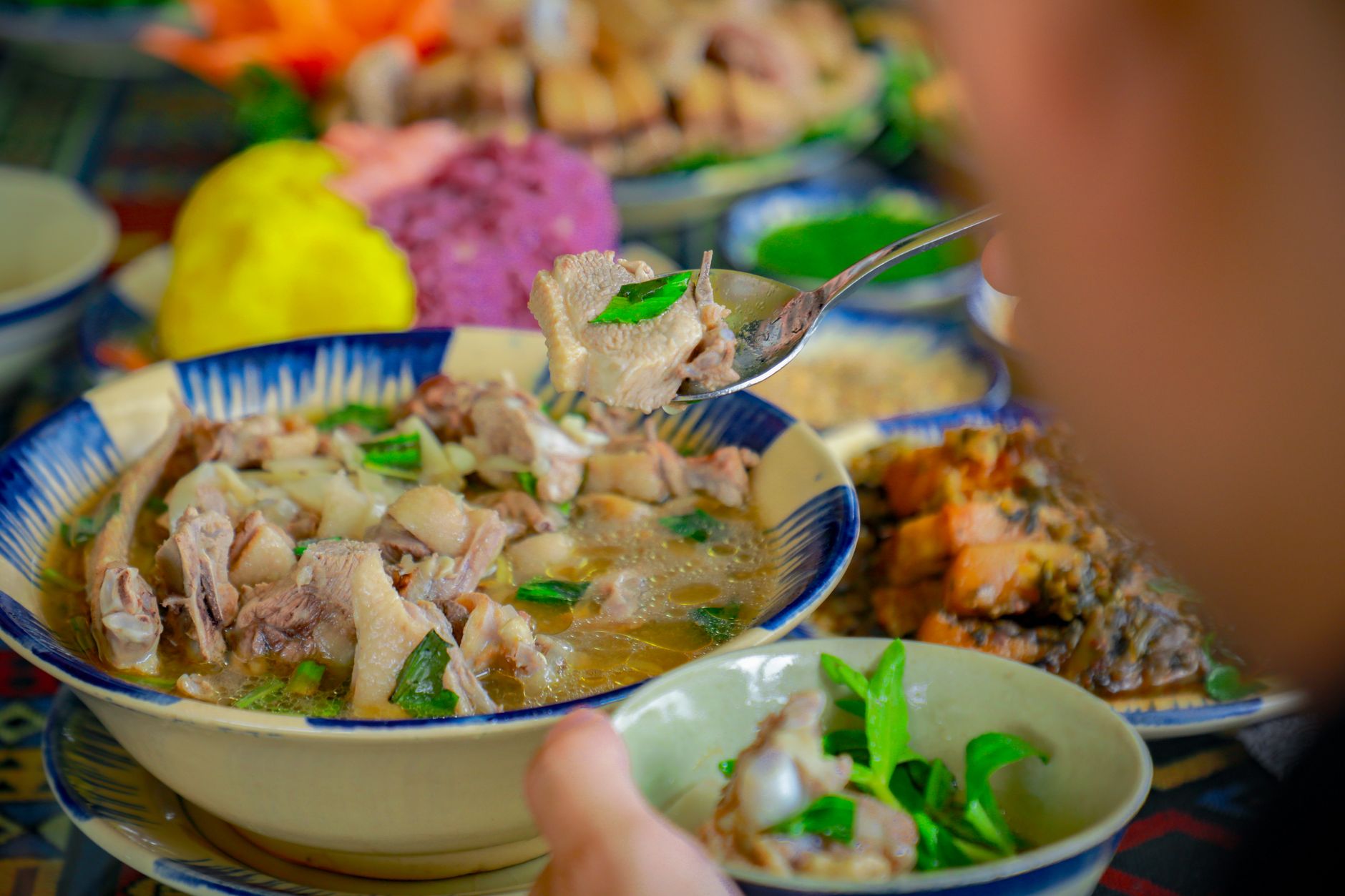
Tram Tau town has a handful of "com binh dan" (everyday rice) shops along the main road. Expect simple plates: rice, stir-fried greens, braised pork or fish, a soup. 35,000–50,000 VND per meal. For something more regional, look for "thang co" — a Hmong-origin offal and bone stew that's hearty and an acquired taste. "Com lam" (bamboo-tube sticky rice) shows up at roadside stalls, especially on market days.
There's no restaurant scene here. If you want proper northwestern highland cuisine — black chicken, stream fish grilled in banana leaf, wild vegetables — you'll eat better in Nghia Lo (45 km back toward Yen Bai) where a few local restaurants cater to Vietnamese weekenders.
Where to stay
In Tram Tau town: Two or three basic guesthouses ("nha nghi") exist. Expect a hard bed, thin walls, hot water if you're lucky, and rates around 200,000–350,000 VND/night. Fine for one night.
Homestays near the springs: A couple of Thai families offer homestay-style accommodation — sleeping on mats in a stilt house, shared meals, communal bathroom. Around 250,000–400,000 VND including dinner and breakfast. Book through local contacts or just show up and ask; online listings are scarce.
In Nghia Lo (45 km east): More options, including proper hotels with Wi-Fi, air conditioning, and hot showers. Nghia Lo is the regional hub — stay there if you want comfort and day-trip to the springs.
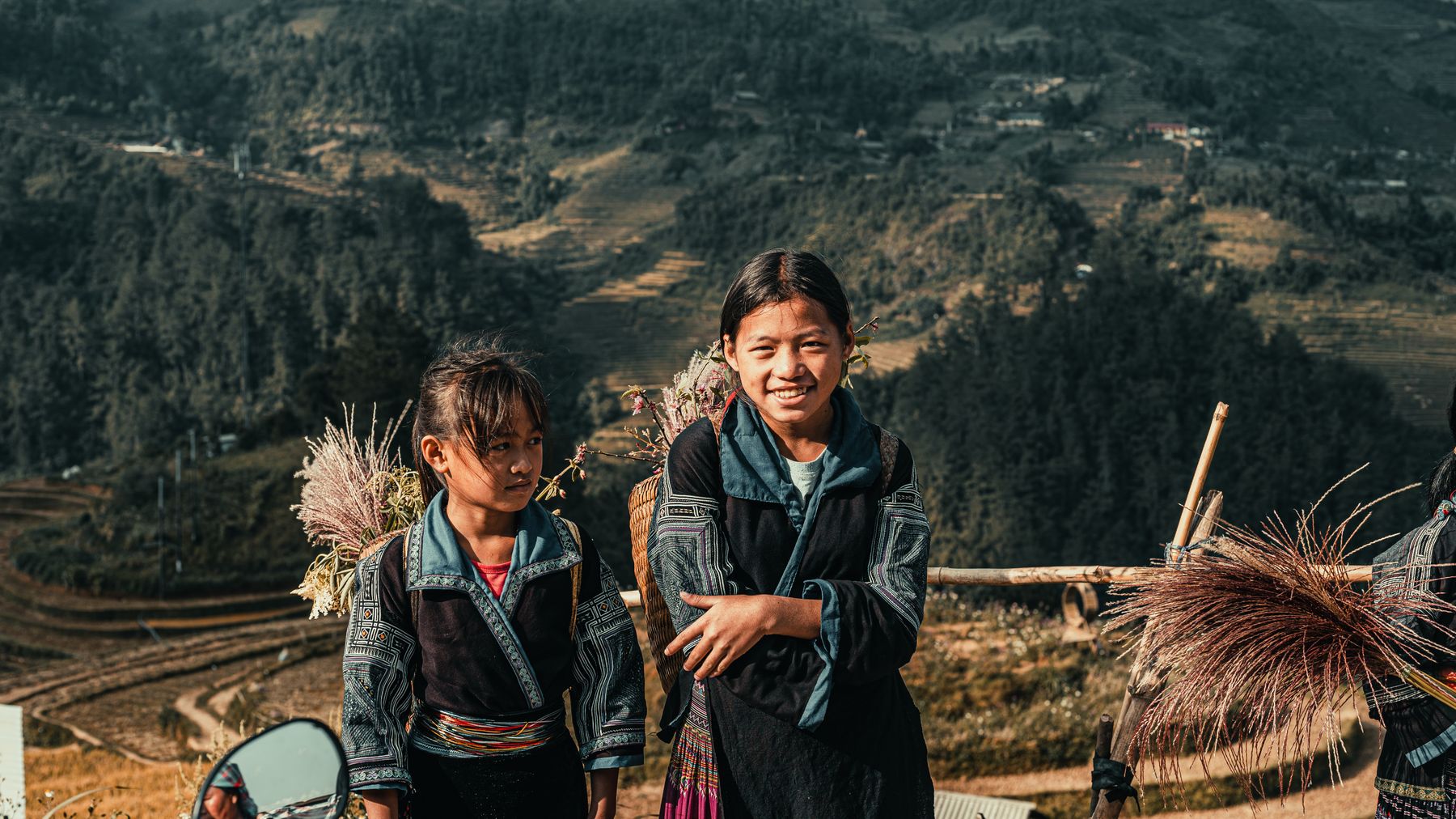
Photo by Quý Nguyễn on Pexels
Practical tips
- Bring cash. No ATMs near the springs; the nearest reliable ATM is in Tram Tau town or Nghia Lo.
- Swimwear: Vietnamese bathers often soak in shorts and t-shirts. You can wear a swimsuit without issue, but going fully nude will draw stares.
- Phone signal: Spotty. Viettel works best in this area; Mobifone barely registers in the valley.
- Motorbike condition matters. The roads are steep and narrow in sections. If you're renting, check brakes and tires before leaving Sapa or Yen Bai. A semi-automatic (Honda Wave, Blade) handles better here than a heavy manual bike.
- Dry bag or ziplock for your phone/wallet — steam and splashing near the pools will find your pockets.
Common mistakes
Treating it as a half-day trip from Sapa. The 130 km takes longer than you think on mountain roads. Either commit to an overnight or plan it as part of a longer loop (Sapa → Mu Cang Chai → Nghia Lo → Tram Tau → back to Hanoi, for instance).
Arriving without a towel or change of clothes. There's nowhere to buy these on-site.
Expecting a resort. This is a rural, community-managed hot spring with basic facilities. If you want robes and eucalyptus-scented everything, the commercial hot spring resorts outside Sapa are a different product entirely.
Practical notes
Tram Tau hot springs work best as part of a broader northwest Vietnam loop — combine with Sapa, Mu Cang Chai, or a stop in Nghia Lo. Budget one night in the area minimum. The reward is exactly what's hard to find elsewhere in the Vietnamese highlands: hot water, quiet, and nobody trying to sell you anything.
Last updated · May 29, 2026 · independently researched, never sponsored.