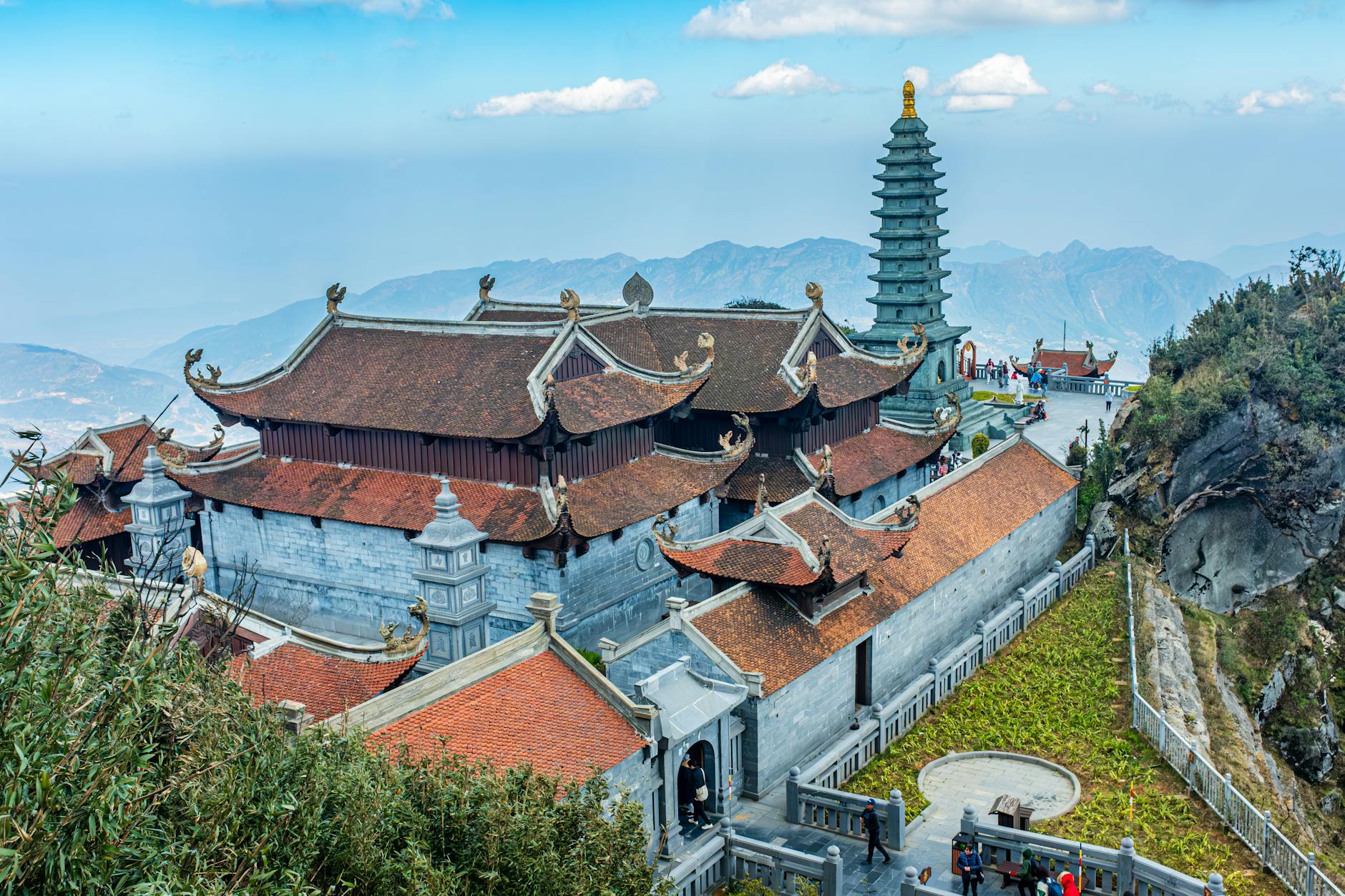
Chien Khu Hien Luong sits in the hilly, forested terrain of Phu Tho province, roughly 90 km northwest of Hanoi. It's not on any mainstream tourist circuit, which is exactly the point — if you're after something that isn't another backpacker loop, this former resistance base zone delivers genuine quiet and a window into mid-20th-century Vietnamese history without the crowds.
What It Is
Chien Khu Hien Luong was a wartime resistance base active during the anti-French resistance period in the 1940s and 1950s. The zone spans forested hills in what was formerly part of the old Phu Tho province (before various administrative mergers with Vinh Phuc and Hoa Binh over the decades). Today, the area preserves remnants of that era — bunkers, command post ruins, memorial markers — set among dense vegetation and working villages. Think of it less as a polished museum and more as a landscape you walk through, reading its history in the terrain itself.
The site holds local significance in Phu Tho, a province better known as the ancestral homeland celebrated during the Hung Kings Festival each spring. Chien Khu Hien Luong adds a different layer to the area — one rooted in 20th-century history rather than ancient legend.
Why Travelers Go
Honestly, not many do — and that's part of the appeal. The people who make the trip tend to be history-focused travelers, cyclists exploring the northern midlands, or anyone who wants to see a part of Vietnam (베트남 / 越南 / ベトナム) that hasn't been reshaped for tourism. There are no ticket booths, no souvenir shops, no tour buses idling in a parking lot. You get forested hills, small trails, a handful of memorial sites, and interactions with villagers who live their daily lives around the historical zone. If you need Instagram backdrops, look elsewhere. If you want to understand how geography shaped Vietnamese resistance movements, this is a solid stop.
Best Time to Visit
September through November is ideal. The monsoon rains taper off, the air cools slightly, and the hills are still green. March through May also works — it's drier, and if you time it with the Hung Kings Festival (usually around the 10th day of the third lunar month), you can combine the trip with celebrations in Phu Tho city and the Hung Temple complex nearby.
Avoid June through August if you dislike heat and heavy rain. The trails get muddy, and some unpaved sections become difficult on a motorbike.

Photo by Q. Hưng Phạm on Pexels
How to Get There
From Hanoi (하노이 / 河内 / ハノイ), the most practical route is by motorbike or car. Take the Noi Bai — Lao Cai expressway toward Viet Tri, then branch off onto provincial roads heading into the hills. Total distance is around 90-100 km depending on your exact starting point in Hanoi. Budget about 2 to 2.5 hours by motorbike, slightly less by car.
If you don't ride, you can take a bus from My Dinh bus station to Viet Tri (around 60,000-80,000 VND, roughly 1.5 hours), then hire a local "xe om" (motorbike taxi) for the remaining 20-30 km into the historical zone. Expect to pay 100,000-150,000 VND for that last stretch. There's no Grab coverage out here, so negotiate the fare before you hop on.
Renting a motorbike in Hanoi costs 120,000-180,000 VND per day for a semi-automatic Honda Wave or similar. This is the best option if you plan to explore the surrounding countryside at your own pace.
What to Do
Walk the Historical Trail
The core experience is following the path through the former base area. You'll pass bunker remnants, old command positions, and memorial stones. Signage is minimal and mostly in Vietnamese — having a translation app ready helps, or better yet, ask a local to walk with you. Some older residents know the stories passed down through their families.
Visit the Memorial Site
A modest memorial marks the center of the former resistance zone. It's simple — a stone marker, a small clearing — but it anchors the visit and gives you a reference point for understanding the layout of the old base.
Ride Through the Surrounding Villages
The hamlets around Hien Luong are classic northern midland Vietnam: stilt houses in some areas, brick homes in others, tea plantations on hillsides, and buffalo in the roads. Ride slowly, stop often, and you'll get a sense of rural Phu Tho that tour brochures never capture.
Combine with Hung Temple
Den Hung (the Hung Kings Temple complex) is Phu Tho's main attraction and only about 30-40 km away. It's a significant pilgrimage and cultural site — the mythical birthplace of the Vietnamese nation. Making a day of both sites is the most efficient way to plan.
Hike the Ridgeline
If you're reasonably fit, follow the trails that climb the low ridges above the base zone. Elevation is modest — maybe 200-300 meters — but the canopy cover and quiet make it worthwhile. Bring water; there's nowhere to buy it on the trail.
Where to Eat Nearby
You won't find restaurants in the immediate area. Head to Viet Tri or the towns along the provincial road for food. Look for "com binh dan" (everyday rice shops) serving plates of rice with stewed pork, greens, and broth for 30,000-45,000 VND.
Phu Tho province is known for "thit chua" — fermented sour pork wrapped in banana leaves, a Muong-influenced specialty. It's tangy, slightly funky, and served with fresh herbs and rice crackers. Ask at any local eatery; most places around Viet Tri stock it. Pair it with a plate of "xoi" (sticky rice) for a filling lunch.
If you pass through Viet Tri in the morning, stop for a bowl of "pho" — the northern style here is clear-broth and straightforward, closer to Hanoi's version than anything you'd find further south.

Photo by Valeria Drozdova on Pexels
Where to Stay
There's no accommodation at the historical site itself. Your options:
- Viet Tri city: Basic "nha nghi" (guesthouses) from 200,000-350,000 VND per night. A few mid-range hotels along the main road run 400,000-600,000 VND with air conditioning, hot water, and Wi-Fi.
- Homestays in surrounding villages: Occasionally available, especially near the Hung Temple area. Expect 150,000-250,000 VND per person including dinner. Ask around locally — these aren't listed on booking apps.
- Return to Hanoi: Entirely doable as a day trip if you leave early.
Practical Tips
- Bring cash. There are no ATMs in the historical zone, and card payments don't exist out here. Load up in Viet Tri or before leaving Hanoi.
- Wear proper shoes. The trails aren't paved and can be slippery after rain. Sandals won't cut it on the hillside paths.
- Carry a paper map or download offline maps. Mobile signal is patchy in the forested areas.
- A few words of Vietnamese go a long way. Locals aren't used to foreign visitors, and even a basic "xin chao" and "cam on" opens doors.
- Mosquito repellent is non-negotiable in the warmer months. The tree cover means they're active even during the day.
Common Mistakes
Don't expect a manicured historical park — this is a rural area with historical significance, not a museum complex. Travelers who arrive expecting signage, guides, and a gift shop leave disappointed. Come with the right expectations: this is exploration, not exhibition.
Don't skip the Hung Temple combo. Going all the way to Phu Tho and only visiting Hien Luong misses the province's biggest cultural draw.
Don't attempt the back roads after heavy rain on a scooter with road tires. The clay soil turns to skating rinks. If it's been raining, stick to the paved provincial roads and walk the last stretch in.
Last updated · Jun 17, 2026 · independently researched, never sponsored.