A bowl of "sup cua" costs you about 25,000–40,000 VND and takes four minutes to eat standing up. That is more or less the entire pitch. The soup — crab meat, quail eggs, corn-starch broth, a fistful of cilantro, and a crack of black pepper — is one of those Saigon things that is everywhere and nowhere at the same time. You either grew up walking past it after school, or you walk right past it now without realizing what you're missing.
The stalls that do it well are not on main roads. They set up in alley mouths, near school gates, or on the kind of narrow side street where the only signage is a handwritten piece of cardboard propped against a pot. The tips below are specific. Call ahead if you're traveling far — hours shift seasonally and some sellers take unannounced days off.
What You're Actually Eating
Sup cua is thickened with dissolved corn starch, which gives the broth a translucent, slightly gelatinous body — not gluey, just substantial. Good versions use real crab meat (usually blue swimmer crab or flower crab picked by hand), not imitation surimi. Each bowl gets two or three boiled quail eggs, a ladle of broth, a pinch of dried shallots, and a heavy hand with the white pepper. Some sellers add a few drops of sesame oil. Accompaniments vary: torn "banh mi" on the side is traditional in the school-snack context; others hand you a pack of crackers.
Time of day matters. Most sup cua sellers operate in the afternoon window — roughly 2 p.m. to 6 p.m. — because the dish's origin is the after-school snack economy. Show up at noon and the pot won't be lit yet.

Photo by Trần Phan Phạm Lê on Pexels
Five Stalls to Know
Hem 76, Nguyen Thi Minh Khai — District 3
The woman who runs this cart has been at the alley entrance opposite a primary school on Nguyen Thi Minh Khai for over a decade. No shop name — look for the orange thermos and the cluster of plastic stools spilling onto the pavement. She opens around 2:30 p.m. and sells out by 5 p.m. most days. Bowl: 30,000 VND. The broth here is on the lighter side, almost clear, and she is generous with the cilantro.
Sup Cua Ba Tuoi — Pham Ngu Lao area, District 1
Ask locals in the backpacker zone about sup cua and a few will point you toward a small fold-up table operation on the alley running parallel to De Tham. Ba Tuoi (the nickname means "Auntie Third") keeps two pots: one with the standard crab version, one with an added pork-floss topping for 35,000 VND. She starts at 3 p.m. Slightly touristy location, but the soup itself is not watered down for foreign palates.
Hem 28, Bui Vien — District 1
Easier to find than most. The stall sits at the entrance of a narrow hem off Bui Vien, identifiable by a hand-painted sign that simply reads "Sup." Opens at 2 p.m., closes when sold out — usually around 5:30 p.m. Bowls run 25,000–30,000 VND. The quail eggs are always perfectly set, never rubbery, which sounds minor until you've eaten a bowl of overcooked ones.
Co Lan — Alley off Hoang Dieu, District 4
District 4 takes its food seriously, and Co Lan's cart is a good reason to cross the bridge. She works from a small folding table near a school on Hoang Dieu, starting at 2 p.m. The broth is darker and more peppery than most — she is clearly not shy with the black pepper mill. 30,000 VND a bowl. Sells out fast on weekdays when school is in session; weekends are quieter.
Sup Cua 88 — Ly Chinh Thang, District 3
A fixed address, which makes it easier to plan around. The stall occupies a sliver of pavement at number 88 Ly Chinh Thang and has a small hand-painted sign. Opens 2 p.m. to 6 p.m. daily except Sunday. At 35,000–40,000 VND, it's on the pricier end of the spectrum, but the crab ratio is noticeably higher and the sesame oil finish is applied with a careful hand rather than dumped in.
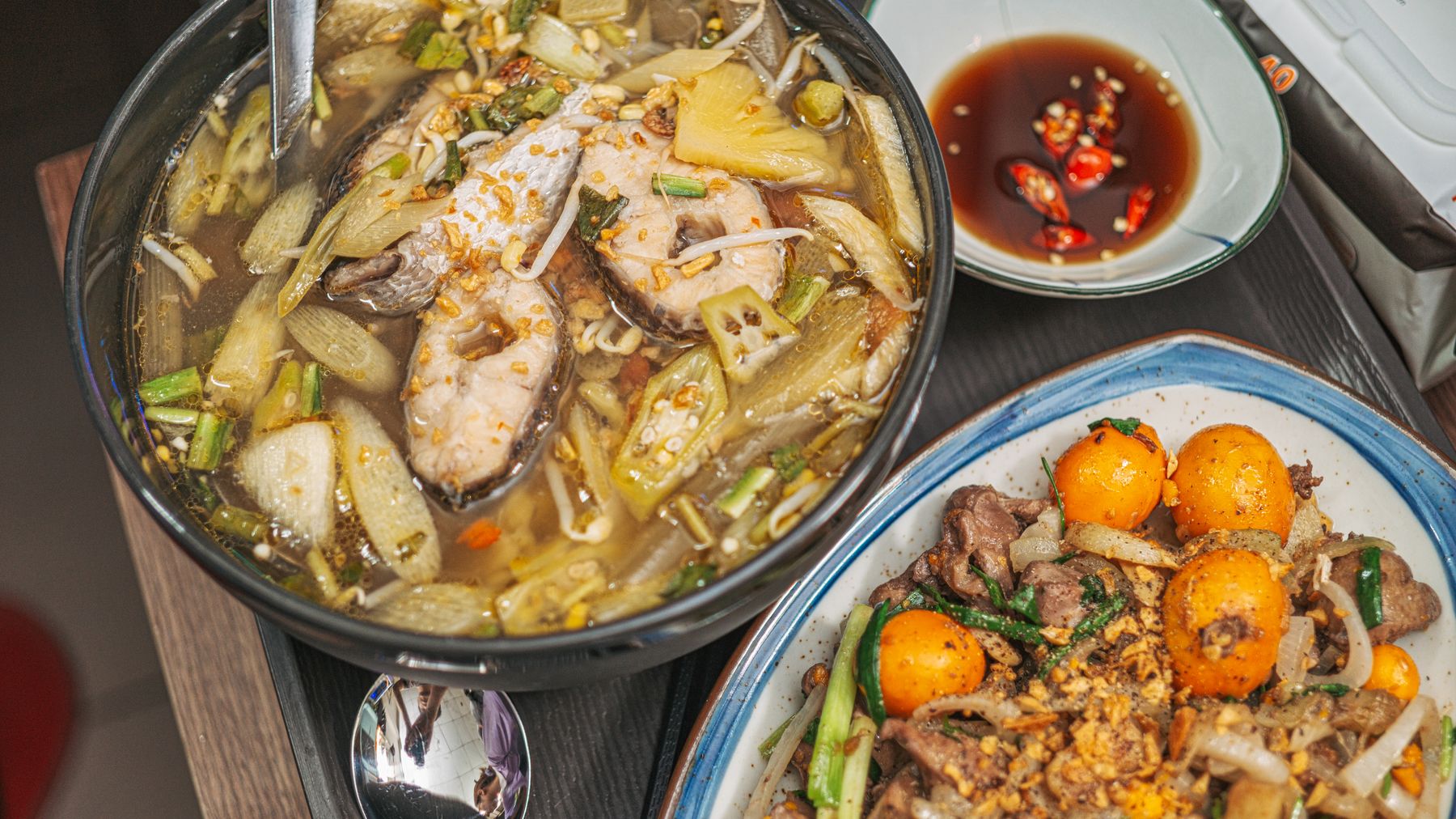
Photo by FOX ^.ᆽ.^= ∫ on Pexels
A Few Notes on Finding These
Saigon (사이공 / 西贡 / サイゴン) alley stalls shift. Sellers move, take breaks during school holidays, or simply stop. The addresses above were accurate as of recent visits, but treat them as starting points rather than guarantees. If you arrive and the spot is empty, ask a nearby shopkeeper — "sup cua o day co khong?" (is there sup cua here?) will usually get you a point in the right direction.
Bring small bills. These sellers rarely want to break a 200,000 VND note at 3 p.m.
Practical notes: Sup cua is a snack, not a meal — budget 25,000–40,000 VND per bowl and plan to eat it between 2 p.m. and 6 p.m. If you're combining it with a broader Saigon food afternoon, pair it with a round of "banh mi (반미 / 越式法包 / バインミー)" from a nearby cart and finish with a "ca phe sua da" from any corner cafe.
Last updated · May 26, 2026 · independently researched, never sponsored.