What it is
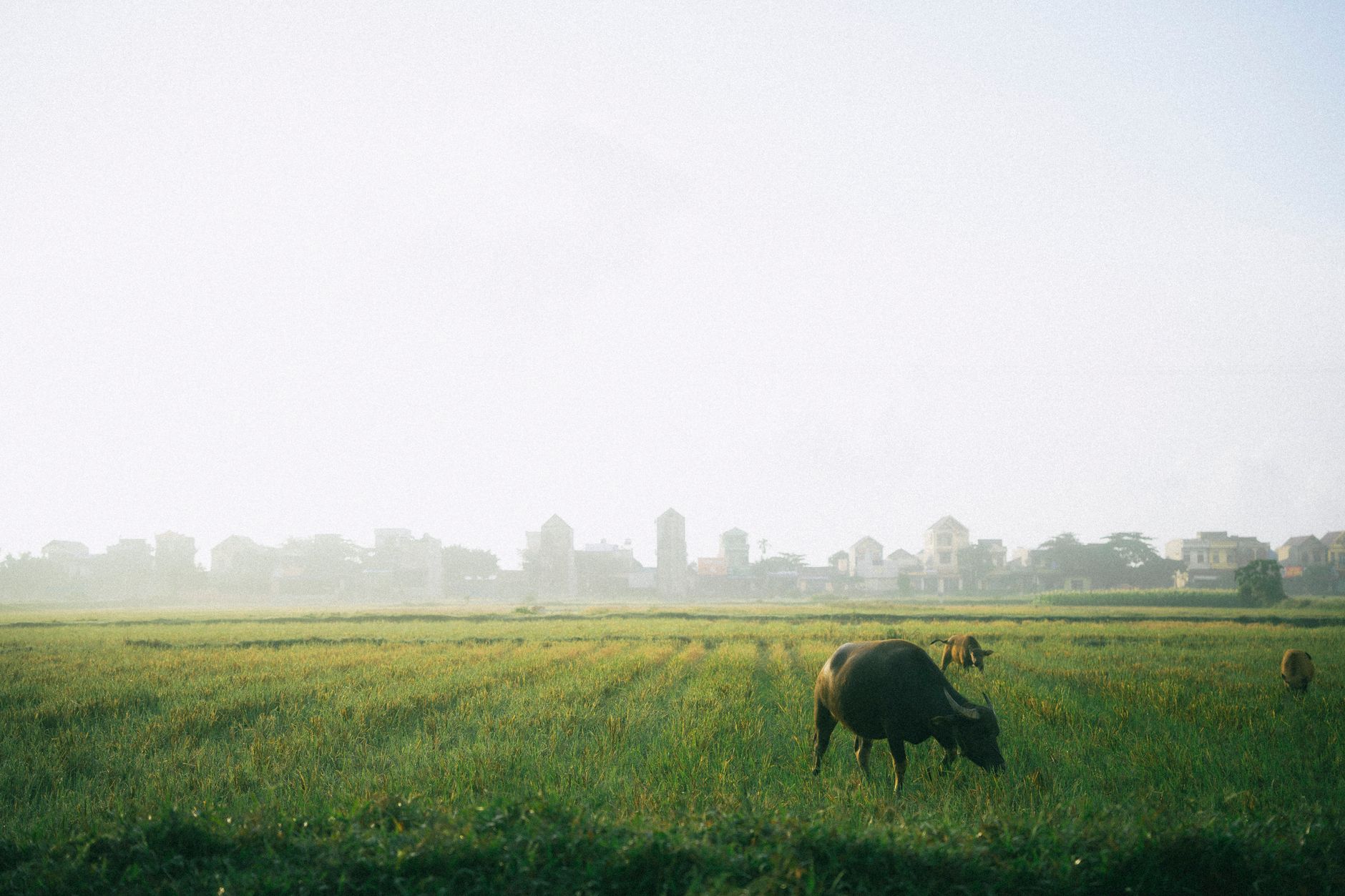
Ta Pa rice fields spread across a valley floor between Nui Cam and Nui Co To in Tri Ton district, An Giang province. Unlike the pancake-flat paddies that define most of the Mekong Delta (메콩 델타 / 湄公河三角洲 / メコンデルタ), these fields are hemmed in by weathered granite peaks — the Seven Mountains ("Bay Nui") cluster — giving them a look closer to northern Vietnam than the deep south.
The area is home to a significant Khmer community, and the terraced edges of the paddy reflect generations of hand-carved irrigation from Khmer farmers who settled here long before the French colonial period. The fields themselves aren't terraced in the Sapa sense — they're mostly flat with gentle contours — but the surrounding hills create a layered backdrop that photographs remarkably well.
Why travelers go
Three reasons, mostly:
-
The visual contrast. Mountains rising from rice paddies in the Mekong Delta is genuinely unexpected. If you've spent days on flat delta roads between Can Tho and Chau Doc, Ta Pa feels like a different country.
-
Khmer culture. Tri Ton district has active Khmer pagodas, Khmer-language signage, and food that blends southern Vietnamese and Cambodian influences. You're 30 km from the Cambodian border.
-
Quiet. This isn't Ha Long Bay. Tour buses don't come here in numbers. On weekday mornings you'll share the viewpoint with maybe two or three other visitors.
Best time to visit
The fields cycle through two rice harvests per year. The most photogenic windows:
- Late May to early July — fields are flooded and bright green, hills are lush from early rains.
- Late September to November — mature golden rice before harvest. The classic postcard shot.
Avoid January–March if you want green paddies; the fields are stubble-brown and dry between harvests. That said, the Khmer pagoda festivals (Chol Chnam Thmay in April, Ok Om Bok around October) add cultural depth regardless of rice stage.
How to get there
From Saigon
Drive or bus to Chau Doc (about 250 km, 5–6 hours by car via the Long Xuyen expressway section). From Chau Doc, Ta Pa is 35 km south toward Tri Ton town — roughly 45 minutes on DT948.
Alternatively, take a bus to Long Xuyen or Can Tho (껀터 / 芹苴 / カントー) and rent a motorbike for the final stretch. The roads around Tri Ton are flat and well-paved, easy riding even for less experienced riders.
From Can Tho
About 120 km northwest. Head toward Long Xuyen on QL91, then cut west on DT943 through Tinh Bien toward Tri Ton. Allow 2.5–3 hours by motorbike with stops.
Local transport
No public bus runs directly to the viewpoint. You'll need your own wheels (rental motorbike from Chau Doc costs 150,000–200,000 VND/day) or a xe om from Tri Ton town (around 50,000 VND one-way to the hill).
Photo by Nhẫn Nguyễn on Pexels
What to do
Climb to the viewpoint
The main vantage point is a hilltop off the road between Tri Ton and Nui Cam. A short concrete path (maybe 200 steps) leads up. No entry fee as of early 2024, though locals sometimes collect a 10,000 VND parking fee for motorbikes. Sunrise and late afternoon light are best — midday is harsh and hazy.
Visit Ta Pa Pagoda (Chua Ta Pa)
A Khmer Theravada pagoda at the base of the hill. The architecture is distinctly Cambodian — ornate naga stairways, multicolored spires. Respectful visitors are welcome; cover your shoulders and knees.
Explore Tri Ton town
Small, quiet, and genuinely local. The morning market (cho Tri Ton) sells Khmer snacks like "num bo choc" (a fish-broth rice noodle soup) and sticky rice with coconut. Worth an hour of wandering.
Day-trip to Nui Cam
The tallest of the Seven Mountains at 716 meters. A paved road runs most of the way up; the final stretch is stairs. Combine with Ta Pa for a full day.
Where to eat
Tri Ton doesn't have a food scene in the Saigon sense, but the local Khmer-influenced dishes are worth seeking:
- Bun nuoc leo — rice noodles in a fermented fish and pork broth, garnished with banana blossom and herbs. Look for stalls near the market. A bowl runs 25,000–35,000 VND.
- Banh xeo Ba Pac — crispy crepes stuffed with shrimp and bean sprouts, served with a mountain of fresh greens. A local favorite on the road into Tri Ton.
- Com tam stalls along DT948 serve broken rice with grilled pork, a safe bet if your stomach needs something familiar.
For Vietnamese coffee, any "ca phe" sign in Tri Ton will pour a strong cup over ice for 15,000–20,000 VND.
Where to stay
Accommodation options are limited:
- Tri Ton town has a handful of nha nghi (guesthouses) in the 200,000–350,000 VND range. Basic but clean. Victoria Nui Sam Lodge or similar near Chau Doc is the nearest comfortable hotel.
- Chau Doc (35 km north) is the logical base if you want proper hotels, ATMs, and restaurant options. Rooms range from 300,000 VND at budget spots to 1,500,000 VND at the Victoria.
- Homestays occasionally pop up on Booking.com in the Tri Ton area — search "Tri Ton An Giang" and filter by recent reviews.

Photo by Nguyen Truong Khang on Pexels
Practical tips
- Bring cash. There's one ATM in Tri Ton town (Agribank) and it doesn't always cooperate. Stock up in Chau Doc or Long Xuyen.
- Wear a hat and carry water for the hilltop — no shade, no vendors at the top.
- If you're riding a motorbike, fuel up in Tri Ton. The next stations toward Tinh Bien are sparse.
- Phone signal (Viettel, Mobifone) is fine throughout the area.
- The viewpoint has no guardrails. Watch your step near the edges, especially if it's rained.
Common mistakes
- Coming midday. The haze and flat light kill the view. Arrive before 7 AM or after 4 PM.
- Skipping Tri Ton market. The fields are photogenic but the cultural depth is in town.
- Not budgeting enough time. Most visitors zip in, take a photo, and leave. Give the area a full day — combine the fields, the pagoda, and Nui Cam.
- Expecting Sapa-level terraces. These are valley paddies framed by hills, not carved mountain terraces. Beautiful, but different. Adjust expectations and you'll enjoy it more.
Final note
Ta Pa won't make anyone's top-ten Vietnam list yet — and that's exactly its appeal. It's an unpolished corner of the Mekong Delta that rewards travelers willing to ride an extra hour past the usual Can Tho–Chau Doc circuit. Go before the Instagram crowd catches on.
Last updated · May 29, 2026 · independently researched, never sponsored.