
Once a year, on the third day of the third lunar month, kitchens across Vietnam (베트남 / 越南 / ベトナム) go quiet — no frying, no grilling, no fire. Families gather to roll soft glutinous dumplings by hand, drop them into simmering ginger syrup, and eat them together before the day is out. This is "Tet Han Thuc", the Cold-Food Festival, and the dish at the center of it is "che troi nuoc" — floating sweet dumplings that are, despite the festival's name, served warm.
Where Tet Han Thuc Comes From
The festival has Chinese origins — it traces back to the Hanshi Festival (Han Shi Jie), a day of mourning that traditionally banned the lighting of cooking fires. When the practice crossed into Vietnam, it absorbed local meaning. For most Vietnamese families today, the cold-food element has softened considerably: the fire ban is largely symbolic, and the focus has shifted toward ancestor veneration and the act of making che troi nuoc together as a household.
The date falls on the third day of the third lunar month — in the Gregorian calendar, that usually lands somewhere in late March or April, close enough to the Hung Kings Festival that the weeks feel stacked with remembrance. Unlike Tet (뗏 (베트남 설날) / 越南春节 / テト) or Tet Trung Thu, Tet Han Thuc doesn't command national attention. There are no lanterns, no street performances. It's quiet, domestic, and easy to miss entirely if you're traveling through.
What Che Troi Nuoc Actually Is
Che troi nuoc is a simple thing done carefully. The outer shell is made from "bot nep" — glutinous rice flour — kneaded with just enough water until it's smooth and pliable, somewhere between Play-Doh and fresh mozzarella in texture. The filling is typically sweetened mung bean paste, "nhan dau xanh", though some families in the south add a sliver of candied winter melon or a pinch of toasted sesame for texture.
The dumplings are rolled into balls roughly the size of a walnut, then dropped into boiling water. You know they're done when they float — hence "troi nuoc", literally "floating on water." They get transferred into a bowl and ladled over with ginger-infused sugar syrup, sometimes finished with a spoonful of "nuoc cot dua", thick coconut cream, and a scatter of toasted sesame seeds.
The result is soft, faintly chewy, mildly sweet, and warming from the ginger. It is not flashy. It's the kind of food that makes sense in context — eaten in a family home, made by multiple sets of hands, placed on an ancestor altar before anyone takes a bowl for themselves.

Photo by Nguyễn Thị Thảo Hà (Ha Nguyen) on Pexels
Regional Differences Worth Knowing
North and south handle che troi nuoc a little differently, as they do with most things.
In Hanoi and the north, the dumplings tend to be plain white and sized conservatively. The syrup is lighter, less coconut-forward, and ginger is the dominant note. Families might also prepare "banh troi" alongside che troi nuoc — smaller, unfilled balls served with grated coconut and sugar rather than syrup.
In Saigon and across the Mekong Delta, the coconut cream element is heavier and the syrup sweeter. Some versions add pandan leaf to the dough for a faint green tint and a grassy fragrance. You'll also find "banh chay" in the north on this day — a slightly larger, softer version of banh troi with a heartier mung bean filling, though the line between banh chay and che troi nuoc blurs depending on who you ask.
In Hue, unsurprisingly, the presentation tightens up. The dumplings are more uniform, the syrup more balanced, and the whole thing arrives at the table with the precision the city applies to most of its food traditions.
Why the Dumplings Float (and Why That Matters)
The floating is not just physics — it carries meaning. "Troi" in Vietnamese also carries connotations of drifting, of the soul's passage. Che troi nuoc is offered to ancestors on the altar before it's eaten by the living, and the imagery of something rising and floating in water sits comfortably inside that spiritual framing. Food in Vietnam rarely exists entirely outside ritual context, and this dish is a clear example: the gesture of making it is part of the offering.
Families who observe Tet Han Thuc will typically clean and re-dress the ancestor altar in the morning, prepare a tray of che troi nuoc, and burn incense before sitting down to eat. The whole observance can take less than two hours. It doesn't require a temple visit or a parade — just flour, water, mung beans, and time.
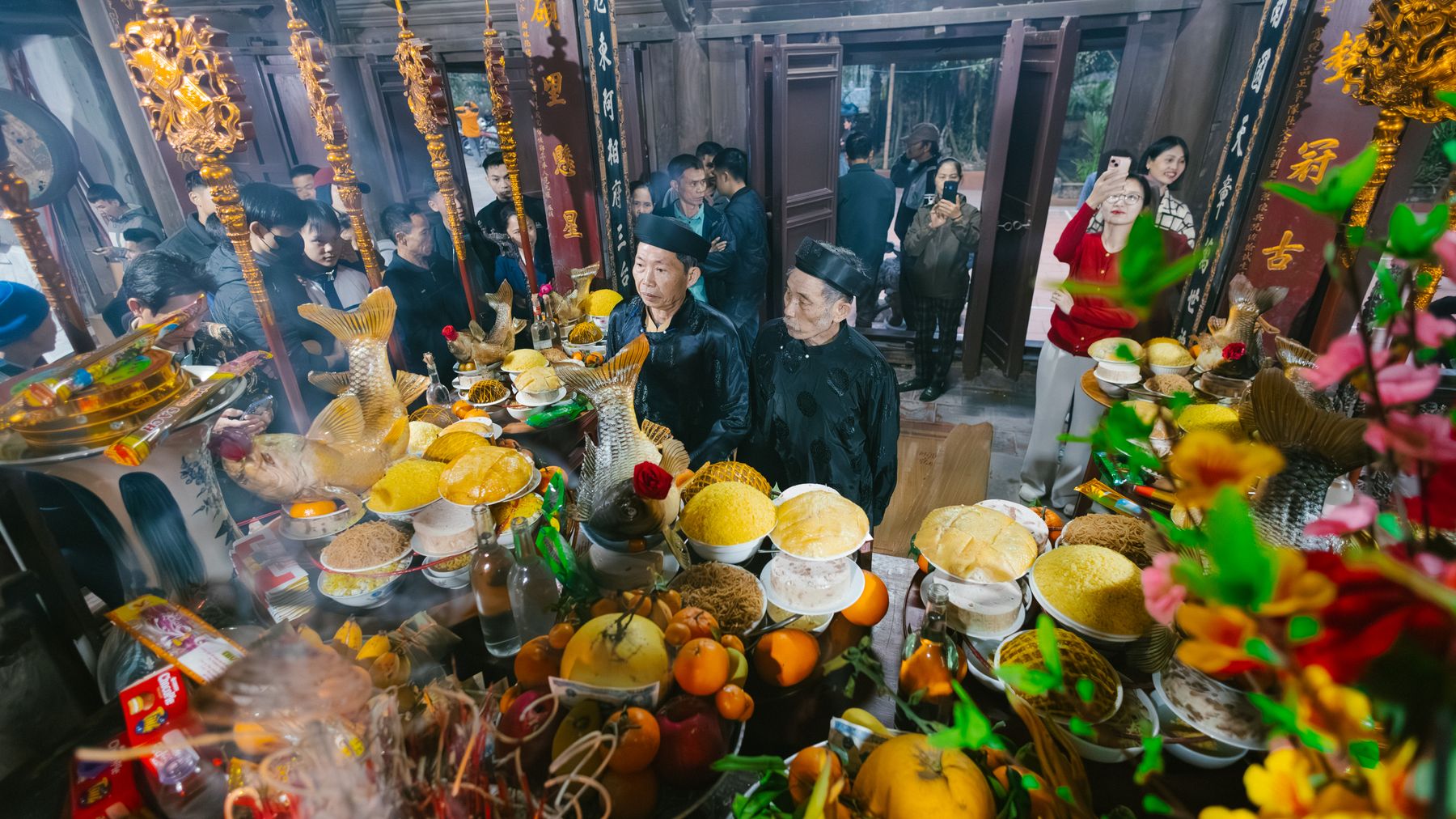
Photo by HONG SON on Pexels
Finding Che Troi Nuoc Outside Festival Season
The good news: you don't need to be in Vietnam in the third lunar month to try che troi nuoc. It exists as a year-round street snack, particularly in Saigon, where small "che" carts and storefronts sell it alongside "che ba ba", "che chuoi", and a dozen other sweet soups for around 15,000–25,000 VND a bowl. In Hanoi, banh troi vendors appear most reliably around Tet Han Thuc itself, but a few "hang che" shops in the Old Quarter keep it on rotation.
If you're in Da Lat, look for che troi nuoc served with an extra-thick coconut cream — the cooler climate makes a warm bowl feel especially right.
Practical Notes
Tet Han Thuc falls on the 3rd day of the 3rd lunar month; check a lunar calendar app for the exact Gregorian date each year. If you want to see the domestic side of the festival, a home-cooking class run around that date is the most direct way in — several operators in Hanoi and Hoi An offer seasonal menus. Ingredients for che troi nuoc (bot nep, dried mung beans, palm sugar, fresh ginger) are available at any wet market for well under 50,000 VND total.
Last updated · May 29, 2026 · independently researched, never sponsored.




