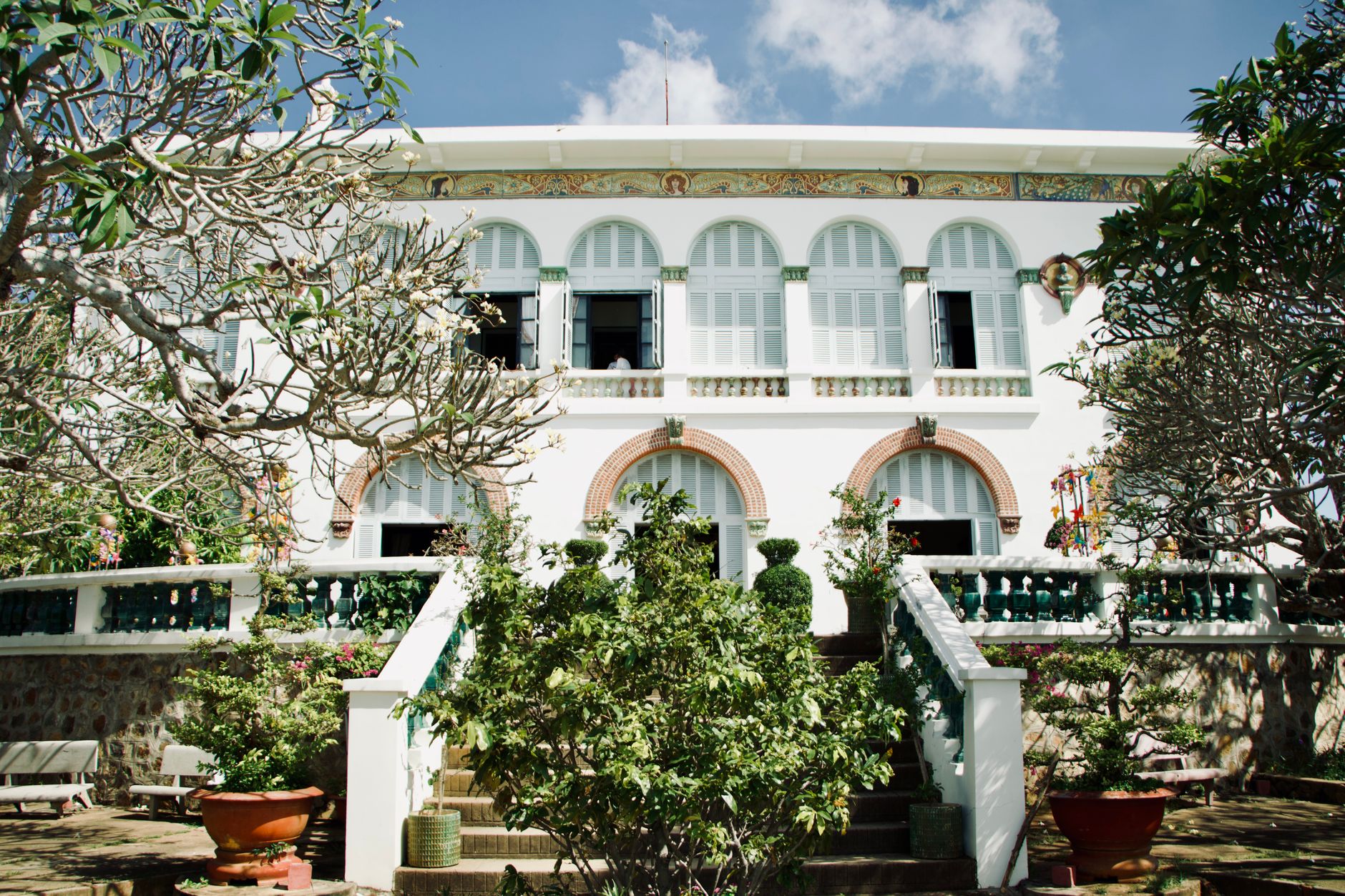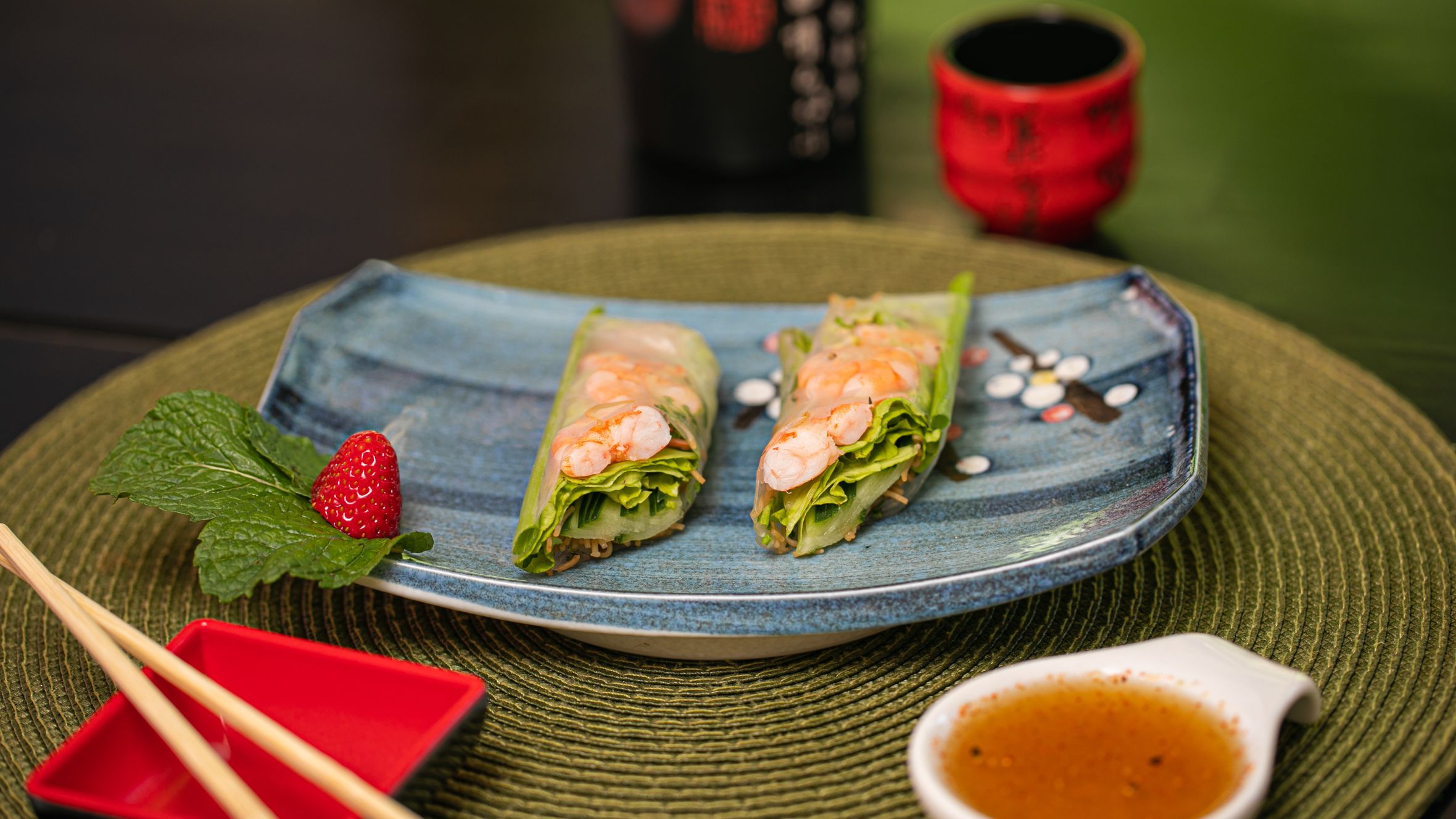
Most people walk past "banh dap" stalls without knowing what they're looking at. It doesn't photograph as dramatically as cao lau or white rose dumplings, so it rarely makes the listicles. That's a shame, because it's one of the more honest snacks in Hoi An — cheap, fast, and built around texture in a way that's hard to forget once you've had it.
What You're Actually Eating
Banh dap translates roughly as "smashed cake", which sounds more violent than it is. You get two sheets layered together: one soft, steamed rice paper on the bottom; one thin, grilled crispy rice paper on top. You press them together — that's the "smash" — and the crispy sheet shatters into the soft one, creating a contrast of crunch and chew in every bite.
The dip is everything: "mam nem", a pungent fermented anchovy sauce cut with pineapple juice, sugar, and chili. It smells aggressive. It tastes complex. Don't skip it, don't ask for something milder. The whole point of the dish is the push-pull between the delicate rice paper and that intensely savory sauce.
Some vendors top the crispy sheet lightly with scallion oil or a thin smear of pork fat before grilling, which adds a faint richness. Others keep it plain. Both versions work.
Where to Find It
Banh dap is a Central Vietnamese thing — you'll find versions in Hue and Da Nang too, but Hoi An (호이안 / 会安 / ホイアン) has its own cluster of reliable spots, mostly outside the tourist core.
Banh Dap Ba Lanh on Nguyen Phuc Chu street (across the Thu Bon River, roughly 1.5 km from the Old Town center) is the one locals point to first. It's a low-roofed shophouse setup, open roughly 2 pm to 7 pm most days. A serving of two to three sheets runs 15,000–20,000 VND. The mam nem here has a proper pineapple backbone that keeps it from being one-dimensionally fishy.
Closer to the Old Town, a few vendors along Tran Hung Dao and near the market on Tran Phu occasionally sell banh dap as a side item alongside "banh canh" and other rice-based snacks, but it's more hit-or-miss in that zone — and the sauce is often watered down for tourist palates.
For a slightly more relaxed setting, the stretch of street stalls along Bach Dang near the riverbank sometimes has banh dap in the late afternoon, particularly on weekends. Expect 10,000–15,000 VND per serve there.

Photo by Quý Nguyễn on Pexels
How to Order
This is where first-timers freeze. The setup at most banh dap spots isn't a full menu situation. You sit down, and someone will often just start bringing things. Here's the basic script:
- Sit anywhere at the communal tables.
- Hold up two fingers and say "hai phan banh dap" (two servings of banh dap). One serving is usually two to three layered sheets.
- They'll bring the rice papers and a bowl of mam nem. Sometimes a plate of raw herbs — Vietnamese mint, perilla — arrives alongside.
- If you want more mam nem, just point at the bowl and nod.
- Pay when you're done. At most spots you tell them how many servings you had, or they've been counting.
Don't worry about ordering wrong. The menu at a dedicated banh dap stall is essentially one item. You're not going to confuse anyone.
The Smash, Step by Step
This sounds obvious but people do fumble it: hold the layered sheets with both hands, bring them together firmly so the crispy top sheet cracks and splinters into the soft bottom one. Not a gentle press — an actual controlled smash. The shards of grilled rice paper stay contained within the soft sheet, which acts as a wrapper of sorts. Dip the whole folded edge into the mam nem and eat immediately. The crispy bits start softening after thirty seconds once they've absorbed any moisture, so speed matters.
If you're eating with herb leaves, tuck a piece of perilla or mint inside before dipping. It cuts the richness of the sauce.
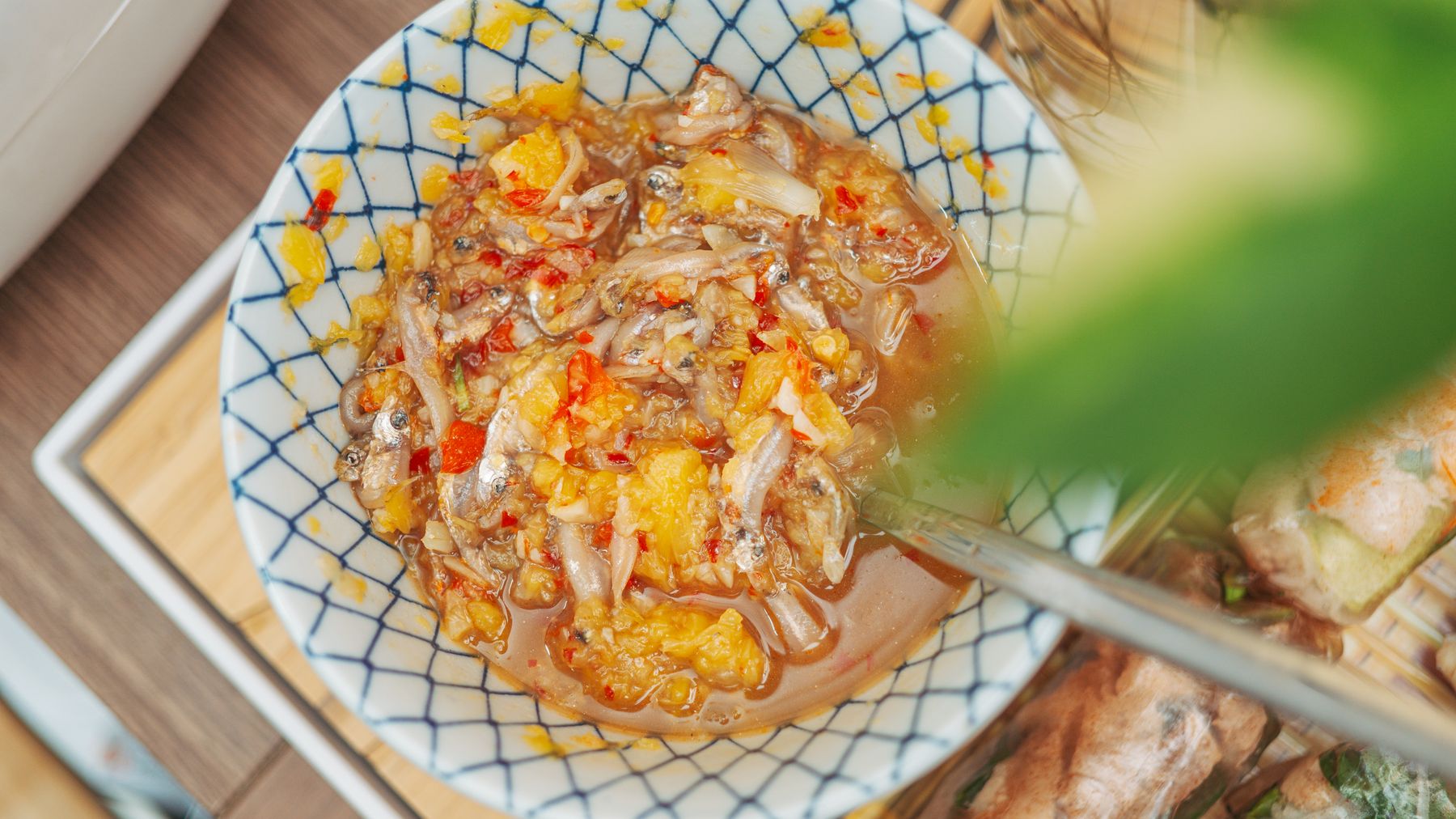
Photo by FOX ^.ᆽ.^= ∫ on Pexels
Timing and Crowds
Banh dap is an afternoon-into-early-evening snack. Most dedicated vendors open around 1:30 pm or 2 pm and sell out or close by 7 pm. Don't look for it at breakfast. The Ba Lanh spot in particular tends to run out of the grilled sheets by 6 pm on weekends, so going around 3–4 pm is the safer window.
If you're already planning to spend time in Hoi An exploring the food scene — and if you've read our coverage of cao lau (까오러우 / 高楼面 / カオラウ) or mi quang, you know there's a lot to cover — block an afternoon for the south side of the river. Banh dap fits naturally into a late-afternoon snack run before dinner.
Practical Notes
Bring small bills: 10,000 and 20,000 VND notes. Most banh dap vendors won't have change for 200,000 VND. The dish is almost always cash only. If the mam nem at one spot tastes flat or over-sweetened, just try another vendor — the sauce varies more than you'd expect across stalls, and finding a version with good fermented depth is worth the extra ten minutes of walking.
Last updated · May 26, 2026 · independently researched, never sponsored.