Ha Giang's weekend markets are not set up for tourists. They exist because H'mong, Dao, and Tay communities need a place to trade, catch up, and eat together. "Thang co" — the horse-meat and offal stew slow-cooked in a blackened cauldron — is the dish that anchors those mornings.
What Goes Into the Pot
Thang co is not a delicate dish. The base is horse meat and a combination of offal: lungs, liver, kidneys, intestines, and often congealed blood cut into cubes. Everything goes into a large cast-iron or steel pot along with bone broth, and the fire stays low for most of the morning.
The spice mix is where cooks distinguish themselves. Traditional recipes use mac khen (a Sichuan-pepper relative native to the northern highlands), ginger, lemongrass, galangal, chili, and sometimes dried cardamom. There is no single recipe — each family or market vendor has their own ratio, and the blend is ground by hand. The result is a stew that smells smoky, faintly gamey, and deeply savory, with a broth that coats the back of a spoon.
Some vendors now use beef or pork alongside horse, partly due to cost and partly to accommodate buyers who are wary of horse meat. If you want the traditional version, ask specifically for horse — ngua — when you approach the pot.
Why H'mong Communities Eat It
Horses are working animals in the highlands. They carry goods along rocky mountain tracks where motorbikes can't go, and they represent real economic value. Thang co historically made use of animals that were old or had died, turning an entire carcass into a communal meal rather than letting it go to waste. Eating it at market was — and still is — a social ritual as much as a meal.
Market day in the northern highlands typically falls once a week, rotating through nearby towns. Families walk or ride several hours to reach them. By mid-morning, the thang co pot has been simmering for hours, and groups gather on low plastic stools around shared bowls. It's not unusual to see three generations at the same table.
The dish carries cultural weight. Offering thang co to a guest is a gesture of welcome. Eating it marks you as someone willing to engage with the place on its own terms.
Best Markets to Find It
Dong Van
Dong Van, about 150 km north of Ha Giang city, hosts a market on Sundays. The old quarter around the market square still has French-era shophouses, and the thang co vendors set up on the outer ring of stalls, usually identifiable by the large pots and the crowd of H'mong men in traditional dress. Arrive before 9 a.m. — the broth is at its best early and the pot empties by late morning.
Meo Vac
Meo Vac's Sunday market draws H'mong, Dao, and Lo Lo communities from across the Meo Vac district and over the border ridgelines. It's a larger, louder market than Dong Van, and the food section is more concentrated. The thang co here tends to be served in deeper bowls with a side of steamed rice or a small basket of bread. Meo Vac is about 24 km from Dong Van along the Ma Pi Leng pass road — that drive alone justifies the trip.
Smaller rotating markets
Dong Van and Meo Vac are the easiest to plan around, but markets at Yen Minh (Thursdays) and Quan Ba (Sundays) also have thang co vendors. The atmosphere at the smaller markets is quieter, which some people prefer.

Photo by Vladimir Srajber on Pexels
How to Order
There's no menu. Walk toward the pot, make eye contact, hold up fingers for the number of bowls. A serving typically costs 30,000–50,000 VND depending on the market and vendor. You'll usually get a bowl of stew, sometimes with a small plate of fresh herbs or sliced chili on the side.
If you want to skip the offal and stick to meat, point to the pieces you want — most vendors will scoop to order. If you're unsure, point at what the person next to you is eating.
Bring cash in small denominations. Don't expect change from a 200,000 VND note at a highland market stall.
Pair It With Corn Wine
"Can ruou ngo" — corn wine — is the natural companion. It's a clear, rough spirit distilled from fermented corn, and it cuts through the richness of the stew. Small ceramic cups are refilled freely at the table. The alcohol content varies but is generally strong; sipping is the right approach at 9 in the morning.
If you'd rather not drink, hot tea is always available at market stalls. Nobody will push the wine on you.
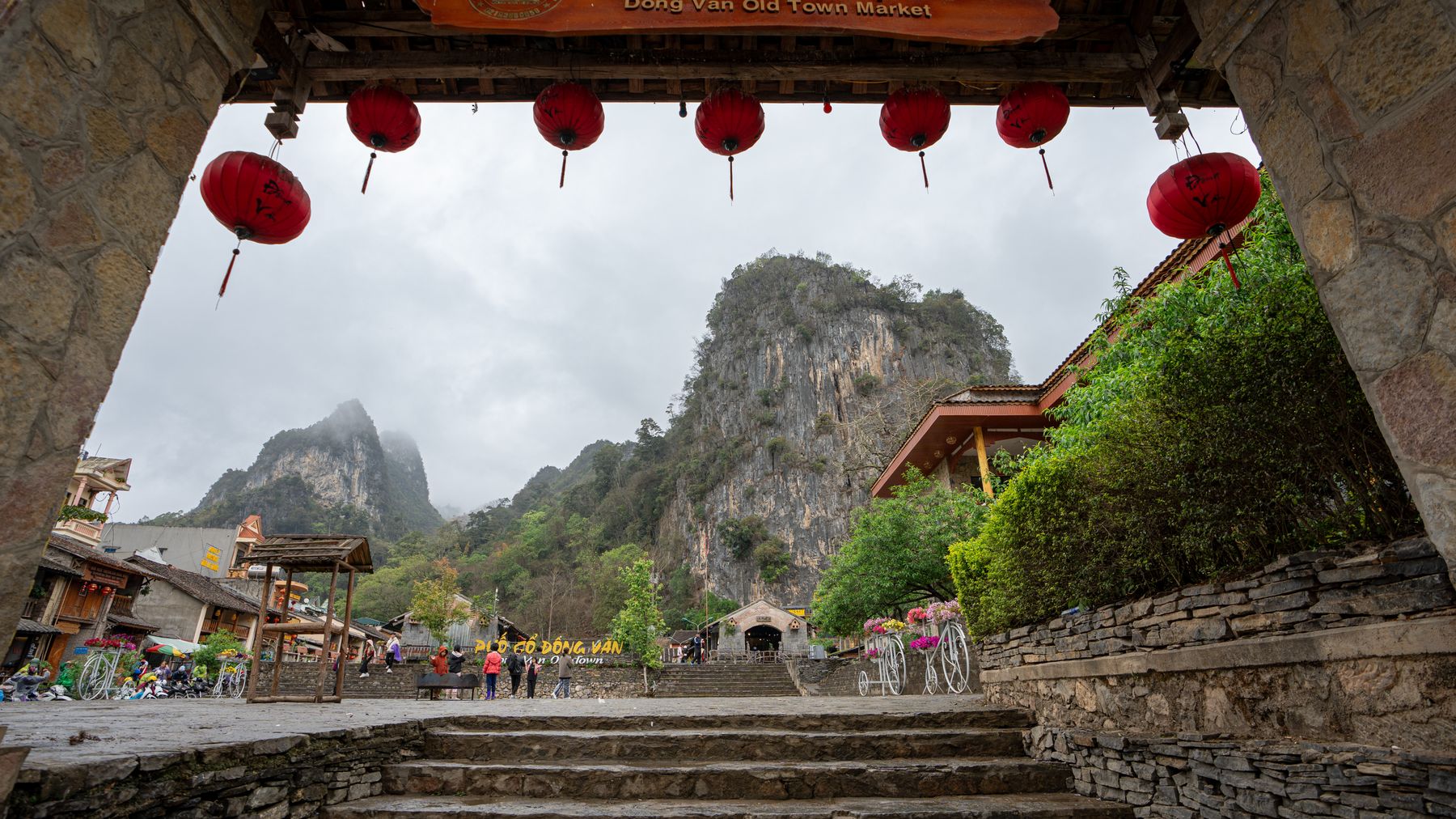
Photo by Nguyen Khuong on Pexels
A Note on Cultural Respect
Thang co tables at H'mong markets are not tourist experiences designed for outside visitors. You're welcome, but you're a guest in a space that exists for the community. A few things worth keeping in mind:
Ask before photographing people, especially women and children. Some vendors and diners are fine with it; many are not. A declined photo request is not an invitation to try again from a different angle.
Don't make a production of the offal. If it's not for you, quietly order the meat portions or skip the dish. Performing disgust at someone's traditional food is rude anywhere.
Learn two words: cam on (thank you) and ngon (delicious). They go a long way.
Practical Notes
Ha Giang (하장 / 河江 / ハーザン) requires a motorbike permit for self-guided riding in border areas — get it at the Ha Giang Tourism Department office on your way through Ha Giang city. Most markets run from around 6 a.m. to noon, and the food stalls wind down earliest. If you're combining Dong Van and Meo Vac markets in one trip, both fall on Sunday, so plan Ha Giang as a multi-day loop rather than a day trip.
Last updated · Aug 17, 2026 · independently researched, never sponsored.