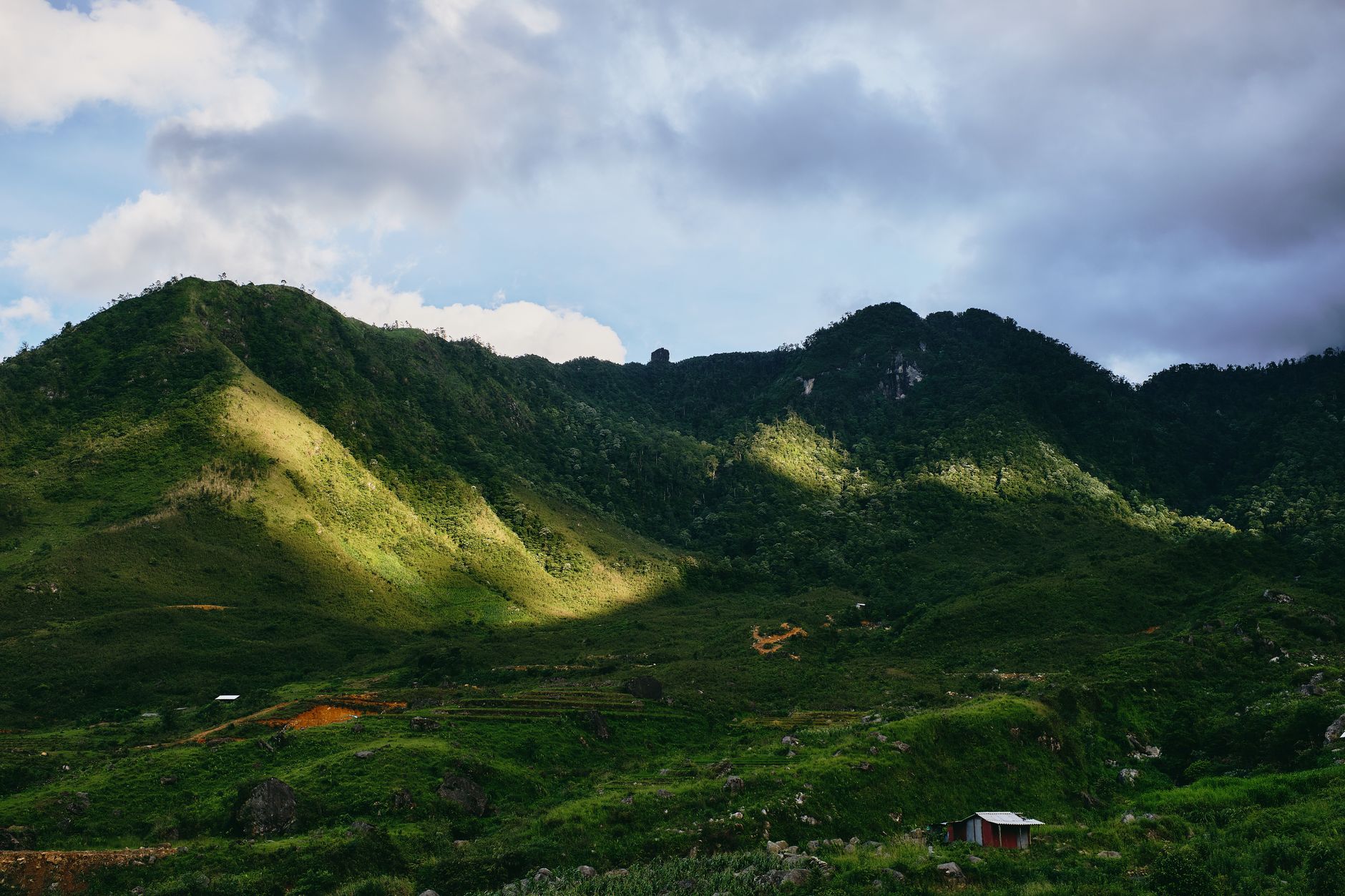
Dien Bien province draws most visitors for its war history, but about 30 km south of Dien Bien Phu city, sitting in a rice-field valley near the Laos border, Thap Muong Luan is one of the oldest Buddhist structures in northern Vietnam (베트남 / 越南 / ベトナム) — and one of the least visited.
What it is
Thap Muong Luan is a brick stupa in Muong Luan village, Dien Bien Dong district. Built sometime in the late 15th or early 16th century, the tower reflects Lao Buddhist architectural traditions rather than the Viet or Cham styles you see elsewhere in the country. It stands roughly 10 meters tall, with a square base tapering into a lotus-bud spire, and sits inside a small walled compound alongside a modest pagoda.
The stupa was built by the local Thai ethnic community — the Black Thai, specifically — during a period when this valley had deep cultural and trade ties with the Lao kingdoms across the border. The brickwork has been repaired more than once over the centuries, most recently in the early 2000s, but the core shape and proportions remain faithful to the original design. It was recognized as a national historical site in 1981.
Why travelers go
Honestly, most don't — and that's part of the appeal. If you're already in Dien Bien Phu for the battlefield sites and want a reason to explore further into the province, Thap Muong Luan offers a look at a very different cultural layer. This isn't Kinh Vietnamese Buddhism. The architecture, the offerings, the surrounding village life — it all feels closer to Luang Prabang than to Hanoi. For anyone interested in the Thai ethnic communities of the northwest or in how Buddhist traditions traveled across borders, this is genuinely interesting.
It's also just a pleasant place to be. The compound is quiet, the valley is wide and green, and the village around it moves at a pace that makes even Dien Bien Phu feel hectic.
Best time to visit
October through March gives you dry weather and cool temperatures. Dien Bien Dong sits at moderate elevation, so mornings in December and January can drop to 8-10°C — bring a jacket. The rice terraces in the surrounding valley are most photogenic in September and early October, just before harvest.
Avoid June through August if you can. The road from Dien Bien Phu can get rough during heavy rain, and the valley fogs over for days at a time.

Photo by Quang Nguyen Vinh on Pexels
How to get there
The nearest major hub is Dien Bien Phu city. From Hanoi (하노이 / 河内 / ハノイ), you have two options:
- Bus: Sleeper buses from My Dinh station run overnight, roughly 10-12 hours, 350,000-450,000 VND depending on the operator. Several departures daily.
- Flight: Vietnam Airlines operates the Hanoi-Dien Bien Phu route, about 1 hour. Book early and fares can be 800,000-1,200,000 VND one way. The airport is small and right at the edge of town.
From Dien Bien Phu to Thap Muong Luan, it's roughly 30 km south along provincial road QL12 toward Dien Bien Dong. By motorbike, that's about 45 minutes to an hour depending on road conditions. You can rent a motorbike in Dien Bien Phu city for 120,000-180,000 VND per day. Alternatively, hire a "xe om" (motorbike taxi) for around 200,000-250,000 VND round trip — negotiate beforehand and confirm the driver will wait.
There's no direct public bus that drops you at the stupa. A few local minibuses head toward Dien Bien Dong town, but they won't stop at the village turnoff unless you ask.
What to do
Walk the stupa compound
Take your time with the stupa itself. Look at the brickwork up close — some of the original carved motifs are still visible on the lower tiers. The lotus-bud finial at the top is a signature Lao Buddhist element you won't find on pagodas in Hanoi or Hue. The small pagoda next to the stupa is active; if a monk or caretaker is around, they'll usually wave you in.
Visit the village
Muong Luan village is a Black Thai settlement. Traditional stilt houses line the road, and if you visit in the morning, you'll see daily life unfolding — rice drying on tarps, women weaving on looms under the houses, kids heading to school. Be respectful, ask before photographing people, and you'll generally be welcomed warmly.
Explore the valley by motorbike
The road beyond Muong Luan continues through a wide valley with terraced rice fields and scattered Thai hamlets. There's no specific "attraction" — it's just good riding through quiet countryside. Budget an extra hour or two if you want to loop around.
Check the local market
Dien Bien Dong town, a few kilometers past the stupa, has a small morning market. It's a Thai and Hmong market, not a tourist one. You'll find forest vegetables, dried meats, local rice wine, and handwoven textiles. Best on weekend mornings.
Combine with Muong Phang
If you have a full day, pair Thap Muong Luan with Muong Phang, General Vo Nguyen Giap's wartime command center, located about 25 km east of Dien Bien Phu in the opposite direction. It makes for a solid day trip that covers both the cultural and historical sides of the province.
Where to eat nearby
Don't expect restaurants near the stupa — this is village Vietnam. Eat in Dien Bien Phu before or after your visit.
Two things worth seeking in Dien Bien Phu:
- "Com lam" — sticky rice cooked inside bamboo tubes over charcoal, a Thai ethnic specialty. Sold at small stalls around the central market.
- Grilled stream fish — small freshwater fish grilled with "mac khen" pepper, a numbing spice native to the northwest. Several small restaurants along the main road near the market serve it. A plate runs 60,000-100,000 VND.
For something familiar, Dien Bien Phu has standard "pho" and "com binh dan" (rice plate) shops throughout town.

Photo by Quang Nguyen Vinh on Pexels
Where to stay
Stay in Dien Bien Phu city. There's nothing in Muong Luan village itself.
- Budget: Guesthouses around the central market area, 200,000-350,000 VND per night. Basic but clean.
- Mid-range: A handful of hotels along the main road offer air-con rooms, hot water, and Wi-Fi for 400,000-700,000 VND.
- Upper range: Muong Thanh Dien Bien Phu is the most comfortable option in town, rooms from about 800,000-1,200,000 VND.
Practical tips locals would tell you
- Bring water and snacks. There are no convenience stores near the stupa.
- Dress modestly at the compound — cover shoulders and knees. It's an active religious site.
- If you ride a motorbike, fill up in Dien Bien Phu. Fuel stops between town and Muong Luan are sparse.
- The caretaker may ask for a small donation (20,000-50,000 VND) for upkeep. It's not a ticket — it's voluntary, but appreciated.
- Cell signal is patchy in the valley. Download offline maps before you leave town.
Mistakes to avoid
- Rushing it as a checkbox stop. The stupa takes 20 minutes to see. The village and valley around it are the real experience — give yourself at least half a day.
- Arriving late afternoon. The compound is best in morning light, and the village market wraps up by noon. Leave Dien Bien Phu by 8 AM.
- Skipping the motorbike. Trying to do this by taxi or hired car is possible but expensive and less flexible. The road is manageable for anyone comfortable on two wheels.
- Expecting English. Very few people in this area speak English. Learn a few Thai or Vietnamese phrases, or use a translation app offline.
Last updated · Sep 15, 2026 · independently researched, never sponsored.