— FIM —
Última atualização · May 29, 2026 · pesquisa independente, sem patrocínio.
We use minimal analytics + ads (no personal tracking). See our privacy policy.
Vietnam has 5G, but coverage is patchy and provider-dependent. Here is what travelers actually need to know before buying a SIM card.
Última atualização · May 29, 2026 · pesquisa independente, sem patrocínio.
Outros artigos sobre esta cidade.

Winter in the north is damp, grey, and surprisingly chilly. Forget the tropical gear and pack for layering to survive the humidity.

…
Hotels, homestays, hostels — strongest inventory in Vietnam.
Thousands of foreigners teach English or freelance in Vietnam on tourist visas. Here is what Vietnamese law actually says, when it gets enforced, and how to do it properly.

The Wise debit card works well in Vietnam if you know the fee structure. Here's how to use it at ATMs and merchants without losing money on bad rates.
Outros artigos nesta região.

The Wise debit card works well in Vietnam if you set it up right. Here's how to avoid fees, use the VND balance, and when it beats alternatives.

Vietnam's wellness scene has matured fast. Here's how to spend 7 days across four retreats — Hoi An, Da Lat, Phu Quoc, and Mai Chau — depending on your pace and budget.
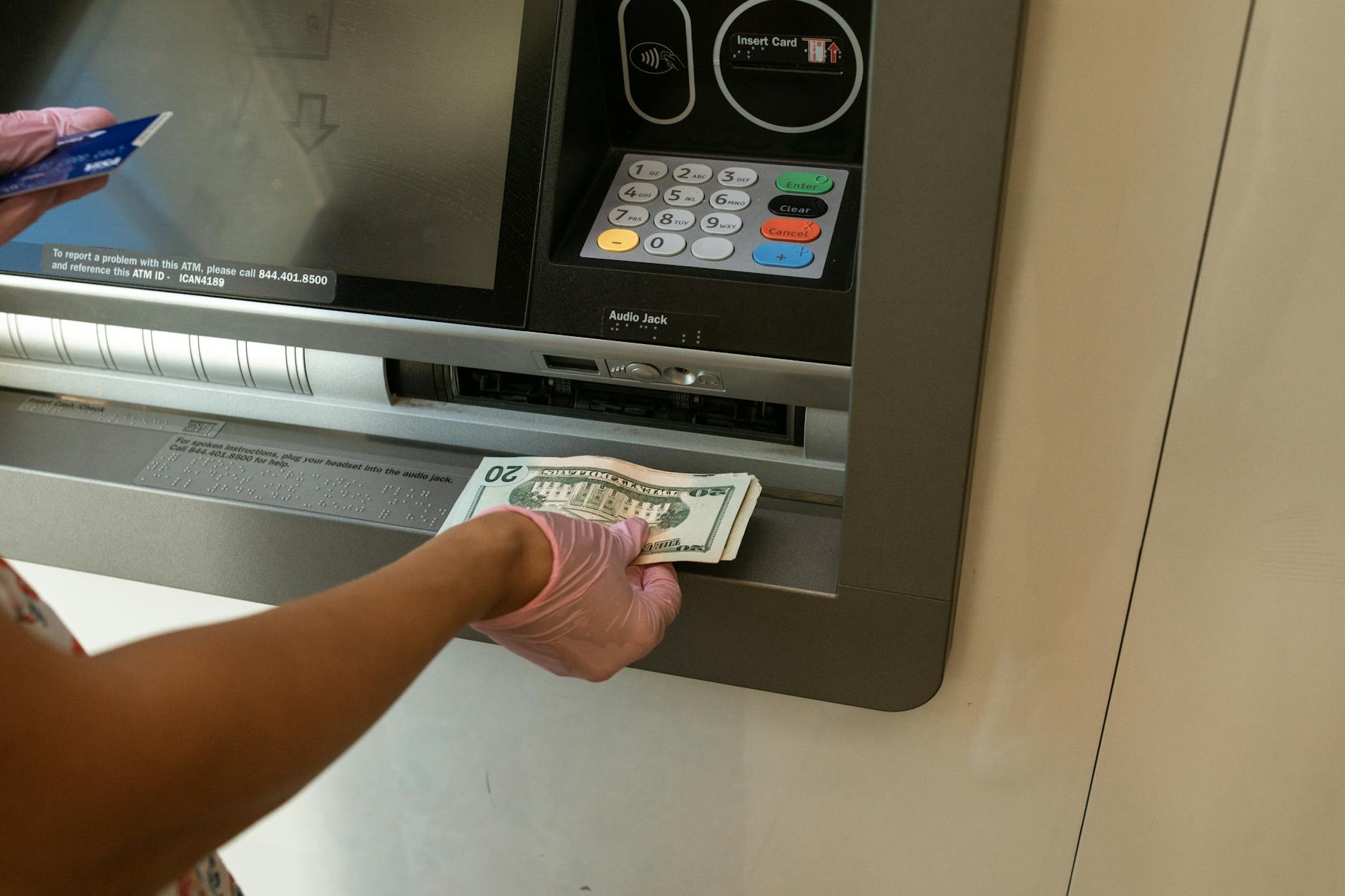
Vietnam runs on dong, but there are real situations where USD cash matters. Here is where you can actually pull USD from an ATM or bank counter.
More articles from the same category.

Forget the heavy gear. Packing for the Mekong Delta is about managing humidity, protecting your skin, and staying mobile on the water.

Wise works for sending VND to Vietnamese banks, but the process has quirks. Here's what fees to expect, which banks receive fastest, and why transfers get rejected.
Fees, speeds, and bank coverage compared for the three most-used international transfer services into Vietnam — so you pick the right one before you send.
Forget the resort-brochure packing lists. Here is the gear you actually need for Vietnam's coast, from the sands of Da Nang to the islands of Phu Quoc.
Mastering basic time and day markers in Vietnamese will save you from missed buses and confused taxi drivers. Here is the essential cheat sheet for your trip.

Most travel insurance policies have gaps that matter specifically in Vietnam — motorbike coverage, medical evacuation, and hospital payment methods. Here is what to check before you buy.
Vietnam (베트남 / 越南 / ベトナム)'s 5G rollout is real, but it is not the kind of thing you should plan your trip around. Here is an honest picture of where the signal exists, which providers carry it, and why 4G LTE remains the smarter default for most people passing through.
If you are staying in central Hanoi, central Saigon, or Da Nang's tourist core, you will probably see a 5G icon on your phone at some point. Whether it translates into meaningfully faster speeds depends on the time of day, your exact block, and which SIM you bought at the airport. Outside those three cities, do not count on 5G at all — Hoi An, Hue, Da Lat, Phu Quoc, Sapa, Ha Giang, Ninh Binh (닌빈 / 宁平 / ニンビン) — all effectively 4G territory as of mid-2025.
Three carriers dominate the Vietnamese mobile market and all three have commercial 5G in varying degrees.
Viettel is the largest network and has the widest 5G footprint. In Hanoi, coverage is reasonably solid across the central districts — Hoan Kiem, Ba Dinh, Dong Da, and parts of Cau Giay. In Saigon, Districts 1, 3, 7, and Binh Thanh have functional 5G. Da Nang's My Khe beach strip and Han River corridor are covered. Viettel SIM cards are available at the airport arrival hall for around 100,000–150,000 VND with a data package. For travelers, Viettel is the default safe choice purely on coverage breadth.
Vinaphone (owned by VNPT) has competitive 5G in urban centres and is often slightly cheaper on data bundles. Coverage maps look similar to Viettel in the major cities, but real-world performance in dense buildings — old French-era Hanoi shophouses, for example — can be patchier. Still a solid pick, especially if you find a better-priced package at the airport counter.
Mobifone has 5G but the rollout is less aggressive than the other two. In Saigon and Hanoi city centres it works, but Mobifone is the one most likely to drop to 4G in secondary neighbourhoods. That said, their tourist SIM packages are often bundled with extras like international call credit, which some travelers find useful.
The Old Quarter around Dong Xuan Market gets 5G intermittently — the density of buildings and foot traffic means the signal competes hard. The area around the Temple of Literature and Tran Quoc Pagoda tends to hold a cleaner 5G signal. West Lake (Ho Tay) lakeside is generally good. Expect indoor 5G to be unreliable; most of the guesthouses in the Old Quarter are deep, narrow buildings that swallow signal regardless of the generation.
District 1 around Ben Thanh Market and the backpacker area on Pham Ngu Lao is among the more consistently covered spots in the country. The newer districts — Thu Duc, Binh Duong border areas — have reasonable outdoor 5G but variable indoor penetration. If you are heading to Cu Chi Tunnels (about 70 km northwest of central Saigon), expect to drop to 4G well before you arrive.
Da Nang is a pleasant surprise. The city has invested in infrastructure and 5G works reliably along the My Khe beachfront and across the Han River bridges. The area near the Golden Bridge cable car departure point in the Ba Na Hills is mostly 4G, which is fine — you are on a gondola, not a Zoom call.

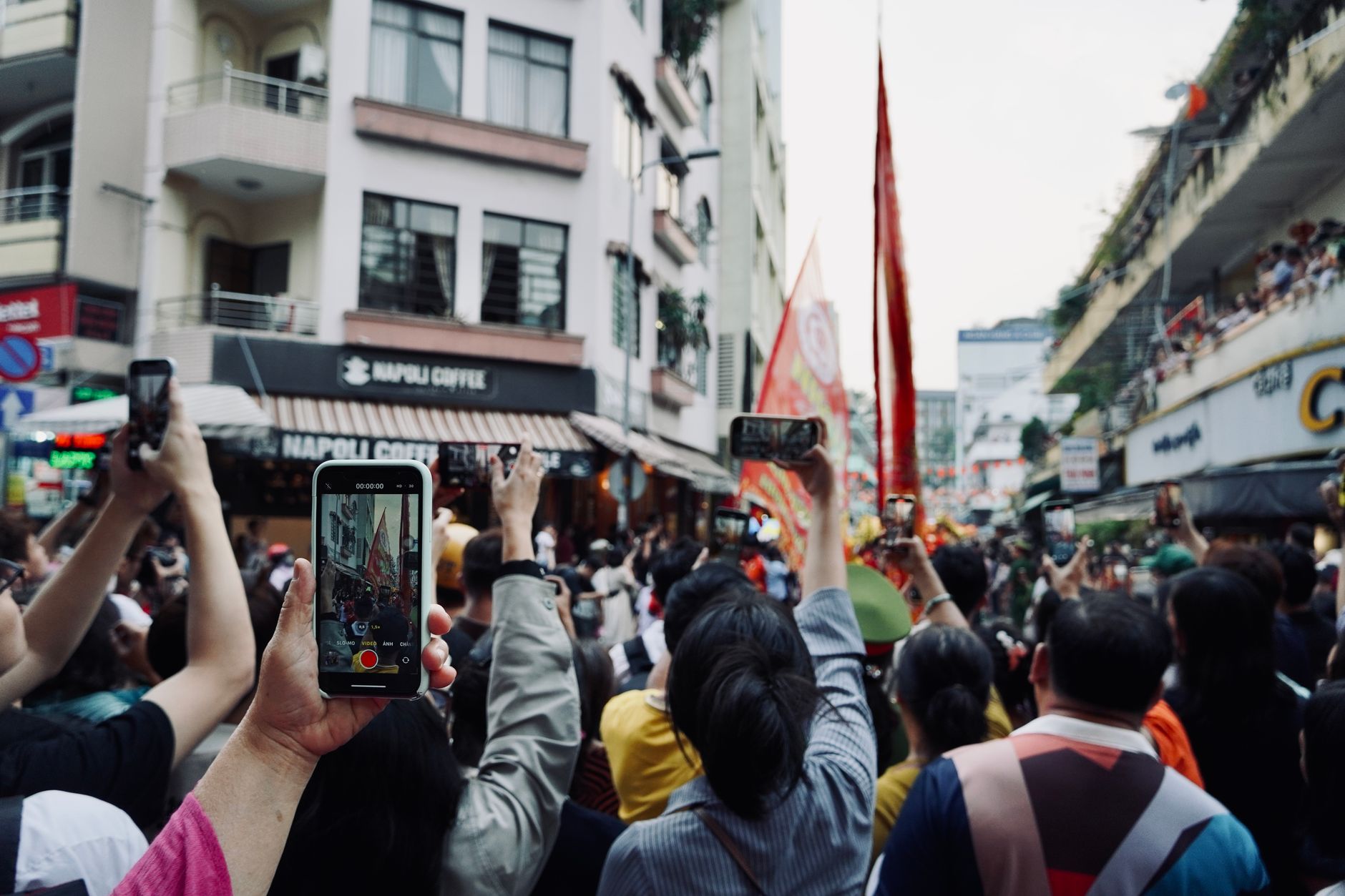
Photo by Nguyen Ngoc Tien on Pexels
Vietnam's 4G LTE network is genuinely excellent. Speeds of 30–80 Mbps are normal in cities and even in places like Hoi An's Ancient Town or along the Hue citadel walls you will get usable 4G. The infrastructure has been solid for years. Streaming, maps, translation apps, video calls — 4G handles all of it without complaint.
The practical argument against chasing 5G: your phone needs to support the correct 5G bands for Vietnam (n78 is the primary band used by all three carriers). Many phones sold in North America or Europe support 5G but not necessarily the Vietnamese band configuration. Before you assume that 5G icon means anything, check your device specs. If the bands do not align, you are on 4G regardless of what the SIM card promises.
All three carriers have counters in the arrival halls at Noi Bai (Hanoi), Tan Son Nhat (Saigon), and Da Nang international airport. Staff speak enough English to sell you a package. For a 30-day trip with heavy data use, budget around 200,000–300,000 VND (roughly 8–12 USD) for a package with 50–100 GB. Viettel tends to have the longest queues because everyone knows it has the best coverage — Vinaphone and Mobifone counters are usually faster to get through.
You will need your passport. Registration is mandatory and takes about three minutes.
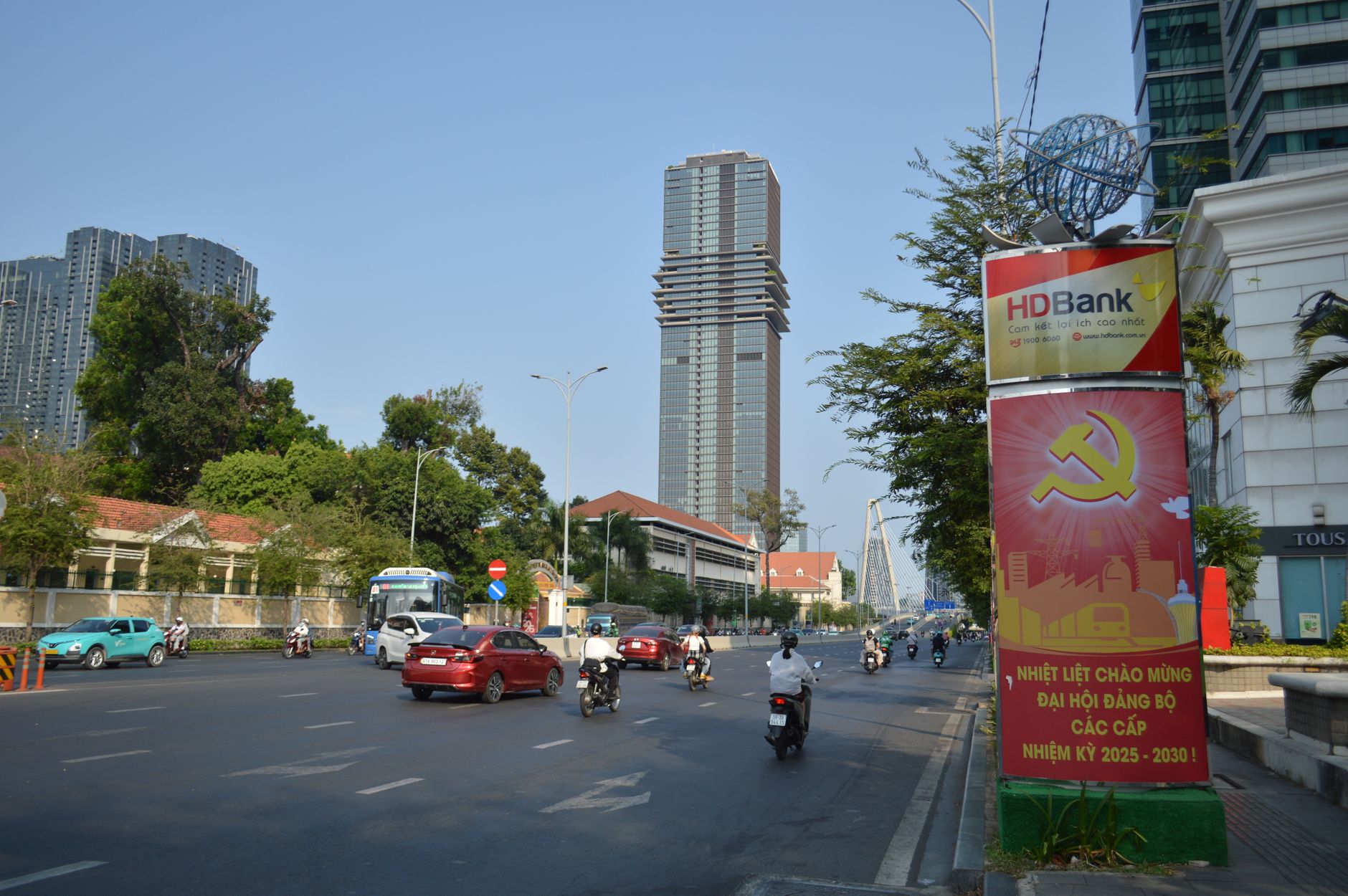
Photo by Nguyen Ngoc Tien on Pexels
If your phone supports eSIM, providers like Airalo and Gigsky sell Vietnamese eSIM packages you can activate before landing. These typically ride on Vinaphone or Mobifone infrastructure. Coverage is the same as a physical SIM from that carrier — the difference is convenience, not signal quality. Prices are slightly higher than buying at the airport counter, but you skip the queue and arrive connected.
For most travelers, buy a Viettel SIM at the airport, choose a 30-day data package, and stop thinking about it. 4G will cover 95 percent of where you go in Vietnam; 5G is a bonus in the city centres rather than a baseline you can rely on. If your trip includes rural northern loops through Ha Giang or mountain towns like Sapa, even 4G will have gaps — download offline maps before you leave the city.