— HẾT —
Cập nhật lần cuối · May 29, 2026 · nghiên cứu độc lập, không tài trợ.
We use minimal analytics + ads (no personal tracking). See our privacy policy.
Vietnam's pagodas and temples are active places of worship, not backdrops. Here's how to behave inside without causing offence or embarrassing yourself.

Cập nhật lần cuối · May 29, 2026 · nghiên cứu độc lập, không tài trợ.
Bài viết khác về thành phố này.

Locals live on Zalo, tourists default to WhatsApp — here's why that gap matters and how to bridge it before your trip.
…
Hotels, homestays, hostels — strongest inventory in Vietnam.
Winter in the north is damp, grey, and surprisingly chilly. Forget the tropical gear and pack for layering to survive the humidity.
Thousands of foreigners teach English or freelance in Vietnam on tourist visas. Here is what Vietnamese law actually says, when it gets enforced, and how to do it properly.
Bài viết khác trong vùng này.
The Wise debit card works well in Vietnam if you set it up right. Here's how to avoid fees, use the VND balance, and when it beats alternatives.
The Wise debit card works well in Vietnam if you know the fee structure. Here's how to use it at ATMs and merchants without losing money on bad rates.
Vietnam runs on dong, but there are real situations where USD cash matters. Here is where you can actually pull USD from an ATM or bank counter.
More articles from the same category.
Forget the heavy gear. Packing for the Mekong Delta is about managing humidity, protecting your skin, and staying mobile on the water.

Wise works for sending VND to Vietnamese banks, but the process has quirks. Here's what fees to expect, which banks receive fastest, and why transfers get rejected.
Fees, speeds, and bank coverage compared for the three most-used international transfer services into Vietnam — so you pick the right one before you send.
Forget the resort-brochure packing lists. Here is the gear you actually need for Vietnam's coast, from the sands of Da Nang to the islands of Phu Quoc.
Mastering basic time and day markers in Vietnamese will save you from missed buses and confused taxi drivers. Here is the essential cheat sheet for your trip.

Most travel insurance policies have gaps that matter specifically in Vietnam — motorbike coverage, medical evacuation, and hospital payment methods. Here is what to check before you buy.
Vietnam (베트남 / 越南 / ベトナム)'s pagodas and temples are not museums — people pray in them every day, often several times. Getting the etiquette right takes about two minutes to learn and makes a real difference to how locals see you.
The single rule that gets ignored most is coverage. Shoulders and knees must be covered before you cross the threshold. That applies everywhere: a neighbourhood pagoda in a Saigon alley, the Tran Quoc Pagoda on Hanoi's West Lake, the grand gate of Bai Dinh near Ninh Binh (닌빈 / 宁平 / ニンビン).
For women, a sarong, light linen trousers, or a scarf worn as a wrap all work. For men, shorts below the knee are usually fine; bare-shouldered tank tops are not. Most major sites sell or lend sarongs at the gate for around 20,000–30,000 VND. Accept the offer rather than arguing the point.
The "ao dai" — Vietnam's traditional tunic-and-trouser ensemble — is obviously ideal, but nobody expects tourists to show up in one. The bar is simply: covered, and not skin-tight. Sleeveless dresses, crop tops, and football singlets are the most common offenders.
This one is context-dependent. At most Buddhist pagodas, you remove shoes before entering the main sanctuary building (the one with the altar and the Buddha statues). The threshold is usually obvious — look for a low wooden step or a line of shoes outside the door.
At Cham towers like Po Nagar in Nha Trang or the My Son complex, removal is typically required before the inner chamber. At Confucian temples like the Temple of Literature in Hanoi, shoes usually stay on in the courtyards but may need to come off in specific halls — follow what others around you are doing.
Socks are fine. Don't step over the raised wooden threshold itself — step over it, never on it. In Vietnamese folk belief, thresholds carry spiritual significance and standing on one is considered disrespectful.

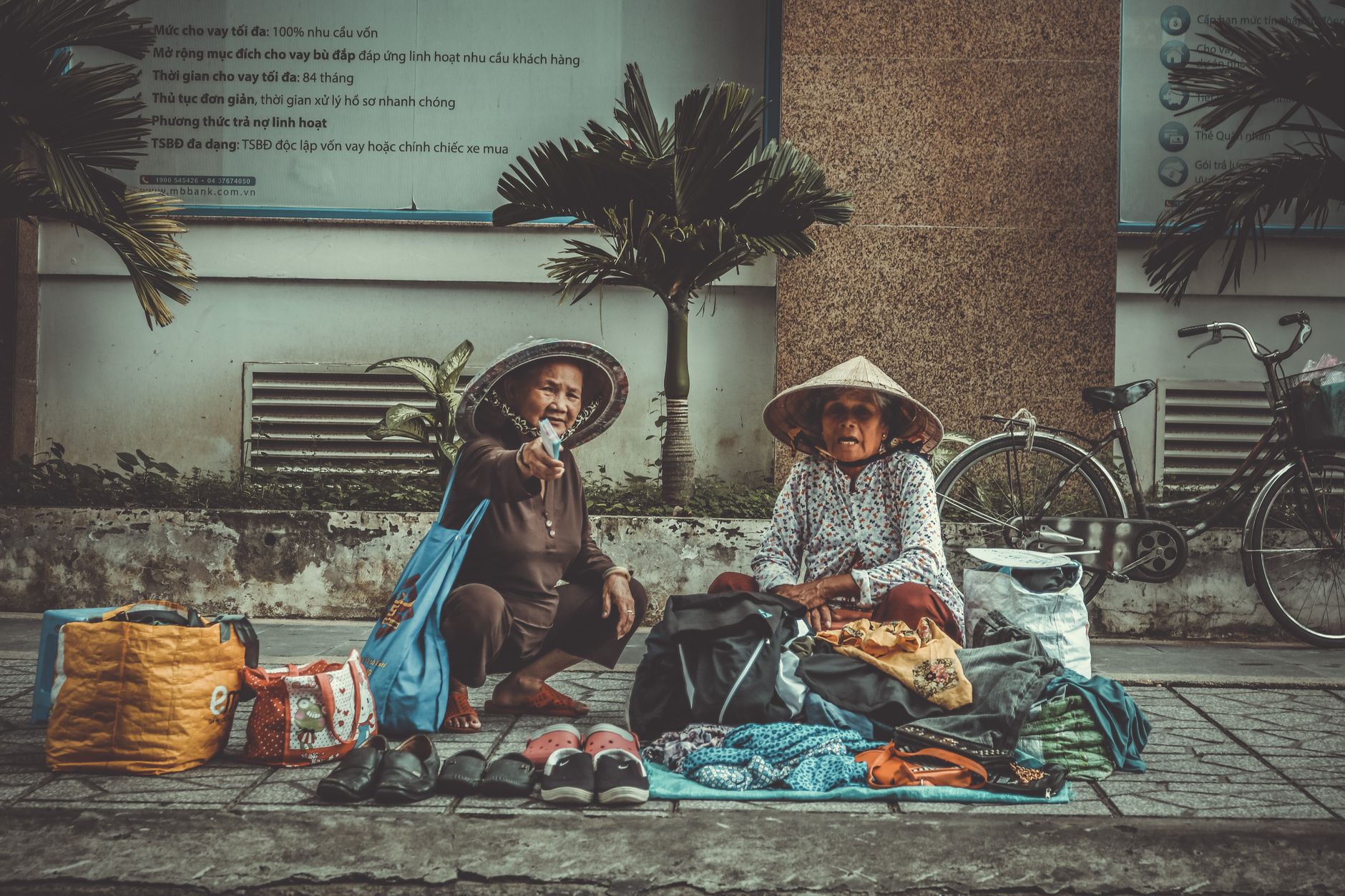
Photo by Nguyen Ngoc Tien on Pexels
If you want to light incense — and you're welcome to — buy a bundle outside (5,000–10,000 VND for a small pack). Light all sticks at once from a candle or the urn flame, let the flame catch, then wave or fan it out rather than blowing it. Blowing out incense with your breath is considered impolite.
Hold the incense at chest height with both hands, close your eyes briefly, and bow three times — once for the Buddha (or the deity), once for the dharma (the teachings), once for the sangha (the community of practitioners). You don't have to know this sequence by heart, but the gesture of pausing with both hands together and bowing is what matters. Place the sticks upright in the sand-filled urn; don't leave them horizontal or on the altar surface.
If there are offerings — fruit, flowers, small cakes — don't touch them. They've been placed deliberately and sometimes ceremonially. Similarly, don't lean on altars, put bags on them, or use them as a shelf for your water bottle.
Bowing when you enter and again when you leave is appreciated. A slight, respectful nod works too. Nobody will correct you for not knowing the full form, but making the gesture signals that you're paying attention.
Most pagodas allow photography of the architecture, courtyards, and decorative elements. The main altar is a grey area — some temples post signs, many don't. When in doubt, ask a staff member or a monk before pointing your camera at a Buddha image. Flash photography directly at lacquered or gilded statues can damage them over time, and many temples have started restricting it for this reason.
Never photograph a monk without asking first. This applies even if they're sitting quietly in a corner, even if the light is perfect, even if they seem not to notice you. Monks in active meditation or prayer are definitively off-limits. If a monk is moving through a crowd or doing something public, a polite gesture — hands together, a questioning look — is the right approach. Many will agree; some won't. Accept either answer without fuss.
Don't photograph worshippers mid-prayer either. It's invasive in any culture. Hang back, observe, keep the camera down. The atmosphere inside a working pagoda on a lunar calendar holiday — during Tet / 越南春节 / テト), or the Hung Kings Festival, or the Mid-Autumn Festival — is worth absorbing without a lens between you and it.
Photo by Nguyen Ngoc Tien on Pexels
Keep your voice low inside sanctuaries. Vietnamese pagodas during weekday mornings can be nearly silent — the sound of chanting, incense smoke, the occasional bell. Matching that energy costs nothing.
Turn your phone to silent. Not vibrate — silent.
Don't point your feet toward the altar when sitting on the floor. Tuck them to the side or sit cross-legged.
If monks or nuns are conducting a ceremony, stand to one side and watch from a respectful distance. Don't walk through the middle of a ritual to get a better angle.
At pagodas where "ca tru" or other traditional music is performed as part of worship — more common in northern Vietnam — the same quiet-observer etiquette applies.
A sarong or light scarf takes up almost no space in a day bag and solves the dress-code problem at any site in the country. Entry fees at most pagodas run 20,000–50,000 VND; major complexes like Bai Dinh charge more (100,000–150,000 VND). The real cost of getting this wrong isn't a fine — it's the look on someone's face when they're trying to pray and you're standing there in board shorts pointing a camera at their altar.