— ENDE —
Zuletzt aktualisiert · May 30, 2026 · unabhängig recherchiert, nie gesponsert.
We use minimal analytics + ads (no personal tracking). See our privacy policy.
Showing up empty-handed is fine in some cultures. In Vietnam, it isn't. Here's what to bring, what to skip, and how to hand it over without causing awkward silences.
Zuletzt aktualisiert · May 30, 2026 · unabhängig recherchiert, nie gesponsert.
Weitere Artikel in dieser Region.
Vietnam's wellness scene has matured fast. Here's how to spend 7 days across four retreats — Hoi An, Da Lat, Phu Quoc, and Mai Chau — depending on your pace and budget.

…
Hotels, homestays, hostels — strongest inventory in Vietnam.
Locals live on Zalo, tourists default to WhatsApp — here's why that gap matters and how to bridge it before your trip.
Thousands of foreigners teach English or freelance in Vietnam on tourist visas. Here is what Vietnamese law actually says, when it gets enforced, and how to do it properly.
More articles from the same category.
Forget the heavy gear. Packing for the Mekong Delta is about managing humidity, protecting your skin, and staying mobile on the water.

Winter in the north is damp, grey, and surprisingly chilly. Forget the tropical gear and pack for layering to survive the humidity.
The Wise debit card works well in Vietnam if you know the fee structure. Here's how to use it at ATMs and merchants without losing money on bad rates.
Vietnam runs on dong, but there are real situations where USD cash matters. Here is where you can actually pull USD from an ATM or bank counter.

Wise works for sending VND to Vietnamese banks, but the process has quirks. Here's what fees to expect, which banks receive fastest, and why transfers get rejected.
Fees, speeds, and bank coverage compared for the three most-used international transfer services into Vietnam — so you pick the right one before you send.
If a Vietnamese family invites you into their home — for a meal, a holiday, or just an afternoon visit — arriving with a gift is expected, not optional. It doesn't need to be expensive, but it does need to be thoughtful. Get it right and you've already made a good impression before you sit down.
Fruit is the default gift for a reason. It's always appropriate, it reads as generous without feeling like a bribe, and almost every host will genuinely use it. A basket or bag of mixed fruit — dragon fruit, mangoes, rambutans, mangosteens — runs about 80,000–150,000 VND at a good market stall and looks more substantial than the price suggests. Buy from a proper fruit shop rather than a convenience store; presentation matters here.
Avoid buying a single type of fruit in odd numbers. Five pieces is fine. Four is bad luck in some parts of the country (the word sounds like "death" in certain regional dialects). Stick to five, six, or eight pieces if you're assembling something yourself.
A box of quality loose-leaf tea — particularly "tra Oolong" or "tra Thai Nguyen" green tea — is a safe, appreciated gift across all age groups. Older hosts especially welcome it. Expect to spend 100,000–250,000 VND for something that looks genuinely considered. Avoid the mass-produced supermarket sachets; they telegraph that you bought it at the last minute.
If the household you're visiting is known to be coffee drinkers, a bag of quality Vietnamese coffee works just as well. A 250g bag of whole-bean or ground coffee from a reputable roaster in Hanoi or Saigon costs around 80,000–180,000 VND and is the kind of thing people don't always buy for themselves.
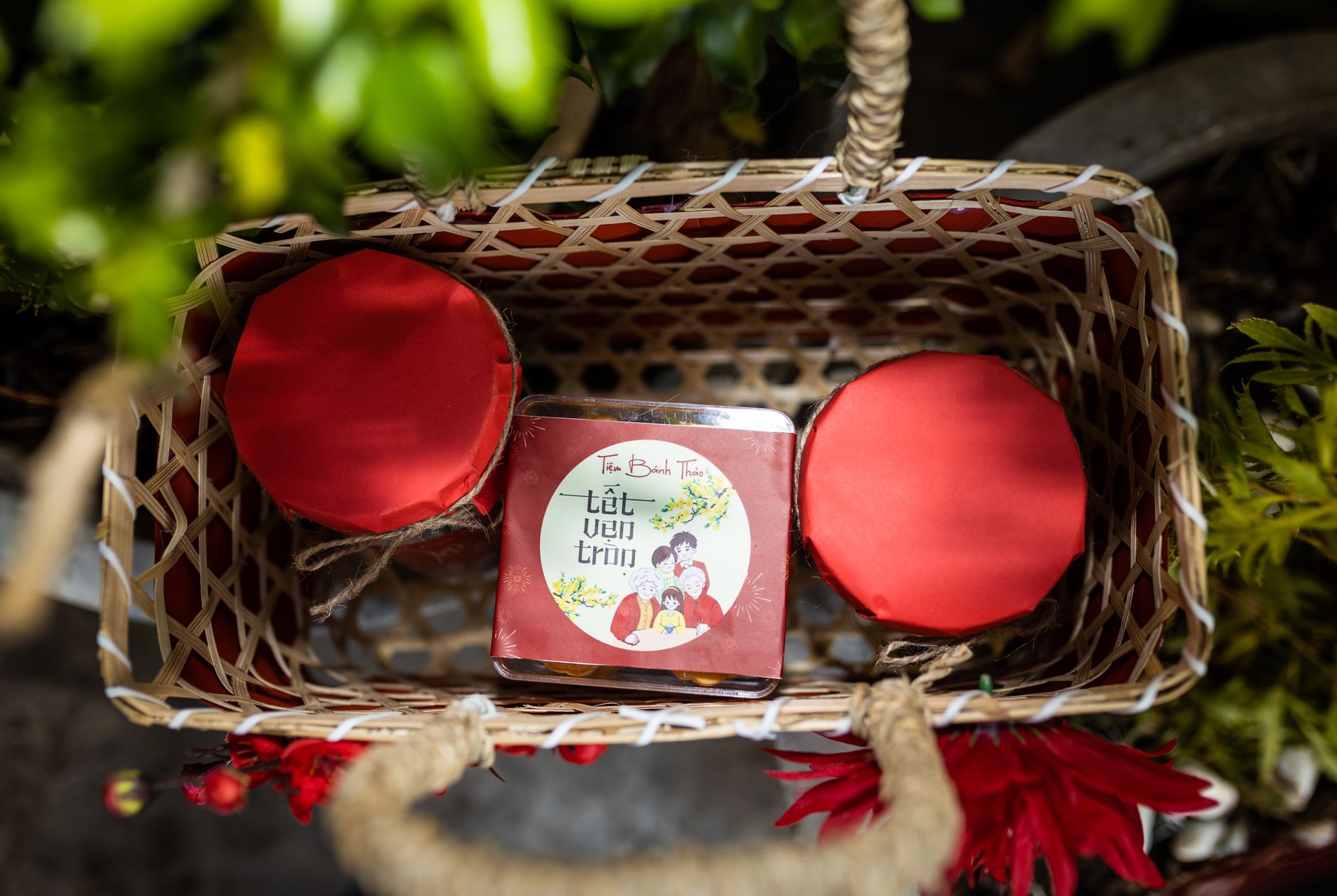
Boxed cakes — "banh" from a bakery rather than a supermarket shelf — are common gifts and well-received. "Banh dau xanh" (mung bean cakes), "banh pia" from the Mekong region, or a box of mooncakes around the Mid-Autumn Festival season are all appropriate. A decent boxed selection sits in the 120,000–300,000 VND range.
For Tet specifically, the calculus shifts. Bringing "banh chung" — the traditional sticky rice cake stuffed with pork and mung bean — is deeply appropriate and meaningful. It signals that you understand what the holiday actually means, not just that you bought something from the airport.
A bottle of wine or a small box of beer isn't wrong, but read the room first. Older or more traditional households may not drink, and showing up with a bottle of red wine to a Buddhist family can feel off. If you know the host drinks, a bottle of decent imported wine (300,000–500,000 VND) or a box of Tiger or Saigon (사이공 / 西贡 / サイゴン) Beer works fine for a casual family dinner.
This is the one that catches most visitors off guard. Chrysanthemums — the pale yellow or white varieties especially — are funeral flowers in Vietnam (베트남 / 越南 / ベトナム). They're placed at altars and used in mourning rituals. Bringing them to a home visit is the floral equivalent of arriving with condolences. Skip them entirely. If you want to bring flowers, go with sunflowers, gerberas, or a small orchid arrangement.
A clock as a gift is considered bad luck — it implies you're counting down someone's remaining time. This is a shared superstition across much of East and Southeast Asia. Don't overthink it, just don't do it.
Gifting shoes — particularly to an elder — implies you want them to walk away from you, or in some readings, to walk away from life. It's not a hard rule for all families, but the association is common enough that it's not worth the risk.
Both colours are associated with mourning. If you're wrapping a gift, use red, yellow, or pink. Most gift shops in Vietnam will wrap purchases in appropriately coloured paper automatically — let them.

Photo by Ditta Alfianto on Pexels
Use both hands when offering the gift. This applies to handing over anything to someone older than you, and it's simply good manners in most situations. Don't make a production of it — a brief, understated gesture as you arrive is the norm. Something like "I brought a little something" rather than drawing attention to the value or the thought that went into it.
Don't be surprised if the host sets the gift aside without opening it in front of you. This is common and not a sign of indifference. Opening gifts immediately in front of the giver can feel like you're evaluating the gift's worth, which runs counter to how hospitality is managed here. If they do open it, compliment what they do with it, not the gift itself.
If you're visiting during Tet, gifts of money in red envelopes — "li xi" — for children in the household are expected and very welcome. Denominations like 50,000 or 100,000 VND per child are perfectly appropriate; the gesture matters more than the amount.

Photo by Nguyen Truong Khang on Pexels
You don't need to overspend or overthink this. A fruit basket, a box of tea, or a decent cake from a proper bakery covers almost every situation. The effort of buying something considered — rather than grabbing the nearest thing at a petrol station — is what actually gets noticed.