Ten days in Ha Giang allows you to move past the rapid-fire motorbike loops and actually sit with the communities that shape this karst landscape. This itinerary prioritizes cultural immersion, local markets, and slow travel through the northernmost borderlands.
Day 1 — Hanoi to Ha Giang City
Your journey begins at Hanoi My Dinh bus station. Board a daytime limousine bus or an overnight sleeper bus for the 300 km trip to Ha Giang City, which typically takes six hours and costs around 300,000 VND. Arrive in the provincial capital by late afternoon to check into a local guesthouse along the Lo River.
For dinner, seek out a bowl of "chao au tau", a bitter rice porridge made from the root of the aconite flower, slow-cooked with pork trotters and herbs. It is a local specialty prized for its warming properties in the mountain chill.
Off-script suggestion: Skip the busy cafes near the central square. Walk across the old bridge over the Lo River to the quiet residential lanes of Phuong Do, where you can find small wooden shacks serving hot green tea.
Day 2 — Ha Giang City to Quan Ba (Nam Dam Village)
Rent a semi-automatic motorbike (about 150,000 VND per day) or meet your local driver. Ride 50 km north toward Quan Ba. The road climbs steeply through the Bac Sum Pass, offering your first taste of the high-altitude terrain. Instead of staying in the main town of Tam Son, head directly to Nam Dam, a village inhabited by the Dao ethnic group.
Nam Dam is famous for its rammed-earth houses. Spend the afternoon walking the dirt paths between the homes, observing the traditional architecture designed to keep interiors warm in winter and cool in summer. For dinner, try "thit lon cap nach", a dish of roasted free-range pork served with local wild leaves.
Off-script suggestion: Book a traditional Dao herbal bath at a family-run homestay. The bath uses up to ten different forest leaves boiled in a large wooden tub, perfect for soothing muscles after your first day of mountain riding.
Day 3 — Quan Ba to Yen Minh via Lung Tam
Ride 50 km toward Yen Minh, taking the scenic detour through the Lung Tam valley. This valley is home to the Hmong ethnic minority and the famous Lung Tam linen cooperative. Here, local women preserve the complex process of turning hemp fibers into traditional clothing.
Spend a few hours watching the steps of drawing thread, weaving on handlooms, indigo dyeing, and wax-resist painting. Have a simple lunch of "men men", a traditional Hmong staple made of steamed ground corn, often eaten with a side of pumpkin leaf soup.
Off-script suggestion: Avoid the main highway to Yen Minh. Take the older, narrower road that passes through Lao Va Chai. It is rougher, but you will pass ancient clay homes untouched by modern tourism.
Day 4 — Yen Minh to Dong Van via Pho Bang
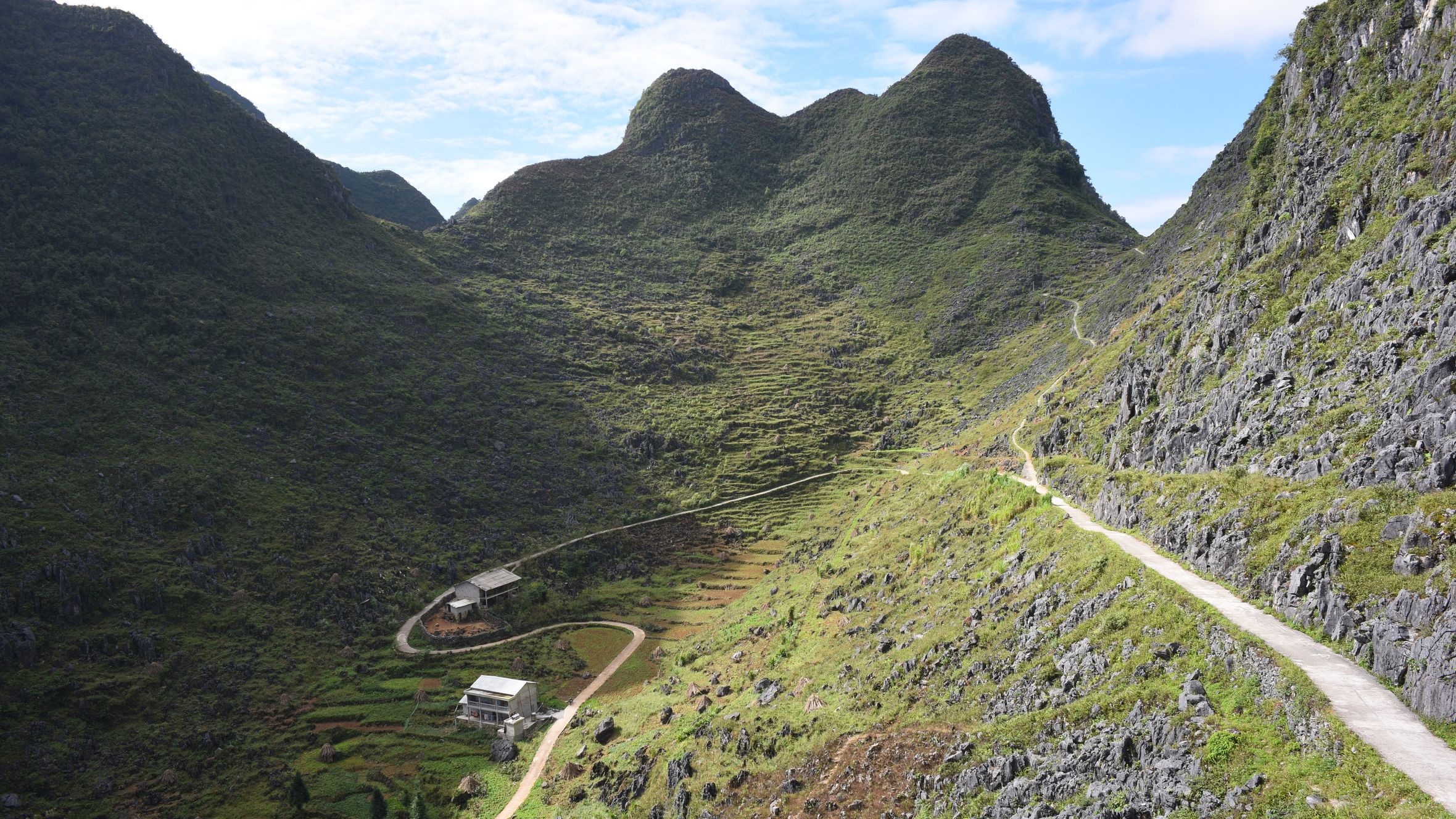
Set out early for the 80 km drive to Dong Van. The landscape transitions into the dramatic limestone formations of the Dong Van Karst Plateau. Halfway through the drive, turn off the main road to Pho Bang, a quiet town right on the border.
Pho Bang feels frozen in time. The houses here feature clay walls, wooden columns, and Chinese-style character scrolls on the doors. After exploring, continue to Dong Van town. For dinner, find a local stall serving "banh cuon" served with a bowl of hot, seasoned bone broth rather than the sweet fish sauce found in Hanoi (하노이 / 河内 / ハノイ).
Off-script suggestion: Walk the back alleys of Pho (쌀국수 / 越南河粉 / フォー) Bang behind the main street. You will find elderly residents sitting on wooden stools, spinning thread or drying herbs on woven bamboo trays.

Photo by Quang Nguyen Vinh on Pexels
Day 5 — The Hmong King's Palace and Lung Cu
Dedicate this day to the historical heart of the plateau. Drive 15 km to Sa Phin to visit the Palace of the Hmong King (Vuong Chinh Duc). Built in the early 20th century, the palace features a unique blend of traditional Hmong woodcarving, Chinese Qing Dynasty architecture, and French colonial stone pillars.
Afterward, ride north to Lung Cu. While most travelers climb the flag tower, focus your attention on Lo Lo Chai, a village of the Lo Lo ethnic group located at the base of the mountain. The women here wear highly detailed, colorful patchwork outfits.
Off-script suggestion: Skip the climb up the flag tower stairs during the midday heat. Instead, sit in a traditional house in Lo Lo Chai and drink hot tea with a local family to learn about their unique embroidery techniques.
Day 6 — Dong Van to Meo Vac via Ma Pi Leng
Today you will ride the famous Ma Pi Leng Pass, a 22 km stretch of road carved into the side of the limestone cliffs. Stop at the monument dedicated to the volunteer workers who built the "Youth Road" in the mid-20th century using basic hand tools.
Arrive in Meo Vac by afternoon. The town is smaller and less commercialized than Dong Van. For lunch, try "ga doi", a local breed of hill chicken known for its firm texture, seasoned with wild pepper seeds.
Off-script suggestion: Leave your bike at the pass information center and hike the Sky Path, a narrow walking trail that runs high above the main road. You will pass small Hmong settlements where children carry baskets of fresh grass on their backs.
Day 7 — The Meo Vac Sunday Market
If you time your itinerary correctly, today is Sunday. The Meo Vac Sunday Market is the largest and most vibrant ethnic market in the province. People from the Hmong, Dao, Tay, and Nung communities travel from distant hillsides starting at dawn.
The market is a sensory overload of sights, sounds, and smells. Watch the livestock trading, browse the hand-forged farm tools, and head to the food section to see locals sharing bowls of "thang co", a traditional horse meat soup, accompanied by cups of "ruou ngo" (corn wine).
Off-script suggestion: Walk 2 km out of the market area to Sang Pa A village. It is a quiet Lo Lo community where you can escape the market crowds and see traditional round-roofed clay barns.
Photo by Quang Nguyen Vinh on Pexels
Day 8 — Meo Vac to Du Gia
Ride 75 km south toward Du Gia. The road is rugged, winding through deep valleys and high passes like Lung Phin. Du Gia is a lush, green valley inhabited primarily by the Tay ethnic group, who live in large wooden stilt houses.
Check into a homestay run by a Tay family. The atmosphere here is peaceful, surrounded by rice paddies and streams. For dinner, join your hosts for a family meal featuring "ca suoi nuong" (grilled stream fish) and wild bamboo shoots.
Off-script suggestion: Walk down to the riverbanks about 1 km past the main village center. You will find local children swimming and water buffalo cooling off in the shallow pools, far from the tourist-heavy waterfalls.
Day 9 — Du Gia to Ha Giang City
Complete the loop by riding 70 km back to Ha Giang City via the Duong Thuong valley. This valley was historically a major center for hemp production. Stop along the road to admire the ancient "che san tuyet" (snow tea) trees, some of which are hundreds of years old.
Arrive back in Ha Giang City by late afternoon. Return your motorbike and check back into your guesthouse. Celebrate the end of your journey with a fresh bowl of "pho" at a local street stall.
Off-script suggestion: Stop at a small roadside blacksmith shop in Duong Thuong. The Hmong blacksmiths here still use manual bellows and charcoal fires to forge highly durable farming knives.
Day 10 — Ha Giang City to Hanoi
Before boarding your return limousine bus to Hanoi, spend your morning visiting the Ha Giang Provincial Museum. The exhibits provide excellent context on the geological history of the karst plateau and the distinct customs of the 22 ethnic groups that call this province home.
Practical notes
Ensure you obtain the required border area permit (about 110,000 VND) from the Ha Giang Immigration Office if you plan to explore the northernmost villages near the border. Pack layers, as temperatures on the high plateaus of Dong Van and Meo Vac can drop significantly, even during the summer months.
Last updated · May 30, 2026 · independently researched, never sponsored.