Many travelers try to see Central Vietnam (베트남 / 越南 / ベトナム) by basing themselves in one city and taking long, exhausting day trips to the others. Packing three distinct regions into rushed commutes means you miss the quiet mornings and late-night food scenes that make this stretch of coast special.
This 10-day itinerary treats Hue, Da Nang, and Hoi An as three distinct chapters. By staying overnight in each, you get to experience them when the tour buses leave.
Day 1 — Arrival in Hue & Riverside Walks
Begin your trip by flying into Phu Bai International Airport (HUI) or taking the train to Hue (후에 / 顺化 / フエ) station. A taxi from the airport to the city center costs around 250,000 VND and takes 30 minutes.
Hue is noticeably slower and greener than Vietnam's major hubs. Spend your first afternoon walking along the northern bank of the Perfume River. As the sun goes down, head to a local joint for your first bowl of "bun bo hue"—the city's signature spicy beef noodle soup loaded with lemongrass, shrimp paste, and thick rice noodles. Look for stalls on Nguyen Du or Ly Thuong Kiet streets where locals crowd the plastic stools.
Day 2 — The Imperial Citadel & Garden Houses
Dedicate your morning to the Imperial City, the sprawling walled fortress that served as the home of the Nguyen Dynasty emperors. Enter through the Noon Gate (Cua Ngo Mon) early at 8:00 AM to beat the midday heat and the tour groups. Expect to spend at least three hours wandering through the restored temples, courtyards, and the quiet ruins of the Forbidden Purple City.
In the afternoon, escape the sun at one of Hue's traditional garden houses in the Kim Long district. These historic wooden homes, built according to strict geomantic principles, feature quiet courtyards filled with fruit trees and ornamental ponds. Finish the day with "banh khoai" (crispy rice pancakes stuffed with pork and shrimp) at a local eatery near Chi Lang street.
Day 3 — Royal Tombs & Backstreet Eats
Hue's emperors built elaborate resting places along the Perfume River. Rent a motorbike for about 150,000 VND or hire a driver for the morning to visit two contrasting sites.
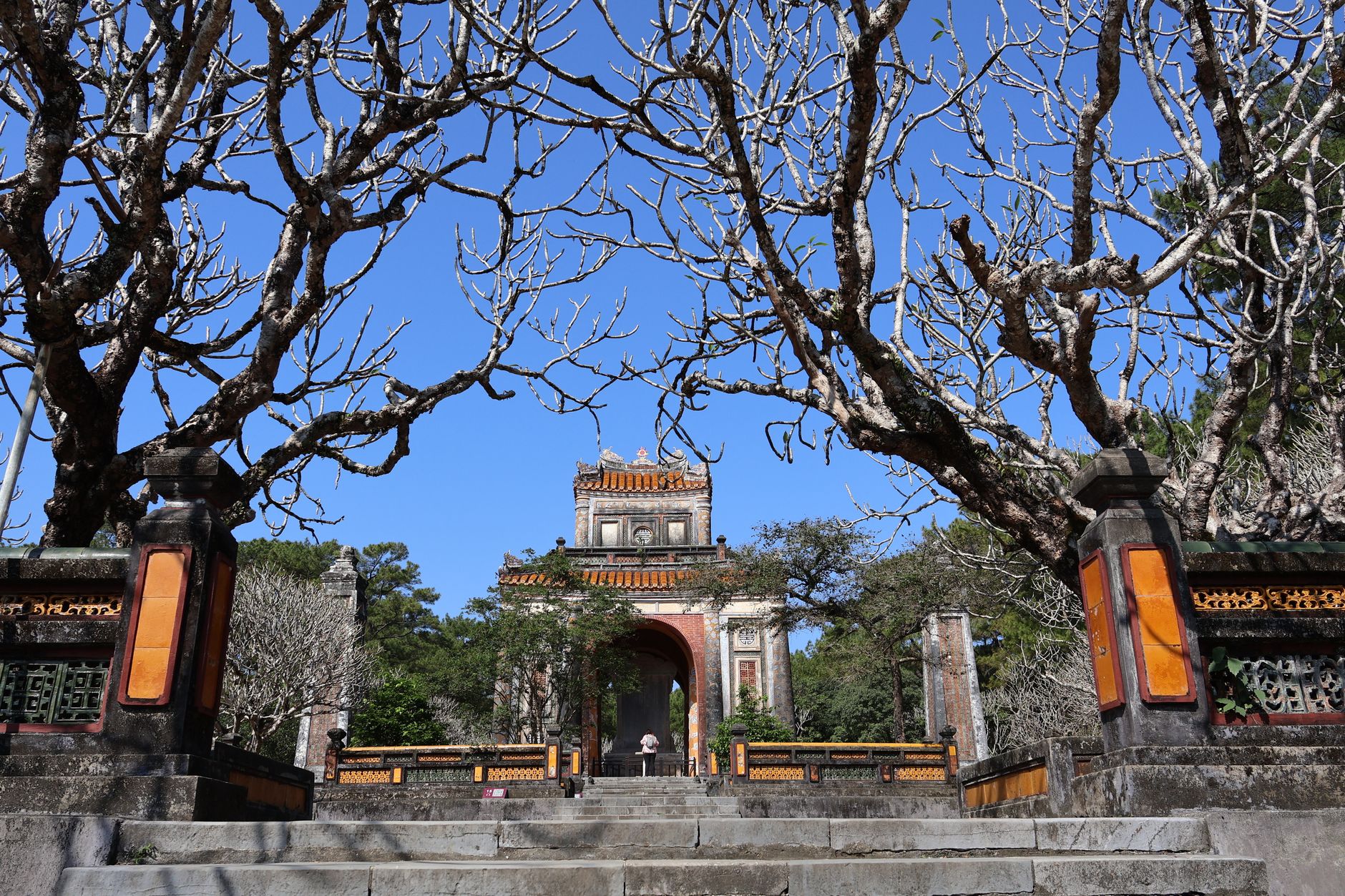
Start at the "Tomb of Tu Duc", designed by the emperor himself as a summer retreat. It features a large lake, pine forests, and wooden pavilions where he wrote poetry. Next, head to the "Tomb of Khai Dinh". Built in the 1920s, this tomb is a dramatic blend of European concrete and traditional Vietnamese design, featuring incredibly detailed mosaics made from broken porcelain and glass.
Spend your final evening in Hue exploring the street food scene. Try "banh cuon" style steamed rice rolls or "banh beo" (small steamed rice cakes topped with dried shrimp and pork cracklings) served in tiny ceramic bowls.
Day 4 — The Hai Van Pass Train to Da Nang
Skip the highway tunnel and book a soft-seat ticket on the morning train from Hue to Da Nang. The railway line hugs the cliffs of the Hai Van Pass, offering views of isolated bays and jungle-clad mountains that you cannot see from the road. The journey takes about three hours and costs roughly 100,000 VND.
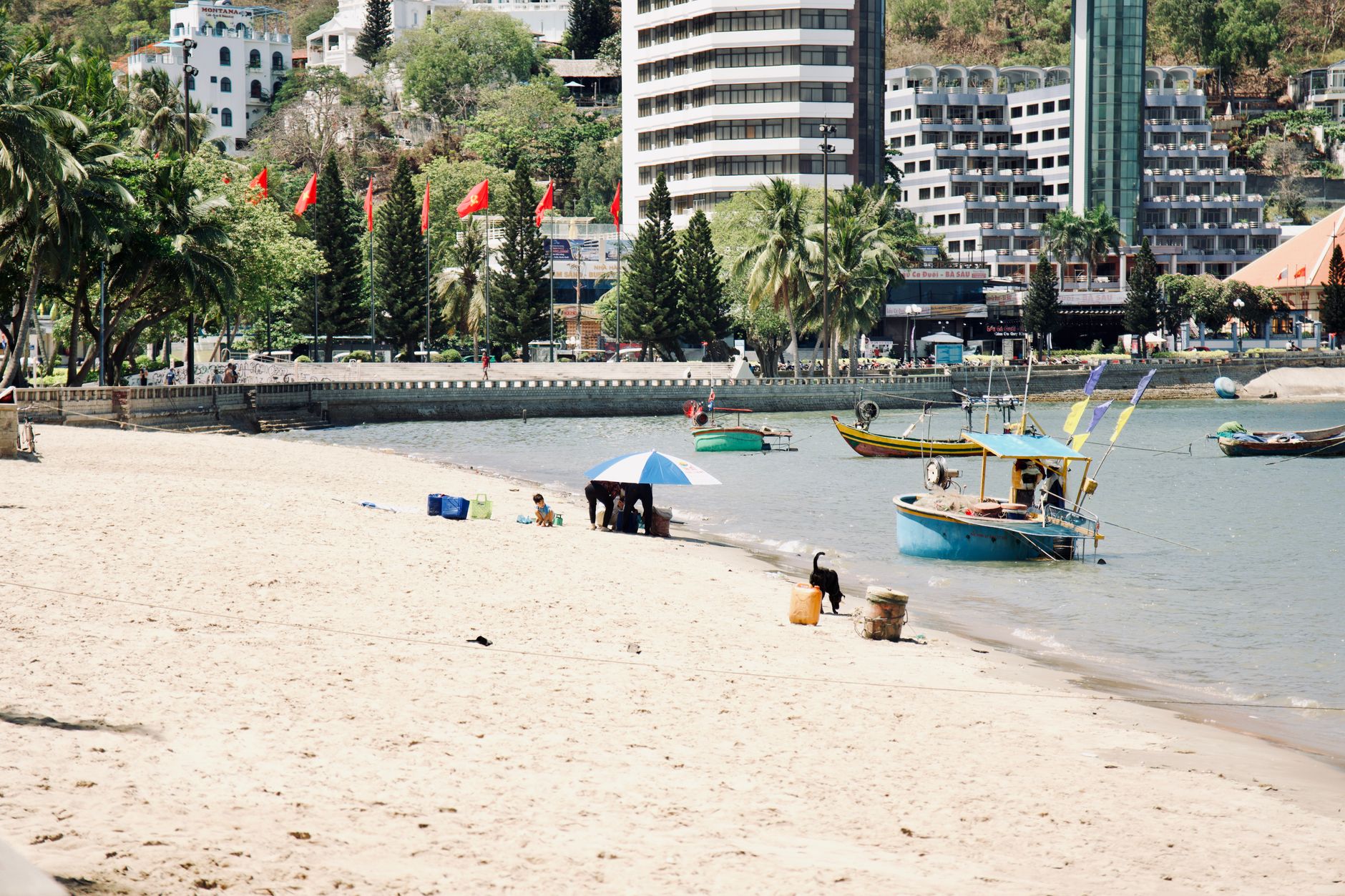
Arrive in Da Nang by lunchtime and check into your hotel. If you want beach access, stay near My Khe. For a more urban feel, choose a spot near the Han River. Spend your afternoon walking the broad sands of My Khe Beach, followed by a bowl of "mi quang"—turmeric-infused noodles served with a rich, shallow broth, pork, shrimp, quail eggs, and fresh herbs.
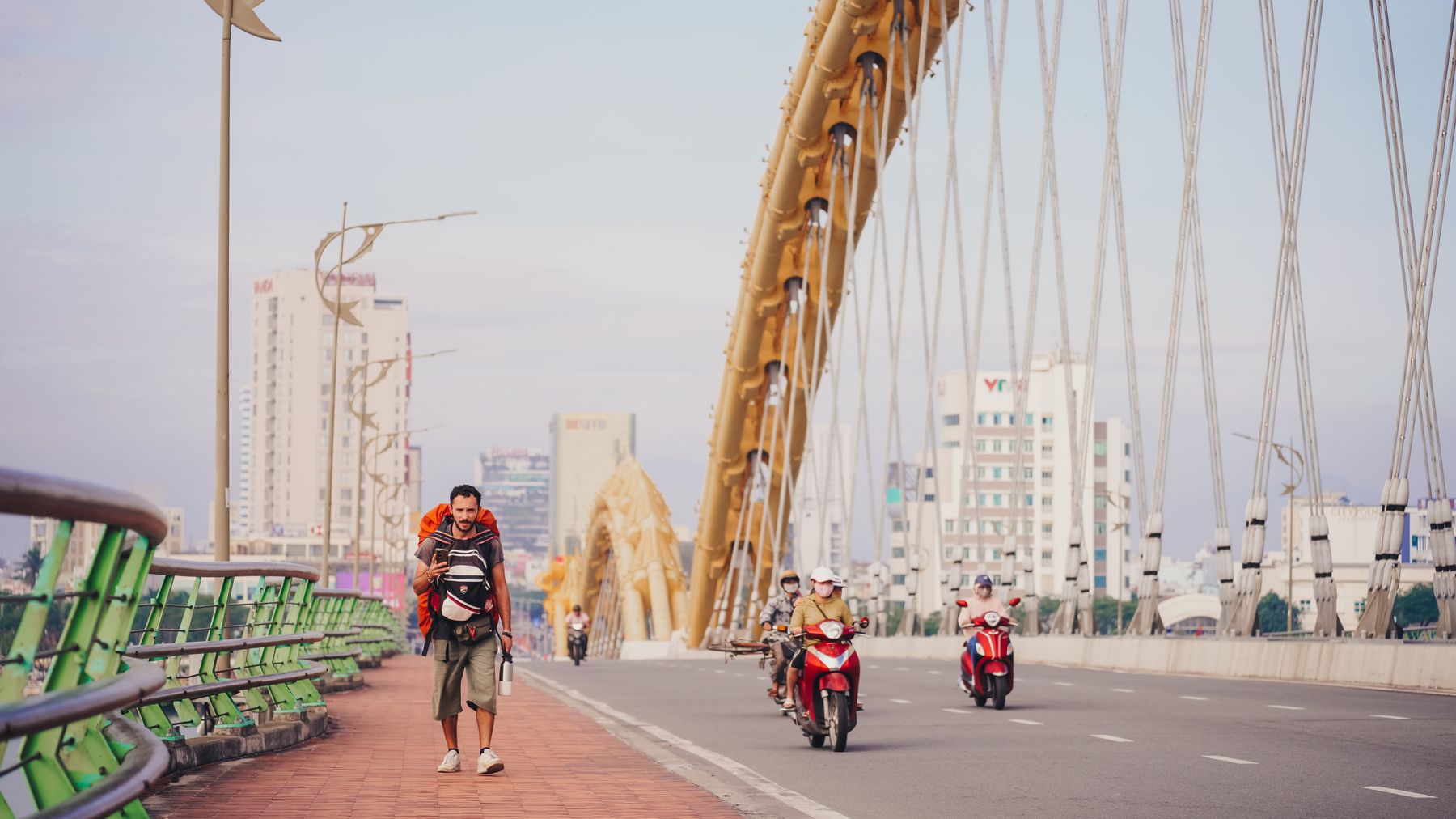
Photo by Xuân Thống Trần on Pexels
Day 5 — Son Tra Peninsula & Han River Views
Rent a scooter or hire a driver to explore the Son Tra Peninsula, the green headland jutting out into the ocean north of the city. The road winds up past the Linh Ung Pagoda, home to a massive 67-meter-tall white statue of the Lady Buddha looking out over the bay. Keep riding along the northern coast of the peninsula for quieter views of the cliffs and hidden coves.
In the evening, head back into the city center. Grab a glass of "ca phe sua da" (iced milk coffee) at a cafe overlooking the Han River and watch the Dragon Bridge light up. If it is a Saturday or Sunday night, stick around until 9:00 PM to watch the dragon breathe fire and water.
Day 6 — Marble Mountains & Local Markets
Start your morning at the Marble Mountains, a cluster of five limestone hills just south of the city center. Climb the stone steps into Huyen Khong Cave, a massive cavern illuminated by shafts of light breaking through holes in the ceiling.
Instead of the tourist-heavy Han Market, spend your afternoon at Con Market (Cho Con). This is where locals shop for everything from spices to clothing. The food court inside is an excellent place to sample cheap local snacks like "banh xeo" (savory crepes) and sweet dessert soups.
Day 7 — Da Nang to Hoi An via An Bang Beach
Hoi An is only 30 kilometers south of Da Nang. A private car ride takes about 45 minutes and costs around 350,000 VND.
Check into your homestay or hotel, then head straight to An Bang Beach for a relaxed lunch of grilled seafood at one of the beachside shacks. In the late afternoon, make your way into the pedestrian-only Ancient Town. The yellow-walled merchant houses and assembly halls look best just as the sun sets and the silk lanterns are lit.

Photo by Võ Văn Tiến on Pexels
Day 8 — Hoi An's Culinary Heritage
Hoi An has a food culture distinct from the rest of the country. Spend the morning on a self-guided food walk. Start with a plate of "cao lau"—thick, chewy noodles topped with sliced pork, fresh greens, and crispy croutons. The noodles get their unique texture from being soaked in water drawn from ancient local wells.
For lunch, grab a "banh mi" from Madam Khanh (The Banh Mi Queen) on Tran Cao Van street. Spend the hot afternoon browsing the local boutique shops or visiting a traditional tailor. In the evening, take a quiet wooden boat ride along the Thu Bon River.
Day 9 — My Son Sanctuary Ruins
Book an early morning trip to "My Son" Sanctuary, located about 40 kilometers inland from Hoi An. Built between the 4th and 14th centuries by the Champa Empire, these red-brick temple ruins are set in a lush valley surrounded by hills. Going early (around 7:00 AM) allows you to walk through the ruins before the mid-morning heat and tour buses arrive.
Return to Hoi An by afternoon. Rent a bicycle and ride through the quiet paths of Cam Kim Island, just across the river from the old town, to see woodcarving workshops and quiet rice paddies.
Day 10 — Slow Morning & Departure
Enjoy a slow morning with a cup of "vietnamese coffee" at a cafe overlooking the river. Do some last-minute souvenir shopping in the Ancient Town before taking a taxi back to Da Nang International Airport for your departure flight.
Practical notes
- Best Time to Visit: February to April offers the best weather, with dry days and moderate temperatures across all three destinations.
- Getting Around: Grab (the ride-hailing app) works reliably in Da Nang and Hoi An for cars and motorbikes. In Hue, traditional green Mai Linh taxis are easy to hail.
- Tickets: Buy the combo ticket for the Hue Citadel and Royal Tombs to save money if you plan to visit more than two historical sites.
Last updated · May 30, 2026 · independently researched, never sponsored.