Spending ten days in Hue allows you to move past the day-tripper checklist and sink into the slow, ritualistic pace of Vietnam (베트남 / 越南 / ベトナム)'s former imperial capital. This itinerary bypasses the rushed tour buses to focus on the architecture, culinary heritage, and quiet neighborhoods that define the city's cultural identity.
Day 1 — The Imperial Core
Start where the Nguyen Dynasty began. The Imperial Citadel is vast, and rushing through it in two hours does it a disservice. Enter through the midday gate (Ngo Mon) in the morning when the light is soft and the crowds are thin. Spend the day exploring the restored pavilions, the ruins of the Purple Forbidden City, and the quiet courtyards where moss grows over centuries-old brickwork.
- Local taste: For lunch, walk just north of the Citadel walls to find a bowl of "bun bo hue" (spicy beef noodle soup) at Bun Bo My Tam on Tran Cao Van street. The broth here is rich with lemongrass and shrimp paste, served with thick rice noodles and tender beef shank.
- Off-script suggestion: Skip the main paths in the late afternoon and walk the quiet northern ramparts near the Hau Binh Gate, where local kids fly kites and older residents play chess by the moat.
Day 2 — The Royal Valley of Tu Duc
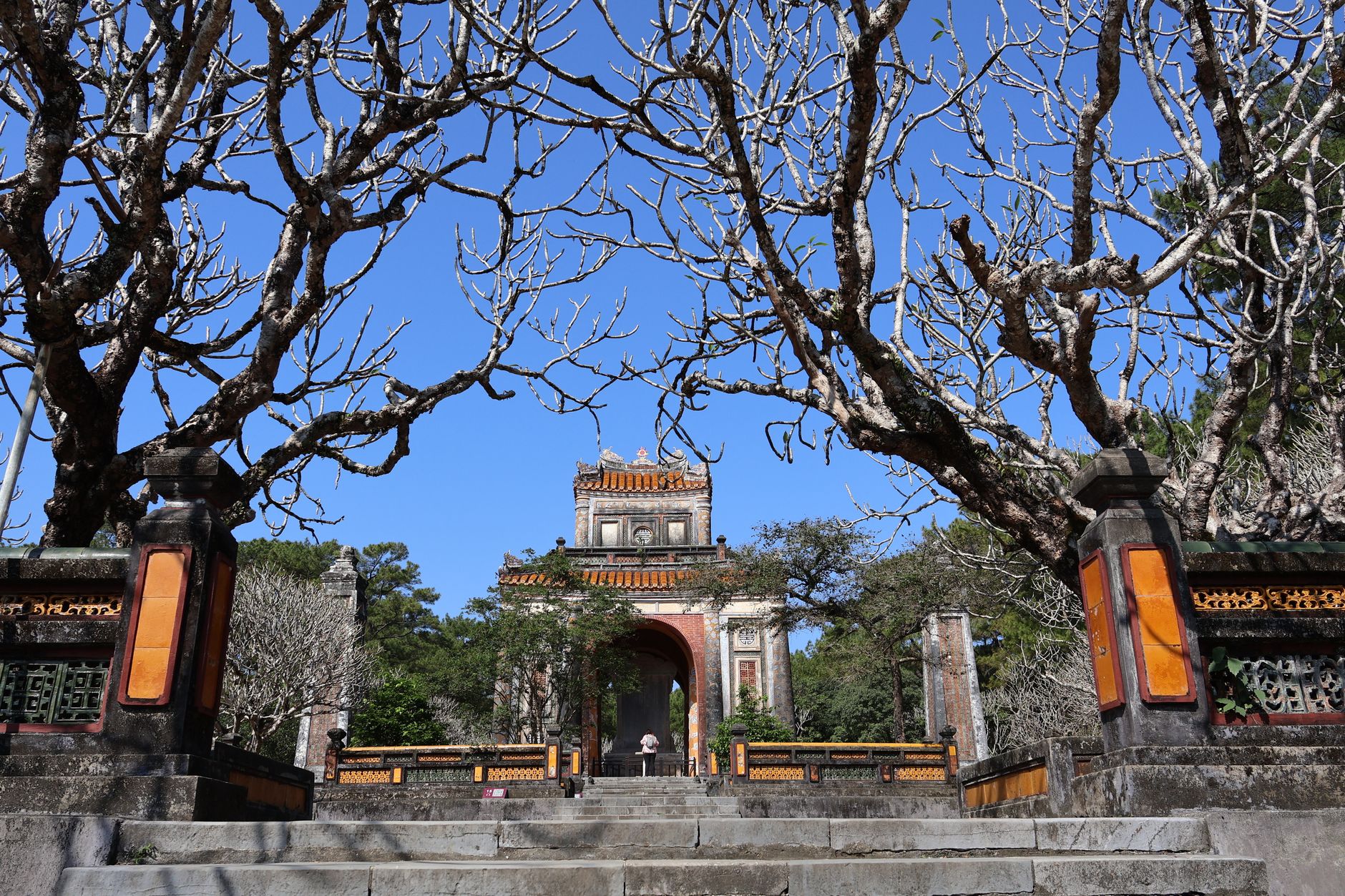
Dedicate your second day to the Tomb of Tu Duc, located in a narrow valley in Duong Xuan Thuong village. Designed by the emperor himself before his death, this site functions more like a royal retreat, featuring a sprawling lake, pine forests, and wooden pavilions where the emperor wrote poetry.
- Local taste: Stop at a roadside shack near the tomb entrance for "banh khoai", a crispy, turmeric-spiced crepe stuffed with pork, shrimp, and bean sprouts, dipped in a rich peanut and pork liver sauce.
- Off-script suggestion: Walk past the souvenir stalls of Thuy Xuan incense village to find the older, family-run workshops deeper in the alleys, where incense paste is still rolled by hand onto bamboo sticks without the tourist fanfare.
Day 3 — Garden Houses and River Rhythms
Hue (후에 / 顺化 / フエ) is famous for its "nha vuon" (traditional garden houses), which blend residential architecture with feng shui principles. Spend the morning in the Kim Long district, visiting An Hien Garden House. Walk through the traditional three-bay wooden house surrounded by apricot, mangosteen, and pomelo trees.
- Local taste: Try "banh uot thit nuong" (grilled pork wrapped in delicate wet rice paper sheets) at Huyen Anh restaurant, located down a quiet alley near the Perfume River.
- Off-script suggestion: Follow the dirt path behind the nearby Thien Mu Pagoda at dusk to watch the local dragon boats return to their moorings under the orange sky.
Day 4 — The Monumental Tombs
Rent a bicycle or hire a rider to head south along the river to the Tomb of Khai Dinh and the Tomb of Minh Mang. These two sites offer a stark contrast: Minh Mang is a masterpiece of traditional Chinese-Vietnamese symmetry, while the Tomb of Khai Dinh is a dramatic, hillside monument blending French classicism with traditional Vietnamese glass and porcelain mosaic work.
- Local taste: Head to Hen Island (Con Hen) in the middle of the Perfume River for "com hen" (cold rice topped with tiny river clams, crispy pork skin, roasted peanuts, and fresh herbs).
- Off-script suggestion: On the way back, stop by the abandoned water park at Ho Thuy Tien. While officially closed, the decaying concrete dragon sitting in the middle of the lake offers a surreal look at modern ruins.

Photo by Quang Nguyen Vinh on Pexels
Day 5 — Craft Villages of Phu Mau
Cross the river to the northern bank and head to the rural commune of Phu Mau. This area is home to Thanh Tien village, where locals have handcrafted colorful paper lotus flowers for over three centuries, and Sinh village, famous for its traditional woodblock folk paintings used in worship.
- Local taste: Seek out a local market stall for "banh beo" (steamed savory rice cakes topped with dried shrimp and crispy pork skin) and "banh loc" (chewy tapioca dumplings filled with shrimp and pork).
- Off-script suggestion: Avoid the highway on your return and take the small, wooden commuter ferry that connects Phu Mau to the historic port neighborhood of Bao Vinh.
Day 6 — The Merchant History of Bao Vinh
Bao Vinh was once a bustling commercial port in the 18th and 19th centuries, welcoming merchant ships from China, Japan, and Europe. Today, it is a quiet residential neighborhood where a few historic two-story wooden shophouses still stand along the riverbank.
- Local taste: Sit at a low plastic table near the old pier and enjoy a plate of "bun thit nuong" (cold rice vermicelli topped with charcoal-grilled pork, fresh herbs, and sweet peanut sauce).
- Off-script suggestion: Spend the afternoon at one of the rustic cafes housed in the decaying French-colonial buildings, sipping a slow-dripped "vietnamese coffee" while watching the river traffic crawl by.
Day 7 — Buddhist Sanctuary and Pine Hills
Hue is the heart of Vietnamese Buddhism. Spend a quiet morning at Tu Hieu Pagoda, a historic temple nestled in a pine forest. This was the root temple of the late Zen master Thich Nhat Hanh. The atmosphere here is deeply meditative, filled with the sound of wind through the pines and low chanting.
- Local taste: Eat a simple vegetarian lunch ("com chay") at Lien Hoa temple restaurant, which serves creative dishes made from tofu, mushrooms, and local vegetables.
- Off-script suggestion: Walk the quiet, unpaved paths around the Nam Giao Esplanade, the ancient stone altar where Nguyen emperors once performed sacrifices to heaven and earth.

Photo by Tuấn Vũ on Pexels
Day 8 — The Waters of Tam Giang
Take a day trip to Chuon Lagoon, part of the massive Tam Giang wetland system. The lagoon is a maze of stilt houses, fish farms, and wooden poles driven into the shallow water. The best time to visit is early morning or late afternoon when the water reflects the sky like a giant mirror.
- Local taste: Buy fresh rabbitfish directly from the morning catch and take it to a local stall to have it fried into "banh khoai ca kinh" (wild fish crepes).
- Off-script suggestion: Hire a local fisherman to take you out in a flat-bottomed wooden boat to see how they harvest fish using traditional net traps.
Day 9 — Royal Gastronomy and Textiles
Spend the day exploring the refined arts of the royal court. Visit a local workshop to learn about the history of the "ao dai" (traditional tunic) and see how royal embroiderers preserve ancient patterns. In the afternoon, take a cooking class focused on the intricate presentation of Hue's royal cuisine.
- Local taste: For dessert, seek out a street vendor selling "che" (sweet dessert soups). Hue is famous for having dozens of varieties, including the unusual sweet soup with roasted pork wrapped in cassava flour.
- Off-script suggestion: Visit the brass casting neighborhood of Phuong Duc, where families have cast temple bells and royal urns for generations.
Day 10 — The French Quarter and Salt Coffee
On your final day, explore the southern bank of the Perfume River, which developed under French influence. Walk down Le Loi street to admire the art deco architecture of the La Residence hotel and the Hue Museum of Fine Arts. End your trip with a walk across the historic Truong Tien Bridge.
- Local taste: Try "ca phe sua da" (iced milk coffee) or the local specialty, "ca phe muoi" (salt coffee), at its original birthplace on Nguyen Hue street, where the salty cream cuts through the bitter strength of the robusta beans.
- Off-script suggestion: Take a final, quiet walk through the residential lanes of Vy Da, a neighborhood immortalized in Vietnamese poetry for its lush gardens and river views.
Practical notes
The best time to visit Hue is from January to April when the weather is cool and dry. Avoid the heavy rainy season from October to December. The most atmospheric way to get around the flat city center is by renting a simple bicycle or hiring a licensed cyclo driver for short hops between the Citadel gates.
Last updated · May 30, 2026 · independently researched, never sponsored.