
An Giang sits deep in the Mekong Delta (메콩 델타 / 湄公河三角洲 / メコンデルタ), where the region's rivers and orchards shape every meal. You won't find high-end fusion here — the food is practical, rice-heavy, and built around what the water and soil provide. Eat at the right stalls and you'll eat better and cheaper than anywhere in Saigon.
Signature dishes of An Giang
The province's food identity rests on fish and "ca kho", a braise of catfish, shallot, and caramel that appears on almost every local table. It's cooked low and slow in clay pots, the sauce thick and dark. A serving of plain rice, a small dish of "ca kho", and a glass of cold tea costs around 50,000 VND at a neighborhood [com tam](/posts/com-tam-saigon (사이공 / 西贡 / サイゴン)-broken-rice) stall.
"Hu tieu" — the clear broth with pork, shrimp, and rice noodles — is everywhere here, often served with extra fish cake and pig's blood. Hu tieu stalls in Long Xuyen city open before dawn; a bowl runs 25,000–35,000 VND and tastes nothing like the pre-made versions you'll find in tourist cafes. The broth here is simmered for hours.
"Banh canh" is less common than in the North but done well in An Giang: thick, chewy tapioca noodles in a pork or shrimp broth, topped with pork fat and crispy shallots. It's comfort food and often sold from small stalls in the early morning. Expect to pay 20,000–30,000 VND per bowl.
Catfish is the king protein. Beyond "ca kho", you'll find "ca nuong" (grilled catfish wrapped in banana leaf), "ca chien xoi" (crispy-fried catfish served with sticky rice), and "ca tam" (catfish in tamarind broth). If you see a stall with a metal barrel of broth and small ceramic pots, that's likely a catfish specialist — locals call it a "quan ca". Don't walk past it.
"Banh mi" here takes a Mekong twist: the bread is airier than Hanoi's, often filled with pâté, lard, and pickled daikon radish. Morning stalls near markets sell banh mi with a hard-boiled egg and extra mayo for 15,000–20,000 VND. The quality varies; look for lines.
Market food and where to eat
Long Xuyen Market (Cho Long Xuyen) in the city center is the baseline for what An Giang eats. Enter early (6–7 a.m.) and you'll find twenty stalls serving hu tieu, com tam, and fresh juice. A meal here costs 30,000–50,000 VND total. The market interior is chaotic but organized by section — seafood, vegetables, prepared food. Tourists rarely venture past the entrance; the real eating happens at plastic tables in the back.
Can Tho Market (across the Hau River, technically not An Giang but accessible by bridge) is larger and has more vendors, but Long Xuyen is less overwhelming if you're navigating alone.
For street food, Tran Hung Dao Street in Long Xuyen city has a lineup of stalls from 6 p.m. onward: "banh xeo" (crispy turmeric crepes), grilled fish, and caramelized pork skewers. This is where locals eat dinner. A full meal — two banh xeo, a skewer, a beer — costs 80,000–100,000 VND.

Photo by Hồng Quang Official on Pexels
Fresh fruit and juice
An Giang produces mangoes, custard apples, and pomelos. If you're here June–August, mangoes are dirt cheap: 20,000–40,000 VND for a kilo of Chaunce or Cai varieties. Juice stalls will blend them fresh for 10,000–15,000 VND per glass. Custard apple ("na") is seasonal and best September–November; buy at the market and eat with a spoon.
Fruit shakes at organized juice stands (usually in or near markets) are 15,000–25,000 VND. Avoid pre-made bottled juice; it's overly sweet and no cheaper.
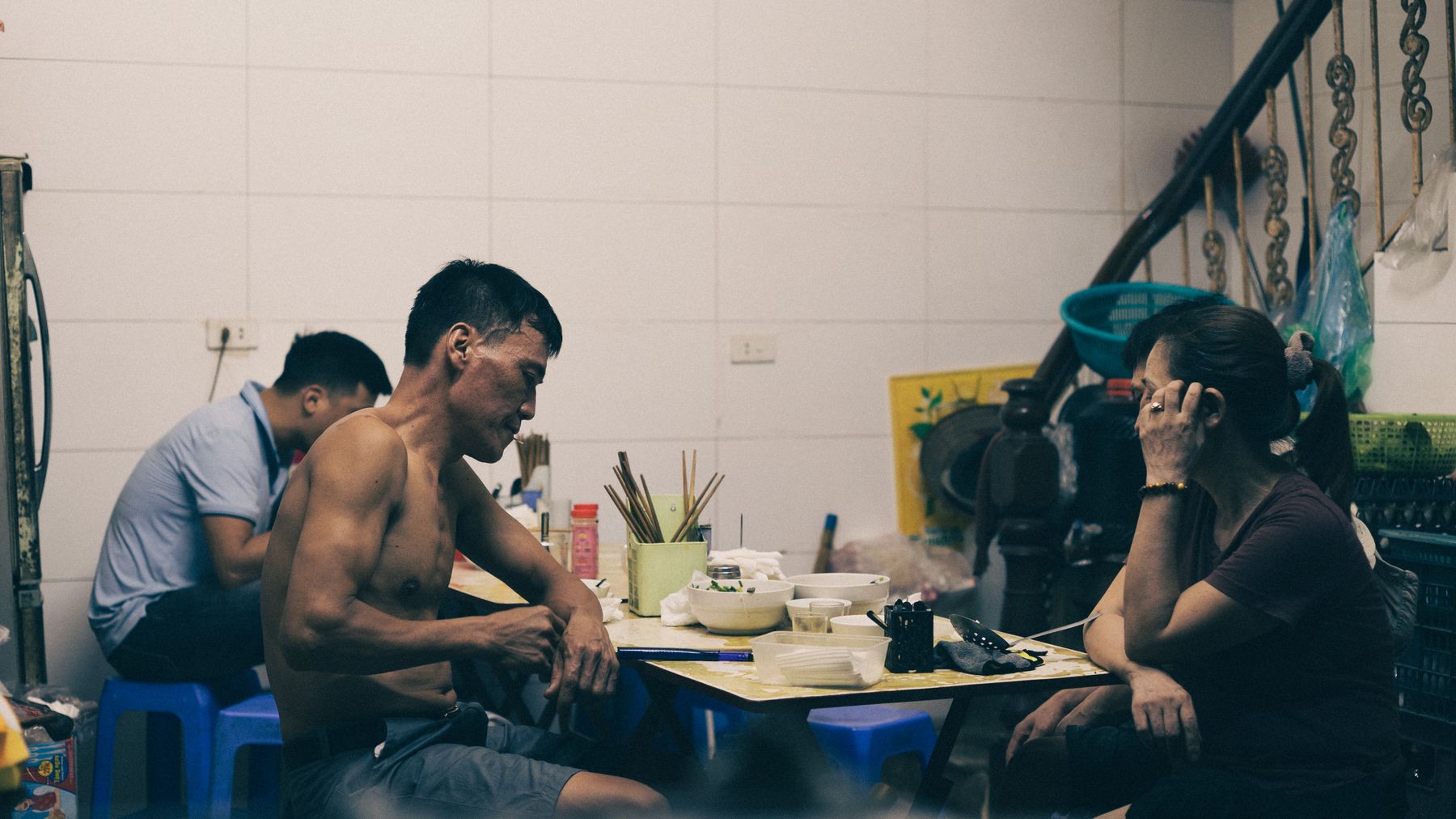
Photo by Dang Hong on Pexels
Local restaurants vs. tourist spots
Long Xuyen's Old Town (near the market and riverfront) has a few mid-range restaurants catering to visitors: expect 60,000–150,000 VND per main dish, with English menus. The food is competent but diluted. Avoid them.
Instead, eat at small "com tam" stalls, pho shops with no signage, and street-side banh xeo vendors. These places have two, maybe three, menu items and locals filling every seat. A meal costs 30,000–60,000 VND. If there's a line and a menu board in Vietnamese only, you're in the right place.
Chau Doc, An Giang's river town near Cambodia, has a different food culture — more influenced by Khmer and Thai. Fish here is cheaper and fresher. Floating fish farms in the Hau River mean restaurants near the docks serve fish caught that morning. Budget 50,000–100,000 VND for a good grilled fish with rice and greens.
Practical notes
Cash is essential; most stalls and small restaurants don't accept cards. Lunch (11 a.m.–1 p.m.) and dinner (5–7 p.m.) are peak hours; go slightly off-peak for more relaxed service. August–October is fruit season and the best time to eat fresh produce at its cheapest. English is rare outside tourist hotels, so learn "ca" (fish), "com" (rice), and "nuoc" (water) or point at what others are eating.
Last updated · May 29, 2026 · independently researched, never sponsored.









