Banh Da Cua: Hai Phong's Red Noodle Crab Soup You've Never Heard Of
Hai Phong sits about 100 km east of Hanoi, and most visitors treat it as nothing more than a transit stop before Cat Ba or Ha Long Bay. That's a mistake — especially if you leave without eating a bowl of "banh da cua".
What Is Banh Da Cua?
"Banh da cua" translates loosely as red noodle crab soup, and both of those descriptors matter. The noodles — called "banh da do" — are flat, wide, and brick-red in colour, made from a blend of regular rice flour and red rice. They're thicker and chewier than the rice noodles you'd find in pho or bun bo hue, and they hold up well in a hot, heavily flavoured broth. They're also almost impossible to find outside Hai Phong, which is part of what makes this dish worth chasing.
The broth is the other thing that sets it apart. Unlike the clear, bone-deep broths common in northern Vietnamese soups, banh da cua's base is tomato-forward — a deep orange-red colour, visibly rich, and noticeably tangy. Ripe tomatoes are sautéed with shallots in pork fat, then combined with a crab stock built from freshwater crab paste ("oc gao cua"), dried shrimp, and sometimes pork bones. The result is something between a Southeast Asian laksa and a hearty tomato bisque, but fully its own thing.
The Toppings
A standard bowl comes loaded. Expect a spoonful of thick crab paste sitting on top — not the watery crab broth you might know from bun rieu, but dense, textured, almost pâté-like in consistency. Alongside that: a few pieces of cha ca (fried fish cake), some slices of lean pork, and a handful of morning glory or water spinach that's been blanched just enough to stay bright green.
Most stalls will add a drizzle of annatto oil over the top, which deepens the red colour and adds a faint nuttiness. A wedge of lime, fresh chilli, and a jar of shrimp paste sit on the table for adjusting. Don't skip the shrimp paste — a small amount stirred in intensifies the briny seafood depth of the broth considerably.

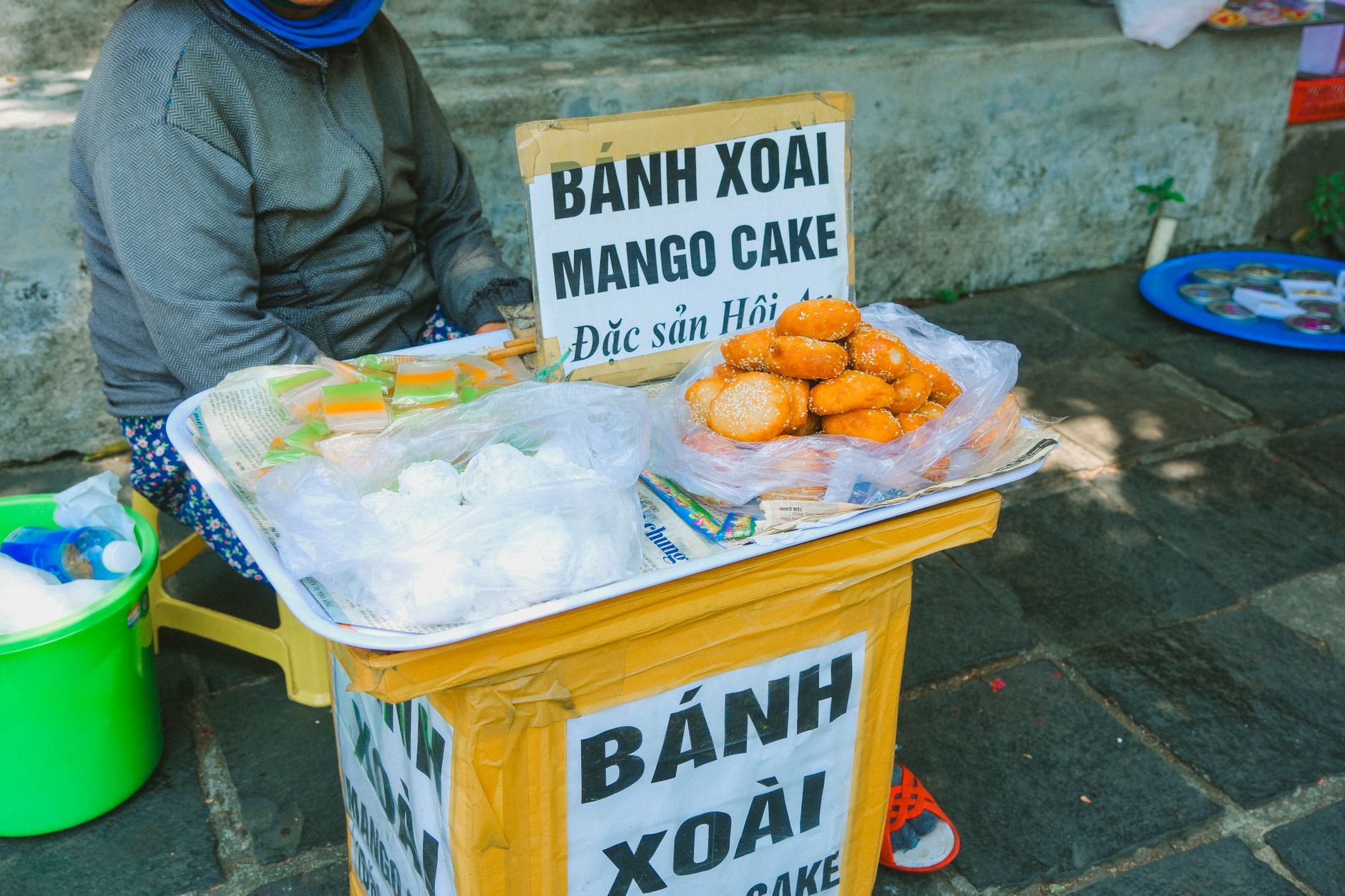
Photo by Quang Nguyen Vinh on Pexels
Where to Eat It in Hai Phong
The city has no shortage of banh da cua stalls, but a few areas are worth knowing.
Cho Sat market area (near the corner of Tran Hung Dao and Le Loi streets in the city centre) is the classic starting point. Stalls open around 6 a.m. and run out of crab paste by late morning on weekends — that should tell you something about the pace of consumption. A bowl runs 30,000–45,000 VND depending on portion size and extras.
Hang Kenh neighbourhood, a couple of kilometres south of the centre, has a cluster of family-run shops that have been serving the same recipe for decades. Less tourist-facing, more local lunch crowd. You'll find fuller toppings here at the same price.
If you're arriving on the morning ferry from Cat Ba, the market stalls on Ben Binh along the waterfront open early enough for a pre-departure or post-arrival bowl. They're not the finest version of the dish, but location makes them convenient.
How It Compares to Bun Rieu
This is the question people ask once they've tried both. Bun rieu (분지에우 / 蟹肉米粉汤 / ブンリュウ) — the tomato-and-crab noodle soup common across northern Vietnam — is the obvious comparison. Both use tomato broth and freshwater crab. But banh da cua is heavier, more aggressively seasoned, and anchored by those distinctive red noodles, which carry the dish differently than the thin vermicelli in bun rieu. The Hai Phong version also tends to use more crab paste per bowl and less tomato-to-broth ratio, making it richer overall.
If you've only had bun rieu in Hanoi (하노이 / 河内 / ハノイ), banh da cua will feel like a bolder, port-city cousin — food that reflects Hai Phong's identity as a seafood hub rather than an inland capital.

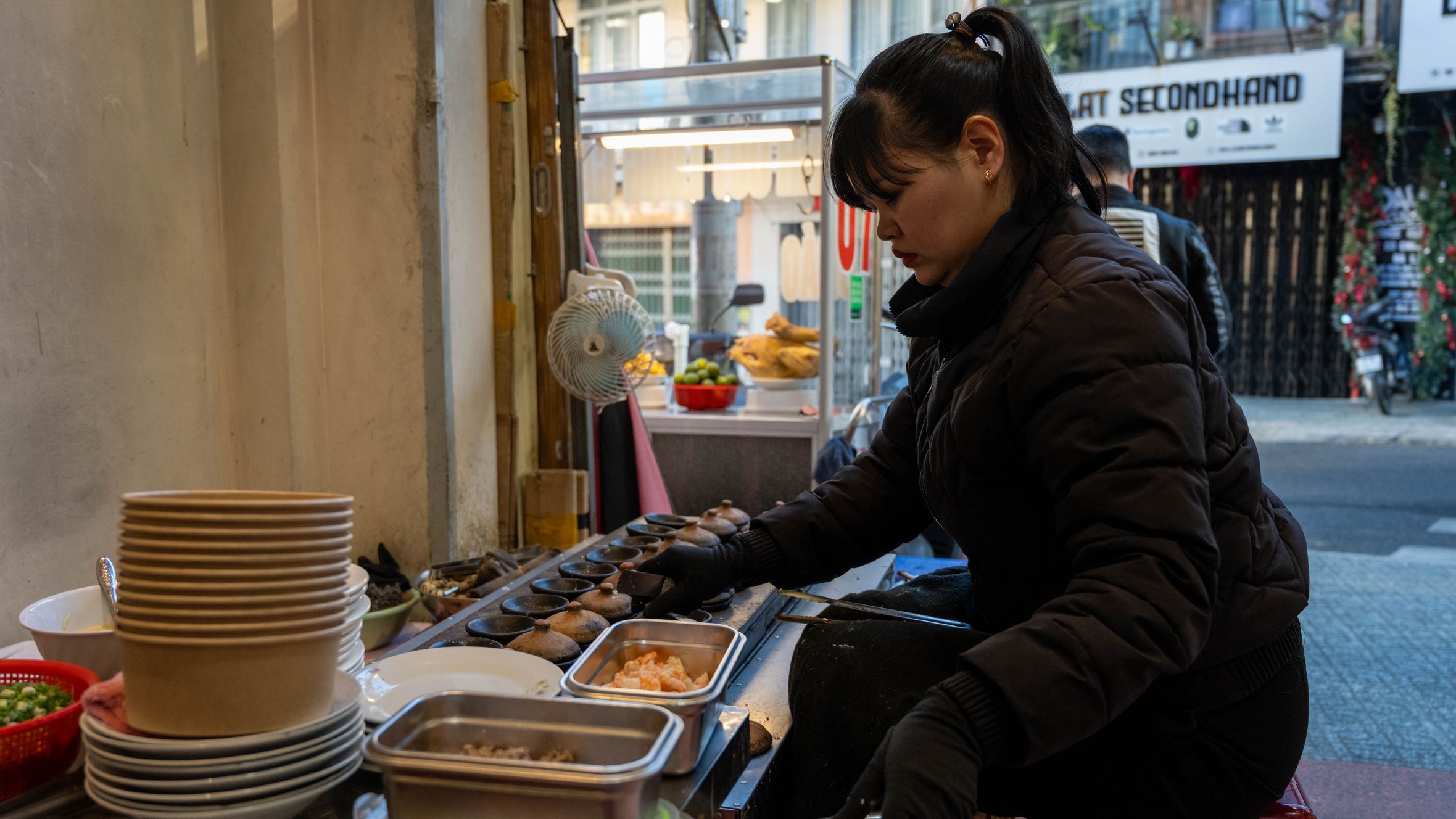
Photo by FOX ^.ᆽ.^= ∫ on Pexels
Drinking Alongside It
Street stalls typically serve tra da (iced tea) for free, and most people drink it between bites to cut through the richness. If you want something stronger, Hai Phong has a decent bia hoi scene — several open-air spots near the night market on Minh Khai Street serve cold draught for 8,000–12,000 VND a glass, though that's more of an evening pairing than a breakfast one.
Getting to Hai Phong
From Hanoi, the fastest option is the express train from Long Bien or Gia Lam station — about 2.5 hours and 80,000–120,000 VND one way. Buses from My Dinh and Giap Bat terminals also run frequently and take a similar amount of time depending on traffic. The city is compact enough that you can eat your way through it in a day if you're not staying overnight.
Practical Notes
Banh da cua is a morning and midday dish — most dedicated stalls close by 1 p.m. Go early, especially on weekends. If you're visiting Hai Phong as a day trip en route to Ha Long Bay or Cat Ba, build breakfast around it rather than treating it as an afterthought.
Last updated · May 29, 2026 · independently researched, never sponsored.