
Banh gio doesn't get the international press that pho or banh mi does, but in Hanoi it's the kind of breakfast that locals have been eating for generations without ever needing to explain it to anyone. It's worth understanding properly.
What Banh Gio Actually Is
"Banh gio" (literally "hour cake" — a reference to the time it takes to steam) is a pyramid-shaped dumpling made from rice flour and tapioca starch, filled with minced pork, wood ear mushroom, and shallots, then wrapped tightly in banana leaves and steamed until the outer shell is translucent and just slightly sticky to the touch. The texture is somewhere between a soft mochi and a firm custard — it holds its shape when unwrapped but yields immediately when you cut into it.
The pyramid form is functional, not decorative. Folding banana leaf into a four-sided cone distributes heat evenly during steaming, and the tight tuck at the top keeps moisture inside. A well-made banh gio unwraps cleanly in one piece. A poorly made one sticks to the leaf and tears apart.
A Brief History
Banh gio is a northern Vietnamese dish with roots in the Red River Delta, where glutinous and non-glutinous rice cultivation has shaped the food culture for centuries. It belongs to the same family of banana-leaf rice cakes as "banh chung" (the square Tet cake) and "banh nam" (a flat Hue variant), all of which use the leaf as both cooking vessel and flavor agent. Banana leaf contributes a faint grassy, almost green-tea-like aroma to the wrapper — it's subtle but you'd notice if it wasn't there.
Historically banh gio was street vendor food: sold from baskets and clay pots at dawn, eaten standing up near the Long Bien Bridge area or the morning markets around Dong Xuan Market in Hanoi's Old Quarter. It remains that way in most of the city.
The Filling and Its Variations
The canonical filling is ground pork shoulder (not too lean — fat matters here for moisture), rehydrated wood ear mushroom chopped fine, fried shallots, and fish sauce seasoned with black pepper. Some cooks add a small amount of glass noodles. The filling is cooked before wrapping, so the steaming process is purely about setting the outer shell.
Regional and vendor variations exist:
Hanoi Standard
Filling stays simple — pork, wood ear mushroom, shallot. The wrapper is pale and soft. This is the version most people mean when they say banh gio.
Hue Variant
Southward in Hue (후에 / 顺化 / フエ), a flatter cousin called "banh nam" uses a similar rice flour base but lies horizontal and incorporates dried shrimp alongside pork. It's not technically banh gio but shares enough DNA that vendors sometimes group them. Hue's version is spicier — expect a hit of dried chili in the dipping sauce.
Saigon Adaptations
In Saigon (사이공 / 西贡 / サイゴン), banh gio tends to have a slightly firmer wrapper, sometimes with a small amount of coconut milk stirred into the dough, which makes it marginally richer and a touch sweeter. The filling can include quail egg in higher-end versions.

Photo by Suki Lee on Pexels
How It's Served
Banh gio is almost never eaten alone. The standard plate comes with:
- Cha: pork sausage, usually "cha lua" (a firm, smooth steamed roll) or "cha chien" (pan-fried patty). Sliced into rounds, laid alongside.
- Dua chua: pickled vegetables — typically mustard greens or bean sprouts — for acidity to cut through the starch.
- Nuoc cham: a light fish sauce dipping sauce with chili and lime.
You eat it by unwrapping the pyramid at the table, slicing the dumpling crosswise (a chopstick handle works if there's no knife), and alternating bites with the cha and pickled vegetables. Some vendors serve it in the leaf as a bowl; others plate it directly. Either way you're done in about four minutes, which is part of the appeal.
Price range: 15,000–30,000 VND per piece at street stalls. A full breakfast plate with cha and dua chua runs 35,000–55,000 VND. Sit-down restaurants can charge 60,000–80,000 VND, rarely more.
How to Order
At a street stall, you don't need much: hold up fingers for quantity, point at the cha you want. "Mot cai banh gio" (one banh gio) is enough to get started. If you want it with everything, "cho toi mot dia day du" (a full plate) usually does it. Most vendors near Hanoi's Old Quarter are used to non-Vietnamese speakers pointing.
One thing to check: ask if it's freshly steamed or reheated. Fresh banh gio has a glossy, slightly damp wrapper. Reheated ones are drier on the outside and the wrapper can be rubbery. The difference matters.
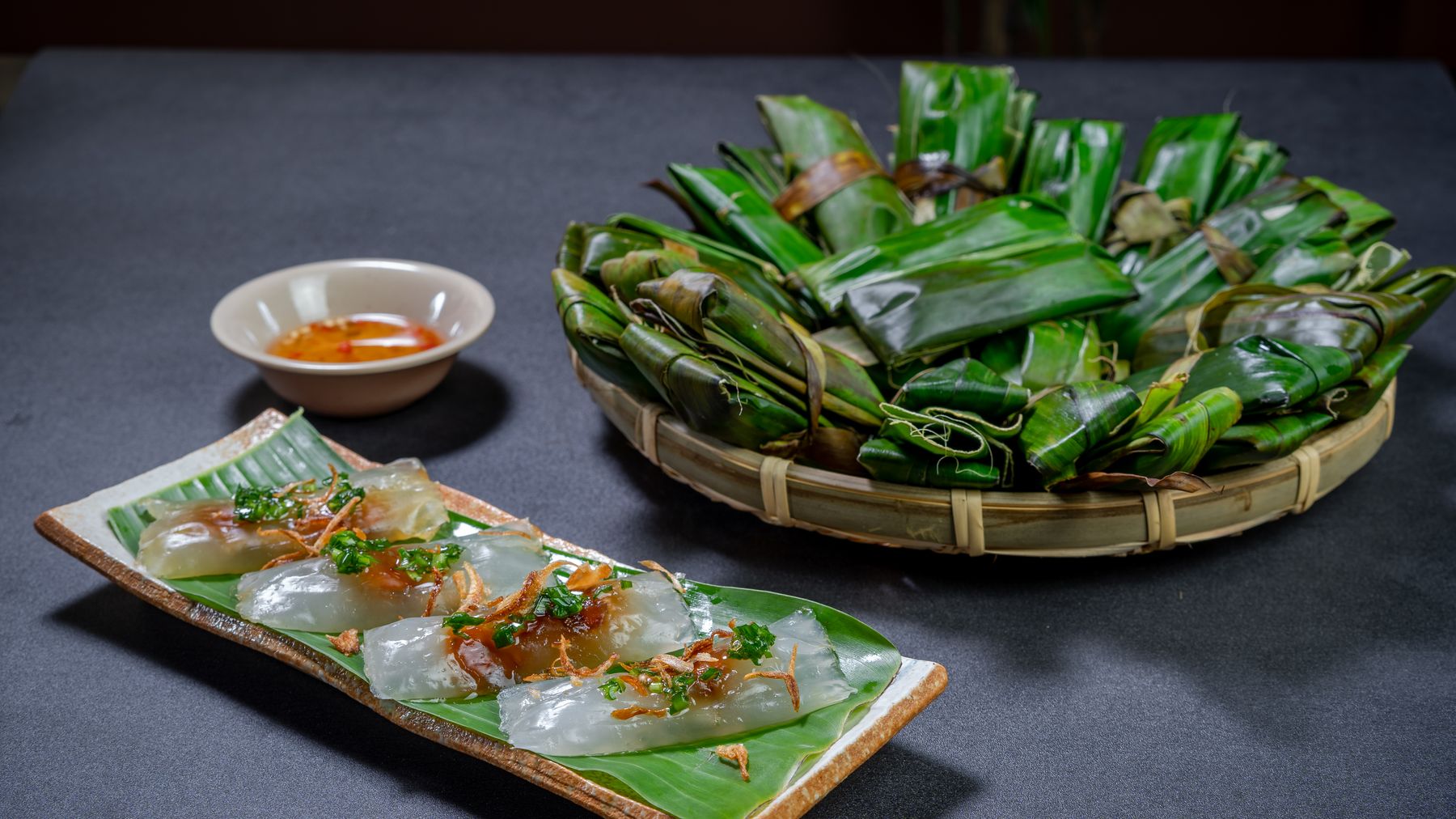
Photo by Hải Nguyễn on Pexels
Where to Try It
Banh Gio Ba Thin — Hanoi A fixture near Dinh Liet Street in the Old Quarter. Opens at 6am, often sells out by 10am. The wrapper here is unusually soft and the filling has a clean pork-forward flavor without being over-seasoned. Queue forms early on weekdays.
Banh Gio Ba Co — Hanoi A few streets over on Hang Chieu, this stall has been operating in roughly the same spot for decades. Slightly firmer wrapper than Ba Thin, which some people prefer. The cha chien here is worth ordering specifically.
Quan Banh Gio — Hue For the Hue variant, small stalls near the Dong Ba market area do a credible banh nam alongside a version of banh gio adapted to central Vietnamese palates — more chili, more dried shrimp, dipping sauce that leans saltier. It won't taste like Hanoi, but that's the point.
Practical Notes
Banh gio is a morning food — most stalls that specialize in it are done by noon. If you're visiting Hanoi specifically to eat it, plan breakfast or an early mid-morning snack, not lunch. It pairs naturally with Vietnamese coffee or a glass of lotus tea from a nearby cart. Leftovers don't travel well; the wrapper gets dense and gummy after a few hours even in a bag.
Last updated · May 29, 2026 · independently researched, never sponsored.



