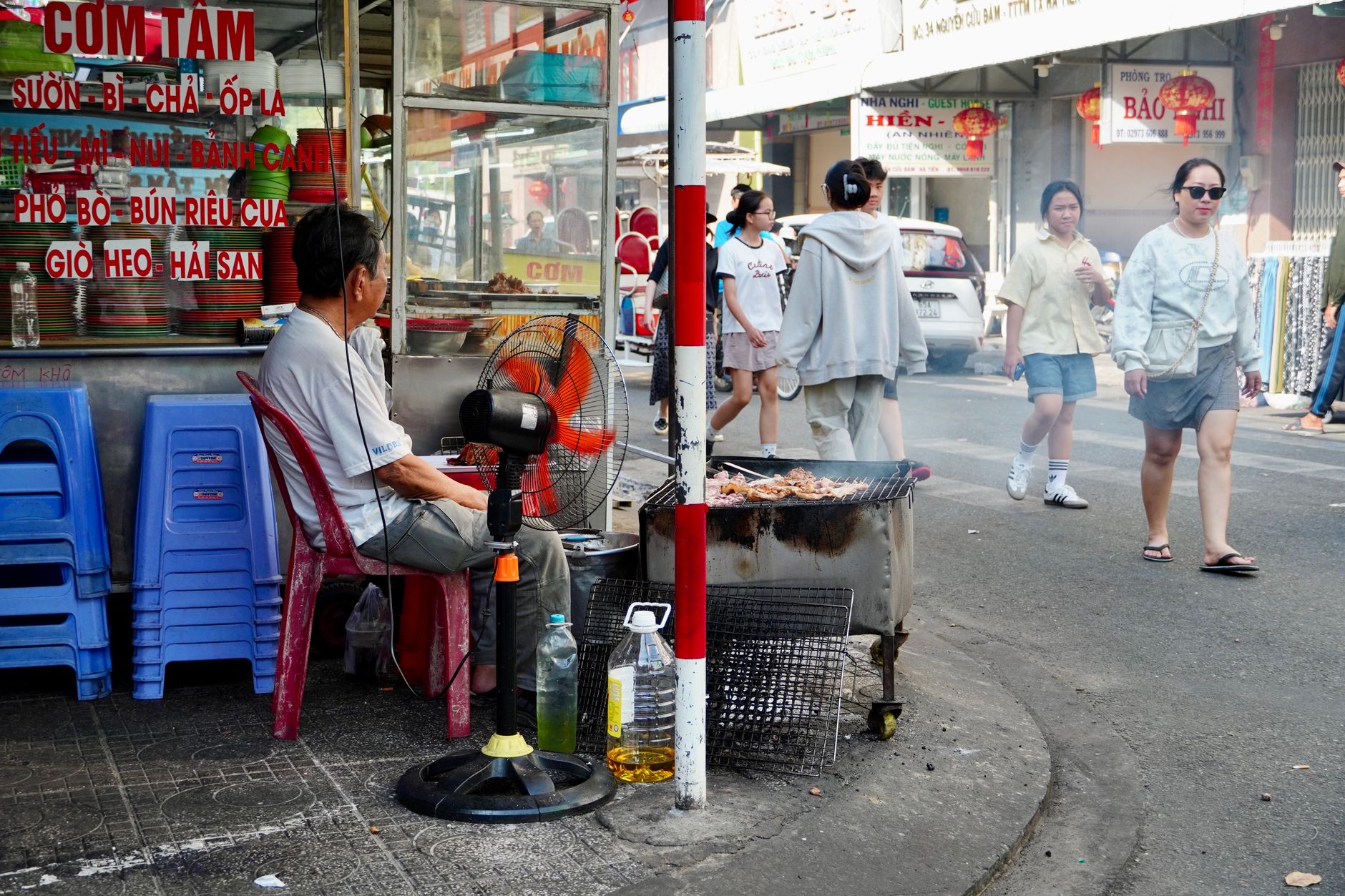
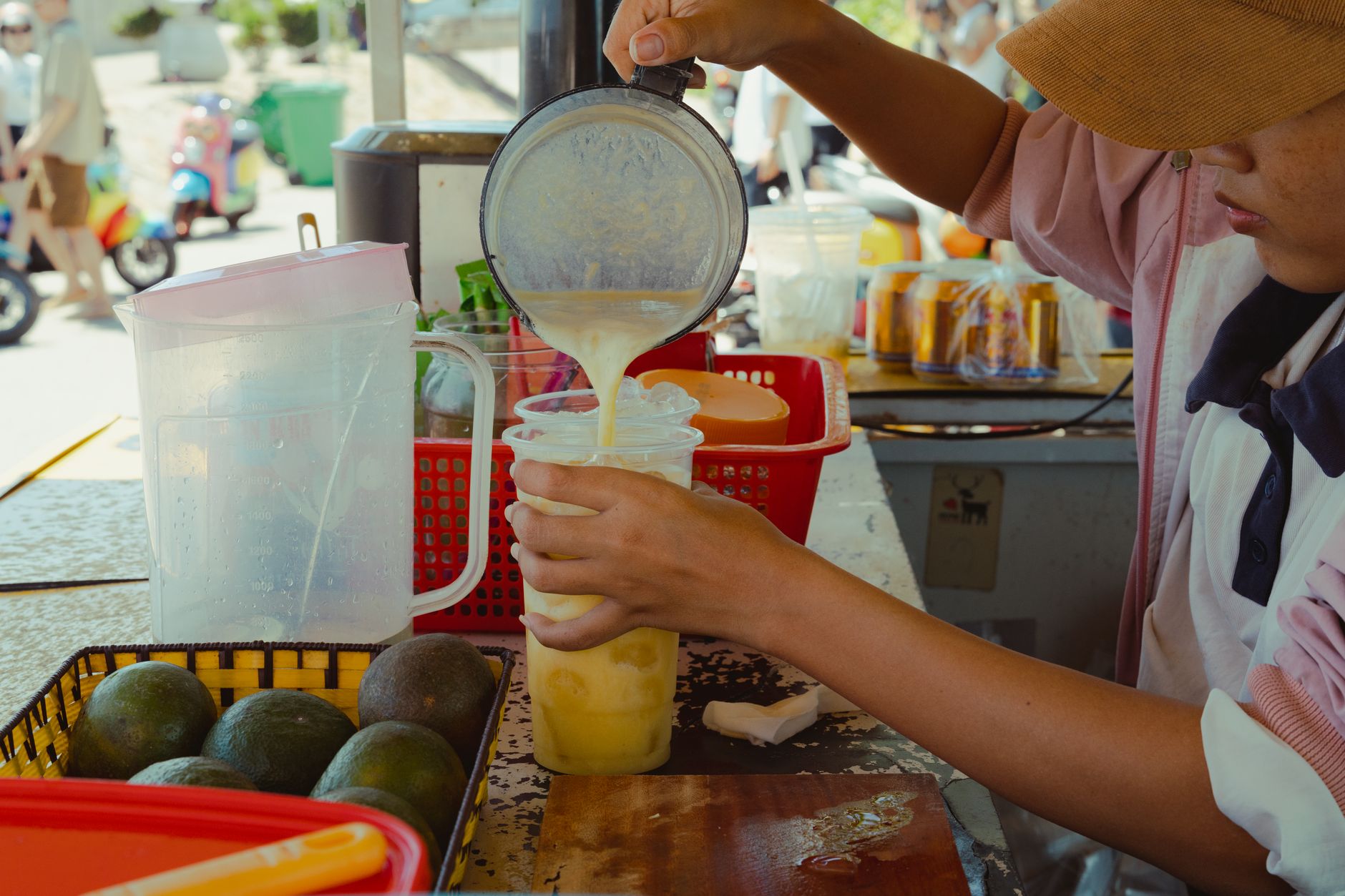
Ben Tre sits in the Mekong Delta (메콩 델타 / 湄公河三角洲 / メコンデルタ) about 85 km southwest of Saigon, and the coconut palm is everywhere: lining the canals, stacked in markets, pressed into oils, fermented into wine. Locals don't just cook with coconut — they cook around it. Here's what to eat when you visit.
Tom Rim Dua — Caramelised Prawns in Coconut Water
"Tom rim dua" is the dish most visitors remember. Fresh river prawns — the small, sweet kind pulled from the Mekong tributaries — are braised low and slow in young coconut water with fish sauce, sugar, and cracked black pepper until the liquid reduces to a glossy, amber glaze. The coconut water does something that plain water can't: it adds a faint vegetal sweetness that rounds out the salt without tipping into cloying.
You'll find it at most com binh dan (everyday rice) stalls in Ben Tre town for around 60,000–80,000 VND. Order it with steamed rice and whatever greens are on the counter. Don't skip the braising liquid — pour it over the rice.
Ca Kho Dua — Braised Fish in Coconut Water
"Ca kho dua" follows the same logic. A clay pot, a whole catfish or snakehead fish cut into thick steaks, and enough young coconut water to cover. The pot goes onto a low charcoal flame for the better part of an hour. What comes out is dense, lacquered fish with a caramel-dark exterior and flesh that flakes at the touch of a spoon.
The technique is almost identical to ca kho to (fish braised in clay pot with caramel sauce) that you'd find across the south — the difference is the coconut water replaces or supplements the caramel base, giving it a lighter, cleaner profile. At market stalls near the Ben Tre bus station, a single-serve portion with rice runs about 40,000–55,000 VND.
Keo Dua — Coconut Candy
"Keo dua" is Ben Tre's most exported product and, walking through any street market here, you'll see it piled in pyramids at every confectionery stall. The basic version is coconut milk cooked down with sugar until it sets into a chewy, pale rectangle — wrapped in edible rice paper, then in a second wrapper of dried coconut leaf.
The variations are worth tasting one by one: pandan-infused keo dua turns a soft green, durian versions are pungent and divisive, and there's a darker type made with coconut caramel that tastes closer to a butter toffee. Prices at source are around 80,000–120,000 VND per 400g bag, considerably cheaper than what gets marked up in Saigon (사이공 / 西贡 / サイゴン) souvenir shops. The Hung Thien and Ba Hung brands are the ones locals tend to reach for.
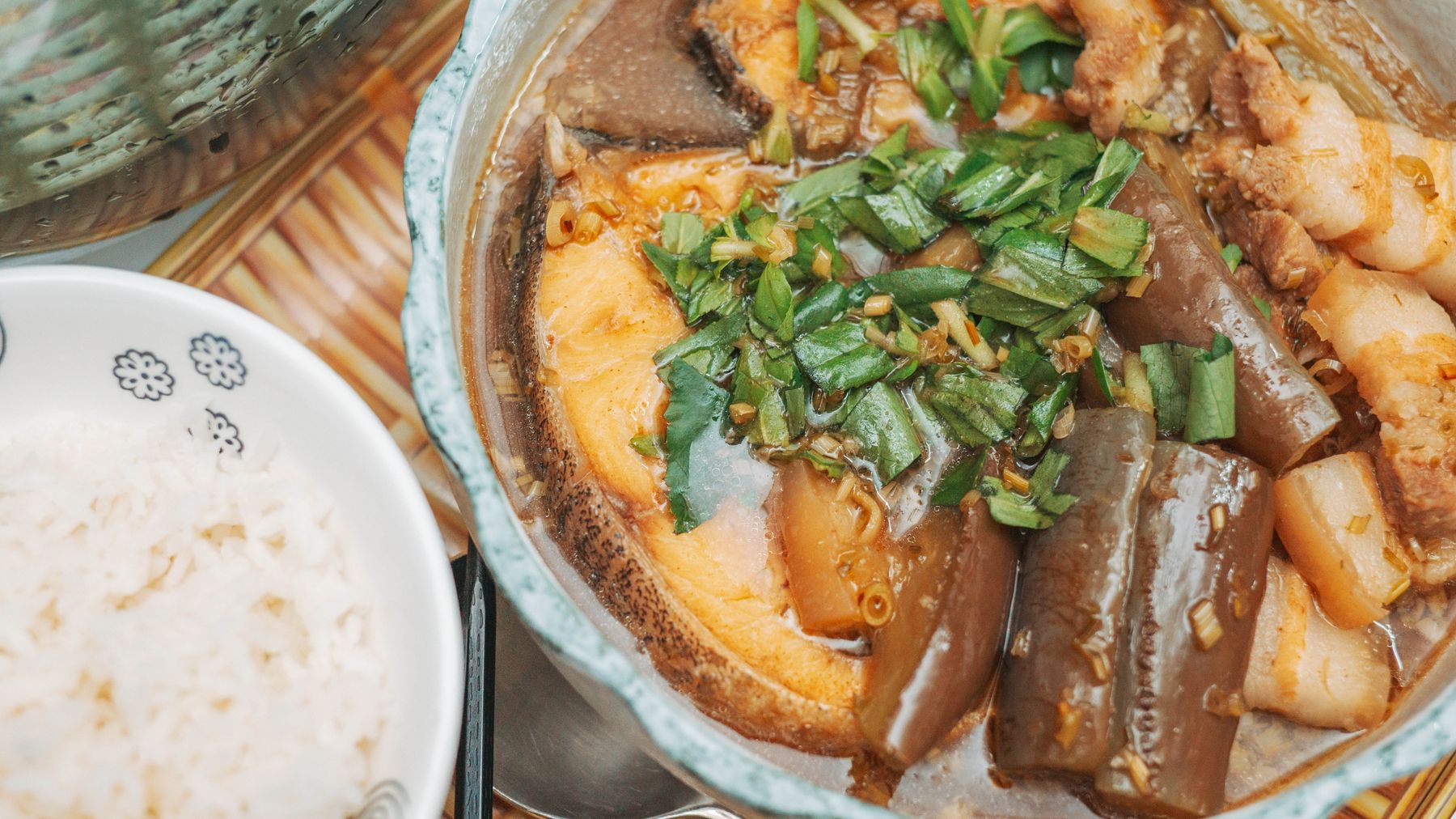
Photo by FOX ^.ᆽ.^= ∫ on Pexels
Ruou Dua — Coconut Wine
"Ruou dua" is not subtle. Fermented from the sap tapped directly from coconut flower stems, it's cloudy white, slightly fizzy, and carries maybe 5–7% alcohol — closer to a farmhouse cider than a spirit. The taste is sour-sweet with a faint yeasty funk. It starts fermenting almost immediately after tapping, which is why you can't really buy it bottled and trust that it's fresh.
The best place to drink it is at a riverside homestay or a stall in one of the smaller villages outside Ben Tre town — Cho Lach district is a good bet. Ask for a small glass first; some batches are sharper than others. A half-litre sells for around 15,000–20,000 VND at source.
There's also "ruou dua" in the distilled sense — a stronger rice-and-coconut spirit — but when Ben Tre locals say it, they almost always mean the fresh fermented version.
What Else to Eat in Ben Tre
Coconut is the headline act, but the province produces good food beyond the coconut frame.
Hu tieu Ben Tre is a regional variation of the southern noodle soup "hu tieu" — thinner broth than the Saigon version, often served with freshwater shrimp and pork, and finished with a few drops of coconut milk stirred in. It's a breakfast staple.
Banh trang dua — rice paper made with grated coconut mixed into the batter — is sold in thick rounds at markets. Eat it plain or grilled over charcoal with a brush of scallion oil.
Goi cuon made with Mekong shrimp appear on most lunch menus. The dipping sauce here often incorporates fresh coconut milk alongside the standard hoisin-peanut base.

Photo by Vietnam Tri Duong Photographer on Pexels
Getting Around and Where to Eat
Ben Tre town has a small but reliable cluster of restaurants along Dong Khoi street and along the waterfront near Ham Luong bridge. For a more immersive experience, cross into the orchard villages by xe om (motorbike taxi) or rent a bicycle — stalls in the villages sell food that doesn't make it to the town restaurants.
From Saigon, Ben Tre is around 85 km and roughly 2–2.5 hours by bus from Mien Tay station. Day trips are possible, but an overnight in a canal-side guesthouse (around 250,000–400,000 VND) means you get to eat breakfast properly.
Practical Notes
Ben Tre's food is built around freshness — fish braised to order, coconut wine tapped that morning, candy made in small batches. If something tastes flat, you've probably hit a tourist-volume stall rather than a local one. The further from the main bus terminal, the better the odds. Cash only at most stalls; bring small denominations.
Last updated · May 26, 2026 · independently researched, never sponsored.