Hue food is often described as Vietnam (베트남 / 越南 / ベトナム)'s most refined regional cuisine, which is technically true but misses the point. What the Nguyen dynasty left behind wasn't just a set of recipes — it was an entire philosophy about how food should look, how it should be served, and how many dishes constituted a proper meal. For an outsider, navigating that tradition without context can feel disorienting. This guide helps.
What "Royal Cuisine" Actually Means
The Nguyen lords ruled from Hue (후에 / 顺化 / フエ) for over 150 years, and the imperial court developed a culinary culture that was deliberately distinct from everyday Vietnamese food. According to historical records, the emperor's daily meal required 50 dishes served across multiple courses, prepared by a dedicated kitchen staff and presented with near-ceremonial precision.
The food itself draws heavily on Central Vietnamese ingredients — fermented shrimp paste, lemongrass, turmeric, fresh herbs — but the preparation is far more labour-intensive than anything you'd find at a street stall. Portions are small. Presentation is deliberate. The colour palette — deep reds, greens, yellows — echoes the decorative motifs you see throughout the Imperial Citadel.
This is also the city that gave Vietnam "bun bo hue", the spicy, lemongrass-heavy beef noodle soup that most locals would argue is more satisfying for breakfast than anything served at a formal banquet. The street food and the palace food coexisted, and both are worth your time.
The Core Dishes to Know
A proper imperial-style meal in Hue today will typically include several dishes that have royal lineage, even if they're now eaten casually across the city.
"Banh beo" — small steamed rice cakes topped with dried shrimp and crispy pork skin, served in shallow ceramic dishes. They look decorative because they were designed to. You eat them with a small spoon and a drizzle of fish sauce.
"Banh nam" and "banh loc" — two more steamed rice-flour preparations, the former flat and wrapped in banana leaf, the latter translucent and filled with shrimp and pork. Both originated as court snacks.
"Com hen" — a cold rice dish topped with tiny basket clams, peanuts, sesame, crispy pork rind, and a tangle of herbs. It's a street food now, sold from carts near the Dong Ba market area for around 20,000–25,000 VND, but its flavour balance — simultaneously funky, crunchy, fresh, and rich — reflects the layered complexity that defines Hue cooking.
"Che" — the category of sweet soups and puddings that formed the dessert course of imperial meals. Hue has more varieties of che than anywhere else in Vietnam: che bap (corn), che dau van (mung bean), che hat sen (lotus seed). The lotus seed version, made with Tinh Tam Lake lotus, carries particular historical weight.
"Mi quang" — while more associated with Da Nang and Quang Nam, wide turmeric-yellow noodles appear in Hue kitchens too, evidence of how Central Vietnamese food traditions blur across provincial lines.

Photo by Pew Nguyen on Pexels
The Multi-Course Format
Modern royal banquets served at Hue restaurants are theatrical reconstructions — nobody is pretending the emperor is coming to dinner. But the format does give you a sense of what the meal logic was: dishes arrive in waves, moving from savoury to sweet, from light textures to richer ones. A full spread at a dedicated royal cuisine restaurant runs 8–12 courses and costs between 250,000–500,000 VND per person depending on the establishment.
The presentation matters here in a way it doesn't at most Vietnamese restaurants. Dishes arrive in lacquerware or blue-and-white ceramic. Some restaurants have staff in "ao dai" serve the meal, which is either charming or kitschy depending on your tolerance for period staging — but the food underneath the theatrics is usually genuinely good.
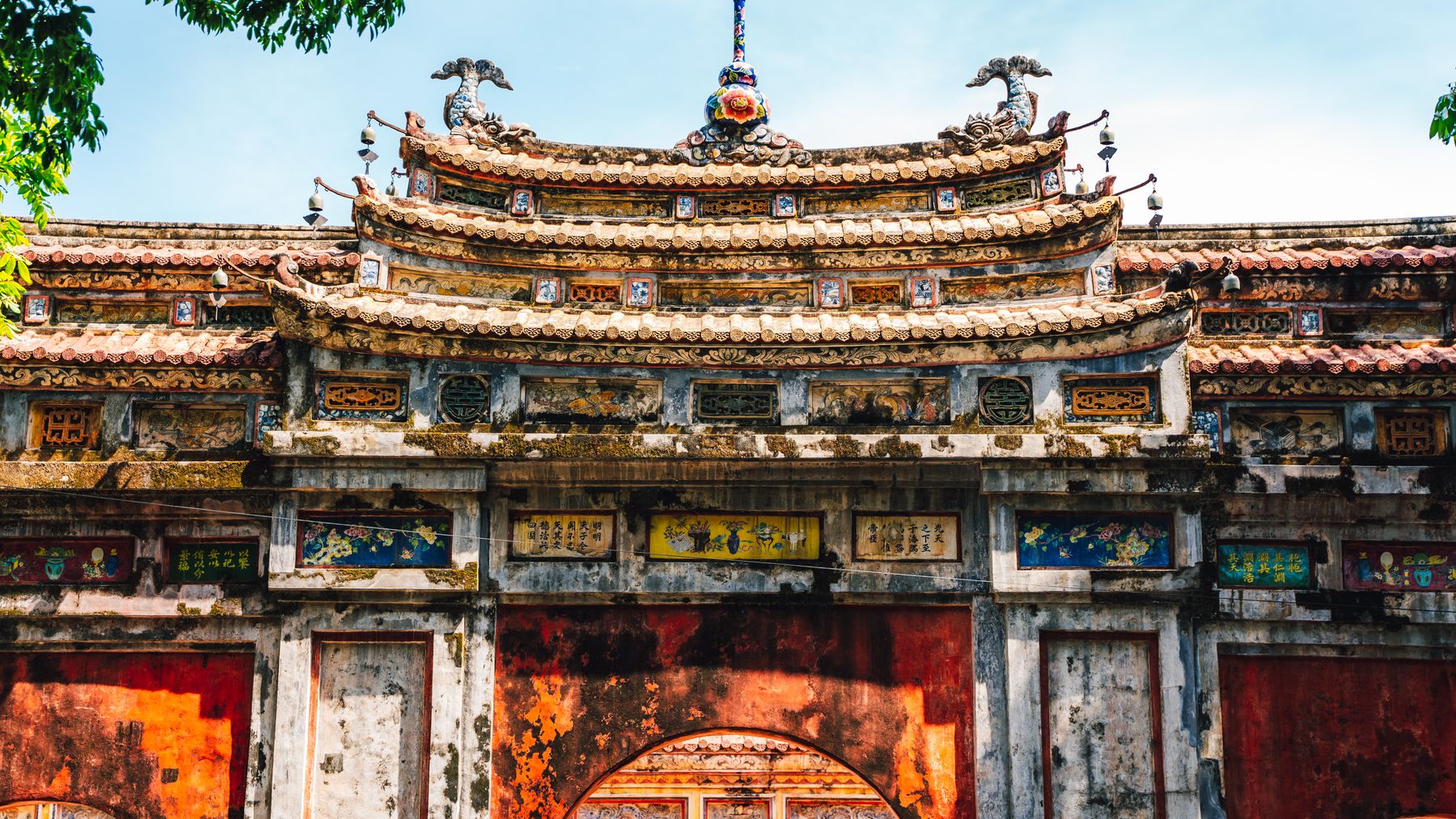
Photo by Vietnam Tri Duong Photographer on Pexels
Where to Eat It
Tinh Gia Vien on Nguyen Binh Khiem street is the name that comes up most consistently among locals who actually care about the cooking rather than the performance. The owner has spent years researching Nguyen-era recipes, and the banh beo and banh loc here are among the best in the city. Book ahead for dinner; it fills up.
Thuong Truong restaurant near the south bank of the Huong (Perfume) River offers a mid-range royal set menu around 300,000 VND per person. Less elaborate than some competitors, but the food is honest and the space is calm.
Quan Com Hue Ba Do is where you go if you want royal-adjacent Hue home cooking without the ceremony. It's a family-run lunch spot, open until the food runs out — usually by 1pm — serving com hen, banh beo, and a rotating selection of claypot dishes for 30,000–60,000 VND per dish.
For street-level research, the stretch of alleyways behind Dong Xuan-style market stalls near Dong Ba is where Hue women sell banh beo and banh loc from trays balanced on motorbikes. This is the cheapest and most direct version of the same food tradition, and worth doing before you sit down to a formal meal.
A Few Practical Notes
Hue's imperial restaurants are concentrated in the area south of the Perfume River and near the Imperial Citadel — a walkable radius from most guesthouses in the centre. If you're coming specifically to eat, two full days gives you enough time to cover both the formal restaurant experience and the street-food version of the same dishes. Lunch is generally the better meal here; several of the best spots don't operate dinner service at all.
Last updated · May 29, 2026 · independently researched, never sponsored.