What makes Ha Giang's "banh cuon nong" different
"Banh cuon nong" — hot steamed rice rolls — show up all over northern Vietnam, but Ha Giang's version is its own thing. The rolls here are thinner and more translucent than you'll find in Hanoi or Thai Nguyen, almost fragile-looking. The filling is restrained: minced pork, sometimes a shrimp or two, maybe a sliver of wood ear mushroom. No filler, no bulk. The dipping sauce is fish sauce sharpened with lime and a whisper of chili, and the rolls come to your table still steaming — order them fresh, and you're eating them within seconds of the steamer coming off the heat.
Locals don't agonize over banh cuon (반꾸온 / 蒸米卷 / バインクオン) nong the way they do over "pho" or "bun cha". It's a quick morning meal, eaten standing or perched on a plastic stool, gone in ten minutes. But the simplicity is the whole point. A good roll here lives or dies on rice flour quality and timing.
Where to eat banh cuon nong in Ha Giang city
Banh Cuon O Xuyen (Duong Quang Trung)
This stall sits on Duong Quang Trung, near the northern edge of the city center, across from a small public garden. The owner, a woman in her 60s, has been steaming rolls from a narrow storefront for over 20 years. She makes the batter fresh every morning, and you can see why — the rolls are nearly translucent, almost fragile when they arrive. Order a plate (typically 3–4 rolls): 25,000–30,000 VND. She pairs them with a bowl of nuoc mam cham (fish sauce dip) that's properly balanced — not aggressively salty, with real lime juice and a single dried chili for heat.
Go early, 6:30–7:30 a.m., before the breakfast crowd empties the steam baskets. By 8 a.m., she's often sold out.
Banh Cuon Thi (Dong Kinh Nghia Thiep)
Smaller, less obvious than Xuyen's, this cart operates from a covered spot on Dong Kinh Nghia Thiep, near the intersection with Duong Minh Khai. The owner, a man in his 50s, fills his rolls with a mix of minced pork and sometimes a bit of fresh shrimp. The rolls are slightly thicker than Xuyen's and a touch chewier — some locals prefer them this way; others find them less delicate. Plate of 3–4 rolls: 20,000–25,000 VND. His dip sauce is heavier on the fish sauce and a bit more aggressive with chili.
Best between 6 a.m. and 7:30 a.m. He closes by 8:30 a.m., and many days sells out earlier.
Banh Cuon Hang (Near Dong Kinh Nghia Thiep Market)
Located in the covered arcade just outside Dong Kinh Nghia Thiep Market, Hang runs a two-steamer operation that moves fast. Her rolls are reliably thin and well-filled, with a light hand on the pork — fillings lean toward shrimp here, which some locals say makes the roll lighter. A plate runs 25,000–28,000 VND. She also sells small bowls of broth (with ground pork and maybe a bit of crab) on the side — worth ordering if you want something warm to wash down the rolls.
Open 5:30 a.m.–9 a.m. weekdays; weekends she sometimes closes earlier.

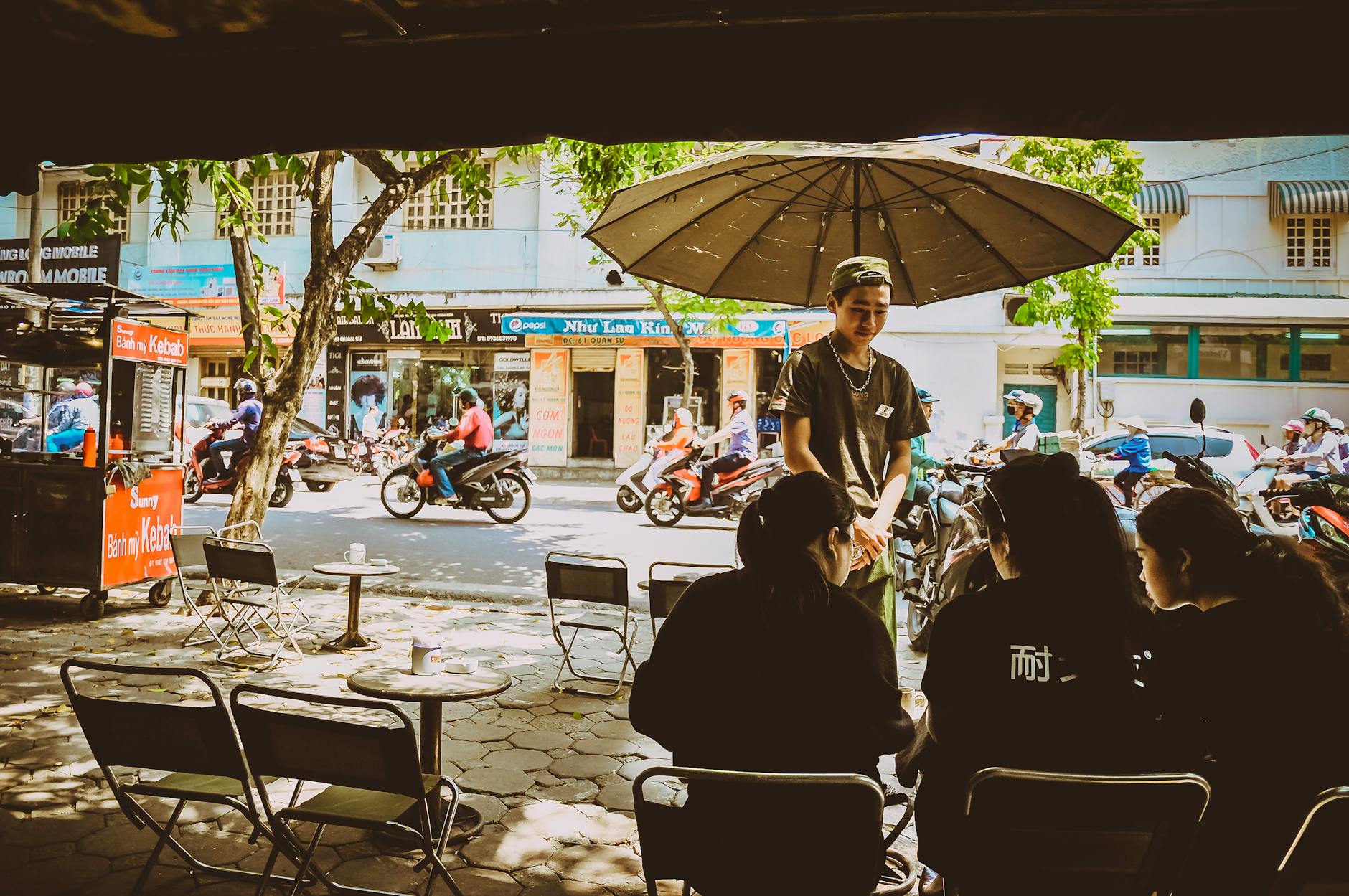
Photo by Quang Nguyen Vinh on Pexels
How to order and eat
Walk up to the stall and say "Mot dia banh cuon nong" (one plate of hot banh cuon nong). If you want extra rolls, say "Hai dia" (two plates). The seller will steam a fresh batch and slide them onto a plate, usually plastic, sometimes a banana leaf. Sauce arrives in a small bowl.
Pour a little sauce into a separate dipping cup if you want — don't drown the rolls. Tear or bite off a piece, dip it, eat it. The whole meal should take 5–10 minutes. Some locals eat standing, some sit on plastic stools that the stall provides.
If you want a more substantial meal, many stalls also sell "banh cuon" with broth (a heavier, lunchier version) after 10 a.m., but the morning steamed rolls are the iconic Ha Giang (하장 / 河江 / ハーザン) thing.
When to go
Breakfast is the only time to eat banh cuon nong in Ha Giang. These stalls open between 5:30 and 6:30 a.m. and are often sold out by 8 or 8:30 a.m. Lunch and dinner, they're closed. This is a morning-only ritual — plan your day accordingly if you want to try them.
Weekends don't change the timing much, though Friday and Saturday mornings can be busier.

Photo by Vietnam Hidden Light on Pexels
Cost and what to expect
A plate of 3–4 rolls runs 20,000–30,000 VND (roughly $0.85–$1.30 USD). Add 5,000 VND if you want a bowl of broth on the side. These stalls don't take cards; bring small notes. Portions are small by Western standards — most locals eat two plates as part of a larger breakfast that might include sticky rice or a small bowl of soup elsewhere.
Practical notes
Ha Giang city is cold and often damp in winter (October–March), so a steaming plate of banh cuon nong hits differently. If you're visiting in summer, go early — the heat and humidity mean these stalls close earlier and the rolls don't keep as well once they've cooled. Don't expect English; learn to point or use "banh cuon nong" and numbers. Most stalls are cash-only.
Last updated · May 26, 2026 · independently researched, never sponsored.