What makes Hoi An "banh mi" different
First, a naming quirk: in Hoi An, locals call it "banh mi" without the city qualifier. But it's unmistakably local. The bread is crispier, the fillings are heavier — more grilled pork and liver pâté, less air — and the overall sandwich is denser, meatier, and less fussy than Hanoi versions. No cucumber slices scattered like decoration. The pickled vegetables are more assertive, the chilli is fiercer, and the mayonnaise (yes, mayo) is applied without apology. It's a working lunch, not a snack.
The style reflects Hoi An (호이안 / 会安 / ホイアン)'s history as a Chinese-influenced trading port. You'll notice the same meat-forward, no-frill approach in other local specialties like "cao lau" and "mi quang" — generous protein, bold flavors, minimal pretense.
Banh Mi Phuong
This is the one every guidebook lists, and for once, the guidebook is right. Banh Mi (반미 / 越式法包 / バインミー) Phuong sits on Tran Hung Dao Street (the main east-west drag through the Old Town), and the queue starts forming around 7 a.m. A woman in a conical hat works the register; her husband grills the meat.
The standard order is around 30,000–40,000 VND ($1.30–$1.70 USD) for a full sandwich. Ask for "banh mi dac biet" (the special) if you want the full arsenal: grilled pork, liver pâté, head cheese, pickled daikon, pickled carrot, coriander, chilli, and that crucial spread of mayo and pâté on the inside of the bread.
What sets it apart: the bread is baked fresh in-house (you can smell it), the pork is grilled to order on a small charcoal brazier right there, and the fillings aren't pre-assembled. Everything goes in as you watch, so nothing sits around getting soggy. It closes by 10 a.m., which tells you this is morning food.
Go early. If you arrive after 9 a.m., you might find yourself at the back of a 20-person line.
Banh Mi Hoa
Two blocks south of Banh Mi Phuong (also on Tran Hung Dao, near the corner with Tran Phu), Banh Mi Hoa runs a quieter operation. It's less famous, which means shorter lines and a more relaxed pace. The owner, Hoa, has been making sandwiches for over 20 years; the regulars are mostly locals getting breakfast before work.
The quality is identical to Phuong — same style of bread, same meat sourcing, same technique. The price is identical too: 30,000–40,000 VND. The difference is atmosphere: you're eating standing up at a plastic stool, not fighting for elbow room. The pork is charred a bit darker here, which some prefer.
This spot also closes by 9:30 a.m., sometimes earlier if they sell out. Hoa doesn't restock in the afternoon.

Photo by Jordan Coleman on Pexels
Banh Mi Hoi An (Bach Dang Street location)
If you're visiting in the afternoon and missed the morning rush, this stand near the waterfront on Bach Dang Street stays open until around 2 p.m. It's less busy than the two on Tran Hung Dao, and the quality is solid without being iconic. The bread is still crispy, the fillings are fresh, and at 35,000 VND for a standard banh mi, it's a fair deal.
The owner here is more chatty than others and will explain the fillings if you ask. Good for travelers who want to linger and ask questions without feeling rushed.
Banh Mi at street stalls near the market
Around Hoi An Central Market (Cho Hoi An), near the main entrance on Tran Phu Street, a few informal stalls sell banh mi from carts starting around 6:30 a.m. These are even cheaper — 25,000–30,000 VND — and the pork is sometimes more heavily seasoned (some might say oversalted). Quality is variable; you're relying on luck and foot traffic to signal freshness. Locals do buy here, but the dedicated spots above are more consistent.
How to order
Walk up to the counter or cart. Point or say "mot banh mi" (one sandwich). If you want the full version with all the meats, say "dac biet." If you want it spicier, say "nhieu ot" (lots of chilli). If you want mayo, they'll add it unless you say "khong" (no). Most spots will ask, but not all.
Payment is cash only at all of these places. No cards, no digital wallets.
If the sandwich is hot and wrapped in paper, eat it immediately. The bread stays crispy for maybe 10 minutes in this humidity. After that, the moisture from the fillings turns it soft.
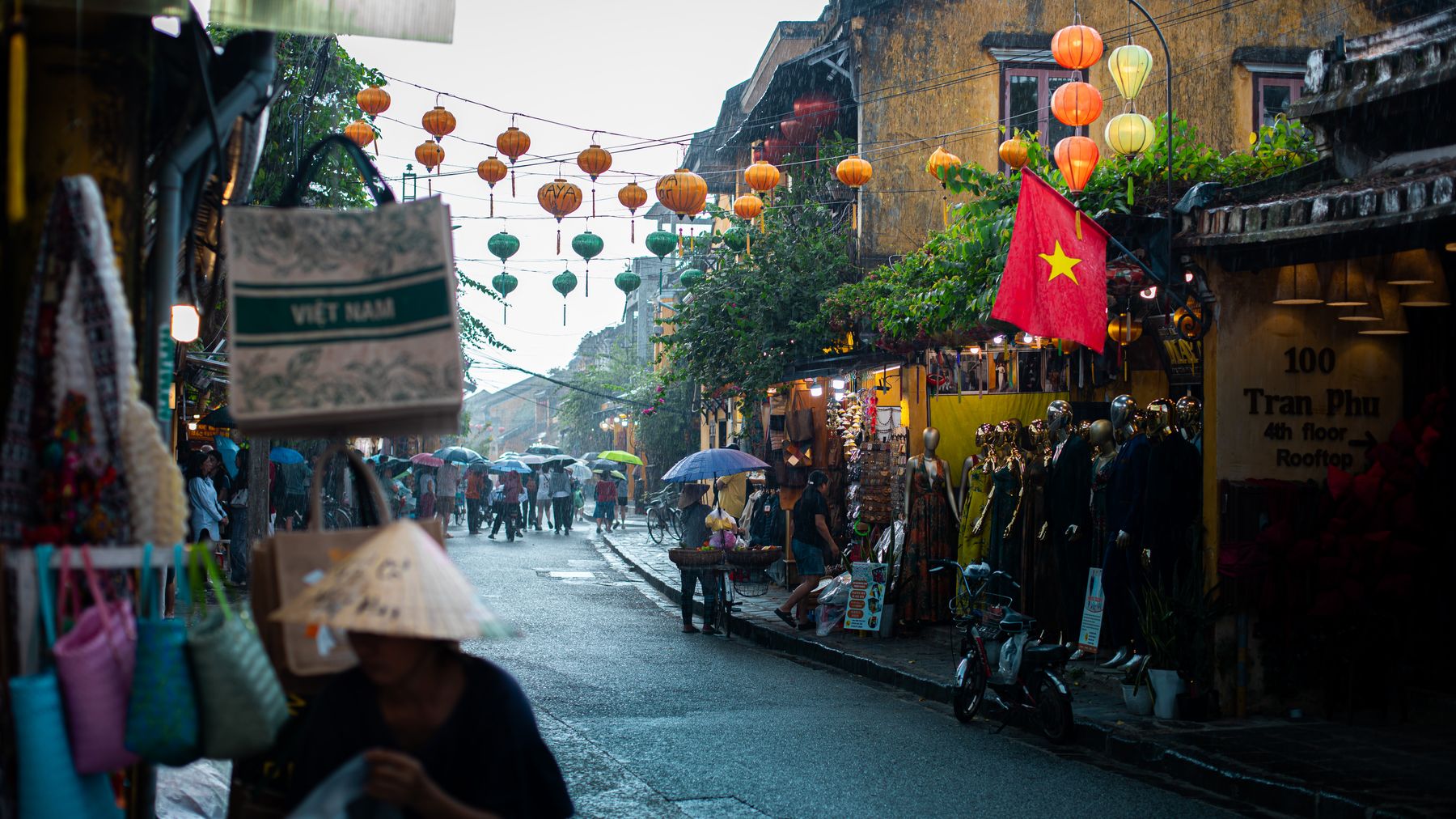
Photo by Sachith Ravishka Kodikara on Pexels
When to go
Morning (6:30–8:30 a.m.): The best banh mi are sold in the first two hours after opening. The bread is at peak crispness, the meat is fresh off the grill, and the pickles are still snappy. This is when locals eat it.
Late morning (8:30–10 a.m.): Still fine. Lines grow, and some popular spots run low on ingredients.
Afternoon (12 p.m. onward): Most banh mi spots close. A few reopen for lunch around 11:30 a.m. to 1 p.m., but the bread quality drops — it's been sitting since morning. Avoid unless you have no other option.
Evening: Not a banh mi time in Hoi An. It's a morning carb-load, full stop.
Why not other cities?
If you've had banh mi in Hanoi or Saigon, Hoi An's version will feel heavier and more meat-centric. Hanoi banh mi is lighter, with thinner bread and more pickles-to-meat ratio. Saigon banh mi is often slightly sweeter and more mayo-forward. Hoi An splits the difference — crisp bread, generous protein, bold seasoning. It's less refined and more fuel; that's the point.
Practical notes
Bring cash, go early (before 8 a.m. for the best window), and eat it on the spot or within minutes of buying. One sandwich is enough for most people; it's dense and filling. Pair it with Vietnamese coffee or a cold drink from a nearby shop. The waterfront on Bach Dang Street is a pleasant spot to eat and watch the boats if you don't mind standing.
Last updated · May 29, 2026 · independently researched, never sponsored.