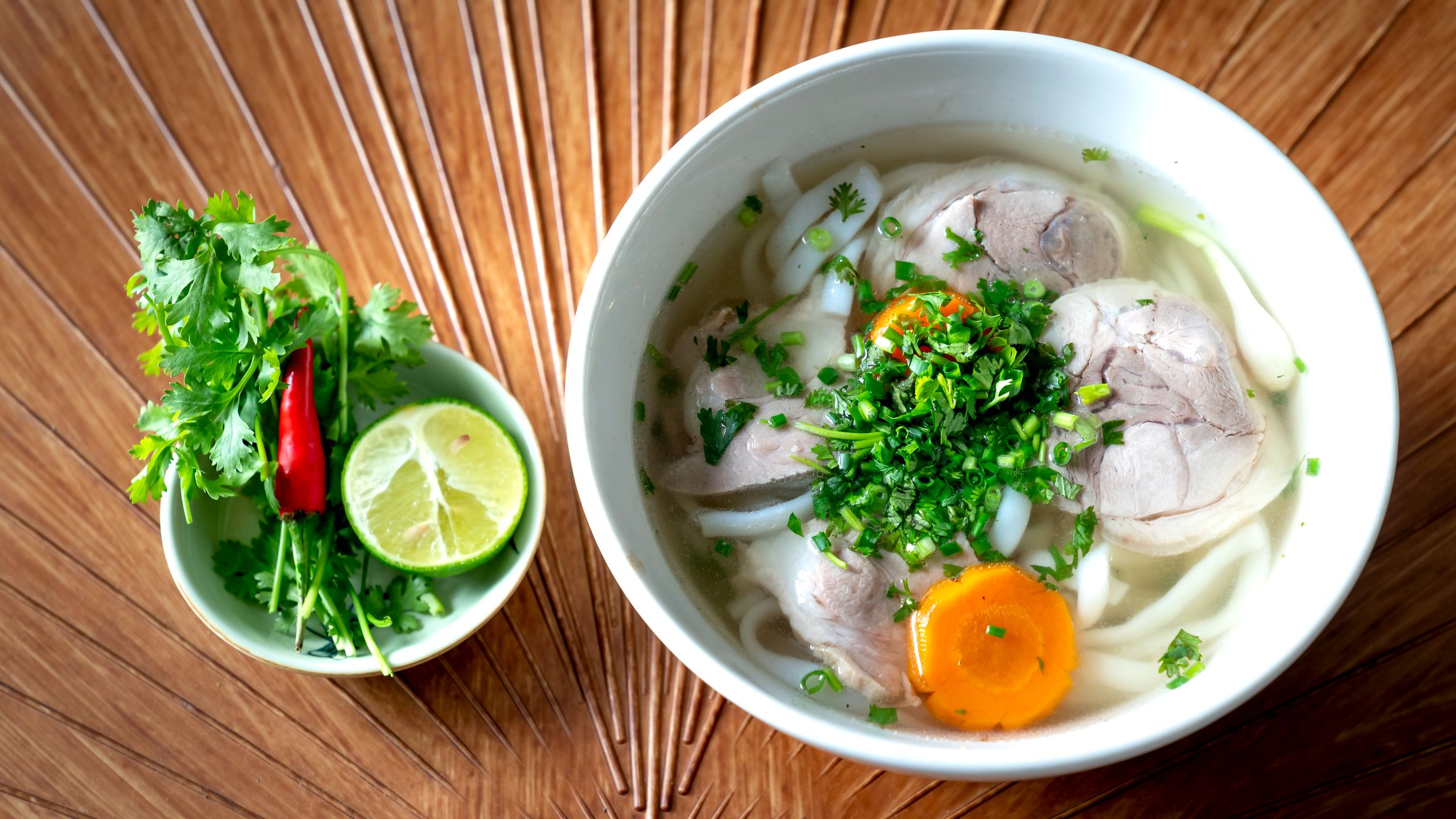
"Pho ga" is not just a lighter version of "pho bo". In Hanoi, it's a different beast altogether—the broth is simmered longer, the chicken is poached whole, and the attention to balance between sweetness and umami defines the bowl. Most tourists never find the good spots because they're buried in Old Quarter alleys or scattered across working-class neighborhoods. These are the places Hanoi people actually eat.
Pho Ga A Trang (Alley off Phung Hung)
This is the one locals mention first. Located in a narrow passage near Phung Hung Street in Ba Dinh, Pho (쌀국수 / 越南河粉 / フォー) Ga A Trang has been running since the 1990s. The broth is clear but rich—made from simmering chicken bones and a small amount of seafood stock for depth. The chicken is always poached to perfect tenderness, never stringy. A bowl of pho ga (small) costs 45,000 VND; large is 55,000 VND. They open at 6 a.m. and close by 10:30 a.m., so breakfast or early lunch only. No sign in English; ask a taxi driver or locals on the street—everyone knows it.
Pho Ga Cam Chi (Hang Gai Street)
Deeper in Old Quarter, on Hang Gai near the Night Market entrance, Cam Chi has been family-run for three decades. The broth here is noticeably sweeter—they use more chicken liver and ginger than most places—and some people find it polarizing. The chicken is tender, but the real draw is the "ga" (chicken) itself: they serve bone-in thigh meat, not just breast. Cost: 50,000 VND small, 60,000 VND large. Open 6 a.m. to 11 a.m. only. Arrive early; locals queue by 7 a.m.
Pho Ga Thanh Huong (Bat Dan Street)
On a residential stretch of Bat Dan in the Old Quarter, Thanh Huong is a five-table hole-in-the-wall that's been family-run for 40 years. The broth is the most balanced of the bunch—not too sweet, clean but savory, with a subtle fishiness that suggests anchovy rather than screams it. The noodles are slightly thicker than standard, and they're made fresh daily. Cost: 48,000 VND small, 58,000 VND large. Open 6 a.m. to 10 a.m. No English menu; point and gesture. This one is easy to walk past if you're not looking.

Photo by Sergey Guk on Pexels
Pho Ga Dong Huong (Hoan Kiem District, near Long Bien Bridge)
If you're near the [Long Bien Bridge](/posts/long-bien-bridge-hanoi (하노이 / 河内 / ハノイ)-history) area or want to venture beyond Old Quarter, Dong Huong (on Phom Hung near the bridge) serves pho ga closer to the Northern style—the broth is lighter and more aromatic, with more star anise and less sweetness. It's popular with morning cyclists and construction workers. Cost: 42,000 VND small, 52,000 VND large. Opens at 5:30 a.m., closes by 10 a.m.
Pho Ga Kim Hoa (Au Co Street, Ba Dinh)
This spot caters to locals and is less of a tourist find. The broth is made with whole chicken stewed low-and-slow for 8+ hours. The flavor is deeper and earthier than the Old Quarter spots. They also serve "pho ga" with chicken offal (liver, gizzard) for adventurous eaters—25,000 VND for a mixed offal bowl. Regular pho ga is 46,000 VND small, 56,000 VND large. Open 6 a.m. to 11 a.m.
What Makes Hanoi Pho Ga Different
Pho ga here tends toward sweetness and delicacy compared to the more assertive broths in central or southern Vietnam. Hanoi cooks often use a ratio of 70% chicken bone to 30% seafood stock (dried squid, anchovy), whereas other regions skip the seafood element entirely. The chicken is always poached whole, never pre-cut, which keeps the meat tender. And Hanoi pho ga is almost exclusively a breakfast food—you won't find it at dinner except in tourist restaurants. Locals eat it between 6 a.m. and 11 a.m.

Photo by Ama Journey on Pexels
How to Order
Simplicity is key. Point to the size you want (small or large). Then indicate toppings: most places bring a plate of fresh herbs (basil, cilantro, sawtooth coriander) and raw vegetables (onion, chili). You add them yourself. Ask for "them rau cai?" (more vegetables?) if the plate looks skimpy. Request extra broth by saying "thêm nước" (more broth). If you want the richer, oilier pho with chicken fat (which many Hanoi people prefer), ask for "pho ga dac biet" or just say "nhiều dầu gà" (more chicken fat). Lime wedge and chili sauce are always on the table.
When to Go
Pho ga is breakfast and early-lunch food in Hanoi. Arrive between 6:30 a.m. and 8:30 a.m. for the best experience—the broth is freshest, the line is manageable, and the chicken is just poached. By 10 a.m., many stalls are running low on chicken or broth and may close early. Never expect pho ga for dinner. If you're not a morning person, go between 11 a.m. and noon; you'll get decent broth and a quieter experience, though some places may have sold out.
Practical notes
Bring cash (VND only); none of these spots take cards. Bowls are small and designed to be eaten quickly. Most locals pair pho ga with a glass of hot tea or a small coffee. Hanoi pho ga is best eaten standing at a plastic table with your hands moving fast—this is not a leisurely meal. It's breakfast. Treat it that way and you'll understand why locals defend their favorite spot so fiercely.
Last updated · May 26, 2026 · independently researched, never sponsored.



