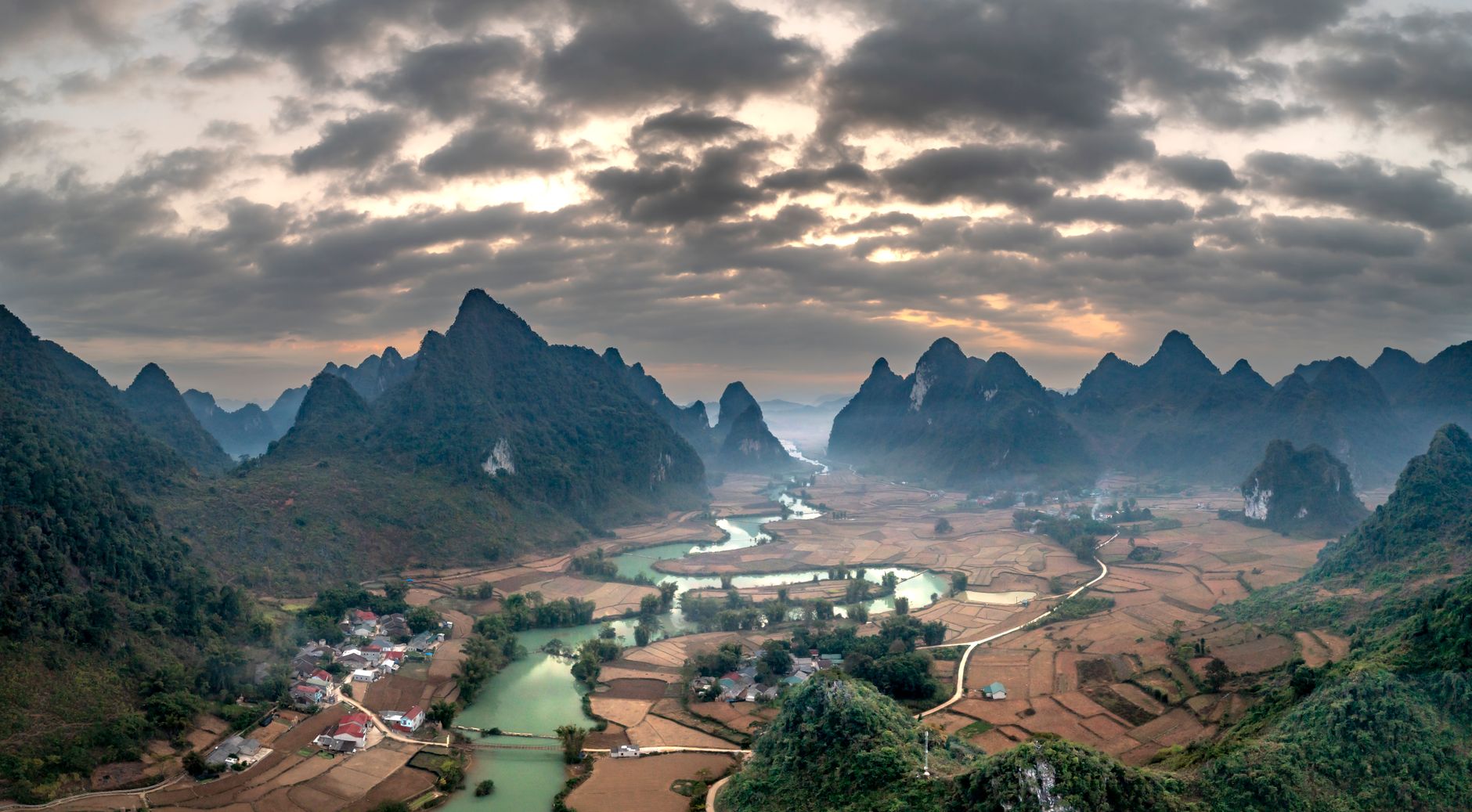
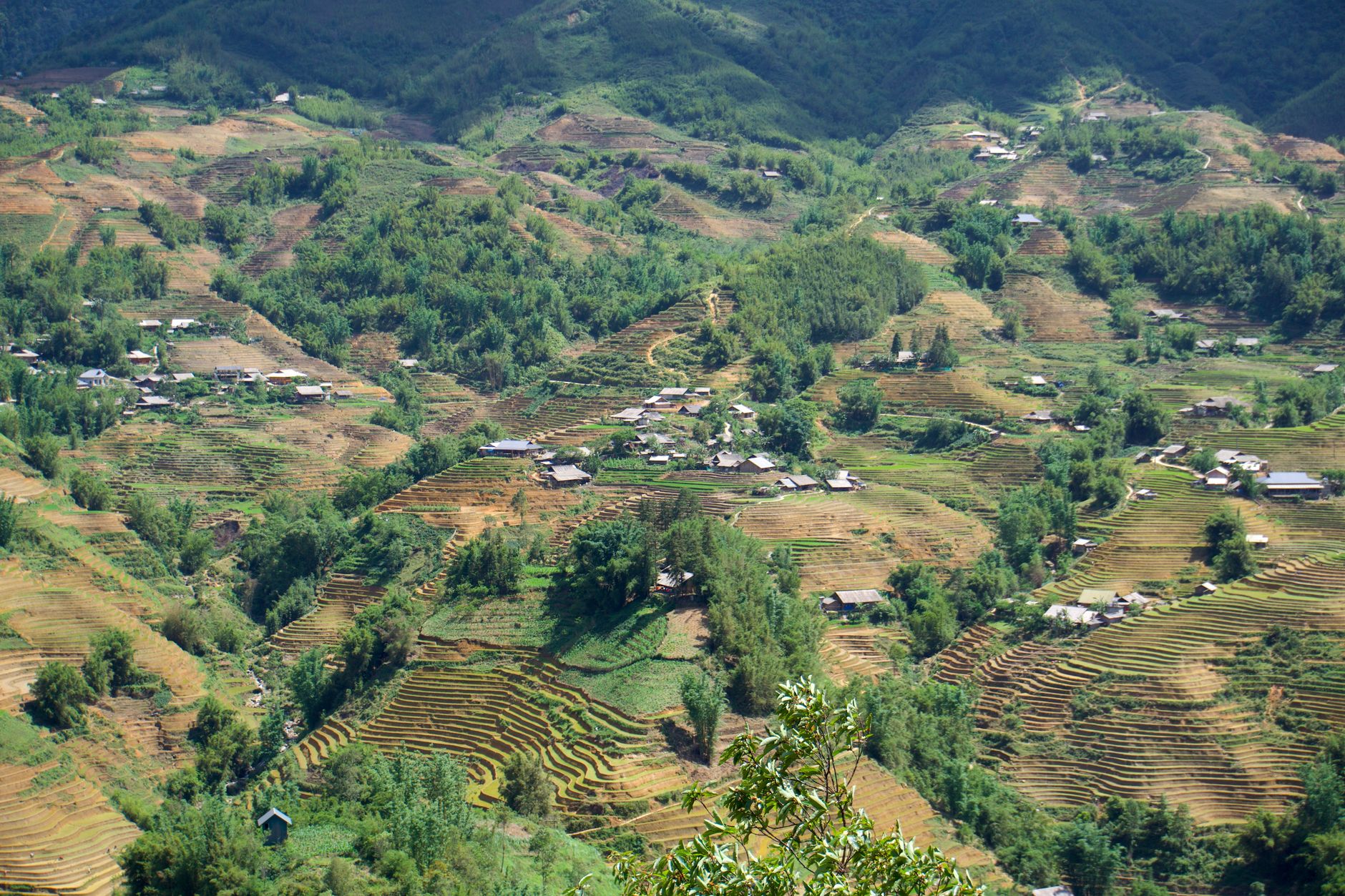
Bac Kan sits in northeastern Vietnam (베트남 / 越南 / ベトナム), a few hours from Hanoi, and almost nobody visits. That's the appeal. The province is ringed by limestone peaks, home to Tay and Dao minorities, and offers a version of northern Vietnam travel that doesn't involve tour buses.
This is a place where you'll see more water buffalo than motorbikes, eat with local families, and sleep in homestays run by people who've never met a tourist before. It's not polished. Infrastructure is basic. But if you like that trade-off, Bac Kan rewards patience.
Ba Be Lake — the main draw
Ba Be is a long, narrow freshwater lake (36 km × 3.5 km) cut through a valley of karst limestone. It's the largest natural lake in Vietnam, and for good reason it anchors most visits here.
What to do:
- Boat tours (around 250,000–400,000 VND per person, depending on group size and duration). The standard trip covers the lake, stops at waterfall grottoes like Dau Dang, and visits floating fish farms.
- Hike from Pac Ngoi village (the main tourist hub on the east shore) to viewpoints above the lake. The 2–3 hour ridge walk is straightforward and rewards you with views of the whole valley.
- Overnight homestay in Pac Ngoi. Several families rent rooms (250,000–500,000 VND/night) with basic plumbing. Dinner is home-cooked Tay food—usually fish, rice, greens. Breakfast is rice porridge and pickled vegetables.
- Swimming in the lake (warm enough May–October; cold but possible year-round).
- Early morning on the water to watch mist rise off the limestone.
How to get there: From Bac Kan town, it's about 40 km north. Most visitors hire a driver or motorbike taxi (negotiate 300,000–500,000 VND for a half-day). Public buses exist but are erratic.
Tay ethnic villages around Ba Be
The villages ringing Ba Be—Pac Ngoi, Na Hang, Quang Khoa—are inhabited by Tay people, Vietnam's second-largest ethnic minority. They've lived here for generations, speaking Tay at home and Vietnamese at school.
What's worth doing:
- Stay in a homestay and eat with the family. You'll learn more in one meal than any museum can teach.
- Morning market in Pac Ngoi (opens around 6 a.m.). Tay and Hmong minorities come down from higher villages to sell vegetables, herbs, sticky rice, and sticky rice cakes wrapped in leaves.
- Visit a traditional bamboo house. Most homestay hosts will show you how their place is built—no nails, just bamboo lashed together.
- Watch (or help) rice-pounding in late autumn. Families still thresh and pound rice by hand in many villages.
- Buy local honey, bamboo shoots, or cinnamon from vendors in Pac Ngoi (prices are genuine, not inflated).
Dau Dang and Thac Khuoi waterfalls
These twin waterfalls drop into the lake's northern end and are usually visited by boat as part of the Ba Be tour. They're not dramatic—maybe 10–15 meters—but the grottos behind them are worth exploring.
Note: Water level and flow depend heavily on season. In dry season (October–April), you may see just a trickle. Summer brings proper cascades.
Nang Tien cave (Fairy Cave)
A limestone cavern in the hills south of Pac Ngoi, named for a legend about a fairy who sheltered here. The walk is about 45 minutes from the village, mostly uphill. Inside, the cave is small but atmospheric—stalactites, a small underground pool, and bats.
Arrange a guide through your homestay (100,000–200,000 VND). They'll bring a flashlight and know the safest route.

Photo by Sergey Guk on Pexels
Ha Giang loop day-trip (if you have time)
If you're already in the northeast, Ha Giang province (another 80 km north) is worth a separate visit. The province is famous for its motorbike loop—a 4–5 day circuit through mountainous terrain and minority villages. Day-trippers can do Dong Van Karst Plateau as a half-day (Quan Ba gate, Meo Vac town, Yen Minh district). Check the separate Ha Giang article for full logistics.
Cultural experiences and what locals actually do
- Cinnamon and honey farms: Bac Kan produces decent cinnamon and honey. Small farms around Cho Don district let visitors walk through orchards and buy direct (cheaper than Hanoi (하노이 / 河内 / ハノイ)).
- Tay textile weaving: Some villages still practice traditional weaving on wooden looms. Ask your homestay if any neighbors are active weavers—many do it part-time.
- Fishing at dawn: If your homestay operator fishes, ask to join. You'll learn about the lake and eat what you catch.
- Cooking class: Pac Ngoi homestays can arrange a morning or evening lesson. Typically 3–5 dishes, using ingredients from local markets, 250,000–400,000 VND.
Outdoor and hiking
- Ridge walks above the lake: Several unmaintained trails follow the hills around Ba Be. Hire a local guide for safety. 3–5 hours, moderate difficulty, little to no signage.
- Waterfall hikes in Na Hang district: Na Hang has smaller, less-visited waterfalls (Thac Mo, Thac Tien). Trails are rough and guides are essential. Arrange through your homestay or the Na Hang tourism office.
- Rock climbing: The limestone walls around Ba Be attract a small climbing community. Contact a guide in Pac Ngoi if you're experienced; bolts are limited.
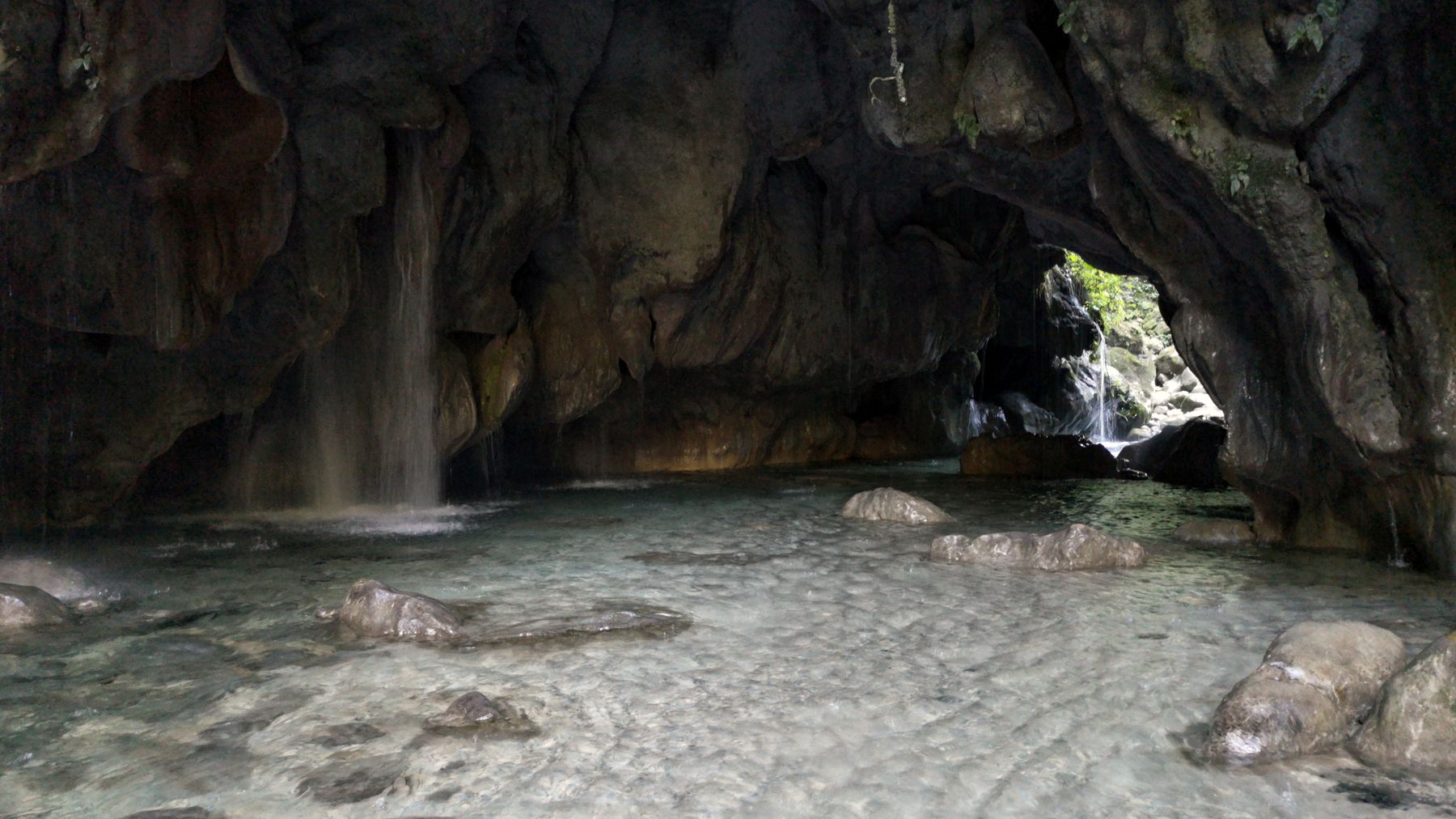
Photo by Walter Alejandro on Pexels
What to skip
- Bac Kan town itself. The provincial capital is dull—a concrete sprawl with no sights worth a detour. Use it only for transport connections (buses to Hanoi, Ha Giang).
- National park office museums. The Ba Be National Park headquarters has a small museum in Pac Ngoi. It's not worth time; the lake and villages are the real exhibits.
- Overpriced tours from Hanoi. Many Hanoi operators bundle Bac Kan into 2–3 day northeastern tours that move fast and miss the point. The value is in staying put, not ticking boxes.
Practical logistics
Getting there: Bac Kan is about 160 km northeast of Hanoi (3–4 hours by bus or car). Buses from My Dinh station (Hanoi) leave several times daily; cost around 80,000–150,000 VND. Hiring a driver from Hanoi costs 800,000–1.2 million VND one-way.
When to go: October–April is best (dry, cool). May–September is warm and humid; trails get muddy and leeches are active. Avoid wet season (late May–July) unless you don't mind heavy rain.
Where to stay: Pac Ngoi has the most homestays and tourism infrastructure. Budget homestays run 150,000–400,000 VND/night; Na Hang and Quang Khoa are quieter and more basic. Bac Kan town has a few hotels (200,000–600,000 VND) but there's little reason to stay there.
Money and supplies: There are ATMs in Bac Kan town but not in Pac Ngoi. Withdraw cash before heading to the lake. Supplies (snacks, toiletries) are available in Pac Ngoi market but limited; bring what you need from Bac Kan or Hanoi.
Language: Many homestay hosts speak some English or French, especially if they've hosted tourists before. Learning a few basic Vietnamese or Tay phrases goes a long way.
Frequently Asked Questions
How much does a boat tour on Ba Be Lake cost per person?
Boat tours on Ba Be Lake run approximately 250,000 to 400,000 VND per person, with the price varying based on group size and duration. The standard trip covers the lake, stops at waterfall grottoes including Dau Dang, and visits floating fish farms. Overnight homestay accommodation in Pac Ngoi village costs 250,000 to 500,000 VND per night, with home-cooked Tay meals included.
What ethnic minority villages can you visit around Ba Be Lake?
The villages ringing Ba Be — Pac Ngoi, Na Hang, and Quang Khoa — are home to the Tay people, Vietnam's second-largest ethnic minority. Pac Ngoi on the east shore is the main base for visitors. A morning market there opens around 6 a.m., where Tay and Hmong minorities sell vegetables, sticky rice, herbs, and leaf-wrapped rice cakes. Local honey, bamboo shoots, and cinnamon are also available at genuine, uninflated prices.
When is the best time to swim in Ba Be Lake and see the waterfalls at full flow?
Swimming in Ba Be Lake is most comfortable between May and October when the water is warm, though it is possible year-round. The Dau Dang and Thac Khuoi waterfalls, which drop roughly 10 to 15 meters into the lake's northern end, flow properly in summer. During dry season from October to April, water levels drop significantly and the falls may reduce to a trickle.
Bottom line
Bac Kan rewards travelers who slow down and accept that everything takes longer here. You won't see neon temples or zip lines. You'll see water buffalo, eat rice with strangers, and sleep in houses with no hot water. If that sounds good, go. If you need creature comforts, skip it.
Last updated · May 29, 2026 · independently researched, never sponsored.